Get our daily fine wine reviews, latest wine ratings, news and travel guides delivered straight to your inbox.
You are now subscribed
Your newsletter sign-up was successful
An account already exists for this email address, please log in.
Why Vega Sicilia still shines brightest among the Tempos collection
Now at the centre of a constellation of other winery projects in Spain and abroad, Ribera del Duero's Vega Sicilia remains focused on safeguarding its legacy as it marks 160 years of winemaking.
To celebrate its 160th anniversary, in January 2024, Vega Sicilia held an atmospheric celebratory dinner at London’s National Gallery.
A long table stretched along the axis of the museum’s room 19, which is lined with the deep-hued, intricate works of the Spanish Masters.
The setting was at once lavish and humbling, a reminder that it takes a lot of dedication and skill to become, and endure as, part of a discipline’s canon.
In wine, however, mastery is an elusive, fleeting pursuit, dictated by nature and time as much as ability and effort. A bottle of Unico doesn’t remain, with impassive gaze, on a damask-covered wall.
Walking the line
Pablo Alvarez, CEO of TEMPOS Vega Sicilia
(Image credit: Vega Sicilia)
Both a privilege and a burden, being at the helm of Vega Sicilia requires the careful handling of timelessness and impermanence, classicism and evolution.
It’s a fine line that the Alvarez family, which has owned Vega Sicilia since 1982, has been navigating with inconspicuous assuredness.
Vega Sicilia is now at the centre of a constellation of other estates and brands, collectively known as TEMPOS Vega Sicilia (TVS), seeking expansion and diversification while leveraging the prestige – and retaining the exclusivity – of the motherhouse.
Decanter newsletter
Get our daily fine wine reviews, latest wine ratings, news and travel guides delivered straight to your inbox.
‘It was the natural development of the journey we started in 1982 when our father acquired Vega Sicilia,’ explains Pablo Alvarez, CEO of TVS.
‘Vega Sicilia is a place with its own terroir, grape varieties and 162 years of history. There was no [room for] growth if we want to maintain and improve the quality level – which has always been the family’s goal.’
Two key factors have proven essential both for the sustained growth of TVS and the enduring mystique of its flagship winery: strategic long-term hires and excruciating attention to detail.
On the other hand, articulating and communicating the histories and stories behind TVS has never been a priority.
Surviving the index
Jessica Julmy, TEMPOS Vega Sicilia managing director
(Image credit: Diego Pela Ez)
When, in August 2025, Jessica Julmy started her tenure as managing director at TVS, what struck her the most was ‘the freedom – and responsibility?! – that comes from thinking in generations rather than [financial] quarters’.
Her appointment signposted a quiet, steady evolution through which Ribera del Duero’s original ‘icon’ producer morphed into a universe of its own. It also sent an important message about where TVS sees (or wants to see) itself, today and in the future.
Julmy arrived at TVS with a glittery CV that includes a long stretch at the helm of three Moët Hennessy companies: Krug, Château Galoupet (in Provence) and Moët Hennessy UK.
It would be naive to ignore the fact that her appointment happened in the aftermath of the landmark arrival of Vega Sicilia, in 2024, at the top spot of the Liv-Ex Power 100 – the report, released each year by the fine wine trading platform and analyst, ranking the most influential brands in the secondary market.
The fall to the 16th spot in the 2025 report says a lot about the complexity of Julmy’s brief.
Remaining investment-worthy is a matter of relevance, visibility and perception. This is a game that TVS has largely thus far refused – with steadiness, level-headedness and perhaps a touch of hubris – to play.
Vega Sicilia built its character and prestige through seclusion and inaccessibility, standing at once among and removed from its Ribera del Duero peers.
Fixing the connection
Julmy acknowledges that while this remove might have been instrumental in building the allure of and demand for the Vega Sicilia brand and wines, the time to communicate more and better has arrived.
Not least because, as she points out, what makes TVS distinct is ‘not just the wines we craft, but the manner in which we think and act’.
And not many, even among those who collect Vega Sicilia’s wines, will know what that manner is.
The estate is one of the few to maintain its own cooperage, while trees are being planted so that, three decades from now, Vega Sicilia can produce its own corks.
But how does this painstaking work translate into the estate’s public identity?
‘Fine wine’s slow rhythm is one of its greatest strengths… That long-term perspective is part of what makes this world unique,’ says Julmy.
‘But the same patience that allows us to build enduring wines must be matched by the agility to understand how consumers and expectations are evolving.’
And by the ability to communicate with those consumers and signal that their expectations are being met.
‘I want us to remain extremely committed to quality while being genuinely connected,’ Julmy continues.
‘Connected to the future of wine, to new consumers, to new perspectives and to new ways of engaging.’
‘I want us to remain extremely committed to quality while being genuinely connected’
Jessica Julmy
Taking vows
(Image credit: Vega Sicilia)
Vega Sicilia was founded in 1864 by Eloy Locanda, who planted cuttings brought from Bordeaux along with the local Tinto Fino/Tempranillo.
The estate was sold in 1888 and again in 1897, bought by one Antonio Herrero Vásquez.
In 1904, under the Herrero family’s ownership, the estate was leased to established Rioja producer Cosme Palacio, who three years later brought in Txomin Garramiola as winemaker; and it was he who, in 1915, oversaw the production of the first vintage of Unico.
In 1950, the Herreros sold to Prodes, a seed company, which in turn sold, 15 years later, to Hans Neumann, a businessman in Venezuela.
The modern, prosperous chapter of Vega Sicilia subsequently started in 1982, when David Alvarez took ownership. His son Pablo has been at the helm since 1985.
It is in many ways remarkable that, throughout these changes of hands and under proprietors with very different backgrounds and profiles, the Vega Sicilia estate, its portfolio of wines and its proposition remained fundamentally the same.
The estate has benefited from an unusual, continued willingness to surrender the self to the identity of its brand.
In stark contrast to other so-called icon projects that relied heavily on the cultivation of their respective Übermensch winemakers – think Peter Sissek for Pingus, or Alvaro Palacios for L’Ermita – the role of technical director at Vega Sicilia (and TVS’ multiple estates) has the quality of monastic abdication: a vocation devoted to a higher power, a shedding of the ego at the service of each vintage.
Gonzalo Iturriaga, the current technical director of TVS, took up the baton, in 2015, from Xavier Ausàs who, after joining Vega Sicilia in 1990, was promoted to the top technical position in 1998, upon the retirement of the great Mariano Garcia. Garcia himself had started at Vega Sicilia in 1968.
It’s revealing to note how, despite holding one of Spain’s most coveted winemaking jobs for so long, none of these winemakers are among the country’s most recognised by the general public.
‘Taking on this responsibility has been a source of great excitement and also an exercise in humility,’ says Iturriaga. ‘When you join a house with such a strong identity, you realise you are not here to leave your own mark, but rather to safeguard a legacy.’
Business of time
Vega Sicilia has operated a dedicated on-site cooperage since 1987
(Image credit: Vega Sicilia)
What that safeguarding means, however, is transforming at pace.
‘One of our major challenges is adapting to increasingly changing conditions – from the climate and increasingly unpredictable harvests to the evolution of consumers and their tastes,’ explains Iturriaga.
Preserving the identity of Vega Sicilia’s wines – not least the self-proclaimed uniqueness of Unico and Unico Reserva Especial – in itself requires creativity, curiosity and ever greater precision.
‘Our sensibility has evolved,’ Iturriaga says. ‘We tend to each plot with greater care and employ gentler extraction... During ageing, we increasingly seek elegance: less influence from oak, a greater use of large-format vessels, and decisions regarding toast levels [of the inside of the barrels] and origin tailored to each vintage.’
It’s an interesting if challenging moment when balance – not unlike the attention span of consumers – is increasingly elusive and harder won.
The future of both Vega Sicilia and TVS will require nimbleness and adaptability as well as a stubborn commitment to permanence and transcendence.
‘Time is the essential element of TVS,’ concludes Alvarez. ‘A span of time that is so long in a person’s life, yet so short in the history of a wine.’
In many ways, the future strength of the Vega Sicilia star might be a good reference point to assess the troubles with the whole universe of fine wine.
TEMPOS Vega Sicilia – a chronology
(Image credit: Diego Pela Ez)
Vega Sicilia is now the flagship estate at the heart of a group of wineries – TEMPOS Vega Sicilia – that share the same concern with classicism and understated luxury. Here is a timeline of the group’s expansion.
1991 Alión – Ribera del Duero
The goal to offer a ‘more modern wine [from Ribera del Duero], standing in clear contrast to Vega Sicilia’s’, as described by CEO Pablo Alvarez, necessitated a different proposition and brand altogether.
It materialised in the creation of Alión, a regional blend – from 70ha across the DO – rather than an estate wine like its flagship sibling.
It’s misleading to see it as a ‘baby’ or ‘entry-level’ Vega Sicilia; released with less time in wood, and featuring an array of terroirs in the blend, Alión is a different animal altogether, more fruit-driven, with a polished rusticity.
Three years after the fall of the Berlin wall, the Alvarez family ventured East, (fore)seeing an opportunity in the now much-coveted Hungarian region.
A new winery was opened in 1999 and the project has evolved slowly but surely, fully blooming under Gonzalo Iturriaga’s direction. The past two releases showcased the spectacular improvement of the two dry Furmints (Mandolás and Petracs).
2001 Pintia – Toro
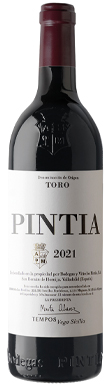
At tastings, Gonzalo Iturriaga always asks who, among attendees, is a ‘Pintista’. It’s as if the appreciation for the wine his team makes at Toro means that you’re in on a secret. He’s not wrong; Pintia is a remarkable expression of Toro and of the local Tinta de Toro/Tempranillo.
It stands out among its regional counterparts for the fluidity of its fruit and polished tannic structure, while still showcasing Toro’s trademark muscularity and verve.
Tasting Pintia is a great way to better understand the craft behind the excellence of Vega Sicilia’s Unico and Unico Selección Especial: Pintia is an open book on viticultural precision and oenological decision making.
In Pintia we see clearly what Iturriaga means when he says that he decides to harvest at the ideal ‘crunchiness point’, retaining a vivid pep without compromising on optimal ripeness.
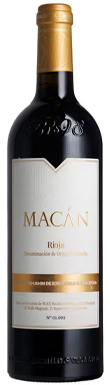
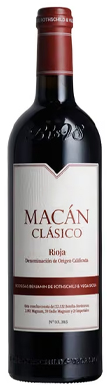
The partnership with Bodegas Benjamin de Rothschild currently has 92ha of vineyards spread across the municipalities of San Vicente de la Sonsierra, Labastida, Abalos and Elvillar, on the northern bank of the Ebro.
It produces two wines – Macán and Macán Clásico – following a first/second wine Bordeaux model. Both are single-varietal Tempranillos, aged for an average 16 and 12 months respectively.
There has been a clear, palpable concern with fine-tuning the winemaking approach, especially given that Macán wines have been notoriously less popular among critics than their TVS counterparts.
2024 Deiva – Rías Baixas
The last week of November 2026 sees the release of the first commercial vintage (2024) of Bodegas y Viñedos Deiva, the TVS foray into Galicia’s most sought-after appellation, which, over the past couple of decades, has attracted investment from many of Spain’s leading producers, including CVNE, La Rioja Alta, González Byass and Pago de los Capellanes.
The upcoming release will include two Albariños; no further details have yet been made available.
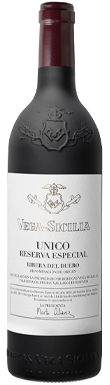
Vega Sicilia, Unico Reserva Especial, Ribera del Duero, Castilla y Léon, Spain NV
My wines
100
The 2026 release of Vega Sicilia’s iconic multi-vintage wine is a masterclass in blending. Everything is in place and balance: there’s grip and fluidity, ethereal fragrance and earthy depth, power and seductiveness. It’s made up of the muscular 2011, the intensely concentrated 2012 and the nuanced, perfumed 2014 vintages. The bright, juicy blue and black fruit is outlined by a zesty verve. The tannins are firm but exceedingly fine, affirming their presence throughout while also nearly disappearing into the coffee, dark chocolate, cherry leaf and cedar smokiness. Touches of parma violet and rockrose hover over wet forest floor. A robust acid backbone gives linearity, focus and length. While drinking perfectly now, this will keep all of its allure – and indeed reveal other facets – for many years to come.
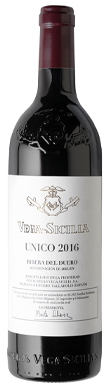
Vega Sicilia, Unico, Ribera del Duero, Castilla y Léon, Spain 2016
My wines
A pivotal vintage for Vega Sicilia, the first to be fully overseen by current technical director Gonzalo Iturriaga, with its classical blend of mostly Tinto...
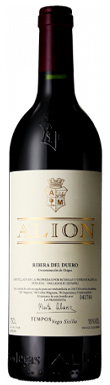
Vega Sicilia, Alión, Ribera del Duero, Castilla y Léon, Spain 2022
My wines
There’s a surprising freshness to this child of the complex 2022 vintage, in which balance was elusive and hard-won. There was therefore less reliance on...
Benjamin de Rothschild & Vega Sicilia, Macán, Rioja, Spain 2021
My wines
A balanced, poised wine from a standout vintage. A dash of Graciano was added to the Tempranillo grapes during fermentation, after which the wine aged...
Ines Salpico is Decanter’s regional editor for Spain, Portugal and South America. Born and raised in Lisbon, Portugal, after moving to London in 2015, she decided to dedicate herself fully to the wine industry and joined the sommelier team at Michelin-starred Spring, Somerset House. Stints at Noble Rot and The Laughing Heart followed. Her work as a judge and writer eventually became her full time commitment and she joined Decanter in 2019 as wine database editor.