
Albariño beyond Spain: The next great white grape?
Albariño. It’s easy to grow and full of racy acidity, and there’s a lot of love for it among consumers. It’s no wonder this Galician super-grape is making converts of winemakers the world over.


The greatest grapes, like the most influential leaders, will only achieve widespread adulation if they can perform under a diverse range of conditions.
Ideally, they should possess characteristics that appeal to experienced enthusiasts and neophytes alike.
There’s a reason why Chardonnay, for instance, is the most-planted white grape variety in the world (other than Spain’s Airén, which is used in brandy production).
Depending on how and where it’s grown, it can be profound, rich and ageworthy, or fun, bright and ready-to-drink.
Albariño, while hardly threatening to usurp Chardonnay’s crown as king of white grapes, is gaining acclaim across the world, for many of the same reasons.
Scroll down for notes and scores of 18 superb Albariño wines from beyond Spain
The ancient grape (known as Alvarinho in Portugal) came to prominence on the Iberian peninsula. For centuries, it has dominated plantings in Rías Baixas, in northwestern Spain, and Vinho Verde in Portugal’s far north.
But now Albariño’s dominion is expanding, as winemakers across the globe embrace its versatility.
Albariño’s litheness in the vineyard is mirrored in the cellar, with expressions ranging from complex and elegant to fun and zippy, depending on when and how the fresh, fruit-forward grape is harvested, fermented and aged.
California

Albariño plantings have been on the rise for years in California. According to the most recent annual report from the US Department of Agriculture, in 2024 there were 280ha under vine.
This is up from 124ha in 2015 – an increase of 126%. It thrives particularly well in Lodi, which produced 33% of the state’s total last year, according to the Lodi Winegrape Commission.
Markus Bokisch (pictured, above) of Bokisch Vineyards was one of the first to identify Albariño’s promise in California, bringing it to Lodi from Rías Baixas in 1998 and harvesting his first Albariño grapes in 2000.
Having previously worked with the variety in Penedès and noting how easy it was to grow, he felt sure that it could work in Lodi’s hot conditions – even if a little tweaking might be required.
‘Climatically, we’re not Rías Baixas, so even though the soils match, we knew that we’d have to make adjustments to get the results I wanted,’ Bokisch explains.
‘We hit [ripeness level] 21 Brix in August, one month earlier than Galicia, so that’s when we picked it, even though the grapes were just showing precursors to the aromatics we wanted.’
The experiment was a revelation, yielding tasting notes that didn’t make immediate sense. ‘I always assumed the brininess of Albariño from Rías Baixas came from its maritime location, but clearly it’s not coming from sea mist,’ says Bokisch.
‘We get the brininess here, which means it must be the soil. Some of the fruit flavours you expect are also dialled up, kissed by California sun,’ he adds. Rather than lemons, Albariño in Lodi may show tangerines, or grapefruit in cooler years.
California Albariño to seek out: Bokisch Vineyards, Imagery Estate Winery, Scheid Vineyards, Tangent.
Oregon

Further north on the US west coast, Oregon is also embracing Albariño’s potential, with Abacela winery leading the way.
While there are now just 63ha planted, according to the 2024 Oregon Vineyard & Winery Report, what exists is beloved by growers, merchants and consumers.
‘We bought the property in the Umpqua Valley because my dad thought it would be promising for Iberian varieties,’ says Greg Jones, CEO of Abacela (pictured, above). ‘We couldn’t find any good Albariño initially.’
But then he located a source for an alleged ‘suitcase clone’ [grapevine cuttings imported illicitly, bypassing official phytosanitary restrictions] that had been secreted into California during the 1990s.
Abacela planted in 2000 and now has about 5.2ha thriving across the estate. ‘Comparing our results with Galicia, the phenology performance is very similar, with bloom, veraison and harvest happening here within one to two days of Galicia,’ he says.
‘Our soils are slightly older, but rainfall, and growing temperature and degree days are very similar.’
In the glass, saltiness is less prevalent in Oregon, but the liveliness and Meyer lemon flower power is there. Acacia wood ageing brings notes of apple and pear, and rounds out some of the hyperactive zing.
Other producers, such as Cyler Varnum, co-owner of Varnum Vintners in the Willamette Valley, are turning to Albariño because of changing climatic conditions.
‘The warming trend in the Willamette Valley is impossible to ignore,’ he says. ‘We’re experimenting with fermenting and ageing for six months in neutral French oak, and partial skin contact, which improves texture and softens the acids.’
In the glass, Oregon Albariño is generally more round and fruit-forward than its Galician counterpart. It is slightly less saline but as bright and fresh, with added texture and complexity thanks to innovative ageing.
Oregon Albariño to seek out: Abacela, Analemma Wines, Varnum Vintners.
Uruguay

In 2002, winemaker and director of Bodega Bouza Dr Eduardo Boido planted Uruguay’s first Albariño.
Today, one winemaker growing 0.87ha has expanded to 38 winemakers and growers cultivating 95ha, according to data from INAVI, Uruguay’s National Viticulture Institute.
Boido pioneered Albariño because of the family’s Galician heritage and its belief that the grape would thrive in Uruguay’s rainy climate. ‘Its loose clusters and small berries with thick skins make it well-suited to adapting to climates like ours,’ he explains.
Plantings have ticked up as other producers, such as Bodega Familia Deicas and Bodega Garzón (pictured, above), have invested in both single-variety expressions and white blends that highlight Albariño.
While Bouza opts for a bright, party-ready expression of young Albariño (fermentation is mainly in stainless steel tanks with selected yeasts),
Deicas is tending more towards deep aromas and ageworthy elegance (spontaneous fermentation happens in Burgundian oak barrels, then the wine is aged for 15 months in barrels).
Across the Canelones region, terroir factors such as proximity to the Atlantic, and diverse set of volcanic and granitic soils, are making for some seriously exciting Albariños.
Uruguay Albariño to seek out: Bouza, Familia Deicas, Garzón.
Chile

Albariño made its way into Chile as late as 2009, with the first 0.47ha registered in Maule, according to Wines of Chile.
The Catastro Vitivinícola Nacional, Chile’s national vineyard statistical survey, records that plantings have now increased to 17.4ha, out of 124,436ha – still a minuscule percentage, but a sign of enthusiasm.
‘Interest is clearly rising among both winemakers and sommeliers, particularly as the market looks for fresh, distinctive white wines with character and versatility,’ says Julio Alonso (pictured, above), executive director for Wines of Chile North America, adding that producers are most eager to explore coastal areas with granite-based soils.
‘The variety’s natural freshness, balanced acidity and elegant aromatics resonate well with today’s consumers, who are shifting toward lighter styles with strong mineral expression,’ he says.
Albariños from powerhouse premium producers such as Montes make the most of cool nights, ancient granitic soils and proximity to the ocean (the company’s Zapallar estate in Aconcagua is 11km from the Pacific) to produce fresh, saline wines with more vibrancy, tension and defined minerality than their Spanish and Portuguese cousins.
Chile Albariño to seek out: Garcés Silva, Montes, MontGras.
New Zealand

Plantings of Albariño in New Zealand are relatively small, but generating excitement.
There were 75ha under vine in 2024, up from 64ha in 2023, according to the 2024 New Zealand Winegrowers Vineyard Report.
The first planting occurred as recently as in 2009, but already Albariño can be found throughout the country, with particular concentrations in Gisborne, Marlborough and Hawke’s Bay.
Nelson’s Neudorf Vineyards, which farms organically, sees great promise in Albariño’s flavour profile and natural fungus-fighting abilities.
‘We first planted it in 2013, because it suits the Nelson profile beautifully,’ notes sales and marketing director Rosie Finn (pictured, above).
‘We have slightly higher rainfall than Marlborough and long sunshine hours. Albariño has naturally thick skins, which makes it hardy in tougher vintages and is especially helpful when farming organically.’
Babich Wines initially planted Albariño because the late Joe Babich wanted to investigate how ‘alternative’ varieties could perform in the vineyard and cellar.
‘The thick-skinned berries and loose bunch structure make it particularly suitable for the more challenging conditions in Auckland,’ says David Babich, current CEO.
‘Marlborough Albariño tends to come through brighter aromatically and on the palate. Ours is fresh and rich in flavour, with citrus and stone fruit.’
Daniel Brennan made his first Albariño for Decibel Wines in 2023, finding it was a hit at consumer tastings.
‘It’s a win for everyone,’ he says. ‘Winemakers love it for the acidity, which we can soften in neutral barrels if we need to. And consumers love it because it’s crisp, bright and has salinity, with the warm hug of apricots and peaches. It’s not too racy like some acid-driven whites.’
NZ Albariño to seek out: Decibel, Neudorf, Nautilus Estate, Villa Maria.
Albariño around the world: the best of the rest
A host of other countries and regions are betting on the future of Albariño, thanks to its climate hardiness and consumer-friendly profile.
Argentina

The relentlessly experimental Zuccardi Valle de Uco planted Albariño in 2015 in its San Pablo vineyard, in one of the coolest pockets of the Uco Valley, with calcareous soils.
Winemaker Sebastián Zuccardi (pictured, above) ages and ferments in concrete to allow the grape’s purest expression to emerge.
‘It shows citrus and yellow fruit, but the fingerprint of the calcareous soils creates a different structure than Albariño from Spain and Portugal,’ he says.
Names to look for: Zuccardi.
Australia

Initially Australian growers mistakenly planted Savagnin as Albariño.
The mix-up has been fixed, but there is still only a tiny amount of Albariño produced, with fewer than 1,000 litres exported to Japan, Hong Kong, the UK and Guam, according to Wine Australia.
Briar Ridge has 1.8ha of Albariño under vine in the Hunter Valley, which winemaker Andrew Duff makes ‘like Hunter Semillon, with at least three months of time spent on lees to aid in mid-palate weight – I aim for freshness and fruit dominance’.
Names to look for: Bassham Wines, Briar Ridge, Mallee Estate.
South Africa

‘Growers in a number of areas are exploring Albariño and plantings, while small, have quadrupled in the past 10 years,’ says Jim Clarke, marketing manager for Wines of South Africa.
‘The variety does very well on granitic soils, which South Africa has plenty of.’
Names to look for: Migliarina, Newton Johnson, Spier, Springfield Estate.
Washington State, USA

With its Idilico label, Pomum Cellars focuses exclusively on Spanish varieties grown in Washington State.
Owner Javier Alfonso believes Albariño is ideal for the region. ‘We assumed it would ripen early because it’s considerably warmer here, but it ripens late in the white grape season,’ he says.
‘Plant vigour is not excessive and the acidity is amazingly high, which is great here, where we struggle to maintain naturally high acid in white wines.’ Washington Albariño offers ripe stone fruits, with a soft, plush mouthfeel.
Names to look for: Grosgrain Vineyards, Idilico.
18 Albariño from around the globe:
Related articles
- Albariño Day: 15 award-winning wines to try
- Catalonian whites: Panel tasting results
- ‘I tasted 700 Languedoc wines over the last year, here are my 10 best under £20’
Analemma, Mosier Hills Estate Albariño, Columbia Gorge, Oregon, USA, 2023
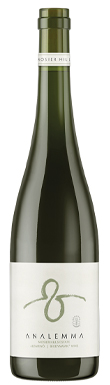

A wine that demonstrates the potential of this Spanish variety in Columbia Gorge. Biodynamically farmed fruit, fermented and then aged in neutral French oak. The...
2023
AnalemmaColumbia Gorge

Garzon, Single Vineyard Albariño, Maldonado, Uruguay, 2023
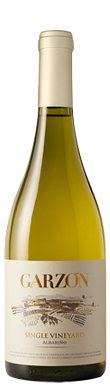
A merry Albariño with real weight. Asian pears, melon, perfumed white flowers, minerality and bristling brightness. With eight months on the lees in concrete tanks,...
2023
Garzon
Migliarina, Albariño, Stellenbosch, South Africa, 2023
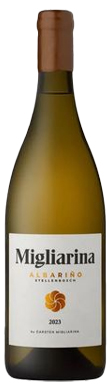
Boutique producer Carsten Migliarina works with grapes from top vineyards around the Western Cape. Showing impressive verve, this unfiltered bottling is made from some of...
2023
Migliarina
Botanica, Flower Girl Albariño, Stellenbosch, South Africa, 2024
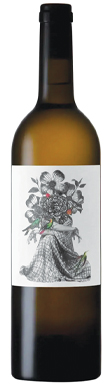
Crafted from organically farmed grapes, then fermented in a concrete egg with native yeasts, this is juicy and floral, with healthy wallops of lime and...
2024
Botanica
Decibel, Giunta Albariño, Hawke’s Bay, New Zealand, 2023
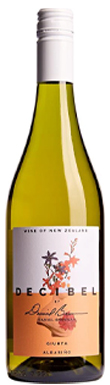
This single-vineyard Albariño is an unabashed party girl, with hot summer stone fruit, pops of lime, lime zest and grapefruit. About 70% spends eight months...
2023
Decibel
Imagery Estate, Albariño, Sonoma County, Sonoma Valley, California, USA, 2024
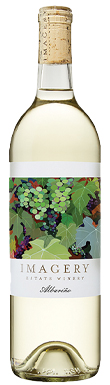
This Sonoma Albariño offers round citrus aromas. On the palate, it has rich, ripe nectarines and tangerines with a hint of pineapple, balanced with a...
2024
Imagery EstateSonoma County
Varnum Vintners, Wooden Shoe Vineyard Albariño, Willamette Valley, Oregon, USA, 2024
Incredibly juicy and fruit-forward, this Willamette Valley Albariño was fermented in neutral oak with native yeast, then spent four months in neutral French oak and...
2024
Varnum VintnersWillamette Valley
Montes, Outer Limits Albariño, Zapallar, Aconcagua Valley, Chile, 2024
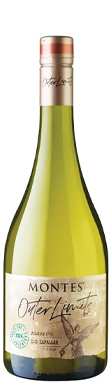
A delight to drink, with citrus aromas and notes of candied grapefruit, melon, salt, wet stones and flint. Silky and balanced, with a refreshing bitterness...
2024
MontesZapallar
Abacela, Albariño, Umpqua Valley, Oregon, USA, 2024
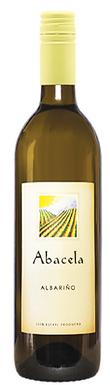
The Jones family brought Albariño to the Pacific Northwest and have since proven that the Umpqua Valley can host this Iberian native with grace. Fermented...
2024
AbacelaUmpqua Valley
Bouza, Albariño, Montevideo, Uruguay, 2024
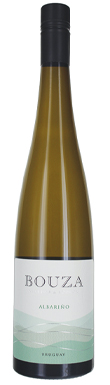
An Albariño pioneer in Uruguay, Bouza hand-picks the grapes for this wine and ferments primarily in steel tank with 10% in French oak. It gets...
2024
Bouza
MontGras, Handcrafted Rare Albariño, Leyda Valley, San Antonio, Chile, 2024
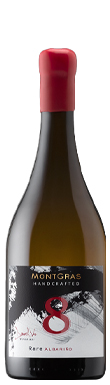
Brisk, refreshing and straightforward, this Albariño offers a touch of stone fruit richness, with rippling minerality and a lovely spine. The grapes of the Leyda...
2024
MontGrasLeyda Valley
Scheid Vineyards, Scheid-Arroyo Seco Albariño, Monterey County, Arroyo Seco, California, USA, 2024
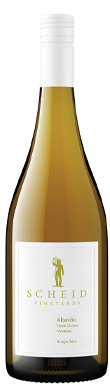
Clean and pure on the nose and palate, this Albariño is aged in stainless steel, which seals in the fruit’s mouthwatering brightness. This is an...
2024
Scheid VineyardsMonterey County
Springfield Estate, Albariño, Robertson, South Africa, 2024
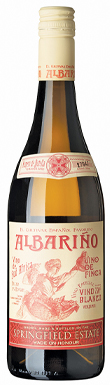
Founded by French Huguenots who arrived in South Africa from the Loire Valley in 1688, Springfield Estate was an early adopter of Albariño in South...
2024
Springfield Estate
Zuccardi, Poligonos San Pablo Albariño, Uco Valley, Mendoza, Argentina, 2023
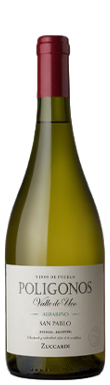
Zuccardi ferments and ages this Albariño in concrete vessels with native yeasts, which contributes to the texture and structure, as does the elevation of the...
2023
ZuccardiUco Valley
Grosgrain Vineyards, Philips Vineyard Albariño, Columbia Valley, Walla Walla Valley, Washington, USA, 2024

This wine is sourced from the Philips Vineyard in Walla Walla, then matured for five months on lees, predominantly in concrete egg with the remainder...
2024
Grosgrain VineyardsColumbia Valley
Idilico, Albariño, Yakima Valley, Washington, USA, 2023

A mouthwatering, citrus-led wine with balance and brightness. The stainless-steel fermentation and moderate four-month contact with lees delivers a light to medium body, with lemons,...
2023
IdilicoYakima Valley
Yealands Estate, Single Vineyard Albariño, Awatere Valley, Marlborough, New Zealand, 2023
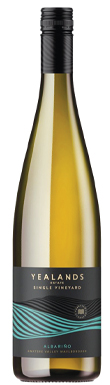
This is just the second vintage of winemaker Natalie Christensen's Albariño, sourced from the Seaview Vineyard in Awatere Valley, where strong off-shore winds help to...
2023
Yealands EstateAwatere Valley
Tangent, Albariño, Central Coast, Edna Valley, California, USA, 2023
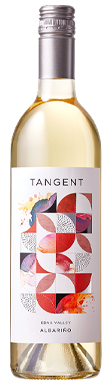
From Davenport Creek Vineyard in the Edna Valley, just 8km from the Pacific ocean, which offers one of the longest and coolest growing seasons in...
2023
TangentCentral Coast
