Anson: Exclusive Macán vertical – Rothschild & Vega Sicilia’s joint project
Jane Anson visits the Macán winery in La Rioja to taste a vertical of the estate's flagship wine from 2009-2016 and looks at the history of this unique partnership as well as how the wines have evolved over the years...
Get our daily fine wine reviews, latest wine ratings, news and travel guides delivered straight to your inbox.
You are now subscribed
Your newsletter sign-up was successful
Rothschild and Alvarez are hardly names that you want to announce to the estate agent if you’re looking to buy vines under the radar and for an honest market price.
So it’s not surprising that over the five years that Pablo Alvarez and Ariane de Rothschild were piecing together a full 170 different plots of old Tempranillo vines around Rioja Alavesa that their new neighbours believed they were dealing with a lawyer from Madrid.
Scroll down for Jane Anson’s Macán tasting notes and scores
The project was finally announced to the public in 2009, years after the two families had met over a dinner and begun to explore the possibility of working together, although the fist wines were not released to the market until 2013.
Partnership
Rioja was new for both families – Alvarez coming from Ribero del Duero where his family have owned the legendary Vega Sicilia since 1982, and Ariane and Benjamin de Rothschild coming from Bordeaux, where they own estates in Listrac and Montagne St Emilion – as well as an important share of Lafite Rothschild.
The Rothschilds had already launched a number of successful joint ventures; including the brilliant Rupert & Rothschild in South Africa. But this was the first partnership for Alvarez, making the stakes high for a man who has only ever been associated with excellence.
‘They knew there was a possibility of making something extremely special here with altitude and the terroir of Rioja,’ winemaker Gonzalo Iturriaga de Juan told me when I visited the estate in October 2019.
‘The criteria was that the vines had to have been planted at least in 1980 or earlier, to avoid the risk of buying lower quality over-productive clones that had been planted in Rioja in the 1980s and 1990s. They also had to be at an altitude of no less than 450m’.
Get our daily fine wine reviews, latest wine ratings, news and travel guides delivered straight to your inbox.
Today they have a full 92ha of vines, entirely owned by the estate, on the border of Rioja Alta and Rioja Alavesa, ranging in size from 100m2 to 7ha.
My trip to Macán during harvest time was to see the stunning new winery that opened in 2015, and I met back up with Iturriaga de Juan at Château Clarke earlier this month (the drive is around four hours door to door from Rioja to the Médoc) to taste through more wines, and to set another few pieces of the puzzle into place.
Tasting
The vertical shows the fascinating steps that are needed establish a new estate and get to understand its terroir.
‘Tempranillo in Rioja is not the same as that in Toro or Ribero del Duero,’ says Iturriaga de Juan, who joined in 2015 and makes wines both here and at Vega Sicilia.
‘Extraction times, oak use, each element needs to be thought through from the beginning’.
The early days saw 100% new oak, which has now been reduced, and larger sized oak casks introduced. Things were a little uneven in the early years – my scores were 94, 91, 95, 91, 90 for the first five wines – showing vintage impact, and also their learning process.
But the desire to do things differently has been unchanged since the outset.
Macan doesn’t follow the usual Rioja system of Reserva and Gran Reserva and instead has a more Bordelais style of first wine and second wine, called Macan Classico.
And you feel the touch of Alvarez at every point – his obsessive pursuit of quality in the cellar for one, and vineyard decisions such as massal selection propagation from their oldest vines for any replanting.
The more recent vintages have far more consistency, and show just how close they are coming to making a project truly worth following.
See Jane Anson’s Macán tasting notes and scores
You may also like
Anson: Do ungrafted vines change the taste of wine?Remembering Harold Olmo: The ‘Indiana Jones of viticulture’Twelve top Rioja wines from Haro Station District – masterclass
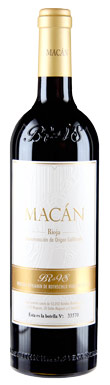
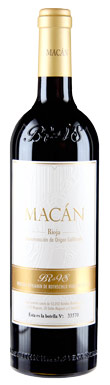
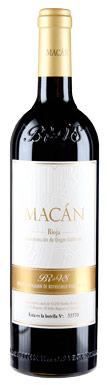
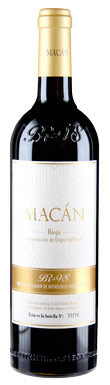
Benjamin de Rothschild & Vega Sicilia, Macán, Rioja, Northern Spain, Spain, 2009

This first vintage of Macán is now 11 years old, and tasting sweet, smoky, with touches of chipotle sauce alongside clear dark cherry fruit aromatics. The slightly dusty finish is the only thing that betrays the level of the new oak that was used at the time (100% for the first few years, and partly malolactic fermentation in barrel, to further pump up the gourmet richness). It is now integrated and soft, something that wasn't quite true even two years ago, and has retained its plump feel while showing lift and definition on the finish. No question that it is ready to enjoy already, but no need to rush. When you return to it after half an hour in the glass, the smoky tar and coffee ben edge is more evident, and it is clear that more recent vintages have a slightly more hands off approach but this is delicious and has aged extremely well.
2009
Northern SpainSpain
Benjamin de Rothschild & Vega SiciliaRioja
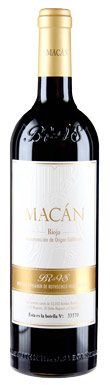
Benjamin de Rothschild & Vega Sicilia, Macán, Rioja, Northern Spain, Spain, 2010

2010 was a very hot vintage in Rioja with small yields of around 25hl/ha. This gives it a concentration that seems at this distance more overdone than the 2009, and the smoked vanilla notes from the oak are a little too evident even at ten years on, giving a drying edge to the finish. But along the way we are treated to beautiful depth of damson and cherry fruits, dark spice and dried herb complexity. In another year or two it will soften as the 2009 has done, but oak integration just not yet fully there. 100% new oak.
2010
Northern SpainSpain
Benjamin de Rothschild & Vega SiciliaRioja
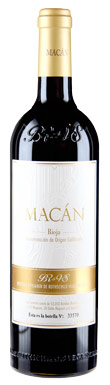
Benjamin de Rothschild & Vega Sicilia, Macán, Rioja, Northern Spain, Spain, 2011

Wonderfully inky depths to the colour and also the palate, with a silky texture and underlying floral notes that sit alongside the power to add an injection of freshness and balance. This has the generosity of Rioja, the sexy smoky edge to the black cherry fruit that adds approachability to the best wines, but also displays a real sense of restraint and subtle power. Still young, this again has high spice and concentrated flavours that will soften over the next few years. This gets even better after half an hour in the glass, strongly recommend this wine if you want to understand the potential of Macán. 80% new oak, plus barrels that had been less highly toasted.
2011
Northern SpainSpain
Benjamin de Rothschild & Vega SiciliaRioja
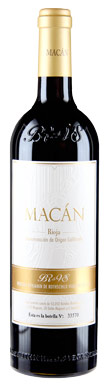
Benjamin de Rothschild & Vega Sicilia, Macán, Rioja, Northern Spain, Spain, 2012

Quite different in feel, this was a warm but not excessive vintage in Rioja, and the wines did not achieve the same ripeness as in 2011, 2010 and 2009. Displaying a striking balsamic edging to the nose, alongside grilled almond that gives the oak barrel signpost, but not overpoweringly so. On the palate comes caramelised toffee and black chocolate, against spiced cinnamon notes. Not as velvety smooth as the 2011, but this has elegance and a juiciness to the finish which is extremely enjoyable. Tannins are clear, slightly rugged through the mid palate, suggesting again that these are wines that benefit from a long ageing. You can drink this now, but it will improve over the next three to four years, although may not reach the same levels of pleasure as the 2009 and 2011. 20% malo in barrel, 75% new oak.
2012
Northern SpainSpain
Benjamin de Rothschild & Vega SiciliaRioja
Benjamin de Rothschild & Vega Sicilia, Macán, Rioja, Northern Spain, Spain, 2013

Complicated vintage with a long vegetative cycle, where they performed a severe green harvest to ensure ripeness. Unlike many in Rioja, they were 75% harvested before the final rains arrived, which gave them a little more wine to play with in the cellar. Caramel comes through strongly on the nose, while on the palate this is silky and well balanced. A less powerful and concentrated vintage, but there are tannins here and the wine has form and shape, and stretches out. A gentler version of Macán but still recognisable, with a black chocolate edge. This is a skilful showing in a difficult year. 20% malo in barrel, 75% new oak,
2013
Northern SpainSpain
Benjamin de Rothschild & Vega SiciliaRioja
Benjamin de Rothschild & Vega Sicilia, Macán, Rioja, Northern Spain, Spain, 2014

This is still young, but already displaying gorgeous balance and clearly feels like you have all the necessary parts and can relax while waiting for it to come around. Not the easiest vintage either, mainly because of nerves after the rot issues of 2013, but they have achieved full ripeness and the oak is burnished and smoked, providing just one more layer in what is already a layered and complex wine, and giving it the confidence and sexiness of a young Rioja.
2014
Northern SpainSpain
Benjamin de Rothschild & Vega SiciliaRioja
Benjamin de Rothschild & Vega Sicilia, Macán, Rioja, Northern Spain, Spain, 2015

The first vintage to be vinified partly in new winery, and also the first vintage to be made entirely by winemaker Gonzalo Iturriaga de Juan, replacing Xavier Ausàs (at Vega Sicilia also). And just to continue with the changes, this was also the point at which they introduced large 4,000l wooden vats for the final three months of ageing, after 12 months in 225l barrels. The idea was to work on the texture while minimising the oak influence. In terms of vintage, this is similar to the 2010, so a rich style of wine, concentrated with white pepper spice, but also juicy and gourmet and extremely enjoyable. This is too young right now, still needs a few years in bottle but it is a great wine with energy and freshness, and brilliantly showcases what Macán is becoming.
2015
Northern SpainSpain
Benjamin de Rothschild & Vega SiciliaRioja
Benjamin de Rothschild & Vega Sicilia, Macán, Rioja, Northern Spain, Spain, 2016

Okay, now they're really starting to turn out the hits with regularity. Feels poised and confident, while pointing down the barrel of black chocolate, black cherry, olive paste, liquorice and rosemary spice. I love where this wine is going, but it's going to take its own sweet time to get there. First vintage entirely in the new winery, and the first year where they stopped the malolactic in barrel, concentrating just on the 225l then the 4,000l vats. They also began incorporating the press wine at an earlier stage to give it more time to integrate (only the first press is ever used). Not easy for a new estate to stand out even with the Rothschild and Alvarez names attached, but this is starting to feel like an extremely serious wine to get to know.
2016
Northern SpainSpain
Benjamin de Rothschild & Vega SiciliaRioja
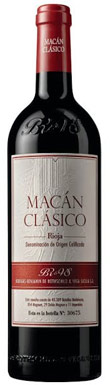
Benjamin de Rothschild & Vega Sicilia, Macán Clásico, Rioja, Northern Spain, Spain, 2016

Released one year earlier than the Macán, this is full of bright and pure red fruits. I tasted this first at the winery, then again at my house, and it's a brilliant wine for drinking now - already open and welcoming, with a touch of smoked cherry and cinnamon. Cool temperature fermentation to keep the focus on the fruits, with just 5% American oak ensuring the kiss of sweetness. This 2nd wine has been made since the first vintage, helping Macán to stand out from its peers in the region.
2016
Northern SpainSpain
Benjamin de Rothschild & Vega SiciliaRioja
Benjamin de Rothschild & Vega Sicilia, Macán Blanc, Rioja, Northern Spain, Spain, 2016
This is not for sale, with just three barrels made, so apologies in advance for torturing you with a tasting note. But it's fascinating to taste a 100% old vine Viura (planted on the tops of the hills in the cooler spots). There is a slight straw edge to the attack but it is quickly overtaken by a stony granite edge that is stunning. Rich citrus run through with honeysuckle. A touch of skin contact helps deepen the colour and structure. 15% new oak with lees stirring.
2016
Northern SpainSpain
Benjamin de Rothschild & Vega SiciliaRioja
Jane Anson was Decanter’s Bordeaux correspondent until 2021 and has lived in the region since 2003. She writes a monthly wine column for Hong Kong’s South China Morning Post, and is the author of Bordeaux Legends: The 1855 First Growth Wines (also published in French as Elixirs). In addition, she has contributed to the Michelin guide to the Wine Regions of France and was the Bordeaux and Southwest France author of The Wine Opus and 1000 Great Wines That Won’t Cost a Fortune. An accredited wine teacher at the Bordeaux École du Vin, Anson holds a masters in publishing from University College London, and a tasting diploma from the Bordeaux faculty of oenology.
Roederer awards 2016: International Feature Writer of the Year