
Behind the 14 new Cru Bourgeois Exceptionnel estates
It’s been a bumpy ride, but the latest official redrawing of Bordeaux’s oft-misunderstood ranking of the cru bourgeois producers was published in February this year. Jane Anson explains what lies behind the listings, and profiles the 14 highest-ranked and their 2016 vintage wines...


For a word that’s become associated with the establishment, cru ‘bourgeois’ wines have pretty revolutionary origins. The exact date of arrival is not certain – some say they date back to the 13th century when Bordeaux was a duchy of the English crown. Others to the 15th century, when French laws were relaxed to allow the best land not to be the sole preserve of the church or of titled aristocrats.
Scroll down for Jane Anson’s tasting notes and scores for the 14 new Crus Bourgeois Exceptionnels
Their real rise, though, clearly came after the French Revolution itself, when noble lands were broken up. These estates, owned by the working ‘bourgeois’, gained traction and grew in number. Their more recent history has been similarly turbulent; first resurrected, then challenged and overturned, then reinvented as a mark of quality. And, as of February 2020, the latest chapter of the Crus Bourgeois du Médoc has arrived – back to being an official classification with three quality tiers, the intention being to provide clearer signposting for consumers.
After a little more than a decade of being a yearly ‘stamp of quality’ that essentially judged the characteristics of individual vintages, cru bourgeois has returned to being an official classification that rewards châteaux across a set period of five years. The hope is that it will give lasting power and sustainability to a category of wines that are in many ways the backbone of the entire Bordeaux system – great quality, reasonably priced claret.
New impetus
A few corollaries before getting started. The new list doesn’t include any of the nine estates that were named ‘Exceptional’ back in the reconstituted but subsequently revoked classification of 2003. That means there’s no Château Chasse-Spleen, no Haut-Marbuzet or Labégorce Zédé, no Ormes de Pez or de Pez, no Phélan Ségur, Potensac, Poujeaux or Siran.
‘We’re not going to pretend that we aren’t missing some names that we would like,’ said Olivier Cuvelier, president of the Alliance des Crus Bourgeois du Médoc, as the time of the launch of the new classification in February this year. ‘It is now up to us to prove its worth. We hope to see them with us in 2025.’
What there is instead, with the 2020 ranking, is a full 249 châteaux, comprising 14 crus bourgeois exceptionnels, 56 crus bourgeois supérieurs and 179 crus bourgeois. This will hold across the Bordeaux vintages of 2018, 2019, 2020, 2021 and 2022.
It’s early days – Covid-19 lockdown coming along just a few weeks after the official launch in February means that it’s difficult at this stage to judge exactly how the market will react – but it’s clear that any new system needs a way to connect with its audience. If the new cru bourgeois exceptionnel wines deliver, they highlight the potential of the entire ranking. On this tasting, the results are mixed.
Positive signs
The new ranking – which was based on blind tastings of any five vintages of the producer’s choice between 2008-2016 – is intended to provide reassurance to drinkers looking for quality and value in the Médoc. It is also intended to be an answer to a real and pressing issue; a single-level cru bourgeois classification was bringing prices down for everyone, and so causing very real struggles for properties which were investing heavily in the quality of their wine and yet not being rewarded for it by the market.
It’s one of the problems of the Bordeaux system. The best cru bourgeois estates have levels of investment in both viticulture and vinification that differ very little, if at all, from those at neighbouring 1855-classified châteaux. And yet the prices they can hope to receive differ widely.
The cru bourgeois châteaux represent 31% of Médoc production, and cover every appellation except St-Julien. There is a solitary Pauillac in the form of Château Plantey. And because cru bourgeois is a name that has been in use since at least the 15th century, there is true consumer recognition and trust around it in France and most traditional markets.
If all goes well, the new clarity of signposting towards the best estates could really bring ‘excitement and a sense of direction to all the châteaux in the ranking’, said Cuvelier, whose family owns newly ranked Exceptionnel Château Le Crock.
Work in progress
The estates named Exceptionnel in 2020 all deserve their ranking, particularly in my opinion Belle-Vue, Cambon la Pelouse, Le Boscq and Lilian Ladouys; and there are several Supérieurs – Fourcas-Borie, La Tour de Mons and Sérilhan among them – that I would have been happy to see at the higher level.
But you don’t need me to tell you what might go wrong. In February I heard a few growlings, specifically around the fact that wine tourism (within a marketing and promotion category) was given more weight than expected among the qualification criteria. There have been concerns, too, over the relatively low tasting scores required for the higher levels: 26 points out of 40 for Exceptionnel and 14 out of 40 for Supérieur.
This suggests that not all lessons have been learned from previous arguments – but then, a process like this will always generate criticism.
Before the February announcement, châteaux had already had access to a ‘dispute committee’, where they could raise complaints if they didn’t receive the ranking they wanted. They also had the chance to withdraw rather than live with a level of classification that they didn’t like. That seems a smart move on behalf of the organisers, as does the five-yearly renewal for the ranking – soon enough, it can be hoped, to dissuade lawsuits.
The new Cru Bourgeois Exceptionnel Châteaux
The 14 cru bourgeois exceptionnel producers all submitted their 2016 vintage for assessment as part of the blind tastings to qualify for the new 2020 ranking. Jane Anson revisited the wines at home in Bordeaux, and here provides up-to-date notes and scores, along with the story behind each producer
Château d’Agassac
Haut-Médoc
Agassac has long stood out for its beautiful 13th-century château – a listed historical monument with turrets, moat and bridge. Owned by insurance company Groupama since 1997, recent years have seen an increasing focus not just on imaginative wine tourism experiences but on getting seriously to grips with the potential of the wine – replanting up to 45% of the 45ha vineyard and redoing the cellars and technical spaces.
Technical director Guilain Latournerie, working alongside managing director Jean-Luc Zell, has carefully split the vineyard into ever- more precise plots, and bottled accordingly – so you have not only Agassac and Château Pomiès-Agassac split according to terroir, but further subdivided with a second wine L’Esprit d’Agassac, ‘quirky’ Merlot-based L’Agassant, and limited-edition Précision d’Agassac (only made in the best vintages and only sold at the cellar door, which is extremely unusual in Bordeaux). The vines right now are planted to 50% Merlot, 47% Cabernet Sauvignon and 3% Cabernet Franc, with the intention to further increase Cabernet Sauvignon (the main wine already has up to 80% of the grape in some years as they look to ensure its Médoc typicity). Another nice touch: all wooden cases for the wine come from certified sustainable forests. Stéphane Derenoncourt consults.
Château Arnauld
Haut-Médoc
This for me is one of the leading Exceptionnels in the new listing, producing great wines with real consistency. It is helped by its location, just on the other side of the line that splits the Margaux appellation from AP Haut-Médoc. Bought by AGF Assurances Générales de France in 2007 from the Theil brothers of Château Poujeaux, it is headed up by Franck Bijon, with Hubert de Boüard as consultant since 2016.
They’ve smartened things up externally over the past few years, with wrought-iron gates and the château’s name emblazoned across limestone walls. But the real work has been happening behind the scenes – not least in the vines, where the footprint has increased from 5ha back in 2007 to almost 18ha today. The additional vines went straight into the first wine, such was the quality, and the grape mix now stands at 36% Cabernet Sauvignon, 55% Merlot and 9% Petit Verdot, all at a high density of 10,000 vines per hectare.
As of 2019, the property is worked entirely organically. The wine has noticeably deepened in structure and intensity since 2015, with supple black fruit flavours and touches of chocolate and menthol.

Château Belle-Vue
Haut-Médoc
To understand why this was a shoo-in for cru bourgeois exceptionnel, you have to look at the organisation of the three estates that fall under the same Héritiers Vincent Mulliez umbrella (bought by the late Vincent Mulliez in 2004, now run by his wife and children). Belle-Vue, Bolaire and de Gironville are close to each other in the southern Haut-Médoc commune of Macau but treated separately according to their soils.
The 15ha Belle-Vue is on fine, deep gravel that gives complexity and depth, and produces great wines year after year. The talented Vincent Bache-Gabrielsen, of Château Pédesclaux in Pauillac, was technical director from 2004-2011, then consultant until 2019, and leaves them in an extremely strong position. Plantings in 2019 were 40% Merlot, 34% Cabernet Sauvignon, 24% Petit Verdot, 1% Cabernet Franc and 1% Carmenère – and they are looking to introduce Malbec into the vineyards to complete the full range of classic Bordeaux varieties.
Château Cambon la Pelouse
Haut-Médoc
Not only has this just become a cru bourgeois exceptionnel, but it has also had one of the most high-profile changes of ownership in Bordeaux. As of August 2019, the 39ha property became the first in the region to be acquired by Australian behemoth Treasury Wine Estates (owners of Penfolds, Rosemount, Wolf Blass, Beaulieu Vineyards, Beringer and more). But whatever investments await under new director Sébastien Long, the work that has led to its promotion was carried out by Jean-Pierre Marie, who bought the estate in 1996, and who ensured it became one of the most consistent and high-quality Haut-Médocs. Marie was responsible for, among other things, replanting 30ha of vines and upping the proportion of Cabernet Sauvignon to make the most of the gravel-dominant soils. It tends to be well structured and tannic in its youth, needing a good four or five years in bottle to soften. Plantings stand at 50% Cabernet Sauvignon, 46% Merlot and 4% Petit Verdot.
Château Charmail
Haut-Médoc
Bernard d’Halluin, a businessman from northern France in the Pas-de-Calais region, has been owner here since 2008. Sensibly, he kept the previous owner Olivier Sèze on board as director for the first five years, ensuring the pairing of d’Halluin’s ability to invest and think big with Sèze’s experience and knowledge of the land – a combination that has been rewarded with this promotion. Sèze has now stepped back for new technical director Sébastien Pineau, and the team continue to impress with their detail-oriented work.
This is prime-location land, 27.5ha on the banks of the Gironde estuary (with its softening influence, no frost here) in the St-Seurin-de-Cadourne commune just to the north of St-Estèphe, and right next door to the iconic Château Sociando-Mallet. Planted to 48% Merlot, 30% Cabernet Sauvignon, 20% Cabernet Franc, 2% Petit Verdot, bottled unfiltered and unfined. This was also one of the first estates in the Médoc to practise precision vineyard techniques such as leaf-thinning and green harvesting, as well as moving to gravity-feed in the winery, getting rid of all pumps for moving the wine.
Château de Malleret
Haut-Médoc
This is a huge (350ha) and stunning estate set at the scenic opening stretches of the Route des Châteaux at Ludon-Médoc. De Malleret has one of Europe’s most high-tech equine spas and a farm for breeding dressage horses. The approach to wine is equally ambitious, headed up by estate director Paul Bordes since 2013 but owned by the Clossmann family since 1860. Stéphane Derenoncourt has consulted since 2014, helping the move towards ever- greener viticulture, with measures such as growing cereals between rows to encourage drainage.
New cellars were completed two years ago, with a mix of cement and oak vats and geothermal air-conditioning to reduce energy use. Out in the 60ha vineyards, largely gravel, planting density has been upped with the aim of getting to 10,000v/ha for the 65% Cabernet Sauvignon and 35% Merlot vines.
Château du Taillan
Haut-Médoc
Du Taillan is one of the first properties you come to when heading into the Médoc countryside from the city of Bordeaux, and it’s where you’ll find the Cruse family, in place since 1896. The property is run today by Armelle Cruse, of the fourth generation and one of five sisters. Women dominate this estate both in terms of the ownership and in the vineyard and cellar – most notably with technical director Joséphine Duffau-Lagarrosse, whose father Vincent owns the brilliant Château Beauséjour Héritiers Duffau-Lagarrosse estate in St-Emilion.
Duffau-Lagarrosse is an oenologist and engineer, who also has a Masters in commerce from Dijon and has worked in New Zealand, Mexico and California, followed by a stint with Derenoncourt Consulting, after which she joined Château du Taillan in 2016. The 32ha vineyard, which is partly clay and partly limestone, is planted to 70% Merlot, 20% Cabernet Sauvignon and 10% Cabernet Franc, with the wine made in cellars that are a listed historical monument.

Château Malescasse
Haut-Médoc
Owned by Philippe Austruy since 2012, this is a 40ha estate with one of the best locations in the Haut-Médoc, just off the D2 ‘Route des Châteaux’ road in the commune of Lamarque, south of St-Julien, on a gravel-dominant series of outcrops. To ensure high quality for the first wine (which comes from specific plots), yields tend to be kept to about 35hl/ha, compared to 45hl/ha for the other estate wines, Le Moulin Rose de Malescasse and La Closerie de Malescasse.
The team is impressive: technical director Bertrand Chemin was previously at Cantemerle and Gruaud-Larose, arriving here in the mid-2000s; vineyard manager Nicolas Dubedout was at Château Latour for three years before joining in 2014. Malescasse has had serious owners over the years, including Guy and Alfred Tesseron from Pontet-Canet from 1970 to 1992, but it is only since Austruy arrived that it feels to have consistently upped.
Recent years have seen soil studies that have led to the replanting of grapes and rootstocks that better reflect the soils. The grape mix stands at 45% Cabernet Sauvignon, 45% Merlot and 10% Petit Verdot. The determination to keep quality at its highest is also clear – this was one of the properties that made no wine at all in 2013 because they felt the quality was simply not good enough. Stéphane Derenoncourt is consultant, since 2012.
Château Lestage
Listrac-Médoc
This château lays claim to the highest point of the Médoc, with the 43m ‘roof of the Médoc’ plot called Puy de Menjon. The name Lestage comes from the family who owned the land in the 15th century. The gorgeous Napoleon III château was built in 1870, but it didn’t take its current shape until 1963 when Marcel Chanfreau, then a winemaker in Algeria, returned to France with his family and installed them in Listrac. His grandchildren Guillaume and Loïc Chanfreau are in charge today, with Loïc running the commercial side and Guillaume the technical side, and their cousin Marion in charge of wine tourism.
A new cellar opened at Lestage in 2016, with stainless steel trionic vats, all extremely sleek with black walls and polished concrete grey floors. The 45ha plantings are at 62% Merlot, 37% Cabernet Sauvignon, 1% Petit Verdot, with plans to slightly increase the Petit Verdot and Merlot and lower the Cabernet Sauvignon by 2022, reflecting the clay-limestone soils. The same family owns Château Fonréaud – a wine that I often find a preference for in many vintages, although one that has not been made cru bourgeois exceptionnel. Recent soil studies have led to greater plot-by-plot viticulture, grass is grown in between the rows and no chemical herbicides or pesticides are used. Antoine Médeville is the consultant since 1998.
Château d’Arsac
Margaux
The man clearly responsible for the rise of this property is Philippe Raoux. He bought d’Arsac in 1986 and set about restoring and enlarging what was then just 4ha of vines on an estate that dated back to the 12th century, with an abandoned château building that took 13 years to be made habitable. He also began lobbying to get d’Arsac, then a Haut-Médoc, included in AP Margaux. It took until 2007 for a 16ha plot to be given the right, meaning that today just over half of the estate is in Haut- Médoc and the rest (54ha) in Margaux – and it is the Margaux part that has been recognised as Exceptionnel in the 2020 ranking.
Today run by Raoux with his son Pierre, this is well worth a visit, as its gardens are pretty much only rivalled by Château Smith Haut Lafitte in Pessac-Léognan for sculptures and other art installations. The wine is a consistently impressive blend of 60% Cabernet Sauvignon to 40% Merlot, on black sand soils.

Château Paveil de Luze
Margaux
One of the oldest estates in the Médoc, and one that belonged to former president of the Alliance des Crus Bourgeois, the late Frédéric de Luze. It has been in the de Luze family since 1862 and is now run by Marguerite and Catherine, Frédéric’s sisters and the seventh generation of the family here.
Located in the commune of Soussans in the northern sector of Margaux, on deep gravel-dominant soils, it is a gorgeous place surrounded by woods and a lake. Stéphane Derenoncourt has been consultant since 2011, overseeing a 32ha vineyard planted to 70% Cabernet Sauvignon and 30% Merlot. Recent years have seen increasingly tailored plot work and soil studies, leading to, among other things, the Cabernet Franc being pulled out to focus on the grapes best suited to the location.
Château Le Boscq
St-Estèphe
A property that has reaped the benefit of slow and steady investment since the arrival in 1995 of Vignobles Dourthe – the vineyard arm of a Bordeaux négociant that has built a quality-focused portfolio. The property is found at 18m on a gravel outcrop over clay, overlooking the Gironde estuary, with a Château Calon Ségur plot on one side and a Sociando-Mallet one on the other. Director Patrick Jestin and estate director Frédéric Bonnaffous are serious about quality – there has been a gravity-fed cellar since 1997, and optical sorting was introduced in 2015.
The 18ha vineyard is planted to 56% Merlot, 35% Cabernet Sauvignon, 7% Petit Verdot and 2% Cabernet Franc, at a density of 9,250v/ha. There has been extensive replanting in the vineyard, and careful work to ensure the right rootstocks are in place, matching soil types and grape varieties. The percentage of Cabernet Sauvigon has also been raised, all harvesting switched to manual, and the best plots undergo integral vinification in barrel.
Château Le Crock
St-Estèphe
A brilliant estate, well worth knowing about, owned by the Cuvelier family of Château Léoville Poyferré in St-Julien, and another that I would unhesitatingly say deserves its title of cru bourgeois exceptionnel. The managing director is Sara Lecompte-Cuvelier, with Isabelle Davin oenologist and winemaker, and Michel Rolland consultant.
A cru bourgeois supérieur in the first 1932 ranking, located in the Marbuzet sector of St-Estèphe, with 32ha on gravel and clay. There’s always a good kick of black spice from Petit Verdot in the wine, from plantings of 45% Cabernet Sauvignon, 44% Merlot, 8% Petit Verdot, 3% Cabernet Franc. Vinification is in cement and stainless steel tanks, and as with Poyferré the blend takes place in the middle rather than at the beginning of ageing, usually after about six months in barrel.
Château Lilian Ladouys
St-Estèphe
Much improvement and enlargement over recent years at this property, its crowning as Exceptionnel the result of serious investment since the arrival of Jacky and Françoise Lorenzetti in 2007 – it was the first estate the family bought and is where they still base themselves when in Bordeaux, although they now have a number to choose from, including Chêteau Pédesclaux in Pauillac.
Now standing at 80ha in all, the estate has grown in size since their arrival, most recently with the addition of vineyards from Châteaux Tour de Pez and Clauzet. Emmanuel Cruse of Château d’Issan is managing director, working alongside Vincent Bache-Gabrielsen as technical director and Eric Boissenot as consultant. It is set on the Cos plateau, with deep gravels over a limestone subsoil, planted at 50% Merlot, 45% Cabernet Sauvignon, 4% Petit Verdot and 1% Cabernet Franc.
See Jane Anson’s tasting notes and scores for the 14 new Crus Bourgeois Exceptionnels
You may also like
Best Cru Bourgeois 2019 wines tasted en primeurTaking exciting new directions: 10 Bordeaux producers to watchBordeaux first growths: How the 2000 vintage tastes nowTasting 20 years of Château Haut-Bailly: 1998-2018
Château Charmail, Haut-Médoc, Bordeaux, France, 2016
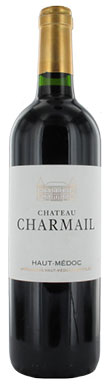

Tons of personality and concentration, delivering on 2016 expectations. Cassis, chocolate, slate, clear oak toasting well handled. One that shows the value at this level...
2016
Château CharmailHaut-Médoc

Château Le Crock, St-Estèphe, Bordeaux, France, 2016
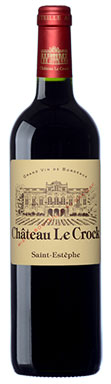
Clearly standing out in this line-up, an impressive, well-crafted wine with great tannic hold; a wine you would be thrilled to own. Cassis, bilberry, blackberry,...
2016
Château Le CrockSt-Estèphe
Château Arnauld, Haut-Médoc, Bordeaux, France, 2016
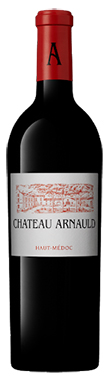
On this showing, Arnauld truly deserves its Exceptionnel status. Firm tannins, austere but with sappy black fruits beneath, tons of personality and good persistency. An...
2016
Château ArnauldHaut-Médoc
Château Belle-Vue, Haut-Médoc, Bordeaux, France, 2016
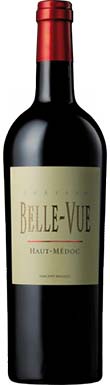
Clear austerity here; this is a wine that you would be extremely happy to own because it has persistent, sappy black-fruit flavours with a mouthwatering...
2016
Château Belle-VueHaut-Médoc
Château Malescasse, Haut-Médoc, Bordeaux, France, 2016
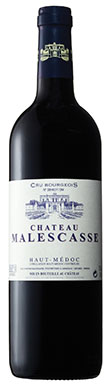
A broad-shouldered Haut-Médoc that feels true to the vintage, fleshed out with cassis and blackberry fruits and confident tannins, traces of heat through the mid-palate...
2016
Château MalescasseHaut-Médoc
Château Cambon la Pelouse, Haut-Médoc, Bordeaux, France, 2016
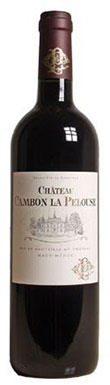
Closed right now, a good sign that this has the structure for ageing. This is a serious wine with spiced cassis and blackberry fruit, fresh...
2016
Château Cambon la PelouseHaut-Médoc
Château du Taillan, Haut-Médoc, Bordeaux, France, 2016
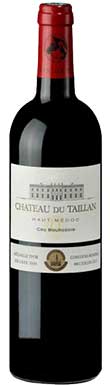
An excellent wine. The taste of this tells you you're getting real Bordeaux 2016 in terms of body and structure, along with enjoyable cassis fruits...
2016
Château du TaillanHaut-Médoc
Château d’Arsac, Margaux, Bordeaux, France, 2016
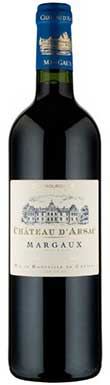
A lighter-framed Margaux with the emphasis on floral notes and raspberry fruits. Good quality, enjoyable, no need to wait before cracking this open, but it’s...
2016
Château d’ArsacMargaux
Château Le Boscq, St-Estèphe, Bordeaux, France, 2016
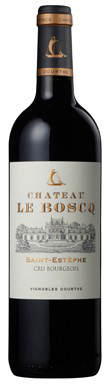
This is an exceptional vintage for this property, owned by Dourthe Vignobles, who have produced a wine that is showing exceptionally well. It has extremely...
2016
Château Le BoscqSt-Estèphe
Château de Malleret, Haut-Médoc, Bordeaux, France, 2016
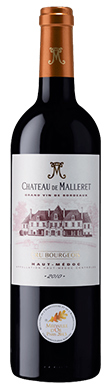
Touch of reduction at first on the nose, clear spice, concentrated on the attack, although softens considerably through the palate. Takes time to open, has...
2016
Château de MalleretHaut-Médoc
Château Fonréaud, Listrac, Bordeaux, France, 2016
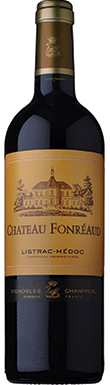
This is from the same stable as Château Lestage, but not a Cru Bourgeois Exceptionnel. It shows firm tannins and sappy black fruits with a...
2016
Château FonréaudListrac
Château Paveil de Luze, Margaux, Cru Bourgeois Exceptionnel, Bordeaux, France, 2016
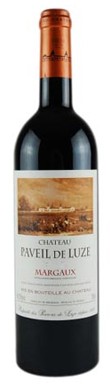
Red cherry and raspberry brightness, with tannic finesse even if a touch austere on the finish. I like the iodine finish and although this lacks...
2016
Château Paveil de LuzeMargaux
Château d'Agassac, Haut-Médoc, Bordeaux, France, 2016
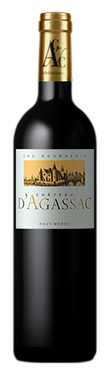
Subdued on the nose at first, unrolls to show fresh acidities balanced by gentle tannins, buttressing soft red cherry and raspberry fruits. Unfussy and open...
2016
Château d'AgassacHaut-Médoc
Château Lestage, Listrac, Bordeaux, France, 2016
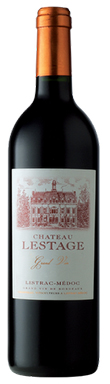
The acidity is marked, even for a high-acidity year like 2016, but balanced by bramble fruits, soft leather and black truffle notes. More reminiscent of...
2016
Château LestageListrac
