
Bierzo reborn: 10 of the best from this revitalised region
After decades of relative obscurity, Bierzo, at the northwestern edge of Castilla y León, is emerging as a source of some of Spain's most in-demand wines.


Kinshasa, Zaire, 1974. Undisputed heavyweight champion George Foreman takes on Muhammad Ali, a boxer with an impressive pedigree but who is now on the comeback trail.
Physically intimidating, with unrivalled punching power, Foreman is the clear favourite but Ali, dancing, ducking and dazzling the champion, surprises the world, winning by knockout in the eighth round.
Worry not, you’re still reading Decanter, not Sports Illustrated – but let’s draw a parallel. Bierzo has a millennia-long history of wine production, but the region was somewhat forgotten for much of the 20th century.
Then, in the 1990s, the development of new projects and the arrival of new winemakers led to a resurgence and now, Bierzo producers are making some of Spain’s best wines.
Is this small region – in a quiet corner of Spain, far from major cities – ready to challenge its heavyweight counterparts among some of the world’s most famous wine regions?
Scroll down to see notes and scores for 10 Bierzo wines that hit the heights
Bierzo’s wine journey

Like great swathes of Spain, Bierzo’s vinous history can be traced back to the Romans who came looking for gold, bringing vines with them. Cistercian monks followed in the ninth century, expanding the vineyard area of Bierzo and most of northern Spain.
With the important markets of Galicia and Asturias on the doorstep, Bierzo’s wines achieved a certain fame and economic success.
In the late 19th century, phylloxera struck, wiping out vineyards and resulting in several decades of grafting and replanting, which saw Bierzo’s vineyards begin to flourish again by the early 20th century.
The subsequent boom in cooperativism in the 1960s put many of the region’s vineyards to work; it could be argued that cooperatives saved much of the viticultural heritage of Bierzo.
Around this time, family growers such as Peique and Merayo – both well-known producers of outstanding wines today – began to carve out the future of the region, paving the way for the creation of the Denominación de Origen (DO) in 1989.
Get to know Bierzo
Bierzo is located in northwestern Spain in the province of León, part of the larger autonomous community of Castilla y León, and borders Galicia to its west and Asturias to its north.
Its 2,395ha extend across mountains, valleys and plains, with the southern areas generally flatter than the north; overall, elevations range from about 450m to 800m.
Bierzo is dominated by smallholdings, with 1,030 growers and just 74 wineries. Red wine dominates, with some 70% of the region planted to Mencía; there are also tiny quantities of Garnacha Tintorera, Estaladiña and Merenzao.
The signature white variety is Godello, almost 17% of total plantings. Smaller amounts of Doña Blanca, Palomino and Malvasía are grown.

Revival and resurgence

Any discussion of Bierzo’s comeback must acknowledge the impact of celebrated Bierzo winemaker Raúl Pérez. Initially making wines at his family’s estate, Castro Ventosa, by the late 1990s and early 2000s, he was receiving international acclaim, particularly after the launch of his own label Ultreia, in 2003.
Pérez also mentored and advised many of the winemakers who are now making their own mark in the region.
Bierzo’s revival attracted producers from other parts of Spain. In 1999, Descendientes de J Palacios (DJP) made its first wine here. With a successful portfolio of wines from Rioja and Priorat, why did the Palacios family turn its attention to Bierzo?
‘Emotion,’ explains Ricardo Pérez Palacios, who runs DJP in partnership with his uncle Alvaro Palacios. ‘Even though memories fade, I am still moved by the magic of the wines that the slopes of Corullón [in southwest Bierzo] can produce,’ he adds.
From the late 1980s to the early 2000s, more, now well-known wineries were established: Luna Beberide, Bodegas Estefanía, Domino de Tares and Losada Vinos de Finca.
A wave of outsiders soon followed, including the Martín Códax brand Cuatro Pasos and Bodegas Pittacum, already established (in 1999) but purchased by the Terras Gauda group. Michelini i Mufatto arrived from Argentina; and Emilio Moro expanded from Ribera del Duero to create a Bierzo ‘home’ for its white wine.
A new generation are now leading the way: Veronica Ortega and Olga Verde, whose projects bear their own names; Silvia Marrao’s Banzao; Vinos Lof, with its minimal-intervention approach; and the younger generation taking charge at Encima Wines.
The investment potential of Bierzo
In December 2024, Spanish winery Vega Sicilia (in Ribera del Duero) topped the Power 100 rankings of fine wine marketplace Liv-ex for the first time. According to Liv-ex, ‘there are plenty of Spanish discoveries for the fine wine market to make’.
Sara Danese, a financial analyst and author of the Substack wine investment guide ‘In the Mood for Wine’, agrees that it’s time to look beyond the classics. ‘Bordeaux has completely alienated wine investors with en primeur pricing that, frankly, insults their intelligence,’ she maintains.
Danese acknowledges that UK collectors are still focused on traditional French regions and established winemakers, but she has seen a shift, with smaller merchants pushing interesting wines from other regions through well-curated offers.
Her tip for promoting new wines to investors? ‘Events showcasing wines more than 10 years old would make a huge difference. It’s one thing to talk about ageability; it’s another to prove it.’
While there aren’t many older wines from Bierzo currently to be found on the market, their ability to age should be a strong selling point for new collectors. As is the star power of some of the region’s producers.
Can Bierzo carve out a space in the fine-wine investment landscape? Ricardo Pérez Palacios, whose wines attract the highest prices in Bierzo, believes there’s a bright future. ‘The best and most diverse wines are being made all over the world,’ he says. ‘In this context, Bierzo has the characteristics to compete with these other regions.’
Old-vine heritage

The jewels in Bierzo’s viticultural crown are its old vines. Of the region’s 2,395ha of vineyards, more than 60% are old vines (defined as more than 35 years by OIV, the International Organisation of Vine and Wine), one of the highest concentrations of any recognised appellation in the world.
Around half of these are even older, with most planted between 1910 and 1950, in very small parcels (minifundios) split among a multitude of individual growers.
It was this heritage that drew winemaker Silvia Marrao from Madrid to the beautiful wilds of the Reserva de la Biosfera de los Ancares Leoneses in Bierzo’s north.
‘Bierzo has managed to preserve its heritage of old vineyards planted to native varieties, cared for by small growers over decades,’ she says.
She established her winery Banzao in San Pedro de Olleros for ‘its old vineyards, diversity of soils and altitude – and because the wines are faithful to their origin’.
It was this clearly defined sense of place that led a group of growers, led by Pérez Palacios and his uncle, to work with the Bierzo DO to implement, in 2017, a new Burgundy-style hierarchical classification system (see below).
In doing so, the DO simply ratified geographical designations that communicate the provenance of the grapes.
Adelino Pérez, president of the Bierzo DO, explains: ‘We didn’t impose this [on the wineries] – it was something that was already happening. Producers were making wines from grapes in specific areas, whether villages, parajes (lieux-dits) or single vineyards.’
There are more than 1,500 parajes spread across Bierzo, many carrying the local name used for decades by local growers. Pérez believes these designations are now highly valued by wine professionals.
‘It is a very significant leap forward and an acknowledgment of all the hard work over many years, which can now be recognised in the bottle,’ he says.
Bierzo classification
A new classification system was implemented in 2017. Wines from Bierzo can now be labelled according to a Burgundy-inspired geographical hierarchy
Vino de la DO Bierzo Wines produced from vineyards anywhere within the DO.
Vino de Villa Village wines, made using grapes from specific municipalities or districts. Maximum yields must be at least 20% lower than those specified for DO Bierzo wines.
Vino de Paraje Site-specific wines, made using grapes from a given paraje – a defined vineyard or lieu-dit. There are more than 1,500 parajes registered within the DO. Yields must be at least 25% lower than those for DO Bierzo wines.
Viña Clasificada Wines must come from the same parcel or from adjacent parcels within a paraje that has been classified as such for at least five years. The wines must be approved by a special tasting committee of the DO. Yields must be at least 30% lower than those for DO Bierzo wines.
Gran Viña Clasificada After five years as a Viña Clasificada, and following approval by the DO tasting committee, a wine can be labelled in this category. Yields must be 35% lower than those for DO Bierzo wines.

Bierzo’s bright future

Producers agree that the region’s singularity is key to its future success. Grower and winemaker José Antonio García is convinced of Bierzo’s capacity to produce outstanding wines. ‘Bierzo boasts a unique vineyard structure and soils that are capable of producing exceptional grapes,’ he says.
‘It has preserved one of the highest densities of old vineyards in the world. This alone makes the region unique, just like its wines.’
Having now made wine in the region for several decades, Pérez Palacios believes that Bierzo possesses all the characteristics of a great European appellation: ‘A grape variety (or grape varieties) well adapted to a place with a defined climate; history and a deeply rooted culture; and a human fabric that makes the region even greater, through hard work and knowledge.’
The president of the Bierzo DO has the last word. He believes that ‘Bierzo should be known for its indigenous varieties and for its wines of great quality’. There is no doubt that Bierzo is already producing some of the finest wines in Spain.
How far can winemakers take the region in the coming years? An incredible potential is ready to be tapped.
Willard’s pick: 10 of the best from Bierzo to try
Related articles
- Wines of the Year 2024: Spain & Portugal
- Spain for foodies: Where to eat and drink now
- Almudena Alberca MW: ‘A revolution is underway: Spain is at an exciting moment in its history’
Michelini i Mufatto, MA Doña Blanca, Bierzo, Castilla y Léon, Spain, 2022
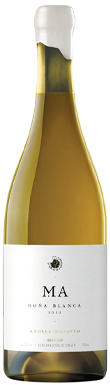

There’s a little bit of reduction on the nose, which slowly reveals white floral and lemon aromas, along with marked salinity. The wine was fermented...
2022
Michelini i MufattoBierzo

José Antonio Garcia, Viñas Viejas Godello, Bierzo, Castilla y Léon, Spain, 2023
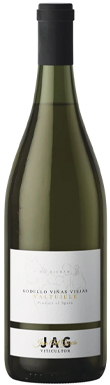
Pineapple and spring flowers are interwoven with fine oak. Metallic drive and energy on the palate. About a year in French barrels has somewhat softened...
2023
José Antonio GarciaBierzo
Descendientes de J Palacios, La Faraona, Vino de Paraje, Bierzo, Castilla y Léon, Spain, 2023
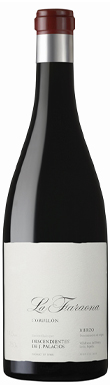
Forest aromas abound, with lavender, thyme, oregano and pretty notes of rose and wild summer berries. The wine’s core is steely and stony, with impressive...
2023
Descendientes de J PalaciosBierzo
Luna Beberide, Paixar Drogonte A Serra, Vino de Paraje, Bierzo, Castilla y Léon, Spain, 2022
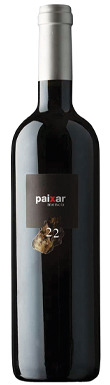
At once wild and finessed, the wine offers sanguine notes and profound minerality. Mint and thyme make for a fresh and herbal nose while the...
2022
Luna BeberideBierzo
Mengoba, Mencía de Espanillo, Bierzo, Castilla y Léon, Spain, 2020
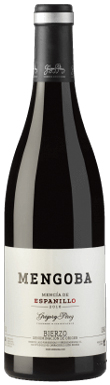
Intense mint, thyme and sundried tomato, as well as a little sour cherry, lead to a fresh and lively palate with a fantastic chalky lift....
2020
MengobaBierzo
Verónica Ortega, Cobrana,Vino de Villa, Bierzo, Castilla y Léon, Spain, 2021
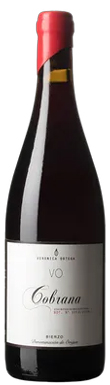
Aged partly in amphora, partly in barrel, it reveals exotic aromas of pomegranate and blood orange. The palate is textured, with chalky tannins. A village...
2021
Verónica OrtegaBierzo
Banzao, Almorelle, Vino de Paraje, Bierzo, Castilla y Léon, Spain, 2021
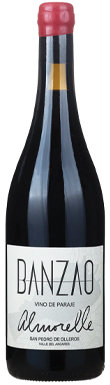
A little reduction on the nose opens up to reveal red cherry fruit and wild herbs, and a precise and elegant structure. Located in the...
2021
BanzaoBierzo
Cantariña, 7 A Freita, Bierzo, Castilla y Léon, Spain, 2022
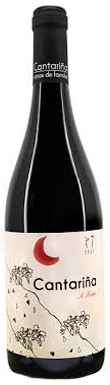
On the nose, delicate wild strawberry and red cherry fruits combine with mountain herbs, while the palate is stony, with a metallic drive. A wine...
2022
CantariñaBierzo
Castro Ventosa, Valtuille Villegas, Vino de Paraje, Bierzo, Castilla y Léon, Spain, 2021
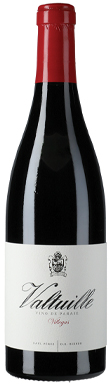
Velvety and voluptuous, this offers fantastic varietal and regional typicity. Red berry fruit and lavender are intertwined with plum and milk chocolate notes. Its silky...
2021
Castro VentosaBierzo
Estévez Bodegas y Viñedos, Versos de Valtuille La Vitoriana, Vino de Paraje, Bierzo, Castilla y Léon, Spain, 2021
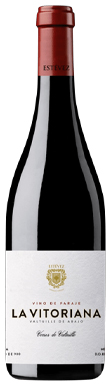
Displays a fresh Atlantic character, with a crunchy backbone and saline finish. Aromas are wild, with dried herbs, garrigue and a touch of orange zest,...
2021
Estévez Bodegas y ViñedosBierzo
