
Bodega Chacra: A New World meeting of redoubtable Old World minds
At Bodega Chacra, in the extreme terroir of Patagonian Argentina, two heirs to renowned European winemaking lineages are crafting a new paradigm for world-class Chardonnay.


In the rugged, windswept plains of Patagonia, where vineyards cling to the banks of the snaking Río Negro, an unlikely partnership has flourished.
Jean-Marc Roulot, a sixth-generation vigneron from Meursault in Burgundy, and Piero Incisa della Rocchetta, grandson of the visionary behind Tuscany’s legendary Sassicaia, came together in Argentina to craft world-class Chardonnay.
Scroll down to see notes and scores of five exquisite Bodega Chacra Chardonnays
While their family legacies precede them – the mastery of Burgundy whites passed down to Jean-Marc and Piero’s inheritance of Tuscan innovation – this partnership brings a surprising twist: a commitment to making some of the world’s finest Chardonnay in the uncharted terroir of southern Argentina.
They make a compelling duo. Piero is an extrovert, brimming with Italian charisma and charm, while Jean-Marc is thoughtful and introspective, his responses shaped by decades of careful observation as a renowned stage and screen actor.
Yet, their differences complement one another, united by a shared hunger for discovery and an unwavering pursuit of perfection.
The story of how these two wine-world titans found themselves in Patagonia is as captivating as the wines themselves.
Forging a new friendship
Piero’s and Jean-Marc’s paths first crossed in the early 2000s. At the time, Piero was living in New York, immersed in its vibrant wine scene.
Having befriended many of the top sommeliers, he often joined them on buying trips to Burgundy. By then, Jean-Marc had already solidified his reputation as one of Burgundy’s most celebrated vignerons.
After taking over Domaine Roulot in 1989 following his father’s untimely death, he transformed it into one of Meursault’s most prestigious estates, renowned for its pure, expressive Chardonnays.
Unsurprisingly, Roulot’s wines were high on the wishlists of US sommeliers, and it wasn’t long before Piero and Jean-Marc formed a bond.
‘We became friends because of our shared family wine heritage and, of course, the common language,’ recalls Piero, a polyglot fluent in four languages.
While Jean-Marc was deeply rooted in Burgundy’s storied vineyards, Piero was forging a very different path. Eschewing the familiar comforts of Tuscany, he ventured to Patagonia, where he acquired an abandoned estate in the Río Negro valley.
It was a daring move, reviving old Pinot Noir vines in one of the world’s most remote winemaking regions – a gamble that didn’t go unnoticed by Jean-Marc.
‘When I tasted Piero’s Pinot Noir from Patagonia, I could see he was doing the opposite of what I expected from a Pinot Noir from South America,’ says Jean-Marc. ‘I trusted his focus from the start.’

See Amanda Barnes MW’s notes and scores for Bodega Chakra’s latest-release Pinot Noirs
A proposition
Their friendship took an unexpected turn over a wine-fuelled dinner with friends. When Piero casually mentioned his desire to produce Chardonnay at Chacra, Jean-Marc jokingly replied, ‘Why don’t you ask me?’
What began as a quip quickly became a serious proposition, spurred on by mutual friends encouraging them both to take the leap.
‘I wasn’t ready,’ Piero admits. ‘It was one thing having Jean-Marc visit Sassicaia, an already illustrious vineyard, but the idea of bringing someone of his calibre to Chacra was daunting. I felt an enormous responsibility. Were we good enough?’
Jean-Marc, on the other hand, was ready. Having already broken conventions in Burgundy, he was eager for a new challenge. Though deeply rooted in Meursault, he had begun to entertain the idea of making wine beyond his estate.
Offers from other regions, including Mâcon, had come his way, but none truly captured his imagination.
‘To make wine in Mâcon wasn’t an adventure – of course it would have been different, but it was too close to home. Patagonia, on the other hand, was something completely different. It was an adventure.’
By 2016, the project was underway. Chardonnay was grafted onto old Merlot rootstocks at the Mainqué estate and Jean-Marc officially joined the partnership. The following year, Bodega Chacra had its first vintage of Chardonnay.
On the edge of the world
The distance between Meursault and Mainqué spans 11,926km – and the two are worlds apart in winemaking realities.
Mainqué, nestled in the Río Negro valley, boasts a unique terroir of old vines and cool desert winds, offering an environment as untamed as it is promising for fine Chardonnay. But Patagonia’s isolation presents undeniable challenges.
‘In Beaune, you have everything you need at your fingertips,’ Jean-Marc notes. ‘In Mainqué, you have nothing – if the press breaks, the harvest stops.’
This reality became painfully clear during their first harvest together when the electricity cut out, bringing everything to a standstill. For Jean-Marc, who places meticulous importance on press techniques, it was nothing short of catastrophic.
‘He asked me when it was coming back. I said, “I have no idea, we just have to wait!”,’ Piero recalls with a nervous laugh. By the next harvest, Piero had a generator waiting for Jean-Marc’s arrival – a precaution that has since expanded to three generators on the estate.

Learning curve
It has been a learning curve for both winemakers, but one they’ve embraced as a journey of discovery, driven by their shared commitment to organic viticulture and a deep respect for the land.
‘Every year, we change something – brick by brick,’ Jean-Marc reflects, clearly relishing the challenge. ‘I think it takes at least 10 vintages to become comfortable. I couldn’t just copy and paste my Chardonnay programme from Burgundy, but with time, I have felt more confident with how to approach this terroir’s wines.’
Now, eight vintages in, the wines reflect Jean-Marc’s growing confidence in Patagonia, where he spends a month each year working closely with Piero and the team.
The Mainqué range offers vibrant, approachable wines with tangy salinity and verve, balanced with appealing, fresh fruit that makes them enjoyable now.
The Chacra line, on the other hand, is more complex, with powerful length and textural layers that hint at its ageing potential, teasing you for opening the bottle too soon.
The precision and purity already in the bottle are a remarkable testament to the evolving synergy between the winemakers.
A human adventure

For Piero, having Jean-Marc’s experienced palate at Chacra is invaluable. ‘The feedback he provides is irreplaceable,’ Piero says.
For Jean-Marc, Chacra has offered something equally profound – it has rekindled a connection to nature that he feels that Burgundy has lost. ‘In Chacra, nature is still working – you feel it,’ he says. ‘The light, the air, the animals. It’s a reminder of what we once had in Meursault. We need to learn to reconnect.’
The wines, too, reflect this special connection that both Jean-Marc and Piero feel with the rugged landscapes of Patagonia and with each other.
‘It’s rare to find a peer you can work with in this way,’ Piero reflects. ‘This partnership is about trust, friendship and laughter – a lot of laughter. It’s about the enrichment that comes from truly working together.’
Their unexpected partnership proves that great wine is not only a product of the land – it’s the result of shared dreams, respect and a touch of adventure. As Jean-Marc puts it, ‘It’s not just about the wine. It’s about the human adventure behind it.’
Patagonian partnership: The Chacra style in five Chardonnays
Related articles
- Argentina’s rising stars: Exceptional wines beyond Malbec
- Argentina: Award-winning wines to celebrate Malbec World Day
- One to watch: Argentina’s Juan Pablo Murgia
Bodega Chacra, Chardonnay, Río Negro, Patagonia, Argentina, 2022
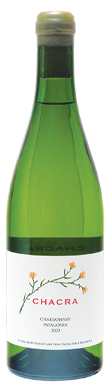

Although initially shy, the 2022 unfurls with delicate layers of seashells, Meyer lemon and apple pie. Its acidity is taut as a tightrope, yet enveloped...
2022
Bodega ChacraRío Negro

Bodega Chacra, Chardonnay, Río Negro, Patagonia, Argentina, 2023
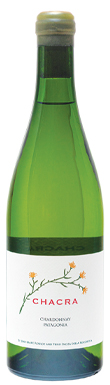
The 2023 release shows Jean-Marc Roulot fully in his stride: elegant and linear, with a racy minerality and top notes of lemon curd and spring...
2023
Bodega ChacraRío Negro
Bodega Chacra, Chardonnay, Río Negro, Patagonia, Argentina, 2019
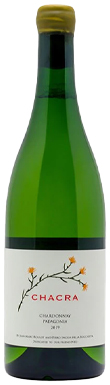
The first Chacra Chardonnay vintage to come from 100% estate fruit, the 2019 shows great purity and drive. It walks a line between orchard fruit...
2019
Bodega ChacraRío Negro
Bodega Chacra, Mainqué Chardonnay, Río Negro, Patagonia, Argentina, 2022
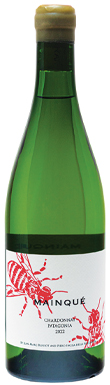
Arguably the finest vintage of Mainqué to date. Broad yet focused, the 2022 offers a honeyed texture cut by a spine of acidity. A hint...
2022
Bodega ChacraRío Negro
Bodega Chacra, Mainqué Chardonnay, Río Negro, Patagonia, Argentina, 2021
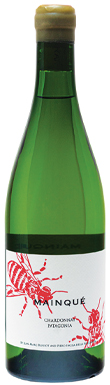
The first Mainqué released from the newly purchased, silt-rich vineyard. There’s a tanginess and salinity here that becomes a trademark in future vintages of Mainqué....
2021
Bodega ChacraRío Negro
