
Anson: Wines where Bordeaux meets the Rhône
Jane Anson reports on four high-profile examples, from the personal side-project of Château Latour's Frédéric Engerer to the Cabernet Sauvignon and Syrah blends of La Lagune co-owner Caroline Frey...


A small stream divides the vineyards of Châteaux Léoville Las Cases and Latour, marking the end of the St-Julien appellation as it crosses over the northern border into Pauillac.
You can jump it in one long stride, so narrow is this body of water, and it’s altogether unremarkable except that it divides two of Bordeaux’s most monumental estates.
The neighbours have something else in common. Both of their directors – CEO Frédéric Engerer in the case of Latour, and Pierre Graffeuille over at Las Cases – have private wine estates in the Rhône Valley that are absolutely worth seeking out.
In an official capacity, rather than a personal one, Châteaux Palmer and La Lagune also have notable projects in the Rhône.
Scroll down for Jane Anson’s ‘Bordeaux and the Rhône’ tasting notes and scores
The attraction that Bordeaux and the Rhône hold for one another has long been documented, most notably through the addition of Rhône wines to boost colour and deepen flavour of Bordeaux in past centuries.
Archives are full of examples of the practice. In 1810, when ordering wine for the East India market, English buyer James Nisbett asked wine merchant Nathaniel Johnston for 20 hogheads of claret, ‘observing the greatest care and attention that the wines have a good strong body, colour and high flavour, [with] a good dash of the Hermitage.’
Three of the four modern-day Rhône projects mentioned above pay tribute to this history, with wines directly inspired by those made in the 18th and 19th century.
La Lagune
Caroline Frey has perhaps the best claim, as she co-owns not only La Lagune, an Haut-Médoc third growth, but also leading Hermitage property Paul Jaboulet Ainé.
It would have been mystifying not to make a wine that nodded back to the history between the two regions.
Frey clearly thought so, and the wine is called ‘Evidence par Caroline’. In French, évidence means obvious, but I rather like that the English meaning can point to proof of what is seen as a rather shameful practice from past centuries.
Frey’s Evidence is a 50/50 blend of Cabernet Sauvignon from La Lagune with Syrah from her Domaine de Thalebert in Crozes-Hermitage. More specifically, the Cabernet fruit is from vines that also produce the second wine, Le Moulin de Lagune.
It has been made since 2006, after she came up with the idea during her weekly journeys between the Médoc and the northern Rhône.
It is now joined by ‘Duo’, a blend of Cabernet Sauvignon from La Lagune’s prime vineyard plots and Syrah from the iconic Hermitage La Chapelle, co-fermented in barrel and bottled only in magnums and jeroboams.
Unfortunately, my own tasting of these wines has been overtaken by events. The wines are right now still in the Rhône Valley, with no travel allowed at present. The last bottle of Evidence I had was the 2017 vintage.
Pierre Graffeuille’s Rhône project
I did, however, get to taste another example of Bordeaux-Rhône cooperation involving the very brilliant Pierre Graffeuille of Las Cases.
Here, the project dates back just to the 2015 vintage, when ‘Odyssée’ was launched with Graffeuille’s high-school friend Matthieu Dumarcher.
As you may know, Dumarcher is a winegrower creating something of a stir in France for his brilliant natural wines from Côtes du Rhône. Vines are grown organically and grapes fermented with natural yeasts, while the wines have low-to-zero added sulphur and are bottled unfiltered and unfined.
The two friends are now four vintages in with Odyssée, and producing a few thousand bottles each year.
The idea is to marry the power of Médoc Cabernets, specifically from Haut-Médoc, with the charm and succulence of the Rhône. Grenache features strongly in the vintage I tasted (see below), and grapes are sourced from land between Gigondas and Châteauneuf-du-Pape. But, Syrah and other grapes are also important in the finished wine, which is bottled as a Vin de France.
Graffeuille says, ‘As vintage quality may be different in each of the two regions, we have to fine-tune our creation depending on the year, adding different amounts of Cabernet, Syrah, Mourvèdre, Counoise, Petit Verdot.
‘The blend is very precise and different each time, although we hope to bring a balance of character from each region, marrying the energy, style and potential of both.’
The result is entirely aged in barrels that come from Las Cases, but new oak is avoided to keep the focus on the fruit.
As both Graffeuille and Dumarcher are winemakers, they take all technical decisions together, meeting in the Rhône three or four times a year. From my tasting of just two vintages – the 2017 once again fell victim to social distancing issues between Rhône and Bordeaux – it’s a wine that is more accessible young than a typical Médoc would be.
There is a beautiful richness to the texture and fruit quality, but it’s also a wine with the power to age.
Château Palmer
In contrast with both of these, Château Palmer has gone for a more traditional 19th century approach.
Around 90% of its aptly-named ‘Historical XIX Century Wine’ comes from its own vines. This breaks down into an even split of Cabernet and Merlot from two of Palmer’s best plots, and the rest from Syrah from the northern Rhône, with sources in Cornas, Hermitage, St-Joseph or Côte Rôtie.
Palmer’s CEO, Thomas Duroux, told Stephen Brook for a Decanter profile a few years ago that he got the idea for this wine after tasting a bottle of 19th century ‘Lafite-Hermitage’, as it was described on the label, at the home of a wine collector in the United States.
‘We try to match the idea of using Syrah as a final touch to the blend, a kind of salt and pepper, as it was done in the 1800s,’ Duroux added this week.
The first vintage of XIX dates from 2004, and that is the one tasted here. At that time it was simply an experiment of a few hundred bottles, but it has since been produced in 2006, 2007, 2010, 2013, 2014, 2016 and 2017.
Although the vintage is not displayed exactly, you can decipher it with a bit of detective work from the lot number on the base of each label.
The cuvée continues to have a small production of around 4,000 bottles per year, but it has not surprisingly become something of a cult wine, with a true sense of identity and character.
I know it’s not hard to say that a wine that is 90% Château Palmer is worth seeking out, but it’s truly delicious, just the kind of history lesson that we can all get behind.
Latour’s Engerer and Domaine de Fontbonau
Set against these three, Frédéric Engerer’s Domaine de Fontbonau stands in clear contrast; it is a true Côtes du Rhône, entirely of itself.
Engerer began the project in 2008 with one of his oldest friends, winemaker Jérôme Malet, formerly of Domaine Sarda-Malet in the Roussillon.
They met in Paris when Engerer owned wine bar Chez Richard on rue Vieille du Temple in the Marais – sadly it no longer exists under that name.
They were introduced by a mutual friend, whose exact words, as Malet recently recounted to Le Monde newspaper, were, ‘I know someone as crazily obsessed as you are about wine’.
Together they started out making a 100% Cabernet Sauvignon called Marius. The 2007 vintage, which I tasted, is still going strong and is actually from a 3ha plot within the estate of Sarda-Malet. However, this wine only saw a few vintages before the pair concentrated on Fontbonau.
‘We used Gravezac rootstock and a massal selection of Cabernet Sauvignon from Latour for the Marius project,’ Engerer tells me.
‘But its last vintage came in 2009. When Jérôme felt he may not be able to keep Sarda-Malet, he started to look for another place in the Rhône Valley. It took around one year to find Fontbonau.
‘It’s an amazing site that gathers all the criteria we were looking for, including enough altitude to give a cooler climate, and old Grenache vines planted in a place that we could afford.
‘The vines are set out across a number of plots with different exposures and styles, some making really concentrated and rich wines, with others much fresher. There can be up to 1.5 degrees less alcohol between different plots even if both are old Grenache vines.’
What that means is a property located at 350m altitude in the Nyons area of Drôme Provençal, on the eastern boundary between northern and southern Rhône.
The property can be found on the Cassini maps from the 18th century and includes a ‘mas’ that dates back to the 14th century. It stands at 42ha in total, with 18ha of vines, mainly Grenache, that date back to the 1940s in some cases.
There are also 3.5ha of 25-30-year-old Syrah, plus one combined hectare of Roussanne and Viognier planted in 2009.
All this is interspersed with 4ha of olive trees, 4ha of truffle oaks, lavender, wild forest and bee hives, with everything certified organic since 2013 – as you might expect from someone who has overseen the shift towards biodynamics at all Domaines Artemis properties.
Their first winemaker, Sophie Mage, is now at Château Franc Mayne in St-Emilion, and has been replaced by Bertrand Degat, who spent six months at Latour in 2015 followed by two years in the Loire.
The estate also now benefits from Malet spending much more of his time there, as he no longer has Sarda-Malet. This means the two can work together closely on new projects, such as no-added sulphur bottlings.
‘The main issue we have at Fontbonau is of course the financial one,’ Engerer says with admirable honesty.
‘When you have very old vines producing very low yields plus organic farming, as well as the reality of the pricing of Côtes du Rhone, it’s very complicated to break even.
‘When you have the chance to work on estates with solid financials like Latour or Clos de Tart, it’s a very good lesson and a good “back to reality” of what is probably the situation in hundreds if not thousands of small wine estates in France.’
The reality of this, to my mind, makes it even more admirable that the partners have not taken the same route that they did with Marius, as enjoyable as that wine is. Instead, they committed to making a wine that reflects its own landscape, rather than Engerer’s starry connections.
And if you are one of the many newly-accomplished Sourdough home bakers after lockdown, I can thoroughly recommend a drizzle of Fontbonau olive oil to go alongside.
It has been one of the highlights of the past two months in this house, sadly now reaching its final drops, and making me more determined than ever to head down to Nyons as soon as it is possible to travel again.
This corner of France has three separate appellations; one for the wines, one for olive oil – ‘AOC Nyons Huile’ – and another for the olives themselves, ‘AOC Les Olives Noires de Nyons’, that are recognised as among the best in France.
No wonder, then, that when I asked Engerer how often he gets to go to Fontbonau his reply was, ‘not often enough’.
See Jane Anson’s tasting notes and scores
You may also like
Château La Lagune: Tasting every vintage from 2004 to 2017Margaux vertical: Tasting 11 years of Château Cantenac BrownBiodynamic St-Emilion: Tasting a decade of Château Fonplégade winesChâteau Beauregard: Every vintage tasted back to 1998
Domaine de Fontbonau, Côtes du Rhône, Rhône, France, 2014
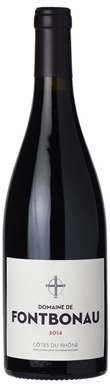

Six years old and just getting to the full expression of the Rhône, exotic spices and dried herbs. You can feel the heat of summer...
2014
Domaine de FontbonauCôtes du Rhône

Pierre Graffeuille and Matthieu Dumarcher, Odyssée, Vin de France, Rhône, France, 2016
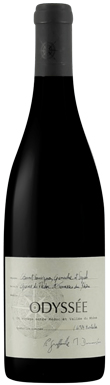
I tasted the 2015 and 2016 of this wine, and this one for me is the best of the two. A powerful mix of Cabernet,...
2016
Pierre Graffeuille and Matthieu DumarcherVin de France
Domaine de Fontbonau, La Lence de Fontbonau, Côtes du Rhône, Rhône, France, 2017
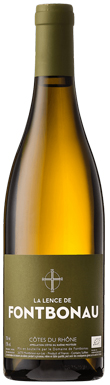
Honeysuckle and straw character on the nose, this is richly scented and textured, silky in feel. Takes its time to pick up though the palate,...
2017
Domaine de FontbonauCôtes du Rhône
Château Palmer, Historical XIXth Century Blend, Vin de France, Bordeaux, France, 2014
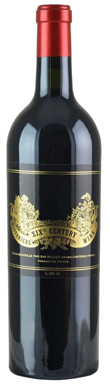
Gorgeous deep plum in colour, this hits you right from the first moment, plastering a smile on your face. The main takeaway is that it...
2014
Château PalmerVin de France
Marius, Vin de Pays Côtes Catalanes, Bordeaux, France, 2007
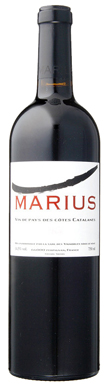
Deeply coloured even at 13 years old, slight disconnect with the tertiary flavours, that are very much soft leather, rich garrigue and pepper notes, with...
2007
MariusVin de Pays Côtes Catalanes
