
Five Burgundy micro-négociants to know and wines to try
Charles Curtis MW takes a look at the role that négociants play in Burgundy today, highlighting the most dynamic small and boutique producers on the scene and rating 20 micro-négoce wines.

In the words of one domaine owner: ‘sometimes when you want grapes you can’t find them; sometimes when you find grapes you don’t want them because the quality isn’t good.’
Taking the high road is easy, however, when you own more than a dozen hectares of premier and grand cru slopes, but fewer and fewer vignerons are able to buy land, because the very wealthy are snapping it up.
In 2014, Bernard Arnaud purchased Clos des Lambrays for a price reported as ‘more than £10m per hectare’. In 2017, American billionaire Stan Kroenke paid more than £15m/ha for Bonneau du Martray. Later that same year, French billionaire François Pinault topped them all by spending more than £32m/ha for Clos de Tart.
It isn’t just storied grand cru vineyards that are fetching top prices, the average price of all AOC land in Burgundy across the entire Côte d’Or region, all quality levels combined, was more than £630,000/ha.
What is a comparatively poor vigneron (or would-be vigneron) to do?
Typically, the answer has been to prove yourself working for someone else, find a backer, and buy some grapes. This classic approach, however, can entail excruciatingly hard work.
Scroll down for 20 tasting notes and scores from Burgundy’s top micro-négociants
Five Burgundy micro-négociants to have on your radar:
- Chanterêves
- Olivier Bernstein
- Benjamin Leroux
- Philippe Pacalet
- Roche de Bellene
Chanterêves
Guillaume Bott founded the boutique négociant firm Chanterêves with his wife Tomoko Kuriyama in 2010. They met while working at Simon Bize, where Bott continues to work as a winemaker.
He hopes someday to leave his ‘day job’. ‘If everything goes sufficiently well for Chanterêves’ vines this year the plan is that I will quit Simon Bize next April. For that to happen, however, we have to avoid the frost. The plan is that I will quit Simon Bize to help Tomoko, since for the time being she is doing three-quarters of the work for Chanterêves.’
Kuriyama trained at Geisenheim, and worked in the Rheingau before coming to Burgundy in 2005. Botte, in contrast, was raised in Burgundy and trained at the Lycée Viticole in Beaune before working at Etienne Sauzet and then at Bize.
They primarily work with purchased fruit, organically-grown where possible. They have recently added five hectares of vines purchased last year, three in the Hautes-Côtes and a bit in Chorey-lès-Beaune and Savigny-lès-Beaune.
In the winery, the red wines are fermented as whole clusters on native yeasts, and the wines see little if any new oak. White winemaking begins with crushing the bunches and then a very long (six-hour) pressing with no sulphur dioxide under the press. They are then racked into barrel (generally no new wood) with little or no sulphur dioxide before bottling. The reds are unfined, and the whites are lightly filtered if necessary.
For the last several years, Chanterêves has produced 30,000 bottles. They also hope to average 20,000 bottles from their own vines for a total of 50,000 bottles. They produce wine in at least twenty different appellations, two-thirds white, one-third red.
Bott notes that there are advantages and disadvantages to working as a négociant. ‘There is no contract [for grapes] – that’s the thing. We have a gentleman’s agreement to buy the grapes every year, [but] there is nothing in writing, nothing is signed. On the other hand, a négociant always has the flexibility to look elsewhere.’
Agreements are made at the time of the flowering, and it is only then that the possibilities of the year begin to solidify. However, if the agreement doesn’t allow the winemaker to choose the harvest date, then all may go awry. ‘The harvest date is primordial,’ according to Bott.
Olivier Bernstein
Once a new grower has gained a foothold in the market, they can focus on their niche. Olivier Bernstein is a good example.
He left his family’s business, the music publishing company Bärenreiter, to focus on wine. After studies at the Lycée Viticole in Beaune and a short internship with Henri Jayer, Bernstein began to make wine in the Roussillon in 2002.
In 2007, he moved to Burgundy. He initially set up as a négociant (still the majority of his production) and purchased parcels in Gevrey Chambertin premier cru Les Champeaux and Mazis-Chambertin in 2012.
From 2019 he has reduced the scope of his activities to focus only on grands crus plus the Champeaux that he has purchased. Most of the appellations are in Gevrey, with the exception of Bonnes-Mares, Clos de la Roche, and Clos de Vougeot.
Olivier prides himself on working with particular plots: they must be old vines (the majority are 60-80 years of age). He must have control of the viticulture and be allowed to pick the fruit himself. In return, Bernstein pays for the maximum allowable yield per hectare, even when the vines yield much less than this. This politic means that his prices are high, but he hopes to repay his clients with top quality that comes with old vines and low yields.
In the winery, the fruit goes through a short maceration before the fermentation, generally with the inclusion of 60-80% whole clusters, although he does not believe in the 100% whole cluster philosophy.
The fermentation itself and the maceration are relatively short, and there is no punching down. Extraction is assured simply by pumping over. Once the fermentation has finished, the wines are run into barrel, with the fine lees are added directly to the bottom of the barrel.
The wines are racked after malolactic and then left for up to 18 months in barrel. Stefan Chassin is the house cooper who buys the wood in the forest and dries it to order. During the two weeks of fermentation, the barrels are made and toasted to order. All of the wines are matured in new wood.
Benjamin Leroux
Benjamin Leroux is one of the leading stars in the new generation of boutique négociants. Like Bernstein, Leroux was not born into a winemaking family but caught the bug early. He also studied at the Lycée Viticole, began his career as a stagiaire with Pascal Marchant at Comte Amand, and returned to manage the estate from 1999.
In 2007 he started a small négociant business on the side. The following year, noted critic Allen Meadows was already musing that Leroux might be the ‘heir to the mantle of Henri Jayer’.
The 2014 vintage was his last at Comte Armand, when he gave up his day job to manage his own business, backed by English businessman Ian Lang.
He has recently started to purchase vineyards, above all in Meursault. His holdings are all farmed organically and are all either certified as such or in conversion; biodynamic methods are also used. Still, the bulk of his work is as a négociant. His purchased fruit is all sustainably farmed and organic/biodynamic when possible.
Leroux notes that 2019 represented the ‘new normal’ in viticultural terms. There was an early budburst and some frost in the Côte de Beaune. Flowering was disrupted, but not to a great extent. However, he feels he lost 30-40% of the potential Chardonnay crop between the frost and the millerandage. After flowering, conditions were warm and dry, with almost no disease pressure. There was also relatively little water stress since the vines received small doses of rain to refresh them in August and again in September.
Leroux feels that the wines in 2019 show well and are somewhat similar to those of 2018 despite a slightly cooler season: they have good maturity and an equal balance. As in 2018, there was little malic acid in the fruit at harvest. Most of the wines had finished their malolactic conversion two to three months after the fermentation. He feels the whites are focused, and the reds are exquisite. Thus, he does not plan to extend the cask aging and is planning to get them ready to bottle early in 2022.
Given conditions in recent years, Leroux is increasing the proportion of whole cluster fermentation. He notes that this changes the way he works the tanks: ‘Everything is ripe, and it’s more about infusion than extraction,’ he says, echoing the comments of Alec Seysses at Dujac.
Philippe Pacalet
Unlike some of the other stars of the ‘micro-négoce,’ Philippe Pacalet did indeed come from a winemaking family: his uncle is the renowned Morgon winemaker Marcel Lapierre with whom he worked from an early age.
Both Pacalet and Lapierre were deeply influenced by Jules Chauvet, the Beaujolais négociant who has been called ‘the father of natural wine’.
Logically, Pacalet has a reputation for being a ‘natural’ winemaker. The wines themselves have a bit of the ‘glou-glou’ (gulp-able) about them, yet he is by no means doctrinaire, and his wines are not easy to categorise. While they are indeed forward, accessible and hedonistic, there is also a depth of complexity that can be beguiling.
Pacalet trained as a scientist (with a specialisation in ambient yeast), and took a degree in oenology. He gained experience working as the régisseur at Domaine Prieuré-Roch for a decade before mounting his own boutique négoce firm in 2001 (first vintage 2002).
He is a meticulous winemaker, and his approach employs many of the techniques of natural wine. The reds are fermented with 100% whole clusters on native yeasts in wood fermenters and lovingly trod by foot. The finished wines are aged in used casks and are not racked during the maturation, nor are they filtered for bottling. White grapes are pressed as whole clusters and run into used barrels for fermentation, again without racking.
All of the wines are fermented on natural yeast, and no sulphur dioxide is used during the vinification. However, despite this roster of winemaking techniques, he opines that ‘indigenous yeast is not a political act, and “natural wine” can sometimes resemble the Taliban’. Despite the complete absence of sulphur dioxide, Pacalet produces brilliant wines with great purity of fruit and refuses to be tied down to a dogmatic system.
Pacalet feels that although the 2019 vintage was sunny and warm, the wines have structure. In comparison with 2018, they are less forward (‘gourmands’) without being strict.
Today he produces over two dozen wines and has firm contracts for 10 hectares of vines that stipulate that he will harvest the grapes himself, giving himself complete control. With his 10 hectares, Pacalet is currently producing about 50,000 bottles per year in the facility that he purchased from the de Montille family near Beaune’s train station.
Roche de Bellene
Like Philippe Pacalet, Nicolas Potel is the scion of a family with an impressive winemaking heritage. His father was Gérard Potel, the celebrated winemaker from Domaine de la Pousse d’Or, founded by his grandfather in 1964.
Many of the old wines from Pousse d’Or are still delicious today, and the elder Potel’s influence has been enormous throughout the Burgundy wine industry. Potel ran Pousse d’Or until his death in 1997. His son Nicolas followed him into the profession, working first at his father’s side and then training at a succession of domaines, including Georges Roumier.
After his father’s passing, Nicolas set up a négociant firm that was eventually acquired by the Cottin brothers of Labouré-Roi. This firm still exists with Potel’s name attached, but he is no longer involved.
Following their spectacular demise after fraud allegations in 2012, Cottin Frères sold their Burgundy assets to Jura producer Henri Maire. Meanwhile, Nicolas Potel had been quietly preparing for his third act.
In 2005 he began to purchase vineyards and launched the small Domaine de Bellene. Next, Potel set up the négociant affair Maison Roche de Bellene in 2008. Today he continues to slowly expand, producing elegant, classic wines that warrant close observation.
History
Négociants have a long history in Burgundy and are some of the oldest firms – Bouchard Père et Fils was founded in 1731.
In the 18th and 19th century the norm was for small tenant farmers to sell grapes to the négociant firms who blended them into large cuvées that were sold more on their name than on their origins.
These negociants controlled the vast majority of the Burgundy wine trade (and still do by volume). However, the system began to fray during the Great Depression, and growers had difficulty selling their wine.
The quality-minded among them began to bottle at least a portion at the domaine and the rise of independent growers has continued to accelerate since then.
In contrast, the allure of the négociants had been tarnished in recent decades by labelling scandals and spotty quality.
Today, however, the new crop of négociants mean these wines are making a comeback. Some surely rank among the most alluring values in the region today, and discerning Burgundy lovers overlook them at their peril.
Charles Curtis MW’s top 20 wines from Burgundy micro-négociants:
You may also like:
Burgundy: a complete guide to Clos de VougeotBurgundy: a complete guide to CortonBeaujolais 2018 cru vintage guide: more than 110 wines ratedBurgundy 2019 en primeur: Full report plus top-scoring wines
Benjamin Leroux, Chassagne-Montrachet, 1er Cru Abbaye de Morgeot, Burgundy, France, 2018
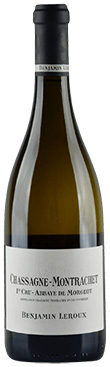

A superb Chassagne, produced from a half-hectare fairly far down the slope. Despite the heat of 2018, the old vines here have given a minerally...
2018
Benjamin LerouxChassagne-Montrachet

Benjamin Leroux, Meursault, 1er Cru La Pièce sous le Bois, Burgundy, France, 2018
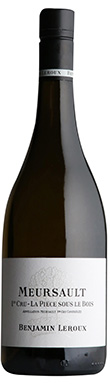
This lush, exotic Meursault has aromas typical of the appellation, scented with ripe apple, white blossoms, a touch of hazelnut, and just a faintly buttery...
2018
Benjamin LerouxMeursault
Domaine de Bellene, Blanc Les Perrières, Beaune, 1er Cru, Burgundy, France, 2018
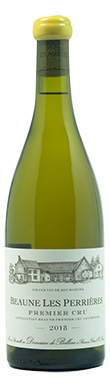
Perrières is a lovely climat for whites, located at the top of the slope with rocky, thin soils that bring a refreshing crisp character, even...
2018
Domaine de BelleneBeaune
Maison Roche de Bellene, Vieilles Vignes, Chassagne-Montrachet, Burgundy, France, 2018
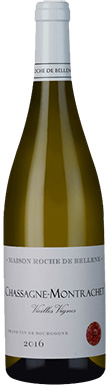
Impressively nuanced. This old-vine Chassagne comes from a half-hectare of vines more than 50 years old. The wine has ripe apple and pear...
2018
Maison Roche de BelleneChassagne-Montrachet
Maison Roche de Bellene, Meursault, Burgundy, France, 2018
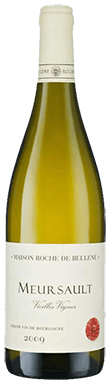
Produced from a 0.85-hectare old vine parcel that averages more than 50 years of age. Harvest got underway on 5 September, and the wine...
2018
Maison Roche de BelleneMeursault
Benjamin Leroux, Bonnes-Mares Grand Cru, Burgundy, France, 2012
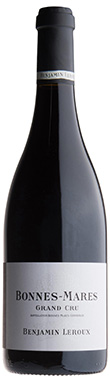
Benjamin Leroux's Bonnes Mares was an absolute delight. It is produced from an organically farmed parcel amid the terres blanches at mid-slope. The...
2012
Benjamin LerouxBonnes-Mares Grand Cru
Benjamin Leroux, Clos St-Denis Grand Cru, Burgundy, France, 2017
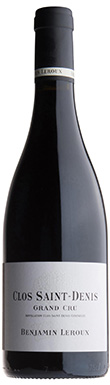
This is an epic Clos St. Denis, and one of the best wines in the cellar from 2017. The grapes come from the center...
2017
Benjamin LerouxClos St-Denis Grand Cru
Benjamin Leroux, Chambolle-Musigny, 1er Cru Les Amoureuses, Burgundy, France, 2017
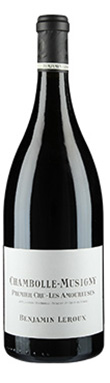
From a tiny sliver of Amoureuses, Leroux crafts a single barrel of exquisite wine. The grapes are fermented with about one-third whole clusters, and...
2017
Benjamin LerouxChambolle-Musigny
Chanterêves, Nuits-St-Georges, 1er Cru Damodes, Burgundy, France, 2018
The grapes here come from old vines at the center of Les Damodes in a parcel that always gives tiny berries because of shatter/coulure. ...
2018
ChanterêvesNuits-St-Georges
Olivier Bernstein, Chambertin-Clos de Bèze Grand Cru, Burgundy, France, 2011
This delicious cuvée shows uncommon concentration for the vintage. Produced from a parcel of old vines in the centre of the Clos, the fruit...
2011
Olivier BernsteinChambertin-Clos de Bèze Grand Cru
Domaine de Bellene, Hommage à Françoise Potel, Beaune, 1er Cru, Burgundy, France, 2018
Nicolas Potel has blended holdings from five separate premiers crus, including Pertuisots, Montée Rouge, Reversés, Bressandes et Clos du Roi, to produce this delightfully nuanced...
2018
Domaine de BelleneBeaune
Benjamin Leroux, Gevrey-Chambertin, Burgundy, France, 2018
The lieux-dits Les Seuvrées, La Justice, Billard, and Le Fourneau all contribute grapes for this cuvée. 10% fermented as whole clusters give just a...
2018
Benjamin LerouxGevrey-Chambertin
Olivier Bernstein, Mazis-Chambertin Grand Cru, Burgundy, France, 2011
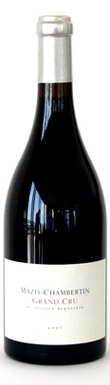
Ancient vines from Mazis-Haut (up to 80 years old) provide the grapes for this wine. After a week-long maceration with 50% whole clusters, the...
2011
Olivier BernsteinMazis-Chambertin Grand Cru
Chanterêves, Les Briquottes, Ladoix, Burgundy, France, 2018
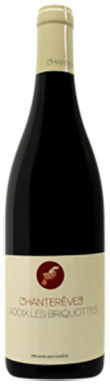
This marvelously restrained wine is a favourite of proprietors Guillaume and Tomoko in 2018. It comes from a very cool site in Ladoix, just...
2018
ChanterêvesLadoix
Domaine de Bellene, Vieilles Vignes, Savigny-lès-Beaune, Burgundy, France, 2018
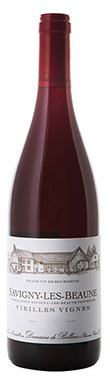
Produced from 1.67 hectares in Savigny-lès-Beaune spread over four parcels. The grapes are pressed as whole clusters and fermented in large and small barrels,...
2018
Domaine de BelleneSavigny-lès-Beaune
Chanterêves, Pernand-Vergelesses, Burgundy, France, 2018
The Pernand Les Boutières shows less tension than some of the Chanterêves wines but more richness and density. This is an elegant wine that...
2018
ChanterêvesPernand-Vergelesses
Benjamin Leroux, Savigny-lès-Beaune, 1er Cru Les Hauts Jarrons, Burgundy, France, 2018
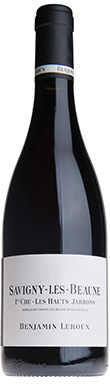
Vines face south and slightly west here at the southern part of the appellation, yet these relatively young vines have delivered a wine of almost...
2018
Benjamin LerouxSavigny-lès-Beaune
Benjamin Leroux, Volnay, 1er Cru Mitans, Burgundy, France, 2017
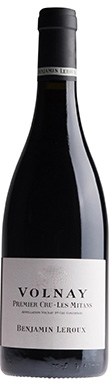
Surprisingly structured for a Volnay, even premier cru. The grapes for this wine come from a 0.65-hectare parcel at the base of the slope,...
2017
Benjamin LerouxVolnay
Chanterêves, Volnay, 1er Cru Les Lurets, Burgundy, France, 2018
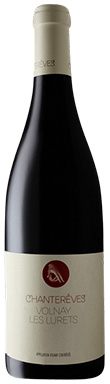
Fragrant with ripe plummy fruit, some spice, and a bit of menthol, this paradoxically seems a bit soft on the palate. The grapes here...
2018
ChanterêvesVolnay
Maison Roche de Bellene, Nuits-St-Georges, Burgundy, France, 2018
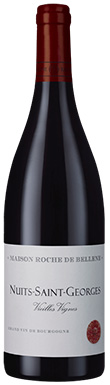
This wine is sourced in Nuits from parcels averaging 50 years of age that deliver a solid, somewhat rustic rendition of the village - every...
2018
Maison Roche de BelleneNuits-St-Georges