
A Château Margaux wine tasting masterclass
Read Jane Anson's exclusive tasting notes and report from our recent Château Margaux virtual masterclass, hosted at the first growth estate with MD Philippe Bascaules.


There was something magical about driving up to Château Margaux on a sunny Friday evening for the most recent Decanter virtual masterclass tasting.
It was held in the Foster Room, a high-ceilinged gallery room full of pale oak and huge glass windows overlooking the graceful park at the back of the estate.
Scroll down to see Jane Anson’s Château Margaux tasting notes and scores from this masterclass
It’s part of the new winery building that was completed by Lord Norman Foster in 2015, the first addition to the property since the iconic château was built back in 1812.
It was also the same year as the youngest red wine that we were tasting, Pavillon Rouge 2015.
The evening took us back to the 1996 Château Margaux, via Margaux 2001 and 2006, and also included Pavillon Rouge 2010 and 2015 before finishing with Pavillon Blanc 2017.
We were joined by estate managing director Philippe Bascaules, who first arrived at Château Margaux in 1990, working alongside legendary director Paul Pontallier before taking over the role himself in early 2017.
Château Margaux is owned and run by Corinne Mentzelopoulos with her children Alexandra and Alexis. It is an estate that dates back to the 12th century, became a full-time wine producing property in the 16th century, was classified at the very top of the ranking in 1855, and is today the only one of the five First Growths to be have no sister estates elsewhere.
There is no négociant business attached – simply a family and a team entirely focused on its wines.
We started off with a simple question: at an estate with so much history, what does it mean to be a First Growth château today?
Bascaules’ reply was equally simple: ‘We don’t think about our classification, we focus instead on making the best wine that we can do, and every single year. The pressure comes from that but not from the ranking.’
Instead, he said the history helped them understand the importance of transmission, and of working in ways that ensure the ecosystem remains healthy. ‘We have been here for five centuries,’ he said, ‘we understand about sustainability.’
The tasting began with two vintages of Pavillon Rouge, one of the oldest second wines in Bordeaux that is still under the same name, with a history dating back to 1908. We also know that a second selection has been made at the property since at least the 17th century, often called simply Château Margaux 2nd Wine.
Bascaules took us through changes in the production of Pavillon Rouge, with an increasing focus on quality alongside the introduction of both a third and fourth selection that means today barely 30% of the overall estate production goes to Pavillon Rouge, and around the same into Château Margaux itself.
The wine of the night in the audience poll was the Margaux 1996, a stunning vintage that I have tasted recently across many 1855 classified estates and been pretty much continually blown away by.
The story of this wine at Château Margaux was particularly interesting, with Bascaules explaining that the team did not immediately appreciate how great it would become.
‘It had been an excellent early season,’ he said, ‘then an unsettled summer, although for most of September we had dry fine weather.
‘When rain came at the end of September, I remember Paul Pontallier telling us that we could not make a great vintage – but then we decided to wait to pick; and the fine weather returned for the picking of the Cabernets.
‘It’s a vintage that taught us to not be afraid of rain during harvest if the grapes are sufficiently ripe before it arrives, and to be brave and to trust in the terroir of Château Margaux.’
Our final wine of the night was Pavillon Blanc, first introduced in 1906 under the name Château Margaux Vin de Sauvignon, and as Pavillon Blanc in 1920, since when not only the name but also the label have not changed.
‘We have records back in the 19th century that tell us the wine was already made from Sauvignon Blanc,’ Bascaules told us, adding to the singularity of its history.
The 2017 vintage was an excellent one for dry whites in Bordeaux, and it was a fitting ending to this most exceptional of evenings.
Château Margaux at a glance
Planted vineyard: 82 hectares (ha) red, 12ha white
Planted to red: 75% Cabernet Sauvingon, 20% Merlot, 5% split between Petit Verdot and Cabernet Franc.
Planted to white: 100% Sauvignon Blanc.
Second wine: Pavillon Rouge
Established: 16th century
Owner: Corinne Mentzelopoulos, her daughter Alexandra and son Alexis, second and third generation; family in place since 1977.
Managing director: Philippe Bascaules.
Technical director: Sébastien Verne.
Consultant: Eric Boissenot
Winemaking: Margaux is made in a mix of traditional oak casks and stainless steel vats, with space set aside for extensive research and development facilities – a micro-vinification area with vats that go down to 25 hectolitres.
In the vineyards, organic farming has been in place since 2012, with a flock of sheep as an alternative to traditional weeding.
See Jane Anson’s Château Margaux tasting notes and scores for wines in this masterclass
You may also like
Château Margaux en primeur history: 2016 – 2020Anson: How the 2008 Bordeaux first growths taste nowAnson: How the 1990 Bordeaux first growths taste nowAnson: How the 1985 Bordeaux first growths taste now
Château Margaux, Pavillon Rouge, Margaux, Bordeaux, France, 2015
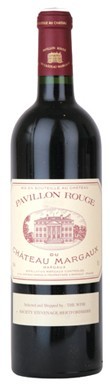

The 2015 grand vin was the last vintage produced by Paul Pontallier (see pXX) and is a contender for wine of the vintage, so I...
2015
Château MargauxMargaux

Château Margaux, Pavillon Rouge, Margaux, Bordeaux, France, 2010
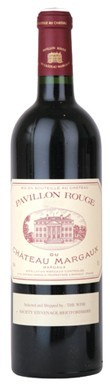
This is juicy and well balanced - extremely impressive and up there with the best Pavillons that I have tasted and going step for step...
2010
Château MargauxMargaux
Château Margaux, Margaux, 1er Cru Classé, Bordeaux, France, 2006
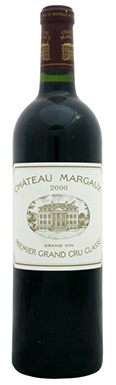
Once inky dark and tannic, the 2006 Margaux impressed me now as the picture of elegance, with enticing aromas of ripe blackcurrant and mulberry, hints...
2006
Château MargauxMargaux
Château Margaux, Margaux, 1er Cru Classé, Bordeaux, France, 2001
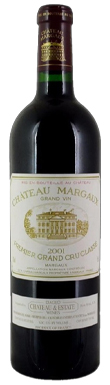
2001 as a vintage was unfortunately eclipsed by the one preceding it. This superb wine shows restrained, elegant blackcurrant fruit aromas, edged with spice and...
2001
Château MargauxMargaux
Château Margaux, Margaux, 1er Cru Classé, Bordeaux, France, 1996
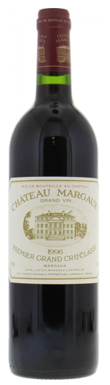
Softly spoken, fine tannins, pencil lead and leather, with truffle, earth, campfire and spice. Long drawn out finish, achingly slow, crushed stone, tobacco and dried...
1996
Château MargauxMargaux
Château Margaux, Pavillon Blanc, Bordeaux Blanc, Bordeaux, France, 2017
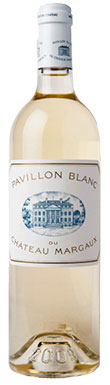
Fleshy nectarine and white peach fruit, and a creamy texture that is still young and packed with vibrant acidities. As precise and carved out as...
2017
Château MargauxBordeaux Blanc
