Croser & Bizot: a family vision in Wrattonbully
Wrattonbully, in South Australia's Limestone Coast region, is home to two powerhouse wine families from opposite sides of the world now entwined by marriage. Sarah Ahmed chats with Australian wine legend Brian Croser and his son-in-law Xavier Bizot of the Bollinger Champagne house, and tastes through some recent releases.
Get our daily fine wine reviews, latest wine ratings, news and travel guides delivered straight to your inbox.
You are now subscribed
Your newsletter sign-up was successful
A scion of the Bollinger family of Champagne and a farm boy from South Australia’s Clare Valley. They might at first seem strange partners but Xavier Bizot (Terre à Terre) and his father-in-law Brian Croser (Tapanappa) could not be more intertwined.
And not only by marriage. Like his late father before him (Christian Bizot, Bollinger’s sixth president), Xavier Bizot established a pioneering vineyard in South Australia’s cooler climes.
Scroll down for latest releases and older vintages from Terre à Terre, Daosa and Tapanappa
Bringing impetus to Croser’s bold pursuit of distinguished sites – first at Petaluma then Tapanappa – the Bizots have helped engineer a new Australian fine wine landscape in both Wrattonbully and Adelaide Hills. One which now also finds expression in Terre à Terre, the label Bizot and wife Lucy Croser established in 2008.
How did these families from opposite sides of the world attract, and how do Tapanappa and Terre à Terre compare?
California dreaming
The meeting of minds between Brian Croser and Christian Bizot drew inspiration from California. It was here Croser studied his masters in viticulture and oenology at UC Davis (and fell in love with Chardonnay). Between 1972 and 1973 he was one of the last to study under such legendary professors as AJ Winkler and Maynard Amerine.
Californian viticulturalists had been using Winkler’s growing degree days system (matching varieties to climate) for some time. It underpinned the state’s nascent but precocious boutique wine industry which, in 1976, famously triumphed over benchmark Burgundy and Bordeaux in the Judgement of Paris.
The Winkler index informed Croser’s ‘belief in the expression of distinguished sites through the choice of suited variety and appropriate planting regimes’. He says this belief ‘has never wavered and has been reinforced continually’ in his 50-year career.
Get our daily fine wine reviews, latest wine ratings, news and travel guides delivered straight to your inbox.
Armed with his ‘golden rule’ for matching Australian sites to Burgundian and Bordelais grapes – ‘close to a metre of rain a year and then a cool climate, at altitude’ – Croser located his first brand, Petaluma, at 450m in the Adelaide Hills’ highest, wettest, coolest point: the Piccadilly Valley.
In 1979, he planted his Tiers Vineyard (‘Adelaide Hills’ first 20th century vineyard’) to Chardonnay at 3,175 vines per hectare. This was revolutionary, compared with Australia’s then typical 1,000-1,500 vines/ha.
Croser was aiming for a style ‘somewhere between Chevalier-Montrachet and California’. In 2003, when he replanted a parcel to Burgundy clones at 4,444 vines/ha, Chevalier-Montrachet ‘my mind’s eye inspiration’.
The French connection
When Croser visited Champagne in 1984 to find a partner for Petaluma’s ‘Croser’ sparkling wine project, he discovered that Christian Bizot was equally receptive to California’s application of science in pursuit of terroir.
The following year Bollinger not only became Petaluma shareholders, but also partnered with British brewers Whitbread and Tuscany’s Antinori, to plant the pioneering Atlas Peak Vineyard at altitude in the Napa Valley.
In 1995, Bizot acquired a Piccadilly Valley site at 550m for sparkling production. With Croser’s guidance, it was planted at similar density to Tiers, with multiple Chardonnay clones and a small block of Pinot Noir.
Following Petaluma’s takeover by Lion Nathan in 2001, Croser and Bizot founded Tapanappa a year later, cutting in a third partner, the Cazes family of Lynch-Bages in Pauillac.
Rather than planting from scratch (or acquiring a vineyard in Coonawarra, where Petaluma had focused its Bordeaux blend ambitions), Tapanappa acquired the Koppamurra Vineyard in Wrattonbully, renaming it Whalebone Vineyard.
Located on South Australia’s Limestone Coast, Wrattonbully shares Coonawarra’s famously well-drained terra rossa over (older) limestone soil. But Croser observed that Wrattonbully’s cool but less windy conditions ‘bridged St-Emilion and Tain l’Hermitage’.
Being sufficiently maritime to ripen Bordeaux varieties but also continental enough for Shiraz, the Whalebone Vineyard became a seat of ambition for that iconic Australian red blend of Cabernet-Shiraz.
Initially to supply Tapanappa with fruit, Croser also planted the vineyard next to Whalebone in 2004. His daughter Lucy and husband Xavier named it Crayères, and managed it from France for a year before settling in Australia in 2005.
From France to Wrattonbully
Following the 2008 global financial crisis, the young Bizots were faced with a difficult decision, as it became obvious that Tapanappa could not absorb all the harvest from the Crayères Vineyard.
Deciding to take on both management and fruit and make their own wine, the couple founded Terre à Terre.
Xavier’s country of origin may have informed the name of the vineyard and brand, but not the wines. With ‘a fondness’ for Cabernet-Shiraz, the former lawyer says he now feels at ease in his RM Williams boots.
The Bizots vision for Terre à Terre’s Daosa sparkling wines is ‘radically different’ from Champagne or any of Australia’s early-picked Champagne wannabes. ‘Our climate, our sunshine, our soils make fruitier and more approachable wines,’ asserts Xavier, ‘so they are distinctively Australian and all the better for it.’
Sourced exclusively from the Piccadilly Valley vineyard his father planted in 1995 (which Xavier and Lucy now own), Daosa’s full-bodied Blanc de Blancs – a Platinum-winner at the 2020 Decanter World Wine Awards – is testament to the quality.
Terre à Terre’s finely honed, perfumed Wrattonbully reds evoke stereotypical Old World descriptors, versus Tapanappa’s big-boned, densely concentrated, more savoury New World style.
This is particularly evident in Terre à Terre’s Crayères Cabernet Franc, planted from Whalebone cuttings. This might be expected, given Whalebone’s vines are 30 years older and Terre à Terre also uses large-format oak foudres.
While pointing out ‘how elegantly and freshly’ Tapanappa’s Whalebone 2004, 2006 and 2008 Cabernet Francs have aged, Croser nevertheless has ‘absolutely no doubt’ that Crayères’ precocious refinement reflects his higher-density planting regime of 4,444 vines/ha.
It was a regime also implemented at the Tiers Vineyard and Foggy Hill – Croser’s Pinot Noir vineyard in Parawa, the highest point of the Fleurieu Peninsula.
In the family
Spelling out the benefits of high-density planting for ripening in Australia’s cooler climates, Bizot explains it ‘devigorates’ and, by increasing the canopy per hectare, improves fruit spread and sunshine exposure.
Croser forecasts that in 10 years’ time ‘Crayères will be the equivalent of or better than Whalebone, with the same density and same seriousness of tannin, but it will always retain its more floral, juicy fruit element.’
Does it annoy him that Crayères is no longer a Tapanappa vineyard? ‘No,’ he insists. ‘It’s in the family. There are separate ownership structures, but the ambition of everybody is to make a success out of all our assets.’
And it’s not just Croser’s daughter Lucy and husband Xavier who are part of the wider Croser winemaking family. Sam Barlow, the husband of his youngest daughter, Caroline, manages the Tapanappa winery where both labels are made and bottled.
In 2014, the Croser family bought out Bollinger and the Cazes family, taking full ownership of Tapanappa. Reflecting on the ‘immense’ importance of the two families’ roles during his ‘long and mostly lonely battle’ to improve and promote Australian fine wine, Croser describes Christian Bizot and Jean-Michel Cazes as ‘revered mentors’.
Their French perspective gave him confidence to continue on the ‘terroir pathway’ that he discovered as a student in California.
Realising the vision
Despite Croser’s successes, it’s been a rollercoaster ride. ‘Like vines, winemakers mature with time,’ he says wryly.
Reflecting on his vision for Tiers Vineyard Chardonnay all those years ago, Croser says that while he can identify a similar intensity and delicacy of power between Tiers Chardonnay, Chevalier-Montrachet and top California Chardonnay, he has come to appreciate the merits of being ‘totally and joyfully different’.
‘Tiers is an expression of where we are, rather than a copy of somewhere else in the world,’ he says.
The justification for all the ‘hard yards’, says Croser, rests in the family’s desire to be part of the journey. But how his vision will ultimately be achieved he says, ‘will be more and more in Xavier’s capable hands’.
While the pair avidly talk about the potential of new, yet-to-be-discovered distinguished sites in Victoria and Tasmania, Bizot is focusing closer to home, excited by the prospect of working with more mature Piccadilly Valley vineyards, planted by Croser. ‘It’s a privilege,’ he beams.
Terre à Terre: the facts
Owners Xavier Bizot and Lucy Croser
Founded 2008
Winery location Piccadilly Valley, Adelaide Hills
Production 50,000 bottles
Vineyard sources Wrattonbully: Crayères Vineyard – 8ha of Sauvignon Blanc, Cabernet Sauvignon, Cabernet Franc, Shiraz; Piccadilly Valley: Bizot Vineyard – 8ha of Chardonnay and Pinot Noir, plus five other vineyards totalling 8ha, planted to Chardonnay and Pinot Noir plus Trousseau Noir, Merlot, Cabernet Franc and Mondeuse
Terre à Terre: a timeline
1995/1996 Christian Bizot establishes Bizot Vineyard in Piccadilly, Adelaide Hills, planting Chardonnay for Petaluma’s sparkling Croser label
2004 Xavier and Lucy Bizot manage Crayères Vineyard in Wrattonbully to supply grapes for Tapanappa, planting Sauvignon Blanc (2ha) and Cabernet Sauvignon (3ha)
2005 The pair leave France for Australia, founding fine wine importer Terroir Selections
2008 First release of Terre á Terre’s Crayères Vineyard Sauvignon Blanc; Cabernet Franc (1ha) and Shiraz (1ha) planted in Crayères Vineyard
2009 First releases of Crayères Vineyard Cabernet Sauvignon and Daosa Blanc de Blancs from Bizot Vineyard
2014 First releases of Crayères Vineyard Cabernet Franc and Shiraz, and Crayères Vineyard Reserve
2016 Xavier and Lucy assume long-term management of five high-altitude, mature Piccadilly Valley vineyards for sparkling production; first vintage of Daosa Natural Réserve
2018 First vintages of Crayères Vineyard Cabernet Sauvignon-Shiraz and Cabernet Franc-Shiraz
2020 New higher-density Chardonnay planted in Bizot Vineyard (Tapanappa Tiers block cuttings)
Tapanappa: the facts
Owners Brian and Ann Croser
Founded 2002
Winery location Piccadilly Valley, Adelaide Hills
Production 80,000 bottles
Vineyards sources Wrattonbully: Whalebone Vineyard – 7.5ha of Cabernet Sauvignon, Cabernet Franc and Merlot; Piccadilly Valley: Tiers Vineyard – 3.53ha of Chardonnay, 6ha of other Chardonnay parcels, 1ha Shiraz (contracted); Fleurieu Peninsula: Foggy Hill Vineyard – 6ha of Pinot Noir
Tapanappa: a timeline
1974 John Greenshields establishes Koppamurra Vineyard, planting Cabernet Sauvignon (4ha), Merlot (1.2ha) and Cabernet Franc (0.8ha)
1976 Brian and Ann Croser found Petaluma
1979 Tiers Vineyard planted to Chardonnay
1996 First release of [Petaluma] Tiers Chardonnay.
2001 Lion Nathan takes over Petaluma
2002 Tapanappa established, with investment from Bollinger and the Cazes family; Koppamurra Vineyard acquired and renamed Whalebone Vineyard; first Tapanappa Wrattonbully red release
2003/2004 Whalebone Vineyard restructured. One third of Tiers Vineyard replanted
2003 Brian and Ann Croser establish Foggy Hill Vineyard, planting 2ha of Pinot Noir
2005 First vintage of Tapanappa Tiers Chardonnay, from thinner, rockier soils on the top of the slope
2007 First release of Foggy Hill Pinot Noir
2014 Croser family acquire 100% shareholding in Tapanappa and reoccupy Petaluma winery, renaming it Tapanappa winery
Terre à Terre, Daosa & Tapanappa: latest releases and older vintages
Related content
Hentley Farm: producer profile
Cape Mentelle: 50 years of Margaret River Cabernet
Cloudburst: producer profile
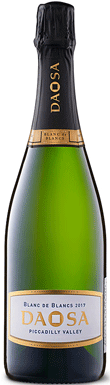
Daosa, Blanc de Blancs, Piccadilly Valley, Adelaide Hills, South Australia, Australia, 2017

White peach and lemon and grapefruit drive, this 2017 vintage is finer and fresher than 2015, with a persistent bead and impressive fruit purity and precision. A flinty mineral undertow and delicate savoury lees bring nuance. The low dosage (5g/l) makes for a dry, taut finish. Following the second fermentation in bottle, it was disgorged after 42 months.
2017
South AustraliaAustralia
DaosaPiccadilly Valley, Adelaide Hills
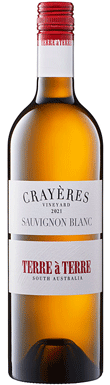
Terre à Terre, Crayères Vineyard Sauvignon Blanc, Wrattonbully, South Australia, Australia, 2020

Silky lees and sophisticated use of old 600-litre French oak demi-muids for structure and complexity bring mouthfeel, depth and layer to nose and palate. Classic blackcurrant bud notes mingle with tangy nectarine skin, fragrant lime zest and juicy fresh lime flavours. A blade of acidity maintains balance and poise. With plenty to tickle the taste buds, it is distinctly gastronomic, but lovely on its own too.
2020
South AustraliaAustralia
Terre à TerreWrattonbully
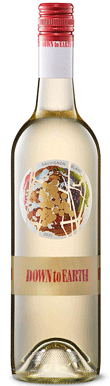
Terre à Terre, Crayères Vineyard Down to Earth Sauvignon Blanc, Wrattonbully, South Australia, Australia, 2021

A mouthwatering nose and palate with an intensely vibrant core of kiwi fruit, tangy, tart gooseberry, zesty lime and dusty chalk minerality. From a significantly cooler year, this Sauvignon did not undergo malolactic fermentation and it is fresh and frisky from tip to toe. Fermented in a combination of stainless steel (60%) and large oak foudres and demi-muids, expect it to show more nuance with bottle age.
2021
South AustraliaAustralia
Terre à TerreWrattonbully
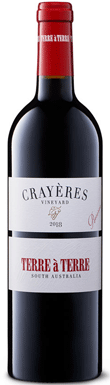
Terre à Terre, Crayères Vineyard Reserve, Wrattonbully, South Australia, Australia, 2018

Spicy, intense and well-structured, filigree tannins weave together the plum and blackcurrant fruit with black cardamom, coriander seed, wattle, tobacco and dusty cedar. Kalamata olive and leather notes lend savoury depth. Mineral acidity and pronounced spice carry a long finish. Aged separately for nine months in French oak barrels (74% new), the varieties were then blended and spent nine months in a five-year-old 4,000L French oak foudre.
2018
South AustraliaAustralia
Terre à TerreWrattonbully
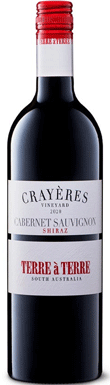
Terre à Terre, Crayères Vineyard Cabernet Sauvignon-Shiraz, Wrattonbully, South Australia, Australia, 2019

A terroir-driven, mid-weight example of this classic blend, with a gentle kelp and earthy undertow and attractive saturating quality to its fresh blackcurrant and plum fruit. Bright redcurrant acidity propels the palate. Ripe but present tannins frame the fruit and bring light, spicy grip to the finish. Aged in French oak barriques (39% new) for eight months, then old 4000L oak foudres for 11 months, the wood influence is subtle.
2019
South AustraliaAustralia
Terre à TerreWrattonbully
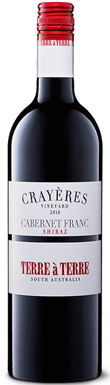
Terre à Terre, Crayères Vineyard Cabernet Franc-Shiraz, Wrattonbully, South Australia, Australia, 2019

True to its lead variety, with fragrant anise, dried roses and subtler herbaceous and menthol hints to the ripe plum, red cherry and juicy blackberry fruit. Lightly worn, the oak adds a lick of cinnamon and cedar. Fine-grained tannins and juicy acidity make for an elegant delivery and persistent finish.
2019
South AustraliaAustralia
Terre à TerreWrattonbully
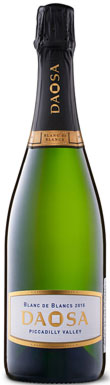
Daosa, Blanc de Blancs, Piccadilly Valley, Adelaide Hills, South Australia, Australia, 2015

A rich, full-bodied sparkling Chardonnay, densely structured and layered, under-scored by tensile, grapefruit acidity. Flavours of dried peach, fig and torched nectarine skin, and a savoury depth of toasted hazelnut, marmite and ozone. Sourced exclusively from the Bizot vineyard, the base wine was barrel-fermented and aged for 23 months, undergoing full malolactic fermentation and lees-stirring. Disgorged August 2019, after 30 months in bottle on lees; dosage 7g/l. Uncommonly powerful fruit expression.
2015
South AustraliaAustralia
DaosaPiccadilly Valley, Adelaide Hills
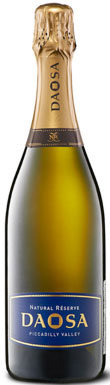
Daosa, Natural Réserve 3rd Release, Piccadilly Valley, Adelaide Hills, South Australia, Australia

Beguiling blend of 83% Pinot Noir and 17% Chardonnay from five elevated sites (500m and above) and three vintages (2018, with 23% reserve wines from 2017 and 2016). Sweet wild strawberry, white peach, grapefruit and minerals. Eighteen months on lees and the reserve wines (barrel-aged without sulphur until tiraging in February 2019) impart tangy, savoury complexity and lingering, sourdough yeastiness. Lovely intensity and flow with a persistent bead. Disgorged August 2020; dosage 7g/l.
South AustraliaAustralia
DaosaPiccadilly Valley, Adelaide Hills
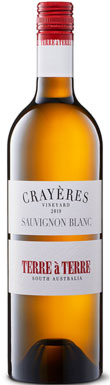
Terre à Terre, Crayères Vineyard Sauvignon Blanc, Wrattonbully, South Australia, Australia, 2019

More in common with oak-aged Sancerre than classic New World Sauvignon, this builds from the mid-palate with its texture and insinuating depth, as opposed to dazzling, upfront aromatics. Seamless layers of white peach, ripe grapefruit, perfumed green apple, dried herbs, pastis, marrowfat peas and earth unfold on the long, lingering palate, with savoury lees and supple lime acidity. Fermented and lees-aged in old French oak demi-muids.
2019
South AustraliaAustralia
Terre à TerreWrattonbully
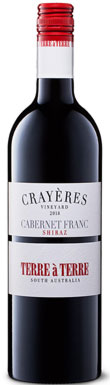
Terre à Terre, Crayères Vineyard Cabernet Franc-Shiraz, Wrattonbully, South Australia, Australia, 2018

The 63% of Cabernet Franc makes its delicate mark, with ink and violet florals, sweet anise and fresh, well-defined blackberry and plum. It is medium-bodied, with subtle cedar oak, a fine, chalky plume of tannins and persistent acidity. A unique, lissom red, with lovely balance and finesse for the price. Following nine months in barrel, the Cabernet Franc spent another nine months in an old 4,000l French oak foudre while the Shiraz stayed in barrels.
2018
South AustraliaAustralia
Terre à TerreWrattonbully
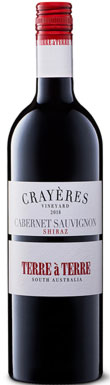
Terre à Terre, Crayères Vineyard Cabernet Sauvignon-Shiraz, Wrattonbully, South Australia, Australia, 2018

The 62% Cabernet Sauvignon jumps out on the nose, with fresh blackcurrant and a hint of mint, while the Shiraz fleshes out the palate with juicy blackberry and plum. Aged nine months in barrel (21% new), then nine months in old 4,000l French oak foudres. Fuller bodied than the Cabernet Franc-Shiraz, with more assertive, chewy tannins and a savoury dimension, with earth and leather. Finishes fresh, firm and focused, with chalky acidity.
2018
South AustraliaAustralia
Terre à TerreWrattonbully
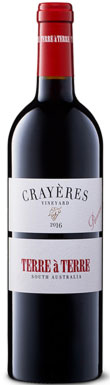
Terre à Terre, Crayères Vineyard Reserve, Wrattonbully, South Australia, Australia, 2016

An iconic blend of Cabernet Sauvignon (68%) and Shiraz (16%) is given a Cabernet Franc twist. Mature, savoury profile with chewy tannins, chalky acidity and great depth and layer of flavour. A big mouthful of fresh blackcurrant, plum, leather, panforte, liquorice, mocha, dried sage, clove, cedar and dusty earth. Aged 11 months in French oak barrels (84% new), then another 17 months in an old 4,000l foudre.
2016
South AustraliaAustralia
Terre à TerreWrattonbully
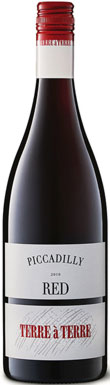
Terre à Terre, Red, Piccadilly Valley, Adelaide Hills, South Australia, Australia, 2019

Vinified as a vin de soif, this is an unusual mix of Cabernet Franc, Trousseau Noir, Merlot and Mondeuse. Reflecting the precise house style, it has little in common with funkier Adelaide Hills’ examples. The Saumur-like Cabernet Franc dominates with its sweet red and black berry fruit, hints of violets, bitter chocolate, capsicum, dried herbs and pencil shavings.
2019
South AustraliaAustralia
Terre à TerrePiccadilly Valley, Adelaide Hills
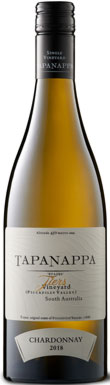
Tapanappa Wines, Tiers Vineyard Chardonnay, Piccadilly Valley, Adelaide Hills, South Australia, Australia, 2018

From the Tiers Vineyard’s oldest, highest vines planted in 1979 on thinner, rockier soils, rising to 450m. Classy oak (33% new) and focused acidity buff the fruit to a shine, propelling the exceptionally, long, focused palate. Terrific intensity of white nectarine, with fig, oatmeal, cashew, cedar and vanilla nuances. Apple, bay leaf, flint and matcha tea hints emerge with time in the glass. Polished and precise, with not a hair out of place.
2018
South AustraliaAustralia
Tapanappa WinesPiccadilly Valley, Adelaide Hills
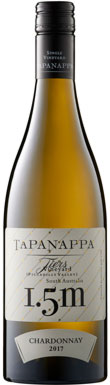
Tapanappa Wines, Tiers Vineyard 1.5m Chardonnay, Piccadilly Valley, Adelaide Hills, South Australia, Australia, 2017

From a lower-trained Tiers’ parcel replanted in 2003 at higher density (1.5m row spacing, hence the name). Different, earlier-ripening clones impart savouriness and mouthfeel (no malolactic fermentation required), with a touch of lanolin to the nectarine fruit. It is rounder and more deliberate in its delivery than the original, with ripe, rolling lemony acidity, a struck-match hint to the nose and kiss of nougat on the finish.
2017
South AustraliaAustralia
Tapanappa WinesPiccadilly Valley, Adelaide Hills
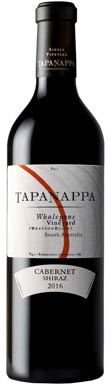
Tapanappa Wines, Whalebone Vineyard Cabernet Sauvignon-Shiraz, Wrattonbully, South Australia, Australia, 2016

From a very warm, dry year, this is a big-boned vintage. Sturdy, blackstrap liquorice tannins frame its substantial polished core of concentrated blackcurrant, dried fig and panforte from the 85% Cabernet Sauvignon. The Adelaide Hills’ Shiraz leavens the whole, bringing juicy line and dimension to the dense core, animating savoury layers of leather, earth, stewed mint, roast chestnut and bitter chocolate. Marathon potential; a feast to savour.
2016
South AustraliaAustralia
Tapanappa WinesWrattonbully
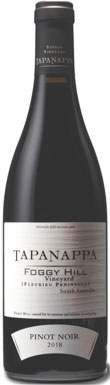
Tapanappa Wines, Foggy Hill Vineyard Pinot Noir, Fleurieu Peninsula, South Australia, Australia, 2018

Still finding its feet but it reveals aromas of sweet blackcurrant, anise, suede and earth. A touch vegetal, initially but buoyant, sweet red berry, pithy redcurrant, anise and red liquorice flavours build to lift and sustain the palate. Supple, cleaning acidity on the finish, the mouthcoating tannins present, but proportionate. Fermented with 15% whole bunches.
2018
South AustraliaAustralia
Tapanappa WinesFleurieu Peninsula
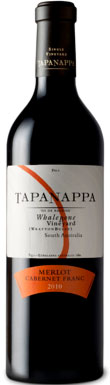
Tapanappa Wines, Whalebone Vineyard Merlot-Cabernet Franc, Wrattonbully, South Australia, Australia, 2016

Even though Merlot is listed first, the 56% Cabernet Franc is the senior partner. Not as dense as the Cabernet-Shiraz, yet its blunt, warm alcohol gives it a certain impenetrability, masking the detail of mint, violet, black olive and dusty earth amid the concentrated plum, mulberry and dried blueberry fruit. Will the fruit rise up, putting the alcohol in its place? One to review.
2016
South AustraliaAustralia
Tapanappa WinesWrattonbully