
Priorat in-depth and great reds to try – Andrew Jefford


Mountain vineyards and arid summers often place heavy demands on Priorat's winemakers, but the results can be excellent. Sit back with a glass in-hand and read Andrew Jefford's report on a recent trip, plus see 15 of his favourite reds to try from this fascinating corner of Spain...
Scroll down to see Andrew’s top 15 Priorat reds – exclusively for Decanter Premium members
Priorat is a secret wine kingdom, hidden and remote. Its loneliness strikes you most clearly at night. You can prowl the constantly twisting roads and never see other headlights; turn off the engine, and the silence can make your ears ache. Even the dogs seem shy of barking. Perhaps they’re awed by the glitter of the stars.
If ever a place was destined to lure monks, this is it. The Carthusians had to find their way here – and they did, back in the 12th century.
They went to the furthest recesses of the region, hard up against the cliffs of Montsant, literally ‘the sacred mountain’. It’s a remote fastness, even today; back then it must have been wild enough to defy survival itself. What else should they call the spot they chose for their fragile little chartreuse but Escaladei, or ‘God’s ladder’? Not only did they survive, but they prospered to the extent that much of this inland island eventually became their dominion – hence its present-day name, and that of the wine it reluctantly surrenders.

Ask local winemakers to describe DOQ Priorat itself, and its relationship to the DO of Montsant which surrounds it, and most resort to the image of the fried egg. Montsant is the lower lying white; Priorat the domed, glowing yolk.
The image is so striking as to be irresistible. Don’t visualise the yolk, though, as gold – but dark brown, to reflect the dense, light-absorbing llicorella (variously translated as slate or schist, both of them interrelated metamorphic rocks), which dominates Priorat.
Nothing, meanwhile, could be less like a seamless yolky membrane than the bucking contours of the hills, which pack this fierce enclave. Every house here has a view that inspires. Or scares.

Splendid isolation
We’re in southern Catalonia, near Tarragona – but also far from Tarragona, with its dreary coastline and heavy chemical industry; a light year away in terms of topography; several biomes away as the landscape is dressed.
Few roads find their way into Priorat; most come knocking at the back door, the southern part of the region, close to Falset, the only small town hereabouts. From there, you climb into the secret kingdom and its 12 widely scattered little villages.
In pre-phylloxera days, when plantings were more extensive than today, the vineyards were often a day or two’s mule trek away. Vine-tenders would leave their village homes for a week to work.
I ask one wine-grower, sara Pérez of Mas Martinet and Venus La Universal, to describe Priorat to me. ‘Heavy, dark, intense,’ she says, ‘gravity; density. But also the sensation of vertigiousness, of rising and falling.’
She works in Priorat, but goes home every day (with some relief) to Montsant, where the generally limey soils are lighter in both colour and texture, the hills more muted, and the atmosphere conveyed by the landscape is gentler, less oppressive, less confronting. ‘In Priorat, the darkness absorbs the light. In Montsant, the light absorbs the darkness.’
What does all this mean in terms of aroma and flavour? We are, here, at a latitude roughly equivalent to Bari in Puglia, Italy. Priorat may lie in the northern half of Spain, but it is very definitely a southern European wine region.
The Consell Regulador’s 2010 climate figures for Torroja del Priorat in the centre of the region showed it had an average annual temperature of 14.5°C and average rainfall of 518mm (it’s been less in recent years); annual sunshine hours usually measure around 2,600. This puts it in the same league, for example, as France’s Châteauneuf-du-Pape, for which the equivalent figures are 14.8°C, 650mm and 2,800 hours.
The fact that the mountain of Montsant lies to the north of the region protects it from cold northern winds; indeed the region is surrounded by mountains to the east and the west, too, like a kind of protective horseshoe. Daytime temperatures regularly reach 40°C at some point or other in summer.

Grape selection
Given all of this, it should surprise no one that these are Big Wines.
Most of Priorat’s reds measure 14.5%-15.5% alcohol and Garnatxa (Garnacha or Grenache) can easily crest 16%. Garnatxa is the most widely planted Priorat variety, at 730ha of the DOQ total of 1,844ha; then comes Carinenya (Cariñena or Carignan, sometimes also called Samsó here): 510ha, Cabernet Sauvignon (234ha), Syrah (228ha) and Merlot (99ha).
The Bordeaux varieties and Syrah, by the way, are the legacy of the early years of the Priorat renaissance, back in the 1980s, when they were thought ‘more qualitative’ than the indigenous Garnatxa and Carinenya, but also in some sense necessary if Priorat was to be taken seriously as a fine wine region. No one thinks that today, and few are still planting these varieties, so they will gradually fade from the scene.
Don’t be prejudiced against wines that contain them. In a region like this, the stamp of origin will always eclipse varietal style; a Priorat Cabernet is Priorat first and foremost. These varieties also bring a certain intricacy of flavour to blends, and can outperform in cool vintages.
‘They give more than they risk,’ is the summary of Anne Cannan of Clos Figueras. If they are not being replanted, it’s because they struggle for balance both as plants and in terms of their fruit constitution. Neither Cabernet nor Syrah enjoys the often searingly dry Priorat summers, while in many sites Merlot sugar-ripens too quickly, leaving pyrazines in the skins.
There we are, I’ve said it: balance. Few questions of wine aesthetics are more discussed than this one at present, and it was a topic raised by almost every grower I spoke to in the region.
They’re aware that 15.5% on a label doesn’t necessarily play well in the international fine wine market any more – and yields are so low (usually 25hl/ha or less) and costs (especially labour) so high that Priorat must convince the market at £30 a bottle, or €15-€20 at source. That’s the break-even point here. The question of balance, though, is more than usually resistant to simple answers.

Hitting the heights
Before I outline some of the Priorat responses, let’s explore the physical texture of the place in more detail.
When you tiptoe into Priorat via Falset, you’ll find yourself at 350m above sea level; the lowest of the 12 villages, tiny El Molar on the southwestern boundary, sits at 200m. From there, the region gradually ramps up northwards, via Porrera and Gratallops via Torroja, the two Vilella villages and breezy Poboleda towards Escaladei and then Montsant mountain itself.
The highest village, La Morera de Montsant, lies at 780m; and Terroir al Límit’s Les Manyes vineyard, which straddles the northern boundary between Priorat and Montsant, lies at 900m. That makes 700m of altitude differential within the region: a huge span, with a commensurately dramatic effect on the constitution of musts and wines.
As a rule, you lose 1°C over the growing season for every 180m of altitude; a vineyard at 500m can often ripen up to two weeks later than one at 300m. It means that wines from the southern end of Montsant have a different, richer and softer style to those of the north, where the wines have more acidity, are more bracing in youth, and need longer to mature.
In any case, this is a region of marked diurnal temperature differences. According to the Consell Regulador, some locations in Priorat can reach daytime temperatures of 40°C, followed by night-time temperatures of 12°C: an astonishing range rarely matched elsewhere, in either hemisphere.
This, by the way, is an absolute contrast to conditions in Châteauneuf (or, for that matter, Bordeaux), where the altitude range is 23m-128m, and where diurnal temperature differences in summer are slight.

In search of balance
The result of these altitude and diurnal temperature differences is that Priorat wines rarely lack acidity, so if you’re one of those drinkers who defines ‘balance’ by reference to acidity, you’ll have no grounds for complaint.
In tasting a wide range of red Priorat wines for this article, indeed, it often seemed that the problems of balance came when high acidity was unaccompanied by central palate density, structure, flesh and texture; there are red wines here from higher altitudes and cooler sites which almost mimic the balance of Priorat whites.
There is a further threat, too. Not alcohol in itself, which plays a submissive, indeed supportive, note in wines with the innate concentration and drama of those of Priorat (a legacy of the region’s stony soils and generally extreme conditions), but any hint of raisiny fruit, and particularly raisiny fruit in conjunction with lavish oak: a drying combination, and one that hardly sits well with the sustained acidity of higher-altitude sites or stark diurnal temperature differences.
If there was a general failing of some of the most ambitious pioneer Priorats of the 1980s and 1990s, it was this. Few Priorat wines are raisiny or over-oaked today.
‘We don’t want the ripe, ripe grape,’ says Cokè Bálon Jiménez of Terroir al Límit. ‘We want the fresh grape.’ So in addition to seeking out higher altitude sites, the Terroir Al Límit response is to favour earlier picking – so early, indeed, that the team sometimes has difficulty matching Priorat’s minimum alcohol requirements (13% for white wines and 13.5% for reds).
Having switched from 300-litre barrels to larger foudres, Bálon and owner Dominik Huber are now moving away from wood altogether, towards concrete storage. ‘Big oak and big ripeness kills the fruit and kills the terroir,’ claims Bálon. This is a team that doesn’t destem grapes, either. One effect of whole-bunch fruit is to provide a sense of freshness.
Others in the younger generation are moving in the same direction: Pérez of Mas Martinet is ageing more and more of her wines in demijohns and amphorae rather than wood or concrete, and she is also favouring successive picking dates stretching over as much as a month-and-a-half.
It’s also striking how many of Priorat’s younger winemakers tend to prize the later-ripening, lower-alchohol and generally higher-acid Carinyena over Garnatxa, though historically esteem lay in the opposite direction. ‘The Garnatxa on top of the hills was all planted by the rich people of the region,’ says Pérez. ‘The poor people’s vines were the Carinyena planted at the bottom of the slopes.’ It’s now generally recognised that Carinyena can cope with the hottest sites more effectively than Garnatxa.

Down to earth
What everyone is agreed on, though, is that the best place to solve any issues of balance is not the cellar but the vineyard.
Ester Nin, who looks after the Clos Erasmus vineyards on behalf of Daphne Glorian, says they have had a programme since 1985 aimed at creating sloping rather than terraced vineyards which permit higher planting densities, and that they have been working biodynamically and with intensive use of composts (their own composts since 2012) in order to improve the life, vitality and responsiveness of the soils.
This work, according to Nin, has paid off over the last four years; in particular the vines don’t suffer from drought stress as they used to. ‘We have managed to pick grapes with lower potential alcohol and better acidity at maturity compared to what we used to get,’ she says. ‘The soils here are very difficult, with very low levels of organic matter, so the composts really help.’
Winemaker Bixente Oçafrain at Mas Alta voices the general concern that summers in Priorat are growing steadily warmer. Old vines and north-facing exposures, he says, help in the quest for balance (full ripening is possible on almost any open slope in Priorat), ‘but our choice is to go towards organic and biodynamic cultivation; that seems to be the best way to get balance in terms of freshness and acidity’. The Mas Alta team cultivated 6ha biodynamically last year (out of a total of 45ha), and will double that this year.

Search for identity
Bordeaux wine merchant Christopher Cannan was an early believer in the potential of Priorat, having traded the wines of many of the initial pioneers; he eventually bought his own estate, Clos Figueras near Gratallops, releasing the first wine in 2000. Since 2002 he has been joined by his daughter Anne, an observer of the Priorat scene who is wise enough to put all these questions in context.
‘In Spain,’ she says, ‘everyone is always comparing themselves to other people, but I think it’s misguided. You’re different: that’s what matters. When we first began here, there was a lot of similarity of aspiration and of approach; everyone was trying to make big, impressive wines. Now actually there is a revolution, and everyone is doing things differently; everything is changing. It’s the start of finding out what Priorat really is.
‘It’s a bit like adolescence: one day you cry because you want to be like everybody else, and the next day you cry because you want to be different.’ So what does she, a woman brought up on Bordeaux and other global fine wines, think Priorat really is? ‘Priorat will always be full-bodied. If you want to try to make Burgundy here, you will always be fighting with nature.’
On the last afternoon of my visit, I stood up on the high costers (slopes) of Poboleda with Sandra Doix of Mas Doix, whose family has lived in the region for many generations. Her oldest Carinyena vines were planted by her great-great-grandfather, who remembered the village in its pre-phylloxera heyday when it had 2,000 inhabitants; today there are just 374.
Rounded masses of stone fell away on every side, and a cold dusk wind was tugging the last leaves of autumn from the sparsely planted vines. Those we were looking at were 110 years old; I wouldn’t have guessed they were any more than 30. A tough life means a thin trunk.
The family did plant Cabernet, Merlot and Syrah, but they are now gradually grafting the Cabernet and the Merlot back to Garnatxa and Carinyena. ‘It’s so hard for anything to grow here. We realised in the end that the traditional varieties are the best ones.’
‘Balance?’ she said, in answer to my question. ‘It comes from the fruit; only there.’ She looked around, in the fading November light. ‘We’re at almost 600m here; it’s always breezy because of the river Siurana, so we have a lot of acidity; sometimes I worry it’s too much. The key is to wait until the skins are truly ripe; that’s when you get the really good flavours, no matter what the sugars are. That is the sense of Priorat. We can’t have much impact on these vineyards; the landscape is too big and we’re too small. What we have to do is observe them, interpret them. But they will be what they are.’
Andrew’s top 15 Priorat reds:
A Decanter contributing editor, Andrew Jefford won the Louis Roederer International Columnist of 2016 for articles in Decanter and Decanter.com
Related content:

First taste: Vega Sicilia’s new releases, including Único 2009
Sarah Jane Evans rates the latest wines...

Alvaro Palacios 2016 vintage preview
The latest range from Alvaro Palacios...

Premium red Rioja – panel tasting results
Incredible value for money, said our judges...
Clos Mogador, Priorat, Catalonia, Spain, 2015
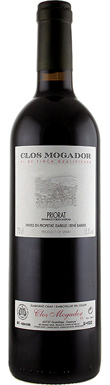

Many of the leading ‘historical’ wines of Priorat prove that a mixture of local and international varieties can produce outstanding results, and this magnificent 2015...
2015
Clos MogadorPriorat

Clos I Terrasses, Clos Erasmus, Priorat, Catalonia, Spain, 2015
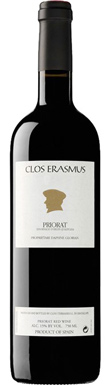
96
You can’t describe Clos Erasmus in any other way than as a luxury wine, yet a close look at the aromatic and flavour detail of this blend of 70% Grenache with 30% Syrah, aged in both barrels and amphorae, shows just what a Priorat thoroughbred it is. The wine is grown in a variety of sites with both north and south facing aspects around the village of Gratallops. It’s deep but not opaque in colour, with complex yet somehow calm and settled aromas - ripe red and black fruits and brushed, fragrant thyme and mint, with a little perfumed sweetness. On the palate it is mouthfilling, intense, deep and amply ripe, with firm though finely-milled tannins, fresh red fruits, juicy acidity and savoury depths, too. Very complete and authoritative, yet also disarmingly lovely.
2015
Clos I TerrassesPriorat
Mas Martinet, Camí Pesseroles, Priorat, Catalonia, Spain, 2015
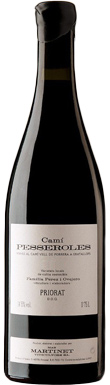
In contrast to its Clos Martinet, Mas Martinet’s Camí Pesseroles is from mostly old Carinyena vines of almost 100 years old, with 40% similarly aged...
2015
Mas MartinetPriorat
Mas Alta, Cirerets, Priorat, Catalonia, Spain, 2015
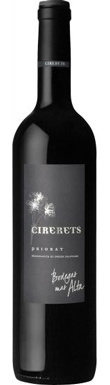
This dark yet translucent wine is a blend of Carinyena from 60 year old vines with younger Garnatxa grown on very soft schist close to...
2015
Mas AltaPriorat
Mas Martinet, Clos Martinet, Priorat, Catalonia, Spain, 2015
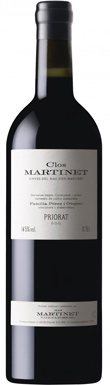
Winemaker Sara Pérez isn’t an unalloyed fan of Cabernet Sauvignon in Priorat, 'but if I’m here and doing what I love', she acknowledges, 'it’s because...
2015
Mas MartinetPriorat
Mas Alta, La Basseta, Priorat, Catalonia, Spain, 2015
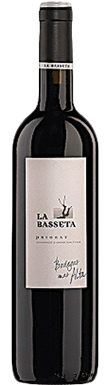
The dark, smouldering and suggestive La Basseta is the perfect foil to its light, graceful sibling Cirerets. The blend here is 80% Garnatxa, some 60%...
2015
Mas AltaPriorat
Mas Doix, 1902, Priorat, Catalonia, Spain, 2015
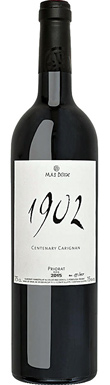
This rare wine, made from Carinyena vines planted at almost 600m in 1902 by Sandra Doix’s great-great-grandfather, is not produced every year, and gets a...
2015
Mas DoixPriorat
Clos Figueres, Priorat, Catalonia, Spain, 2015
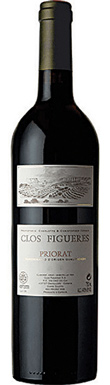
Dark black and red in colour, this Gratallops-grown blend of older vine Garnatxa and Carinyena, with 10% of Syrah and 5% of Cabernet Sauvignon, is...
2015
Clos FigueresPriorat
Clos I Terrasses, Laurel, Priorat, Catalonia, Spain, 2015
This deeply coloured but limpid blend of 60% Grenache, complemented by equal quantities of Syrah and Cabernet, is a tonic contrast to its slow-dropping, sumptuously...
2015
Clos I TerrassesPriorat
Terroir al Límit, Les Manyes, Priorat, Catalonia, Spain, 2014
The label tells you that this is a ‘Vi d’altura’, a high-sited wine. Indeed the region can boast few higher, and this is pure old...
2014
Terroir al LímitPriorat
Ferrer Bobet, Vinyes Velles, Priorat, Catalonia, Spain, 2014
This wine, from the steep llicorella slopes of the village of Porrera, brings together old vine Carinyena (a Porrera speciality) with 30% Garnatxa, aged in...
2014
Ferrer BobetPriorat
Terroir al Límit, Dits del Terra, Priorat, Catalonia, Spain, 2015
This wine is pure 85 year old Carinyena grown in a south facing site lying between Torroja del Priorat and Poboleda. The grapes are picked...
2015
Terroir al LímitPriorat
Mas d’en Gil, Coma Vella, Priorat, Catalonia, Spain, 2013
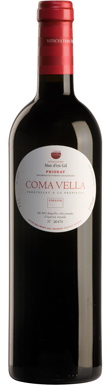
Mas d’En Gil lies to the south of the region, close to the village of Bellmunt, and the Coma Vella vineyard is the oldest in...
2013
Mas d’en GilPriorat
Família Nin-Ortiz, Nit de Nin Coma d'En Remeu, Priorat, Catalonia, Spain, 2015
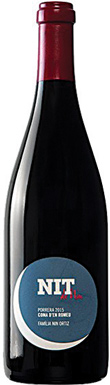
Dark black and red in colour, this blend of old vine Garnatxa Peluda, the ‘downy’ variant of Garnacha, with 40% of Carinyena grown in the...
2015
Família Nin-OrtizPriorat
Magran, Partida les Manyetes, Priorat, Catalonia, Spain, 2015
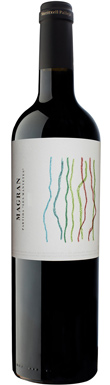
There’s sometimes an apothecary, menthol or eucalyptus note to the wines of Priorat, and that is something which young winemaker Meritxell Pallejà - who worked...
2015
MagranPriorat
