
Forge Cellars: Producer profile plus 10 wines to try
From its perch high above Burdett, New York, Forge Cellars stands slightly apart from its neighbours. The wines are also driven by a unique vision that reveals an analytical exploration of the terroir of Seneca Lake through the lens of Riesling and Pinot Noir, amounting to a unique expression of this extraordinary cool-climate terroir.

Forge Cellars is committed to exploring the unique terroir of the southeastern side of Seneca Lake. This section, known as ‘The Banana Belt,’ ripens fruit well due to west-facing slopes that maximise the heat of the late afternoon sun. The winery sources grapes from 13 sites and produces a unique single-vineyard dry Riesling from each.
Scroll down to see 10 Forge Cellars wines to try
All Rieslings ferment in casks until bone dry, yet none are acerbic or challenging to appreciate, even in their youth. From this collection of sites, Forge also crafts in some vintages two single vineyard Pinot Noirs, three Cabernet Francs, and a Chardonnay, as well as the ‘Classique’ range of blended dry Riesling and Pinot Noir that provide an entry point to the range.

Rhône roots
Forge Cellars is the brainchild of Louis Barruol and Rick Rainey. Barruol represents the 15th generation of his family to own the Château de Saint-Cosme in Gigondas. Passionate and articulate, he is responsible for the winemaking, while Florida-born Rainey is responsible for sourcing the fruit and overseeing the grape growing.
The Rhône is very different from the Finger Lakes, but Barruol says, ‘Although we don’t do the same things in each place, we are still the same vignerons.’ He had always wanted to create a new winery from scratch, and Rainey, who worked for the Saint-Cosme importer, introduced him to the terroir of the Finger Lakes.
‘It is Seneca Lake that we truly believe in,’ he explains: ‘it is the deepest of the Finger Lakes and holds the heat, buffering the cool dominant winds from the northwest before they reach us.’
‘After that, it is necessary to learn the code of the terroir. We use French methods in our search for minerality and expression of terroir. America’s ‘great white wine’ will not be a 14.5% Chardonnay but a Riesling at 12%.’
A selection of Seneca vineyards
Vineyard: Willow Vineyard
Farmed by: John Wagner
Planted: 2014
Elevation: 220m
Key vineyard details: Willow is the furthest north of the sites from which Forge sources on the east side of Seneca Lake. It is located in the village of Lodi. Aurora and Farmington silt loam on shale with a west-facing aspect. Because of the sand and the light reflecting off the water, this is among the earliest vineyards to ripen.
Key wines: Riesling and Cabernet Franc are planted in sandy soils at 220m.
Vineyard: Railroad Vineyard
Farmed by: John Wagner
Planted: 1995
Elevation: 250m
Key vineyard details: Located near the village of Lodi, perfectly preserved railroad ties from a clearly defined route for the historic Lehigh Valley Railroad from the early 1900s bisect the vineyard. Honeoye and Lima silt loam on shale.
Key wines: Riesling is planted here in heavier gravelly loam soils that impart more richness and fruit.
Vineyard: Wagner Caywood East
Farmed by: John Wagner
Planted: 2005 & 2006
Elevation: 300m
Key vineyard details: Located near the village of Caywood. At the top of the slope at an average elevation of 300m, it is a 5.6hasite on a drastic slope in soils of almost pure shale. (Lansing and Conesus gravelly silt loam on shale.)The vineyards have been converted to vertical shoot positioning and are very low-yielding: the average is 35 hl/ha, while some growers can harvest three times that amount.
Key wines: Riesling with electric character
Vineyard: Caywood Vineyard
Farmed by: Matt Doyle
Planted: 1972 & 1973
Elevation: 215m
Key vineyard details: Near the village of Caywood, on Honeoye silt loam on shale. Caywood is the most historical of the Seneca Lake sites planted by one of the region’s two most important figures, Charles Fournier, who pioneered Vitis vinifera in the Finger Lakes. The vineyard is relatively flat, and the topsoil is very thin, yielding concentrated wines.
Key wines: Riesling and Chardonnay with old vine character.
Vineyard: Freese Vineyard
Farmed by: Mark Wagner
Planted: mid-1990s
Elevation: 235m
Key vineyard details: Near the village of Lodi, on Conesus and Lansing silt loam atop shale. Near Breakneck Creek, which has some moderating influence on the vines. Forge began working with this vineyard in 2015 and bottled it for the first time as a lieu-dit in the 2018 vintage. The Riesling planted here has a balance between salinity and ripe fruit.
Key wines: Riesling that is ‘prudent and precise, offering ripeness and restraint.’
Vineyard: Breakneck Creek
Farmed by: John Santos & Doug Hazlitt
Planted: 1992
Elevation: 238m
Key vineyard details: Near the village of Valois, Lansing and Conesus silt loam on shale. Breakneck Creek was so called owing to the steep slope down which it ran to Seneca Lake. The creek runs parallel to Lake Seneca, drawing cool air in to give a salty marine edge to the wines.
Key wines: Riesling
From vines to wines
Barruol explains that he has been certified organic at Saint-Cosme ‘since forever’, but this type of viticulture is difficult in the Finger Lakes, where one finds copious rain during the growing season and more heat than one might think. ‘Mildew loves that! We are developing alternative organic solutions, but you can’t go too far without knowing what works.’
The 6ha home vineyard, Bellows, is farmed using organic methods but not certified. The vineyards are tilled but only as needed for weed control (many neighbours are using herbicides), and the canopy is managed with enough leaf-pulling to ensure both ripeness and the airflow to reduce mildew.
Forge is part of a group of growers in the Finger Lakes along with Silver Thread, Hermann J. Weimer, Dr Konstantin Frank and others that follow sustainable practices, including regenerative agriculture, bio-intensive farming, biodynamics, and the VineBalance sustainability practice developed at nearby Cornell University.
The hand-picked grapes are pressed whole-cluster. However, the fruit sourced from machine-picked vineyards is pressed as whole berries. The press cycle is long and slow, done in old mechanical Vaslin presses. For the single vineyard ‘Lieux-Dits’ bottlings, the must is settled overnight and run into neutral large and small casks with some of the lees for a long slow fermentation.
Tank-fermented wines form the base of the ‘Classique’ range, supplemented by barrels from single vineyards. Although the grapes are fermented until bone dry, there is nothing harsh or biting in the Forge style – on the contrary, a delightfully soft, floral perfume permeates the Rieslings.
The reds ferment with a proportion of whole clusters that can vary from 10-40%, and the wines are gently extracted with a light punching down to ensure a silky tannic structure. All fermentations use the starter or ‘pied de cuve’ method with ambient yeasts.

Forging a future
Barruol and Rainey continue to grow the volume at Forge Cellars, which they hope will top out at 15,000 cases, ideally with a mix of 80% dry Riesling and 20% red wine. The wines are well-distributed abroad, and the team is on a mission to spread the message that the Finger Lakes can offer wines of minerality, freshness, and complexity.
Barruol believes that the Finger Lakes is the region of the future, where despite global warming, the vines give wines of 12° with lively acidity — ‘Difficult vintages are less and less frequent’. Now that the winery is turning out consistently delicious wines, it seems that Barroul’s dream of creating a stellar winery ex nihilio has finally come to pass.
Vintage notes
2022: The December of 2022 was warmer than the average, and the vines were not fully dormant when a cold snap in January sent temperatures as low as -25° C. Relatively few vines died completely, but this extreme cold reduced yield by up to 50% in some sites. From the onset of spring, however, many growers were reminded of the beautiful conditions of 2020, with abundant sun and arid conditions—the season was drier for longer than many could remember. The drought led to small grapes with thick skins, which easily withstood the rain that fell in September. In short, the quality of the 2022 vintage is superb, but the quantity of grapes is small.
2021: Dry and sunny weather kicked off the growing season in the Finger Lakes. After flowering, however, the region saw much more rainfall than average. This lead to fungal disease and difficult ripening. Although the rain let up in September, most growers picked in the rain, making this among the most challenging of recent vintages. At Forge, the vintage is compared to an oyster, with the best wines showing a compelling salty quality.
2020: The season began with cooler-than-normal temperatures in April and May, and some vines were damaged by frost in early May. After flowering, however, temperatures were warmer, and the weather was notably dry. Drought conditions helped the grapes to ripen to exceptional levels, and yet levels of acidity and alcohol were close to normal — overall, a very successful vintage
2019: Cooler weather early in the season led to a classic vintage for white wines in the 2019 vintage. The lower temperatures delivered crisp acidity. Yet July and September were very sunny, producing healthy grapes and good ripeness to the structured fruit — an excellent year for white wine.
2018: Warm, wet weather was the general rule for 2018, and the rain intensified throughout the season. While conditions during the early season were close to normal, the weather became increasingly warm and wet from the end of veraison, increasing the threat of botrytis. A challenging year with a small crop.
2017: Flowering was warm and wet, but July and August were drier and cooler than average. The sun returned in September and most of October to deliver a good-sized, ripe crop with crisp acidity levels and balance — a good year for both red and white.
2016: A warm and very dry vintage producing concentrated fruit. The yield was 10 – 20% lower than usual. The heat produced a moderate crop of healthy grapes with excellent ripeness and slightly lower-than-average acidity — a good year, particularly for red wines.
Forge Cellars an exploration of Seneca Lake terroir in 10 wines
Related articles
- International Riesling Day: American style
- Producer profile: Orin Swift
- Ten exciting dry and off-dry German Riesling wines
Forge Cellars, Wagner Caywood East Dry Riesling, Finger Lakes, Seneca Lake, New York State, USA, 2022
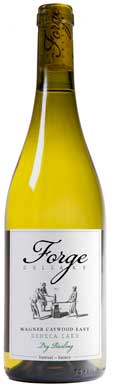

This superb Riesling has an almost piercing concentration and depth of flavour, with aromas of lime, passion fruit, fresh white flowers and an undercurrent of...
2022
Forge CellarsFinger Lakes

Forge Cellars, Leidenfrost Dry Riesling, Finger Lakes, Seneca Lake, New York State, USA, 2020
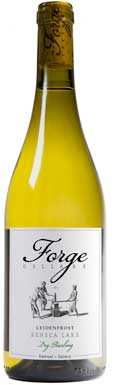
Steep slopes of nearly pure shale close to the lake give a wine of superb concentration with notes of ripe apricot, quince paste, and hawthorn....
2020
Forge CellarsFinger Lakes
Forge Cellars, Railroad Dry Riesling, Finger Lakes, Seneca Lake, New York State, USA, 2020
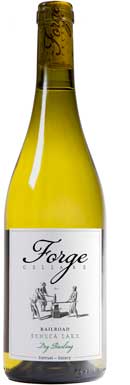
This rich, almost honeyed wine shows the lush aromas of peach and honeysuckle. The palate has a lovely density and impressive concentration, yet the wine...
2020
Forge CellarsFinger Lakes
Forge Cellars, Caywood Chardonnay, Finger Lakes, Seneca Lake, New York State, USA, 2022
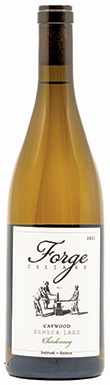
This concentrated, elegant wine amply demonstrates the potential of Chardonnay in the Finger Lakes, with great precision and purity of fruit and notes of grapefruit,...
2022
Forge CellarsFinger Lakes
Forge Cellars, Freese Dry Riesling, Finger Lakes, Seneca Lake, New York State, USA, 2021
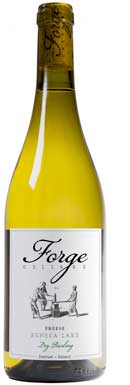
Described by managing partner Rick Rainey as ‘apricot jam, the perfect breakfast wine’, this is almost savoury and intensely flavourful. There is more richness and...
2021
Forge CellarsFinger Lakes
Forge Cellars, Peach Orchard Dry Riesling, Finger Lakes, Seneca Lake, New York State, USA, 2020
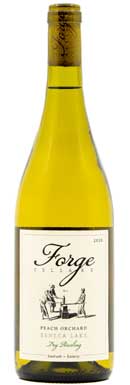
Opening with a slightly reductive, almost savoury mineral note, the aromas blossom in the glass to show hints of ripe kiwi and nectarine and a...
2020
Forge CellarsFinger Lakes
Forge Cellars, Breakneck Creek Dry Riesling, Finger Lakes, Seneca Lake, New York State, USA, 2021
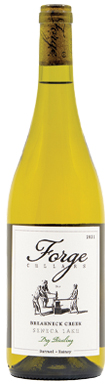
Driven by notes of grilled lemon peel, salt and crushed stone. Dried herb, smoky flint and floral notes peek out of this reverberating Riesling. Delicious...
2021
Forge CellarsFinger Lakes
Forge Cellars, Willow Dry Riesling, Finger Lakes, Seneca Lake, New York State, USA, 2021
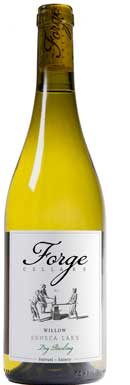
The fresh aromas of ripe apricot, lemon peel, and acacia flower have surprising concentrations for such a damp year. The palate has a pronounced salty...
2021
Forge CellarsFinger Lakes
Forge Cellars, Arlo Cabernet Franc, Finger Lakes, Seneca Lake, New York State, USA, 2021
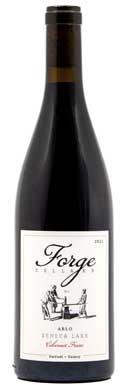
There is a sweet edge to the high-toned plum and blackberry fruit in this convincing Loire-style rendition of Cabernet Franc, replete with attractive notes of...
2021
Forge CellarsFinger Lakes
Forge Cellars, Leidenfrost Pinot Noir, Finger Lakes, Seneca Lake, New York State, USA, 2021
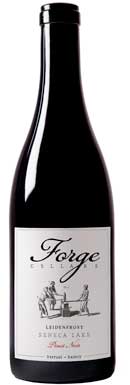
This cool-climate take on Pinot Noir has a vibrant pomegranate and cranberry fruit aroma with an edge of lavender, liquorice, and earth. The texture is...
2021
Forge CellarsFinger Lakes