
Luce exclusive: 30 vintages of an under-the-radar Super Tuscan
To mark the 30th anniversary – and on-going evolution – of Italian fine wine Luce, Michaela Morris heads to Tuscany to speak with Lamberto Frescobaldi and taste every vintage of this Super Tuscan from youngest to oldest in a Decanter exclusive.


Launched in 1997 with the simultaneous release of 1993 and 1994, this Super Tuscan was born as a collaboration between two formidable wine families: Robert Mondavi brought California’s modern sheen to Frescobaldi’s rustic Tuscan charms.
Over the years, Luce has garnered high praise for its opulence and power.
Scroll down for notes and scores on all 30 vintages of Luce
Before diving in, I ask Lamberto about the birth of Luce. ‘It was really thanks to [Robert] Mondavi,’ he replies. Speaking of him fondly, Lamberto gives context to Mondavi’s mindset when he connected with Lamberto’s father, Vittorio in the early 1990s – a full two decades after resolving to making a wine in Italy.
‘Opus One had taught him and his kids that there is no such thing as a perfect wine,’ asserts Lamberto, who credits the joint venture with the Rothschilds in Napa Valley for attuning Mondavi to place over grape variety.
‘Bob was smart enough to understand that he wouldn’t make a wine on his own,’ Lamberto continues, explaining that, in Vittorio, he recognised a like-minded entrepreneur.
Leading the project for the Mondavis, Robert’s son Tim was particularly struck by Castelgiocondo in the luminous southwestern expanse of Montalcino. Despite being in the heartland of Sangiovese, it was Lamaione – a 100% Merlot – that initially inspired Tim.
This interloper was planted in the 1970s, when the property was under French ownership.
A UC Davis graduate, Lamberto was managing the vineyards when the Mondavis arrived, and collaborated with Tim to create the Luce prototype. He recalls their early conversations. ‘Do we want to make another wine? Not really. Do we want to learn something between us? Yes.’
‘The idea to blend Sangiovese and Merlot was quite unusual at the time,’ he states, adding that it didn’t compete with other wines the two companies already made. Calling himself the ‘cowboy’, Lamberto sought the power and sexiness of Merlot, while it was Tim who favoured the firmness of Sangiovese.
‘Sometimes we were arguing, and I would exclaim, “Luce isn’t Brunello!”.’
The richly textured, generously fruited, lavish style of Luce has long made that clear in the glass.

Standing alone
Touting the partnership, bottles bore both families’ names until Mondavi sold to Constellation in late 2004. Shortly after, Frescobaldi exercised its option to buy Mondavi’s 50% stake in Luce. Following the split, both the Robert Mondavi and Frescobaldi signatures were removed from the label.
‘The idea was for Luce to stand alone,’ says Lamberto.
Nevertheless, an amicable relationship between the two families has endured. ‘Most of the time, collaborations don’t work,’ Lamberto declares. ‘But in this case, it did.’
He considers Luce a new beginning for Frescobaldi, which is significant for a family that boasts seven centuries of history in agriculture and winemaking.
‘We started transferring what we were doing at Luce to our other wines, giving more care to everything from pruning, selection and picking to vinification, managing malolactic fermentation and ageing.’

Honed winemaking
While the Super Tuscan boom has largely waned, Lamberto asserts that ‘Luce has strengthened’. Still based on approximately equal proportions of Merlot and Sangiovese – only the cool, wet 2002 vintage has ever deviated from this – production has been appreciably honed over the years.
Today, Luce is selected from the property’s 92 hectares, which are distinct from the 200ha of sister estate, Castelgiocondo. Rising from 270 to 418 metres, 21 unique parcels are categorised by five different macro-soil types.
Sangiovese is planted at higher altitudes on predominantly schist, versus Merlot which sits at slightly lower elevations on sandy clay. Organic certification for all the vineyards was achieved in 2015 (although as of 2024, the company is re-evaluating if this is the right approach to attain the highest quality grapes).
Ermanno Morlacchetti has been the head agronomist since 2000. Besides ongoing research of clones and rootstocks, he cites two key improvements in the vineyards: meticulous pruning to preserve the health of vine wood, and soil management to encourage water permeation.
‘We evaluate our work every week,’ he says. ‘It is less standardised than 20 years ago.’
Renowned oenologist Niccolò d’Afflitto continues to oversee all of Frescobaldi’s estates exclusively. The Luce della Vite brand also has its own dedicated winemaker, focusing solely on the stable of Luce, second wine Lucente, Cabernet Sauvignon-based Lux Vitis and Luce Brunello.
Bordeaux-trained Alessandro Marini assumed the role of head winemaker in 2020. With an aim to preserve freshness, he favours picking earlier.
In the cellar, ‘I am looking for balance immediately,’ he remarks.

Doing better
While originally made in the same facility as Castelgiocondo, Luce has had its own cellar since 2017. ‘We have become much more precise,’ explains Lamberto, citing the beneficial role of new technology. ‘In the past, we were crossing our fingers. Now we have many more tools.’
The oak regime has also evolved: by 2005, Luce was being aged in 100% new French oak barriques. ‘You had to in those days,’ Lamberto declares. They began easing up on the use of new oak in 2011, reaching up to 20% of second-use barriques as of the 2018 vintage.
Luce is still noticeably oak-driven in its youth, however recent vintages – particularly from 2015 on – demonstrate greater refinement of oak and tannins with better balance of fruit.
Though a bit awkward, the noughties wines are not without gems – 2008 being a particular highlight. And as for the older wines, they are time capsules of a different era and provide a baseline for what has been achieved over the years. Those from the 1990s are fully developed, with an impressive rally from the 1996.
‘Tasting the older vintages makes you feel younger because they bring back memories,’ says Lamberto as he recounts making the first trial blends with Tim. ‘Bob showed up and said, “this wine is terrific; it has complexity. But I know you can you do better.”’
From 28,000 bottles in the first vintage, Luce has reached an annual production of 130,000. Lamberto does not foresee increasing quantities further. He describes Luce as ‘a young wine with much to prove’ and his focus is on improving quality.
‘Our goal is for Luce to stand proudly among the world’s finest wines.’
Robert Mondavi’s comment about doing better has clearly become Lamberto’s mantra.
Luce: 30 years of progress
Related articles
- Best value Brunello di Montalcino 2020: 10 to buy
- The making of a megastar: Masseto
- Italy’s future greats: 10 wineries from Piedmont to Campania nominated by their peers
Luce della Vite, Luce, Toscana, Tuscany, Italy, 1993


In its final breaths, the 1993 is dominated by an oxidised character with just a whisper of exotic spice. It leaves the palate with a...
1993
Luce della ViteToscana

Luce della Vite, Luce, Toscana, Tuscany, Italy, 1994
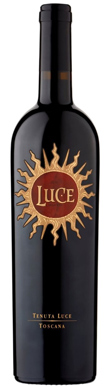
Released in tandem with the 1993 vintage, the 1994 has apparently always outshone the former. Lamberto Frescobaldi says that a cool September favoured Merlot. Black...
1994
Luce della ViteToscana
Luce della Vite, Luce, Toscana, Tuscany, Italy, 1995
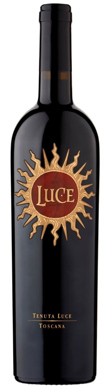
Some bitter chocolate and dried orange peel remain but a paucity of fruit exaggerates hard tannins and a tenacious oak imprint. Following below average temperatures...
1995
Luce della ViteToscana
Luce della Vite, Luce, Toscana, Tuscany, Italy, 1996
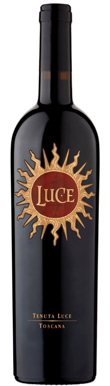
Evoking orange pekoe tea and dried raspberry, there is a brightness on the nose before the palate plumbs earthy and mineral depths. Persistent, sinewy tannins...
1996
Luce della ViteToscana
Luce della Vite, Luce, Toscana, Tuscany, Italy, 1997
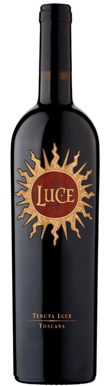
A relatively youthful nose compared to the 1998, this 1997 is clean and articulate, with a profusion of dried herbs, exotic Chinese five-spice and floral...
1997
Luce della ViteToscana
Luce della Vite, Luce, Toscana, Tuscany, Italy, 1998
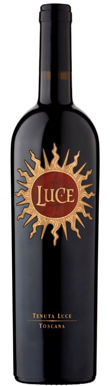
A fully garnet hue heralds an earthy mushroom and warm cocoa bouquet. The palate is characterised by a salty-sweet character as prune, tobacco and beef...
1998
Luce della ViteToscana
Luce della Vite, Luce, Toscana, Tuscany, Italy, 1999
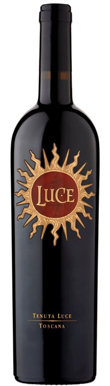
A great vintage throughout Tuscany, 1999 was very warm, though not extreme by today’s standards. The 1999 Luce has aged well – though faded in...
1999
Luce della ViteToscana
Luce della Vite, Luce, Toscana, Tuscany, Italy, 2000
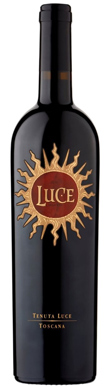
While not tired, it lacks some precision and is tenuous in fruit and frame. Notes of stewed cherry, leather and cocoa rally, and short, dry...
2000
Luce della ViteToscana
Luce della Vite, Luce, Toscana, Tuscany, Italy, 2001
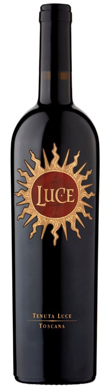
Ethereal yet attractive, this hints at green tea and forest undergrowth with subtle flavours of dried berries and bay leaf. A leaner Luce, it comes...
2001
Luce della ViteToscana
Luce della Vite, Luce, Toscana, Tuscany, Italy, 2002
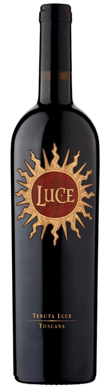
While not oxidised, this has simply reached the end of its life naturally, showing notes of tea, dried tobacco and cured leather. It is midweight...
2002
Luce della ViteToscana
Luce della Vite, Luce, Toscana, Tuscany, Italy, 2003
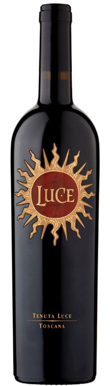
While fully evolved, it remains intense in all its elements: brawny mature fruit, compact tannins, a substantial lashing of chocolatey oak, and even concentrated acidity....
2003
Luce della ViteToscana
Luce della Vite, Luce, Toscana, Tuscany, Italy, 2004

A developing nose of black tea, baked earth and tar is age appropriate. Cedar wood suffuses the soft, red fruit palate as it glides fluently...
2004
Luce della ViteToscana
Luce della Vite, Luce, Toscana, Tuscany, Italy, 2005
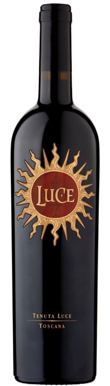
Aromas of sweet herbs and vanilla emerge from a backdrop of baked summer berries. It boasts a deep core of kirsch and prune, though the...
2005
Luce della ViteToscana
Luce della Vite, Luce, Toscana, Tuscany, Italy, 2006
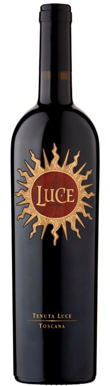
Dusty and savoury accents offset intense ripeness of dark berries. A sumptuous, exuberant, big-boned palate is abundantly packed, with tannins which lend some welcome tension...
2006
Luce della ViteToscana
Luce della Vite, Luce, Toscana, Tuscany, Italy, 2007
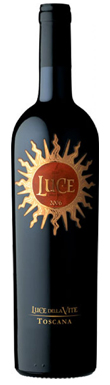
Cinnamon-spiced plum and blackberry compote are joined by sunbaked herbs. Expansive tannins wrap around the palate with absolutely no hard or gritty edges and an...
2007
Luce della ViteToscana
Luce della Vite, Luce, Toscana, Tuscany, Italy, 2008
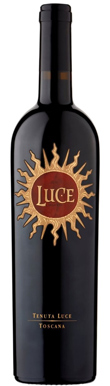
The 2008 is evolving beautifully and currently offers an enticing bouquet of liquorice tea, tarragon, mocha and leather. It fills the mouth graciously without weighing...
2008
Luce della ViteToscana
Luce della Vite, Luce, Toscana, Tuscany, Italy, 2009
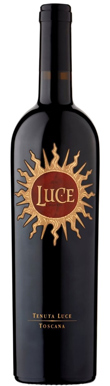
The 2009 Luce wears the warmth of the vintage on its sleeve. Evolving but not tired, dried blueberry, sandalwood and wet earth waft from the...
2009
Luce della ViteToscana
Luce della Vite, Luce, Toscana, Tuscany, Italy, 2010
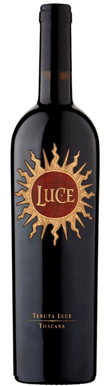
Tuscany’s temperate, slow ripening 2010 growing season bore sturdily structured wines. Indeed, at almost 15 years-old, Luce 2010 still demonstrates stern, vigorously extracted tannins and...
2010
Luce della ViteToscana
Luce della Vite, Luce, Toscana, Tuscany, Italy, 2011
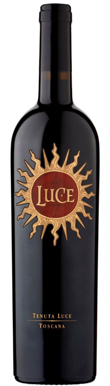
Lamberto describes the second half of August as hotter than expected, with plants shutting down and struggling with phenolic ripeness. Based on the two bottles...
2011
Luce della ViteToscana
Luce della Vite, Luce, Toscana, Tuscany, Italy, 2012
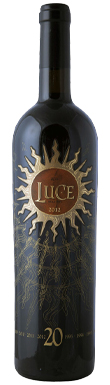
An intense nose of black plum compote reveals accents of smoky flint and coconut. The palate is penetrating and powerful, with masses of chewy tannins...
2012
Luce della ViteToscana
Luce della Vite, Luce, Toscana, Tuscany, Italy, 2013
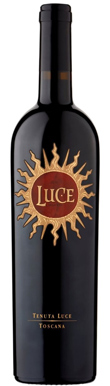
Overall, a discreet vintage for Luce. Relatively angular, it's just a bit dusty with cinnamon, pepper and liquorice poking through. There is no lack of...
2013
Luce della ViteToscana
Luce della Vite, Luce, Toscana, Tuscany, Italy, 2014
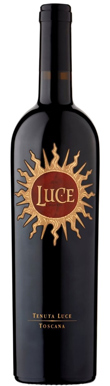
Evocative forest scents morph into roasted coffee and incense. It is elegantly weighted, with dark bramble fruits and just-ripe tannins giving grippy texture. The finish...
2014
Luce della ViteToscana
Luce della Vite, Luce, Toscana, Tuscany, Italy, 2015
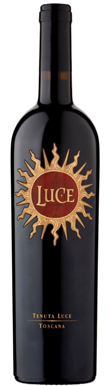
The generous warmth and luminosity of the summer is palpably harnessed in its enticing scents of star anise, mint and tarragon which mingle with cocoa,...
2015
Luce della ViteToscana
Luce della Vite, Luce, Toscana, Tuscany, Italy, 2016
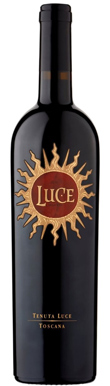
Developing attractively, the 2016 Luce offers fragrances of clove, tobacco and porcini atop baked cherries. It manages to fuse Merlot’s plushness with Sangiovese’s lightness of...
2016
Luce della ViteToscana
Luce della Vite, Luce, Toscana, Tuscany, Italy, 2017
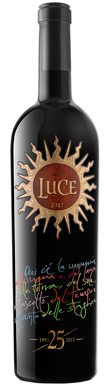
Opens with candied blackcurrants, spice box and hints of chocolate. Muscular and robust, it is showing maturing flavours of prune cake and leather, and soft...
2017
Luce della ViteToscana
Luce della Vite, Luce, Toscana, Tuscany, Italy, 2018
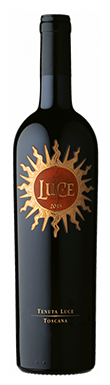
Expressive and upfront in its charms, the 2018 exudes baked black plum, macerated cherry, smoke and toasty oak. It becomes weightier, building in concentration as...
2018
Luce della ViteToscana
Luce della Vite, Luce, Toscana, Tuscany, Italy, 2019
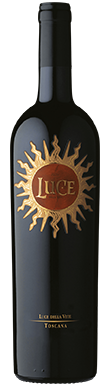
A bright and animated nose exhibits lovely precision of liquorice, red cherry, orange peel and forest floor. The oak is well embedded, imparting Christmas spice...
2019
Luce della ViteToscana
Luce della Vite, Luce, Toscana, Tuscany, Italy, 2020
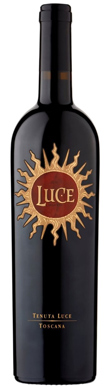
Aromas of garden herbs and tobacco are subtle for the time being. Dark fleshy cherry suffuses the palate, and its creamy texture and vanilla finale...
2020
Luce della ViteToscana
Luce della Vite, Luce, Toscana, Tuscany, Italy, 2021
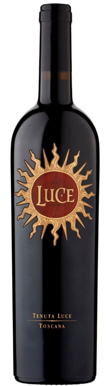
Wild blackberry and blackcurrant are densely packed in. Pliant, chewy tannins seem lost in layers of fruit, yet this remains properly corseted. Penetrating acidity lends...
2021
Luce della ViteToscana
Luce della Vite, Luce, Toscana, Tuscany, Italy, 2022
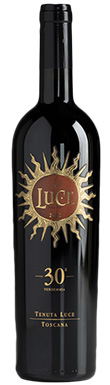
Beyond the cedar, toast and sauna-like prologue, nuances of nutmeg-infused dark brambles lie in wait, while upfront grainy tannins are accentuated by a puckering raciness....
2022
Luce della ViteToscana
