
Mercurey: A regional profile of this hidden corner of Burgundy
Charles Curtis MW shines a light on Mercurey; an often unheralded Burgundy appellation which regularly punches above its weight in terms of quality and value.

According to local legend, Napoleon stopped in the village of Mercurey as he returned from exile on the island of Elba. Quenching his thirst with the local wine, he is said to have exclaimed: ‘This Mercurey is excellent, its colour reminds me of the ribbon of the Légion d’honneur, and the bouquet of heady aroma of victory.’
However, just as Napoleon’s return from Elba was short-lived, the fame of Mercurey was also soon eclipsed, and today the wines are less well-known, to the detriment of all who love firm, ageable Burgundy that won’t break the bank.
Scroll down to see tasting notes and scores for 20 Mercurey recommendations from Charles Curtis MW
The history of winemaking in the village is long, dating back nearly 2,000 years, when the Roman occupiers had erected a temple to Mercury along their road from modern-day Autun to Chalon-sur-Saône.
The location was well placed among the limestone hills for the cultivation of the vine, which has flourished since then. Through the centuries, Mercurey wines have had their admirers: they were consumed with abandon at the papal court of Gregory XI in the 14th century and were much beloved by Henri IV’s mistress, Gabrielle d’Estrées. In 1874, the vineyards were classified (along with those in Beaujolais, Mâconnais and rest of the Côte Chalonnaise) by Antoine Budker, a local civil engineer.
Budker inventoried 300 hectares of vines in Mercurey proper, another 200ha in Saint-Marti-sous-Montaigu, and 400ha in the neighbouring hamlets of Bourgneuf Val d’Or, Touches, Chamirey and Etroyes (all today absorbed into Mercurey).
This precursor to today’s system was the first official classification. A generation later, at the end of phylloxera, the magazine Revue des Viticulteurs published a simplified classification and, in 1923, the limits of the Mercurey appellation were defined in a court case, more than a decade before most Appellations d’Origine Côntrolées were decided.
Mercurey at a glance
Appellation officially established: 1936
Vineyards: 543ha red (148ha premier cru); 106ha white (18ha premier cru)
Production: 17,167 hl red (6,112 hl premier cru); 3,910 hl white (758 hl premier cru)
Soil: Clay and marl over limestone from the Jurassic period (mostly Bathonian and Oxfordian)
Grapes: Pinot Noir and Chardonnay with Pinot Gris allowed up to 15% of the total.
Number of producers: 105
Geography
The vineyard area of Mercurey is much smaller today than before phylloxera; according to the Bourgogne Wine Board, a total of 649ha are currently planted. Despite this shrinkage, Mercurey is the village of the Côte Chalonnaise with the most land devoted to vineyards.
If the area of the vineyard has shrunk over time, the area of the premier crus has expanded. The first group were anointed in 1943. The list of premier crus was greatly expanded in 1988, and today there are 32, with plans to promote more.
The vineyards here are often described as being an amphitheatre. This description is broadly true, but the vines line the slopes of several different hills. The valley of the river Giroux bisects the village, and this broad valley is, in turn, interrupted by four smaller valleys, creating a complex terroir.
The largest group of premier crus lie north of the village on the slopes of the wood called ‘La Boussière Communale’. They stretch from the east-facing Faiveley monopole Clos des Myglands and the large Clos l’Evêque around the slope to the southwest-facing Champs Martins. Other names to remember in this section are Le Clos Voyens, Les Crêts, Les Combins and Les Croichots.
The following group of premier crus is dominated by east-facing Sazenay, which produces both red and white wines. The final section of premier crus begins southeast of Sazenay with La Mission, Clos du Roy, Les Vellées (or Velley) and Clos du Château de Montaigu, a monopole of Domaine Meix Foulot. This line of vineyards meanders along the base of the slope to the Clos des Montaigus and the Clos du Paradis in the village of Saint-Martin-sous-Montaigu.
Style
Mercurey is, above all, a red wine village, with Pinot Noir accounting for more than 80% of production, although both colours can excel. Its reputation, however, is founded upon the tannic, dense reds that are an interesting counterpoint to the supple, velvety wines of Givry and the lighter, perfumed reds of Rully.
The colour is often a deep garnet, and the wines can show both red and black fruit character, a hint of earth and sometimes a slightly rustic edge. They are generally tannic and full-bodied on the palate and open best with a few years in the bottle. The white wines offer aromas of grapefruit, apricot and quince, and are often sturdy rather than fine, yet the best can continue to improve for a decade.
The variety of terroir creates a diverse array of wine: Faiveley’s technical director Jérôme Flous explains that the east-facing Clos du Roi has the spirit of Corton, while its monopole Clos des Myglands in the north of the village is more like Gevrey. With such a wide choice of styles, Mercurey delivers a delicious range of wines that remain largely affordable and eminently worth exploring.
10 Names to Know
Domaine Bruno Lorenzon
Bruno Lorenzon prides himself on going his own way. He took over the 5ha family estate in 1997 after helping to found the Tonnellerie de Mercurey and working harvests abroad. Today, Lorenzon farms 10ha, proudly noting that his father had stopped using herbicides and all synthetic chemicals decades before he took over. He also had the good fortune of being mentored by Henri Jayer.
He follows organic procedure but has removed the organic label because he disagrees with the number of times certified growers sometimes spray their vines. Lorenzon plants at high density (between 14,000-17,000 vines per hectare), and prunes to five buds per vine to limit yields. He trains the vines relatively high but disagrees with the fashion for weaving together untrimmed shoots (‘tressage’). The fermentations are done with yeast strains he cultures himself.
Lorenzon says that his approach to white wine fermentation is a long, slow (four hour) and gentle pressing of the whole bunches. The wines are left in barrel for a year and racked into tank for another six to eight months before bottling. The reds are fermented in wooden tanks that are wide but not tall; extraction is gentle and solely by foot treading. The maceration is also long.
Lorenzon contrasts this with the ‘minimalisme’ of vignerons such as Charles Lachaux, who use a short maceration. Once the fermentation is done, the wines are racked into barrels. As one might expect given Lorenzon’s background as a cooper, he takes extraordinary measures with his casks, from choosing his own trees to drying the staves for three years and making the barrels himself. This is a domaine to discover without delay.

Domaine Faiveley
Faiveley has a long, proud history with Mercurey that dates back nearly a century to the years before the Depression when Georges Faiveley (great-grandson of the founder Pierre Faiveley) began to source grapes here. His son Guy and grandson François expanded these holdings, while seventh-generation Erwan Faiveley also invested in Mercurey, building a new winery in 2013.
Today, half of the 140ha owned by Faiveley are in the Côte Chalonnaise, and 55ha are in Mercurey alone. A significant proportion of this is on the northern edge of the town, including La Framboisière, Clos Rochette and Mauvarennes, a near-solid block of 28ha. Nearby is its 6.3ha monopole premier cru Clos Myglands. Faiveley also owns more than 2.5ha of premier cru Clos du Roi (a Top Value choice in our Burgundy 2022 en primeur coverage).
Faiveley’s régisseur in Mercurey, Julien Bordet, has been in place since 2008 and is the past president of the local winegrowers association. Given such a prominent role in Mercurey, it would be difficult to overstate Faiveley’s importance here.

Château de Chamirey
Construction of the imposing Château de Chamirey began in the 18th century before passing into the family of the Marquis de Jouennes. Vineyards were long a part of the domaine, and the Marquis started to bottle his wine in 1934.
His son-in-law, Bertrand Devillard, expanded the holdings to 37ha while working as the CEO of local négociant Antonin Rodet (now sold to Jean-Claude Boisset).
Devillard’s children, Amaury and Aurore, have continued to expand and refine the offer here with the assistance of winemaker Carole Briffox. The reds are destemmed and given a cold soak before fermentation on native yeasts and regular pigeages (punch downs).
After a post-fermentation maceration, the wines are aged in a cask (one-quarter new) for up to 18 months. The Chardonnay is carefully sorted, pressed as whole clusters, and fermented and aged in used casks for 15 months.

Domaine Belleville
Recent years have brought enormous changes at Rully-based Domaine Belleville. The property was purchased by private equity billionaire Mark Nunnelly and his wife, developer Denise Dupré, who own Champagne Leclerc-Briant and Domaine de la Commaraine in Pommard. The couple has retained Jean-Luc Vitoux to oversee their holdings, and Charles Nebout is making the wines at Belleville, including their 5.5ha in Mercurey.
The domaine completed conversion to certified organic production in the difficult 2021 vintage, using biodynamic techniques when possible. The reds are gently fermented, beginning with destemming and then a cold soak before fermentation, gentle pumping over to ensure extraction and only one punch down during the entire three weeks in vat. The reds see a year in cask (30% new) before being bottled according to the phases of the moon.

Domaine de Suremain
Domaine de Suremain is a family estate run today by seventh-generation Loïc de Suremain (not to be confused with his cousin Eric de Suremain in Monthélie). The Mercurey branch farms 18ha of vines. Grapes are picked ripe and carefully sorted before destemming and fermentation on native yeasts in open-top wood fermenters with a cuvaison (maceration) lasting up to two weeks. The wines are aged in cask for a year (10%-15% new).
The domaine is based at the Château de Bourgneuf. Loïc’s ancestor, Hugues de Suremain, was among the founders of the Confrérie de Saint-Vincent de Mercurey and of the local co-op. Although the wines were once renowned as very tannic and slightly rustic, in recent years they have stood out for their elegance in my blind tastings of the appellation.

Domaine Meix Foulot
Meix Foulot is a historic domaine that the de Launay family has run for six generations. The current proprietor, Agnès Dewé de Launay (a cousin of the Suremain family), took over in 1996. She and her team farm 20ha, including the magnificent 1.9ha monopole Clos du Château de Montaigu.
The vines are pruned short to limit yield, and a green harvest reduces yield further if necessary. Besides a small cuvée of white Mercurey (a blend of village-level and premier cru grapes), most of the wines are red.
The Pinot is destemmed and given a cold maceration before fermentation on native yeasts, with extraction primarily by punching down. Maturation is in cask (mainly used) for 16-18 months before being bottled, generally without filtration. Some of the oldest vines are those in the Clos, dating from 1955.

Domaine François Raquillet
François is the 11th generation of his family to grow grapes in Mercurey. He took over from his father in 1990 with his wife, Emmanuelle, and the couple was joined by their daughter Jeanne in 2018. The family sustainably farms 14ha, with cover crops alternating with ploughed rows. Fungicides are not employed, and botrytis is normally controlled through canopy management.
After a careful manual harvest, the grapes are rigorously sorted before destemming and cold maceration, and fermentation on wild yeasts. Extraction is assured by pumping over twice daily but punching down infrequently. Reds are generally aged in cask for a year (30% new). The whites are gently pressed as whole clusters and settled overnight before fermentation on indigenous yeast and ageing in 400-litre casks for a year.

Domaine Michel Juillot
This substantial domaine of 31ha was founded in 1928 by Emile Juillot and is headed today by his grandson Laurent, assisted in recent years by his son Pierre. The winery continues to innovate and was certified as Haute Valeur Environnementale (High Environmental Value) in 2020.
Tanks are filled by gravity, and extraction is done by punching down and pumping over. At the end of fermentation, the marc is pressed using a vertical press and the wines are aged 16-18 months in cask (15%-30% new). Whites are lightly crushed before fermentation in foudres and smaller casks (up to 30% new) and aged on the lees for 10-12 months before bottling.

Domaine Theulot-Juillot
Natalie Theulot and her husband Jean-Claude direct the domaine founded by her grandfather Emile Juillot in 1928. His son Louis stayed at Domaine Michel Juillot, while his other son (Emile) formed his eponymous domaine, now named Theulot-Juillot by Natalie and Jean-Claude.
The couple farm 12ha using sustainable methods, limiting yields by debudding and green harvesting, and sorting at harvest carefully to ensure quality and concentration. The reds are entirely destemmed and given a cold soak before fermentation on native yeasts with punching down and pumping over.
Ageing is done in cask with 20%-25% new oak for 12-15 months before light filtration and bottling. The whites are pressed as whole clusters and settled overnight before fermentation in cask (20%-25% new) and ageing on the lees with bâtonnage for 11 months.

Domaine Vincent et Jean-Pierre Charton
Vincent Chartron has recently taken over from his father, who is still very present in the winery. The pair farm the domaine created by his grandfather in 1941, totalling 11.5ha of vines in Mercurey that are ploughed and sustainably worked to ensure the integrity of the grapes.
The vines are pruned to five or six buds to limit yields, and the grapes are picked by hand and carefully sorted. The fruit is completely destemmed and partially crushed before fermentation using punching down and pumping over for approximately three weeks. The wines are aged in cask (up to 30% new) for eight to 10 months before bottling. The white Clos du Roy is a standout.

See notes and scores for 20 Mercurey recommendations from Charles Curtis MW
Related articles
- Domaine Parent: A benchmark Pommard domaine
- French police arrest man for stealing 7,000 Burgundy wines – report
- Top northern Côte de Beaune 2022 wines en primeur
Domaine Bruno Lorenzon, Mercurey, 1er Cru Clos des Barraults, Burgundy, France, 2015
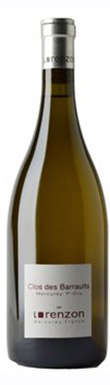

Drunk with great pleasure eight years after the vintage, this premier cru from Bruno Lorenzon is a revelation, boasting aromas of quince and apricot along...
2015
Domaine Bruno LorenzonMercurey

Domaine Belleville, Les Villeranges, Mercurey, Burgundy, France, 2022
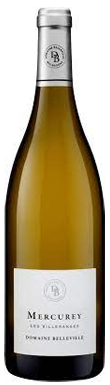
This charming white is perennially among my favourites from Belleville. In 2023, the 0.3ha delivered a Chardonnay more serious than many, with bright, lemony fruit,...
2022
Domaine BellevilleMercurey
Domaine François Raquillet, Mercurey, 1er Cru Les Veleys, Burgundy, France, 2022
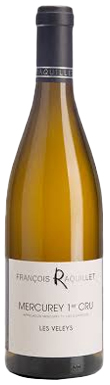
With an impressive concentration of nectarine fruit, hints of flinty minerality, hazelnut and smoke, this premier cru white from Raquillet demonstrates the potential for white...
2022
Domaine François RaquilletMercurey
Domaine Tupinier-Bautista, Mercurey, 1er Cru En Sazenay, Burgundy, France, 2022
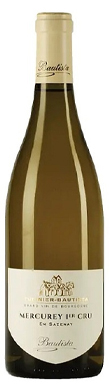
Manu Bautista's white from Sazenay is delightful, with its light lemon-yellow colour, fragrant aromas of ripe apple and pear, and a well-integrated suggestion of oak...
2022
Domaine Tupinier-BautistaMercurey
Domaine Michel Juillot, Mercurey, 1er Cru Champs Martin, Burgundy, France, 2022
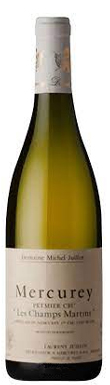
Michel Juillot's white premier cru from Les Champs Martin shows a deceptively light lemon-yellow colour, but the ripe pear and marzipan aromas waft from the...
2022
Domaine Michel JuillotMercurey
Domaine Faiveley, Mercurey, 1er Cru Clos des Myglands, Burgundy, France, 2022
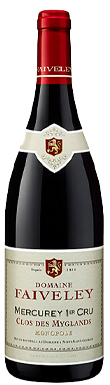
Faiveley's monopole Clos des Myglands on the northern edge of the village has delivered a delightful wine in 2022, with a lovely raspberry and plum...
2022
Domaine FaiveleyMercurey
Domaine Meix Foulot, Clos du Château de Montaigu, Mercurey, 1er Cru, Burgundy, France, 2016
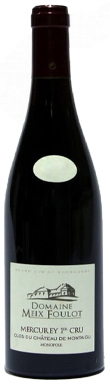
This wine has it all, with a deep, plummy fruit touched with notes of mineral, earth and sage. The texture is dense, with plenty of...
2016
Domaine Meix FoulotMercurey
Domaine Ninot, Mercurey, 1er Cru Les Saumonts, Burgundy, France, 2022
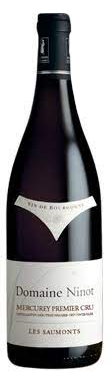
Aromas of blackberry, bramble and earth. The texture is dense and lustrous, with plenty of acidity to keep the wine lively on the lingering finish....
2022
Domaine NinotMercurey
Domaine Paul & Marie Jacquesson, Mercurey, 1er Cru Champs Martin, Burgundy, France, 2022
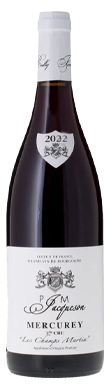
A charming wine, with ripe mulberry fruit alongside hints of earth and smoke. The texture is firmly tannic and impressively dense, but a sophisticated elegance...
2022
Domaine Paul & Marie JacquessonMercurey
Domaine Theulot-Juillot, Mercurey, 1er Cru Champs Martin, Burgundy, France, 2022
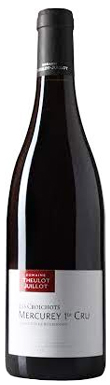
Impressively forward, plummy fruit aromas and hints of violets, spice and smoke announce a lovely sweet character to the fruit on the palate but the...
2022
Domaine Theulot-JuillotMercurey
Domaine de Suremain, Mercurey, 1er Cru Les Crêts, Burgundy, France, 2022
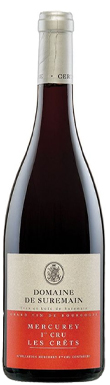
Powerful and deeply coloured, boasting aromas of mulberry and blackberry fruit with hints of earth, smoke and leather. The texture is firm and concentrated, with...
2022
Domaine de SuremainMercurey
Domaine François Raquillet, Vieilles Vignes, Mercurey, Burgundy, France, 2022
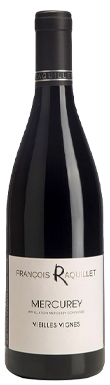
Displays impressive depth and concentration for this level, with its plum and currant fruit, cigar leaf and smoke notes, and a charmingly rustic edge. The...
2022
Domaine François RaquilletMercurey
Domaine Génot-Boulanger, Mercurey, 1er Cru En Sazenay, Burgundy, France, 2022
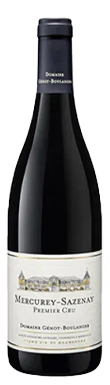
This attractive wine has a lovely ruby colour and an aroma fragrant with ripe cherry, rose petals and spice. The fruit has a distinctly sweet...
2022
Domaine Génot-BoulangerMercurey
Domaine Tupinier-Bautista, Vieilles Vignes, Mercurey, Burgundy, France, 2022
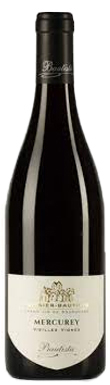
Slightly closed on the initial attack, this elegant wine opens in time with a pleasant aroma of spice-scented plums and figs. The texture is balanced...
2022
Domaine Tupinier-BautistaMercurey
Domaine Vincent et Jean-Pierre Charton, Mercurey, 1er Cru Clos du Roy, Burgundy, France, 2022
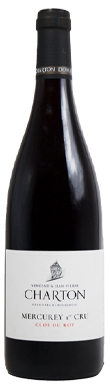
Well-developed black cherry fruit with a suggestion of earth, cedar and smoke. The texture is velvety and dense, with impressive concentration and length. The grapes...
2022
Domaine Vincent et Jean-Pierre ChartonMercurey
Château de Chamirey, Mercurey, 1er Cru Ruelles, Burgundy, France, 2022
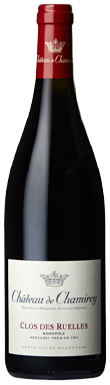
Alluring ruby colour and fragrant cherry fruit aromas touched with violets and earth. The texture is silky and surprisingly light for such a warm vintage,...
2022
Château de ChamireyMercurey
Domaine Belleville, Mercurey, 1er Cru Le Clos l'Evêque, Burgundy, France, 2021
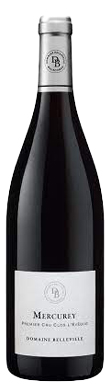
Firmly tannic and somewhat forbidding, this restrained wine opens with time to show blackcurrant and fig aromas and an exotic, lifted note that gives it...
2021
Domaine BellevilleMercurey
Domaine de Suremain, Mercurey, 1er Cru Le Clos l'Evêque, Burgundy, France, 2022
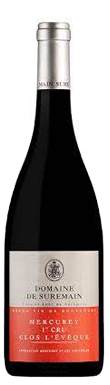
A quintessential Côte Chalonnaise red, this classic expression of Mercurey has a deep ruby colour and pleasantly pronounced aromas of ripe plum underscored with hints...
2022
Domaine de SuremainMercurey
Domaine Theulot-Juillot, Mercurey, 1er Cru Les Croichots, Burgundy, France, 2022
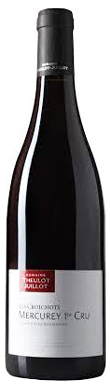
Ripe blackberry fruit aroma, a bit of bramble and forest floor give this a rustic charm. The texture is firm and dense, with plenty of...
2022
Domaine Theulot-JuillotMercurey
Domaine Jeannin-Naltet, Mercurey, 1er Cru Le Clos l'Evêque, Burgundy, France, 2022
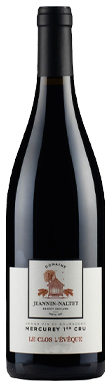
Initially a bit closed, with time in the glass it shows a reserved curranty fruit and hints of earth, smoke and bramble. The texture is...
2022
Domaine Jeannin-NaltetMercurey