
Modern Marsala: How an Italian classic rediscovered its verve and attitude
From solera-aged classics to savoury new still wines, Marsala is finding fresh momentum. Emerging new expressions span cocktails, cuisine and culture, bursting with freshness, finesse and plenty of attitude.


Western Sicily is never entirely at rest. The land is shaped by limestone plateaus that sit above subterranean pockets of fresh rainwater, while the ongoing tectonic tension between the African and Eurasian plates means that earth tremors are a familiar feature of life.
The island of Sicily itself has undergone upheavals and constant evolution throughout its history, marked by centuries of conquests. At its far-western tip, the fortunes of Marsala (from Marsa Allah, meaning ‘Harbour of God’ in Arabic) were shaped by the seafaring British empire, which brought its wines global reach during the 19th century before they began to fall out of favour in the latter part of the 20th.
Marisa’s pick of the best of modern Marsala below
Hello, Grillo

At the heart of Marsala’s revival is the Grillo grape, a natural cross between Catarratto and Zibibbo (aka Muscat of Alexandria).
Of the varieties permitted for making Marsala – Inzolia (known elsewhere as Ansonica), Cataratto, Damaschino, Grillo, Nerello Mascalese, Nero d’Avola (Calabrese) and Perricone – producers believe that Grillo is singularly vital, possessing naturally high alcohol that allows for minimal fortification and thereby preserves Marsala’s character (see more on Grillo, below).
Its capacity to resist heat also brings acidity and resultant tension – the ideal backbone for wines destined for long ageing. Based in the south of Marsala town, Cantine Florio puts Grillo front and centre.
Its visitor experience explores food and Marsala pairings, starting with the unfiltered (and unfortified) base wine Vino Florio, an expression of terroir and variety as it is before a wine begins the journey towards becoming a fortified Marsala.
‘Grillo is the incarnation of the Marsala territory and brings to the glass all the flavour of the sea and a crunchy, evolving, structured and decisive character,’ says Florio director Roberto Magnisi. ‘All this is essential for the birth of a Marsala destined to live for many, many years.’
The beginnings: fortified fortune
By the 18th century, Britain had long enjoyed Port, Madeira and Sherry, but when trade relations with Spain and Portugal became strained, supplies were uncertain. Then, in 1773, English merchant John Woodhouse arrived on the shores of Marsala.
He spotted an opportunity in the local solera-style wine (made by a process of gradually moving wines down through a tiered arrangement of casks, adding fresh wines from each new vintage to the casks at the top, such that those at the bottom contain the longest-matured blend of wines for bottling, and ensuring consistency of complexity and depth).
His commercial optimism proved successful, and with the addition of a splash of distilled spirit to stabilise it for the journey home, a new wine trade was born. This marked the beginning of Marsala as the world would come to know it, in its fortified guise.
In the first half of the 19th century, the likes of Englishman Benjamin Ingham and Italian Vincenzo Florio transformed Marsala’s global reputation, and a century later, more than 100 wineries lined the coast, strategically positioned for easy export; Marsala became one of the very first Italian wines to travel across continents.
However, industrial production ultimately led to Marsala’s decline. Sweetened and adulterated, the wines lost the character they had once had. Changing consumer tastes also tested its reputation, and by the 1980s, few outside Sicily saw Marsala as much more than a cooking wine.
Back to the table

Producer Francesco Intorcia, whose family has been making Marsala since 1930, claims that wine doesn’t need reinvention, just rediscovery.
Intorcia’s aim is to change perceptions of wines from this historic region. ‘It’s a mental and cultural barrier we need to break’, he says. He developed his Heritage brand (see tasting notes) to create a new vision for Marsala.
Magnisi at Florio elaborates: ‘Marsala is a wine that has many expressions, and these can be enhanced by the right pairing with food.’
From the shores of Marsala to the restaurants of Paris, sommeliers are now offering it not just as a sweet encore to cannoli, but pairing it with everything from starters to mains.
‘Marsala is a world that is so profound you simply can’t avoid experimenting,’ says Agnese Morandi, head sommelier at Table by Bruno Verjus in Paris. ‘Of course, it will always be amazing at the end of a meal as a meditation wine,’ she adds, ‘but it has a lot more to give.’
Shaken and stirred

Bartenders have also begun exploring Marsala’s potential as a flavourful, versatile stand-in for vermouth or Port in cocktails. Its umami notes and layered aromatics lend depth, making it an easy ‘why not?’ for creators of innovative cocktails.
Suddenly, cocktail menus are featuring Marsala-tinis, Bloody Marsalas, Marsala Manhattans and Marsala Negroni riffs kissed with exotic bitters. Sliding over a Marsala Tonic, Intorcia leans in. ‘A cocktail should showcase Marsala as the main character, not just a supporting role.’
His passion for reviving Marsala’s culture is clear in the cocktail tours he leads across the island. Pellegrino’s Marsala Revolution range is intended for use in bars and in mixed drinks, and as a means of targeting younger consumers.
‘To truly restore Marsala to the place it deserves, we need to generate new opportunities for people to taste it, understand it and fall in love with it again,’ says Benedetto Renda, president of Cantine Pellegrino. ‘Marsala is being rediscovered with new eyes, in new places, by a new audience.’
Marsala’s many moods
The versatility of Marsala stems from its family of styles. On its way up is the bone-dry Vergine, aged for at least five years in casks. Across all its varied styles, Marsala combines oxidative complexity with natural acidity, making this historically intriguing wine excellent for pairing with food.
Marsala’s production methods, and therefore the style of the wines, vary dramatically, ranging in colour and sweetness, and in ageing and fortification designations.
To shape the wine’s final character and help distinguish one style from another, winemakers choose whether to add either mistella – a blend of grape must and alcohol – or mosto cotto (‘cooked must’), which adds concentrated sugars along with a caramelised character and deep colour.
Florio brings clarity with labels that summarise and visually map the wine’s ageing journey through its cellars, placing the focus on Marsala’s evolution in both artistic and narrative ways.
The front label includes information on the years spent ageing in cask and the year it was fortified, also clearly indicating the ‘Angel’s share’ – the portion lost to evaporation through the wood of the barrel during long ageing – as a percentage figure.
Each style has a side label with a unique ‘map’ or chart that shows in graphic form which barrel it started in, in which part of the cellar, and how it progressed to where it ended up, as well as the distance (in metres) the barrels are from the coastline.
It’s a level of detail that reveals the depth of the wines’ character and helps consumers to connect with their story.
Drink what the locals drink

No conversation about Marsala’s future is complete without recognising Marco De Bartoli, the winemaker who, in the late 1970s, revived the ancient ‘vino perpetuo’ method, using a solera-type system to layer vintages of 100% Grillo in oak and chestnut barrels before bottling it under the name Vecchio Samperi.
Unfortified and oxidative in style, yet with freshness and persistence, this wine recalls the ‘pre-British’ style that preceded fortified Marsala – it’s a style that has long been respected (and drunk) by Sicilian locals.
Always unfortified, these wines fall outside the Marsala DOC regulations, hence cannot be bottled under the name ‘Marsala’. More producers are beginning to reintroduce this style, and since multi-vintage blends in general are finding themselves increasingly in vogue again, the age-old production method of the Marsala region suddenly feels unexpectedly contemporary.
While aged cheeses and seafood couscous pair beautifully with these pre-British wines, according to the producer (Marco De Bartoli died in 2011, but the business has been continued under his name by his children Renato, the late Sebastiano and Giuseppina), ramen has emerged as an unexpected match in Japan, where Marsala remains more underground than ubiquitous.
Here, seaweed, bamboo shoots and long-simmered stock yearn to be matched with an oxidative style. At Table restaurant in Paris, sommelier Morandi has paired the Marco De Bartoli Vecchio Samperi with a wide range of dishes, including everything from abalone and caramelised aubergine to pigeon glazed with Mexican mole sauce, and sweetbreads with chanterelles and lobster sauce.
The fresh wines of Marsala

In addition to the oxidative pre-British wines, the non-fortified, non-oxidised still wines made from Grillo are also gaining attention.
Crisp, dry and ‘salty’ in character, they also fall outside the Marsala DOC, but they’re integral to Marsala’s future, expressing youthfulness and terroir without the constraints of tradition.
Wines from the Salt West project (see boxout below) are reviving the Grillo wines from the Stagnone lagoon area, a little north up the coast from Marsala town, while Tasca d’Almerita produces a Grillo from the lagoon’s Mozia island.
The wines’ great strength is pure food-friendliness.
Is there still a place for fortified wine?
In a world leaning toward fresh, low-intervention, low-alcohol wines, fortified wines might seem passé, but Marsala is an outlier and its dry styles are proving otherwise. Producers are cutting sweetness levels and focusing on freshness.
And for wine lovers open to oxidative depth – the kind that reveals toasted almond, orange peel, dried fig, caramel with sea salt, antique wood – there is enormous reward.
Looking ahead
There’s a quiet but newfound swagger in Marsala’s step. It’s more self-aware than it has been in generations, with renewed pride in the land, the grape and the craftsmanship that goes into making the wine.
‘Producers have changed their approach,’ says Renda, who is also president of the Marsala producers’ consorzio. ‘They are telling the story of a Marsala suited to any moment: a social, contemporary wine, perfect for an aperitif, a dinner with friends, a special evening or a moment of relaxation. Marsala is a wine that surprises.’
Little by little, the surprise is being discovered and Marsala is reclaiming its place on the table. Tourism in Sicily is rising; people are seeing Marsala in a new light.
‘Marsala must return to its rightful context – in the glass, at the table, and in the conversation,’ says Maria Chiara Bellina, sixth generation and head of wine hospitality at Pellegrino.
Perceptions are changing. Marsala finds itself in motion once again.
Salt West – reviving Sicily’s salty soul

In western Sicily, Stagnone lagoon is home to shimmering salt pans, four quiet islands rich in Phoenician history and an emotionally evocative landscape. This natural reserve is balmy and windswept, with salty breezes blowing nearly 300 days a year.
Located near the port town of Marsala, the area has long been known for its namesake fortified wine, yet a grassroots wine revolution is today quietly unfolding. A project launched by Italy’s three Masters of Wine – Pietro Russo, Gabriele Gorelli and Andrea Lonardi – Salt West’s mission is as elemental as salt itself: to reclaim the soul and viticultural future of the Stagnone.
‘In spring 2022, I was in the middle of an old and beautiful Grillo vineyard for sale right in front of the Stagnone,’ says Russo, a native of Marsala and former winemaker at Donnafugata. ‘I sent a photo to Gabriele and Andrea, and without me even asking, they both replied, “Let’s buy it!”’
United by their MW journey, the trio began working the land and crafting a wine that spoke not only of the limestone plateau, saline breezes and historic lagoon, but of the starring grape: Grillo.
Their first vintage, Officina del Vento 2023, captures the area’s raw intensity as an unfortified, still wine. ‘It’s a Grillo that embodies this place,’ says Russo. ‘Restrained yet expressive – crunchy citrus, iodine, garrigue, salty breeze. Ambitious and contemporary, with ageability.’
But soon came a deeper purpose. ‘Why don’t we give back to this area and share our project with other wineries?’ Russo recalls. ‘That is the essence of Salt West.’
The project today includes local producers Cantine Fina, Francesco Intorcia Heritage, Baglio Oro and Mastro di Baglio, and is growing, the project’s members united by a shared vision with a commitment to crafting 100% Grillo wines that express the identity of the Stagnone.
‘It’s a unique place,’ states secondgeneration Federica Fina. ‘Not only for its beauty but for the distinctive geology of its vineyards and wines.’ Salt West’s progenitors share a longterm vision of cultural and economic sustainability, formal recognition as a geographical indication and community.
‘It’s a dream to promote the vitality of this place,’ adds Russo. ‘Even more, to leave something that lasts beyond us.’
Marsala’s new-era style wines
Italy newsletter: Sign up today
Get the best recommendations, vintage analysis, regional and cultural insights and more delivered to your inbox once a month, helping you to stay up-to-date with the latest in Italian wine.

Related articles
- Savour Sicily: The essential food and wine pairings
- A guide to Sicily’s native grape varieties
- Arianna Occhipinti: Leading Frappato’s revival
Officina del Vento, Grillo, Sicilia, Sicily, Italy, 2023
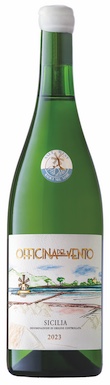

The flagship bottling of the Salt West project celebrates the pure and characterful expressions of the historic coastal vineyards of the Stagnone lagoon. Sourced from...
2023
Officina del VentoSicilia

Fina, Firma del Tempo Grillo Riserva, Sicilia, Sicily, Italy, 2023
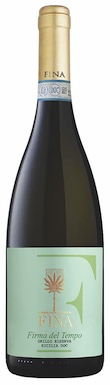
From a single vineyard at sea level, a little inland from Stagnone lagoon, comes this limited-production Grillo white. Fermented partially in new barriques (20%), it...
2023
FinaSicilia
Cantine Florio, VR0510 Vergine Riserva, Marsala, Sicily, Italy
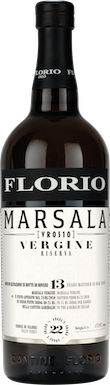
The 100% Grillo grapes destined to become this Marsala were picked in 2009, and the wine fermented in concrete tanks. As the bottle's ‘storyteller’ label...
Cantine FlorioMarsala
Francesco Intorcia, Heritage Vergine Secco, Marsala, Sicily, Italy, 2015
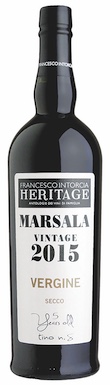
Intorcia’s dry, fortified 100% Grillo expression is aged in oak barrels for more than five years. Deep golden-amber in hue, it showcases aromas of toasted...
2015
Francesco IntorciaMarsala
Cantine Pellegrino, No.018 Single Barrel Vergine Riserva, Marsala, Sicily, Italy, 2005
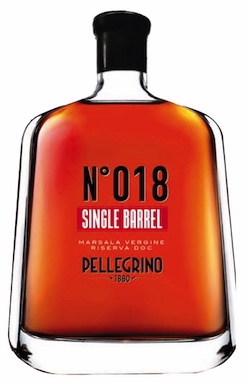
Aged for more than 15 years in a single 20hl oak barrel, number 018, this represents the second release in a bold, pioneering series that explores...
2005
Cantine PellegrinoMarsala
Caruso & Minini, Superiore Riserva Secco, Marsala, Superiore Riserva, Sicily, Italy
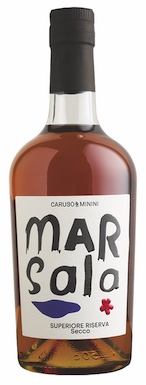
Deep citrine in colour, this brings together Grillo and Catarratto grown in Marsala's calcareous clays and the rusty red soils of Salemi. Crafted in the...
Caruso & MininiMarsala
