
Napa Valley Cabernet: 2018 vintage report
The best wines show control, poise and transparency between vineyard and appellation, with most of the 2018s well integrated and tastefully seasoned with oak, says Matthew Luczy, who rates 250 wines from the 2018 vintage


The 2018 Napa Valley Cabernet vintage belongs in an echelon with the finest of the past two decades. It was absent of challenges that plagued many of the previous years, ranging from drought, low yields and heatwaves.
It was spared in the second most destructive wildfire season in California’s history, behind only 2020. The best wines show control, poise and transparency between vineyard and appellation.
Scroll down to see Matthew Luczy’s top-scoring 2018 Napa Cabernets
When compared to recent vintages, it is most synonymous with the highly acclaimed 2016. ‘There were a lot of synergies in both the growing season and the wines. They have a lot of the same energy, expression and life’ explains Chris Carpenter, winemaker for Lokoya, Cardinale, La Jota and Mt Brave, all part of the large Jackson Family Wines portfolio.
In terms of weather, ‘slow’ and ‘easy’ were consistent descriptors. After the heatwaves and wildfires of 2017, this calm was met with open arms. Pilcrow’s Jonah Beer says: ‘Mother Nature allowed us to walk through the vintage rather than sprint. Everything came in like a parade instead of a stampede.’
Quick links
Individual AVA analysis and top-scoring wines:
Calistoga, Coombsville, Howell Mountain, Mount Veeder, Oakville, Rutherford, St Helena, Stags Leap District
Luczy’s wines of the vintage:
Corison, Kronos Vineyard 97 pts | Kapcsándy, Grand Vin, State Lane Vineyard 97 pts
Full verdict
Chimney Rock winemaker Elizabeth Vianna gave similar praise, saying ‘2018 is a beautiful, cool vintage. We got fully ripe but nothing was overripe. The fruit integrity was pristine and there were no heat spikes. It was just a dream.’
Winter brought February rains, leading to a temperate, dry spring. Budbreak and flowering occurred slightly later than normal, and summer was warm overall. Dan Petroski at Larkmead points out: ‘It was a cooler year, but when I say “cool”, it was still 90°F [32°C]. That’s “cool” in Napa.’
Cathy Corison also recalls the atypical summer. ‘It dipped into the 20°C/70°Fs! That’s crazy in Napa! It never got over 35°C/95°F for all of July, August and September.’ She also notes the deep colour of the wines, saying ‘You could write a letter with them.’
Due to the mild spring and generous flowering of 2017, yields were up 20% to 30% on average.
Harvests like this almost remove the variable of vintage altogether, producers being left free to express their individual styles. At the end of the day, wine is made by people, and people are influenced by culture, timing and incentives. 2018 could be likened to a smooth flight; even without turbulence, the pilot still has to fly the plane and land it.
See all of the wines in the Napa Valley Cabernet 2018 vintage report here
Maintaining historical perspective is important when assessing any vintage, and Napa Valley has undergone many distinct phases. The 1960s began the ‘Second Golden Age’, and the ’70s placed the region on the world stage. The 1980s introduced wide-scale irrigation, as well as a bout of phylloxera that caused numerous replantings.
The ’90s gave rise to cult wines: mailing-list-only wineries showered with lofty scores. The dotcom boom and resultant real estate values dramatically elevated vineyard prices throughout California. The influence of critics with penchants for punchy and slick wines brought about noticeable standardisation and uniformity, especially among elite producers.
The mid-2000s were arguably the peak of the ripeness and oak craze, with the cooler 2010 and 2011 vintages initially correcting for some of this escalation. Movements like In Pursuit of Balance and the Somm documentary series brought awareness to the merits of balanced wines and those whose passion is educating consumers about them. It was the beginning of a sea change.
Winemakers, viticulturists, PR firms and winery presidents alike spoke of a ‘return to our roots’, a ‘reeling in’ and ‘dialing back’ of ripeness and extraction. However, based on the 330 samples reviewed for this report, this largely doesn’t seem to be the case.
The back-to-back blockbuster vintages of 2012 and 2013 largely kickstarted the ripeness parade all over again. As the decade has progressed, many producers seem to be saying one thing and doing another.
Napa Valley area under vine by variety
Cabernet Sauvignon 8,800ha
Merlot 1,681ha
Cabernet Franc 444ha
Petit Verdot 296ha
Malbec 194ha
Past vintages guide (out of 5)
2018 4.5
2017 3
2016 4.5
2015 4
2014 4.5
2013 4.5
2012 4.5
2011 3.5
2010 4
2009 4
From the valley floor to mountain slopes, northern Calistoga to southern Coombsville, the average alcohol-by-volume of the wines submitted was 14.7%. In a vintage like 2018, this can’t help but feel excessive. Numerous examples simply burned on the nose and finish – and not just wines labelled upwards of 15%.
If the ageing potential of a fine wine is a factor in its perceived value, these levels are worrisome. Ethanol is static, thus a wine that is overtly hot in its youth will only be edged further out of balance as time sheds the fruit around it.
Is the variance and complexity of Napa’s terroir truly being expressed, or is uniformity and manipulation permeating and masking it? A circumstance akin to The Emperor’s New Clothes appears to be the answer in many cases. There seem to be precious few influential wineries truly producing hands-off wines, and far too many where narratives of ‘expressing place’ are varying degrees of disingenuous.
Domino effect of manipulations
On multiple occasions, I was quoted sugar levels at harvest that equate to 16%+abv on wines labelled 14.5% or thereabouts. This indicates that either grapes were harvested extremely ripe and watered back, altered with reverse osmosis post-fermentation, left with residual sugar, or some combination thereof. An opposite but still-bothersome situation was a winemaker commenting that a wine was less than 14%, but they were uneasy to label it as such due to consumer perception of a ‘lighter’ style.
An aside regarding California’s labelling laws: if a wine is less than 14%, the producer has 1.5% of labelling leeway in either direction. Above 14%, a 1% change is allowed. Tax rates increase by 38% on wines above the threshold, and the tolerance cannot be used to dodge this.
In the case of manipulation, such practices quickly begin a domino effect. Water additions pre-fermentation dilute the skin-to-juice ratio of grape must, lowering the amount of flavour extraction possible. To maintain concentration in the finished wine, a portion of must is bled off and an equal – but often less – amount of water is added back.
Must contains nutrients, sugar, phenolic compounds and acidity. Water additions replace the volume lost (sans nutrients) but also raise pH, making the must more susceptible to microbial issues. To ensure stability, acid and increased sulphur additions are now necessary, as is sterile-filtration prior to bottling in many instances.
These actions quite literally strip a wine of its true character. It appears the Emperor is not only unclothed, but stands on a house of cards.
Knowledge is power
To be clear, this is not a manifesto seeking the return to a bygone era where storied wineries struggled to reach 12.5% (many of whom adjusted chemistry in the cellar as well) nor is it a slight towards consumers that genuinely enjoy riper flavours.
Napa currently has the potential to make the best wines it ever has. We know considerably more now than in decades past about how vine spacing, rootstocks, clone selection, canopy management and yeast strains affect a finished wine.
Great progress has been made in the once-prevalent, obvious over-usage of new oak, which couldn’t have been said earlier in the decade. The majority of the 2018s I tasted were remarkably tastefully seasoned and well-integrated with their oak.
What is troubling is the pervasiveness and normalisation of this slipping-of-the-leash in terms of balance, especially as wine prices perpetually escalate. It brings to mind the aphorism ‘rising tides raise all ships’. In this instance, however, the tide is weakening the hulls and leaks are springing.
A time for change
2018 was a blank canvas for each winemaking team. As much as producing world-class wine is contingent on grape quality, it is equally dependent on choices in the cellar. Over-treatment muddies the identity of any wine, however amenable the weather is.
There is more than enough diversity and diligence to go around in Napa. It is very possible for producers to make decadent wines which retain balance and authenticity, while their neighbours hang their hat on more understated expressions.
It is up to those who influence the wine world – producers, consumers and journalists alike – to call spade a spade and encourage sensible practices that highlight rather than conceal. We need a ‘Third Golden Age’ in the Napa Valley.
See Matthew Luczy’s top-scoring 2018 Napa Cabernets
You may also like
California Cabernet 2016: panel tasting resultsDecanter Premium Collector’s Guide: Napa Valley Napa 2020 ‘not lost’ despite smoke taint concerns
Corison, Kronos Vineyard, Napa Valley, St Helena, California, USA, 2018
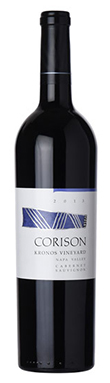

Corison’s Kronos Vineyard is one of the great Cabernet vineyards on earth, and an anomaly in the modern Napa Valley landscape. Planted in 1971 on...
2018
CorisonNapa Valley

Kapcsandy Family Wines, Grand Vin State Lane Vineyard, Napa Valley, Yountville, California, USA, 2018
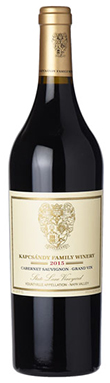
A truly exceptional wine. The very definition of feminine, perfumed and enthralling on the nose, with aromas of fresh flowers, bath soaps, orchard blossoms and...
2018
Kapcsandy Family WinesNapa Valley
Larkmead Vineyards, Solari, Napa Valley, California, USA, 2018
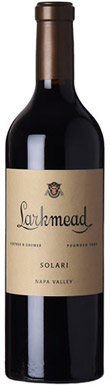
The flagship single-vineyard wine from Dan Petroski at Larkmead is remarkable in 2018. Comprised of two parcels at the southern border of Calistoga, bordering St....
2018
Larkmead VineyardsNapa Valley
Lokoya, Napa Valley, Mt Veeder, California, USA, 2018
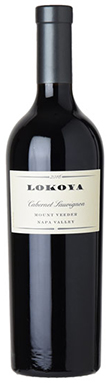
There is a palpably regal quality to all four Lokoya wines, but the Mount Veeder Cabernet attains an additional level of purity and class. There...
2018
LokoyaNapa Valley
Meteor Vineyard, Special Family Reserve, Napa Valley, Coombsville, California, USA, 2018
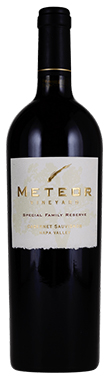
The Special Family Reserve takes Meteor vineyard to another level entirely, and is unquestionably one of the definitive wines of the Coombsville appellation. Exotic, enthralling...
2018
Meteor VineyardNapa Valley
Dalla Valle Vineyards, Maya, Napa Valley, Oakville, California, USA, 2018
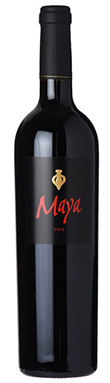
A wonderfully fragranced and well-structured wine. Perfumed florality comes through from the 40% Cabernet Franc in the blend (with 60% Cabernet Sauvignon) alongside ripe...
2018
Dalla Valle VineyardsNapa Valley
Lokoya, Napa Valley, Howell Mountain, California, USA, 2018
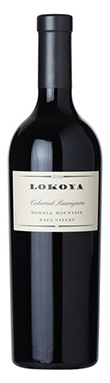
A luxurious, decadent and refined nose. Where many mountain-Cabernets may be sharp and rugged in their youth, the Lokoya Howell Mountain Cabernet is remarkably integrated...
2018
LokoyaNapa Valley
Inglenook, Rubicon, Napa Valley, Rutherford, California, USA, 2018
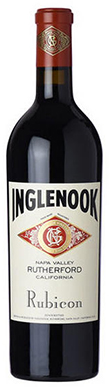
A lovely enticing nose filled with rich plum, fig and blackcurrant fruits - heady and opulent. The palate is precise with a distinct texture, certainly...
2018
InglenookNapa Valley
Marston Family Vineyard, Napa Valley, Spring Mountain, California, USA, 2018
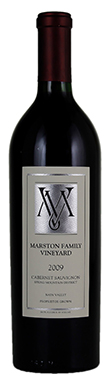
An earth-forward showing of Spring Mountain, with aromas of tilled earth, moss and dried leather. Perfectly ripe raspberries, pomegranate skin and oolong tea on the...
2018
Marston Family VineyardNapa Valley
Pilcrow, Granite Lake, Napa Valley, Howell Mountain, California, USA, 2018
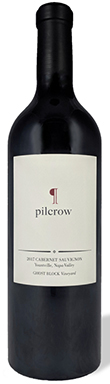
Dramatically darker and more intense on the nose, very clearly stating its rustic, Howell Mountain origins. Cigar box, charcoal and black currants on the nose....
2018
PilcrowNapa Valley
Larkmead Vineyards, Napa Valley, California, USA, 2018
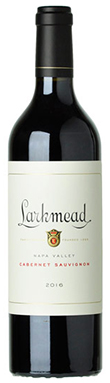
Very savoury and spice-laden on the nose, showing aromas of cigar box, chicory, sandalwood and redcurrants. The palate is beautifully multidimensional: deep but bright, weighty...
2018
Larkmead VineyardsNapa Valley
Merryvale, Napa Valley, St Helena, California, USA, 2018
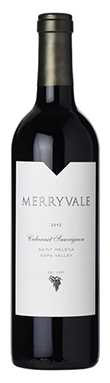
Black, dusty fruits and subtle new oak on the nose. Dark-fruited, punchy and spongy on the palate. The finish has a very upright posture, leaving...
2018
MerryvaleNapa Valley
Cardinale, Napa Valley, California, USA, 2018
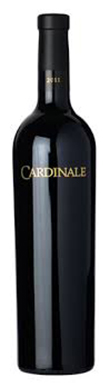
The perennial centerpiece wine from Jackson Family Wines and winemakers Chris Carpenter. Composed around mountain fruit with supporting roles from valley floor vineyards across the...
2018
CardinaleNapa Valley
Turnbull, Black Label, Napa Valley, Oakville, California, USA, 2018
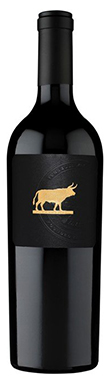
A selection of the best barrels of both the Fortuna and Leopoldinda sites. A blend is not always greater than the sum of its parts,...
2018
TurnbullNapa Valley
Sodaro, Estate Cabernet, Napa Valley, Coombsville, California, USA, 2018
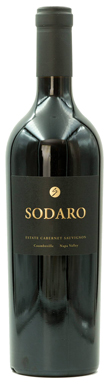
Quintessentially Coombsville on the nose, which combines freshness with opulent black fruits, tying them together with a sturdy, graphite-laden core. Utterly seamless on the palate,...
2018
SodaroNapa Valley
Dalla Valle Vineyards, Napa Valley, Oakville, California, USA, 2018
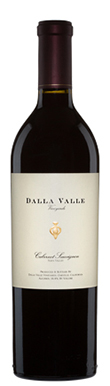
A luscious, ripe but tucked-in expression of eastern Oakville Cabernet from Andy Erickson. The nose is voluptuous and chock full of ripe red and purple...
2018
Dalla Valle VineyardsNapa Valley
Lokoya, Napa Valley, Diamond Mountain, California, USA, 2018
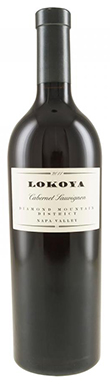
Year in and year out, Lokoya provides a masterclass in crafting rugged mountain fruit into a svelte package, while always letting its essence come through....
2018
LokoyaNapa Valley
Corison, Sunbasket Vineyard, Napa Valley, St Helena, California, USA, 2018
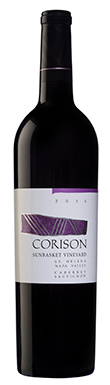
Acquired by Corison in 2015 after working with the fruit since the 1990s, the Sunbasket Vineyard is a 'stone's throw' away from the more well...
2018
CorisonNapa Valley
Chimney Rock, Tomahawk Vineyard, Napa Valley, Stags Leap District, California, USA, 2018
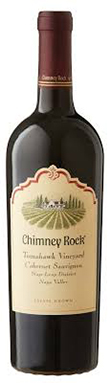
Planted in 2002, this site produces a wine more dark-fruited and lush than the Ganymede bottling. Aged in 75% new French oak. Blackcurrants, wet cedar...
2018
Chimney RockNapa Valley
Chappellet, Pritchard Hill Cabernet Sauvignon, Napa Valley, California, USA, 2018
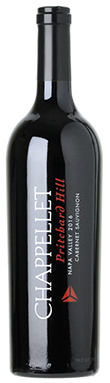
Fabulous nose on this wine, rich, ripe, full-throttle Cabernet cassis with added complexity from graphite and leaf. Despite being so expressive, you get the impression...
2018
ChappelletNapa Valley
