
Regional profile: Roussillon plus 12 top wines worth seeking out
In this proudly independent region, the individuality of its winemakers and the wide array of styles they produce are the perfect window into the character of France’s southwest. Rosemary George MW gives the lie of the land, and picks 12 fascinating wines to try...


Roussillon is so often lumped somewhat unceremoniously in with the Languedoc, as one large region, when in reality it has a completely separate identity. Its history and traditions are quite different.
It was part of Spain until the Treaty of the Pyrenees in 1659; Catalan, not Occitan, is spoken in the villages around Perpignan and the original reputation of the wines of Roussillon was based on what are rather clumsily called vin doux naturels, fortified wines, usually made from very ripe and therefore alcoholic Grenache grapes.
Scroll down for Rosemary George MW’s pick of 12 top Roussillon wines
Table wines, or vins secs as they are called in the region, are a relatively recent development. The first appellations – Banyuls, Maury and Rivesaltes – were all vin doux, recognised among the early appellations in France at the end of the 1930s; the first appellation for vin sec was Collioure in 1971, with Côtes du Roussillon and Côtes du Roussillon Villages following in 1977. Maury Sec is a much more recent addition, in 2011.
Scenic backdrop
Essentially, Roussillon equates to the department of the Pyrénées-Orientales. Its boundaries are limited by the Pyrenees, with the Canigou the highest peak, at 2,785m, providing an important landmark. To the north, the foothills of the Corbières massif separate it from the Languedoc vineyards of Corbières, with landmarks such as the ruined Cathar castle of Quéribus and the lookout tower of Tautavel dominating the skyline.
Three principal rivers cross the region, to meet the Mediterranean. The most northern is the Agly, with the appellations of Maury and Maury Sec, as well as many of the villages of Côtes du Roussillon Villages; in the middle is the Têt, and to the south the Tech, which meets the sea just to the north of the resort of Argelès and the vineyards of Banyuls and Collioure. The countryside is dramatic, with wild scenery and breathtaking landscapes, and a skyline dominated by the Pyrenees and the hills of Corbières forming an amphitheatre around the plain of Perpignan, where fruit trees, peaches and apricots grow.
The climate is essentially Mediterranean, but with climate change that is becoming less consistent. The wind can blow hard, with the cold Tramontane coming from the north, and the warmer Marin bringing rain from the east. Winters are usually mild, but summers are hot – drought conditions are increasingly prevalent, with an inevitable impact on yields.
The soil is enormously varied; Roussillon has more soil diversity than just about any other vineyard area of France, with the exception of Alsace. Maury is based on schist; there is granite at Lesquerde, and you will find also clay and limestone, marl and sandstone. The variations are infinite.
Roussillon: the facts
Appellations for table wine/vin sec Côtes du Roussillon (red, white, rosé); Côtes du Roussillon Villages (red only) with village designations for Caramany, Latour-de-France, Lesquerde, Tautavel and Les Aspres Collioure (red, white, rosé)
Maury Sec (red only)
IGPs Côtes Catalanes (optional addition of ‘Pyrénées-Orientales’), Côte Vermeille
Vin doux (sweet)
Banyuls (blanc, ambré, rosé, rimage, traditionnel, hors d’âge, rancio)
Banyuls grand cru Maury (blanc, ambré, grenat, tuilé, hors d’âge, rancio)
Muscat de Rivesaltes Rivesaltes (ambré, rosé, tuilé, grenat, hors d’âge, rancio)
Area under vine 13,619ha (2019)
Altitude From 0m-650m, most about 200m-350m
Soil types Very varied; Maury based on schist; granite, clay and limestone
Climate Hot summers, drought; tempered by altitude and maritime influence
Wine estates 411
Cooperatives 26
Principal grapes
Red Grenache Noir, Carignan, Mourvèdre, Syrah, also Lledoner Pelut, Cinsault, Counoise
White Grenache Blanc, Grenache Gris, Carignan Blanc, Macabeo, Malvoisie du Roussillon (Tourbat), Vermentino, Marsanne, Roussanne, Muscat d’Alexandrie, Muscat à Petits Grains
Broad canvas
As for grape varieties, Grenache Noir is the key variety for red wine, with the added attraction of old vines. You will see vineyards of gnarled stubby bush vines, usually field blends of all three colours of Grenache, with some Carignan for good measure, that can withstand the strong winds, and which are now being appreciated for their quality, rather than being indiscriminately pulled up.
Jean-Marc Lafage is not alone in enthusing about Carignan: ‘It is a little treasure, and the red variety with the most acidity, as much as in white grapes, which provides a backbone for the wines.’
You will also find Syrah and Mourvèdre, but the likes of Cabernet Sauvignon and Merlot are relatively rare. For white wine, Grenache Blanc and Grenache Gris are important, as is Macabeo, and you may also encounter Vermentino, Roussanne and Marsanne, as well as occasional examples of Chardonnay, Viognier and Sauvignon. Malvoisie du Roussillon, or Tourbat, is another grape variety that has fallen from favour, but may be in line for a revival in its fortunes.
Côtes du Roussillon Villages includes several named villages; Tautavel, which includes vineyards in neighbouring Vingrau, is the most rewarding, as well as Les Aspres, which was recognised in 2017 and covers 19 villages to the southwest of Perpignan, with specifically delimited vineyards. Where once the production was dominated by village cooperatives, the number of independent wine estates is growing. Newcomers to the region are playing their part, attracted by the affordability of the vineyards, and by the challenges and the climate. This is a region that lends itself to organic and biodynamic viticulture.
The appellations of Maury and Maury Sec are based on vineyards in Maury and three neighbouring villages in the Agly valley, with a distinctive terroir of black schist soils. It is one of the warmer parts of the region, hence its original suitability for vin doux. The recognition in 2011 of the quality of the vins secs has given a real impetus to the development of independent wine estates, as the village co-op declines in importance.
Banyuls and Collioure, towards the border with Spain, benefit from a maritime influence. The vineyards of the two appellations are synonymous – a wine-grower can alter his production of the two wines, depending on the characteristics of the vintage, but these days the trend is towards vin sec. Heroic viticulture is the order of the day, with steep terraced slopes of vineyards plunging down to the sea, making mechanisation well-nigh impossible.
Many facets
There is no doubt that the quality of vins secs has improved enormously in recent years, with an emphasis on the importance of a blend of grape varieties and vineyard sites. Asked about typicity, most producers will reply that they are looking for freshness and elegance, even if their alcohol levels may be relatively high.
However, the shift is away from high alcohol, as well as heavy extractions and extensive barrel ageing. Larger barrels are increasingly common, and, as well as concrete vats, you also see eggs and amphorae. In a region where temperatures are high, it is perhaps surprising that the white wines are so successful, but rewarding they are, with refreshing flavours and surprising acidity.
Victor Gardiés is not alone in admitting that one of his aims is to make the best possible white wine. He encourages a malolactic fermentation, but rarely stirs the lees as that makes for too much body. He wants white wines with tension, that will keep. Examples of pure Grenache Gris or Blanc, or Macabeo are coming into their own, often labelled Côtes Catalanes: the IGP that covers most of the department. Marjorie Gallet of Le Roc des Anges really likes Macabeo: ‘People criticise it for its neutral flavours, but it really expresses the soil differences.’
Rancio Sec is neither fortified nor a table wine, but depends on oxidative ageing to develop wonderfully incisive flavours, akin to fino Sherry. It almost disappeared, but happily is being made again by a group of passionate enthusiasts.
Sadly with the growing importance in vin sec, the sweet vins doux have fallen from favour. Where once a wine estate produced mainly vin doux, that trend has almost completely reversed. Some make no vin doux at all, while for others it represents a mere 10% or 20% of their production. And yet these are fabulous wines, and quite unique.
Maybe one of the problems is the variety in vin doux: they can be red, white or rosé, tuilé from red grapes, or ambré from white grapes. They can be made for early drinking or are aged in barrel, for several years exposed to the elements, and possibly in a solera, to produce some fabulous hors d’âge wines, which may or may not be vintage dated.
The vins doux more than deserve a revival in their fortunes, as they are an intrinsic part of the winescape of Roussillon. And Roussillon itself deserves a greater reputation – Domaine of the Bee’s Justin Howard-Sneyd MW aptly asks: ‘Why does it not have the same reputation as Priorat, the DO of Catalonia in Spain that is known for its table wines based on Grenache?’
The last word should go to Wendy Paillé of Domaine le Soula, who describes the region as ‘a hidden treasure, waiting to be discovered’.
Roussillon: 10 names to know

Domaine Cazes
An innovative family company, based in Rivesaltes, and also with vineyards at Clos des Paulilles outside Banyuls. 250ha are farmed organically. One of the pioneers of vin sec (table wine), with Le Canon du Maréchal (Marshal Joffre was born in Rivesaltes) and Le Credo. Cuvée Aimé Cazes Rivesaltes Hors d’Age is an exemplary vin doux.
Domaine Paul Meunier-Centernach
What brings a Burgundian, from the wine estate of J-J Confuron near Nuits-St-Georges, to Roussillon? Answer: a fascination with Port. Paul Meunier is based in the Roussillon village of St-Arnac, producing vins secs as well as vins doux, Côtes du Roussillon Villages and Maury, first vintage in 2014.
Domaine La Tour Vielle
One of the established wine-growers of Banyuls, Vincent Cantié made his first wine in 1982. Les Canadells Collioure Blanc is a sterling example of the improvement in the white wines of Roussillon, along with two red Collioure: La Pinède and Puig Oriol. His vin doux is exemplified by his Banyuls rancio solera, started in 1952.
Domaine Piétri-Géraud
Laetitia Piétri-Géraud is the fifth generation of wine-growers in Collioure, with a compact little cellar right in the centre of town. With a first vintage in 1997, she is the first member of her family actually to make a living from her vines, with 16ha. Unusually as much as 40% of her wines are vin doux, exemplified by her hors d’âge Banyuls, with a solera begun by her great-grandfather.
Domaine Rancy
The Verdaguer family in Latour-de-France are passionate about vin doux. If you are looking for an older vintage, this is the cellar to visit, with wines back to the 1940s, as well as incisive unfortified rancio sec. The next generation, Delphine, is now developing a range of vins secs.

Domaine Le Roc Des Anges
Marjorie and Stéphane Gallet created Roc des Anges in 2001, with vineyards mainly in Montner, and subsequently in Maury, with Terres de Fagayra. They have worked biodynamically since 2011. Elegance, entailing low levels of alcohol, is the hallmark of their winemaking.
Domaine Vaquer
A key estate in Les Aspres, based in the village of Tresserre. Frédérique Vaquer courageously took over her father-in-law’s estate when her young husband died suddenly in 2001 and she has continued to develop and refine the wines, both sec and doux, with great talent.
Face B
Séverin Barioz is the newest arrival in the group of innovative wine-growers based in the village of Calce, who were inspired by Gérard Gauby of Domaine Gauby. With his first vintage in 2015, from just 4ha, he is particularly enthusiastic about the white wines of Roussillon as exemplified by his Makeba, or Macabeo, which is firm and saline; Engrenaches (Macabeo with Grenache Blanc and Grenache Gris), is his second white wine.
Mas Amiel
The pioneering estate in Maury is now owned by Olivier Decelle, with winemaker Nicolas Raffy. One of the largest estates of Roussillon, with 145ha, making an extensive range of both vin doux and vin sec. Look for Terres Rares range Maury Sec and Vertigo Côtes du Roussillon, as well as wonderful old vintages of Maury.
Mas Karolina
Caroline Banville comes from Bordeaux – vineyards were much too expensive there, so she looked in Roussillon, beginning with 2ha in Maury in 2003. She makes a range of characterful Côtes Catalanes and Côtes du Roussillon Villages, as well as Maury and some original Muscat de Rivesaltes.
See Rosemary George MW’s pick of 12 top Roussillon wines
You may also like
Languedoc-Roussillon v Southern Rhône: Top wines comparedThe Decanter Interview: Alain Brumont20 great-value French white wines under £25Regional profile: Pézenas
Domaine Gardiés, Les Glacières, Côtes du Roussillon, Languedoc-Roussillon, France, 2018
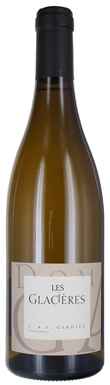

A fresh, fragrant nose, with lemony fruit and herbal notes, and on the palate rounded fruit with very good acidity. It has a wonderful sapid...
2018
Domaine GardiésCôtes du Roussillon

Domaine Le Roc des Anges, Llum, Côtes Catalanes, Languedoc-Roussillon, France, 2018
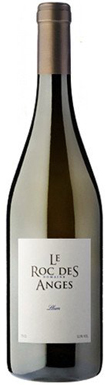
Predominantly Grenache Gris blended with Macabeo. Firm stony notes on the nose and palate, with fresh elegance and mineral tension and a long, incisive finish....
2018
Domaine Le Roc des AngesCôtes Catalanes
Mas Mudigliza, Caudalouis, Côtes Catalanes, Languedoc-Roussillon, France, 2014
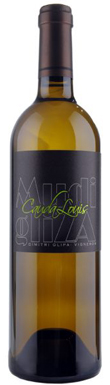
Firm stony, sappy nose and very fresh on the palate – it simply does not taste six years old. Grenache Gris and Macabeo. There are...
2014
Mas MudiglizaCôtes Catalanes
Le Soula, Côtes Catalanes, Languedoc-Roussillon, France, 2016
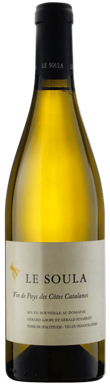
2016 was Wendy Paillé’s first vintage at Le Soula. Light colour. Nuances on the nose from the diversity of grape varieties (49% Sauvignon Blanc, 23%...
2016
Le SoulaCôtes Catalanes
Clos del Rey, L'Aragone, Côtes Catalanes, Languedoc-Roussillon, France, 2018
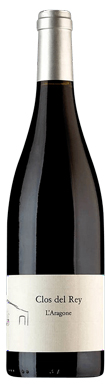
100% Carignan, old vines. Restrained red fruit and less opulent than the Grenache that preceded it in my tasting. A firm streak of tannin on...
2018
Clos del ReyCôtes Catalanes
Domaine Ferrer-Ribière, Cuvée Tradition, Côtes du Roussillon, Languedoc-Roussillon, France, 2017
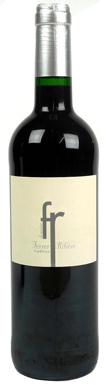
Rounded, spicy fruit on the nose, and on the palate ripe black berry fruit. Warming without being heavy, with a balancing streak of tannin. Easy-drinking...
2017
Domaine Ferrer-RibièreCôtes du Roussillon
Domaine Augustin, Collioure, Languedoc-Roussillon, France, 2016
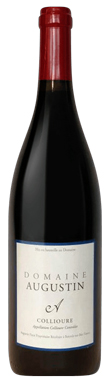
Mostly Grenache with Mourvèdre and Carignan. Ripe, rounded, intense black fruit on the nose, chocolatey roundness. Textured mouthfeel with some weight. Rich and warming without...
2016
Domaine AugustinCollioure
Domaine Vaquer, L'Exception, Côtes du Roussillon Villages, Les Aspres, Languedoc-Roussillon, France, 2015
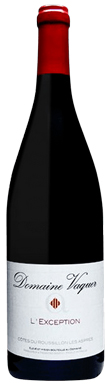
Blend of Grenache with Carignan and Syrah. Quite a firm, spicy nose, which opens up nicely in the glass. Rounded spicy fruit, with some structure...
2015
Domaine VaquerCôtes du Roussillon Villages
Domaine de Centernach, Couillades d’en Paillol, Côtes du Roussillon Villages, Languedoc-Roussillon, France, 2014
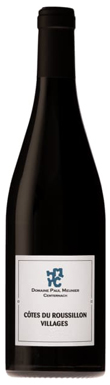
Carignan with Grenache and Syrah, from a vineyard planted in 1950 in Maury. Rounded red-berry fruit on the nose with notes of cherry liqueur, reminiscent...
2014
Domaine de CenternachCôtes du Roussillon Villages
Domaine du Clos des Fées, Vieilles Vignes, Côtes du Roussillon Villages, Languedoc-Roussillon, France, 2010
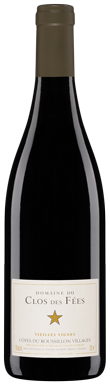
50% Grenache and Lledoner Pelut, 35% Carignan, 15% Syrah, vines 50-100 years old. Nicely rounded, ripe spicy fruit. Lots of black fruit on both nose...
2010
Domaine du Clos des FéesCôtes du Roussillon Villages
Domaine des Soulanes, Grenat, Maury, Languedoc-Roussillon, France, 2017
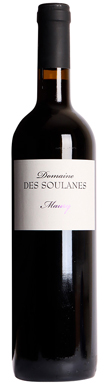
Deep red colour. Ripe berry-fruit nose and palate, fresh finish. Ripe and intense but not heavy; rich fruit and a streak of tannin, alcohol and...
2017
Domaine des SoulanesMaury
Domaine de Rancy, Ambré, Rivesaltes, Languedoc-Roussillon, France, 1998
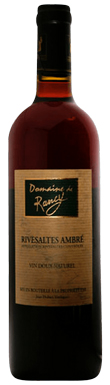
Yellow-green rim. Firm, dry, nutty nose: walnuts and hazelnuts. A rounded, rich palate, with lovely depth and length and lots of nuances of flavour. Mature...
1998
Domaine de RancyRivesaltes
