
Swartland in a bottle: The stellar wines of David & Nadia Sadie
David and Nadia Sadie have built a reputation for their expressive single-vineyard Chenin Blanc wines – putting the unique soils and old vines of South Africa’s Swartland firmly on the map. Jason Millar discovers what drives them and tastes the latest vintages.


South Africa‘s Swartland region is both literally and figuratively remote. It is a long way from the Cape Dutch architecture of Stellenbosch, the mountainscape of Cape Town and the Huguenot avenues of Franschhoek.
It is wide open, a vast prairie of wheat fields and dusty tracks that feels more like something Steinbeck might have written about than a wellspring of contemporary Cape winemaking.
Scroll down for eight scrumptious Chenin Blancs and other wines from David & Nadia
Yet in the space of 30 years, Swartland has moved from curiosity to pioneer to icon. That‘s thanks to a relatively small group of producers, among them David and Nadia Sadie.
They have been working here since 2010 and quietly building a reputation for some of South Africa‘s finest and most ageworthy wines.
The pair met in their final year at Stellenbosch University; Nadia studying conservation and soil science and David specialising in viticulture. After graduation, they moved to Tulbagh near the Swartland.
‘We started from scratch,‘ David says. While Nadia worked for an environmental company, David took a job at local winery Saronsberg Cellar. By 2010, they‘d relocated to Malmesbury in the Swartland, where David was buying fruit.
The early wines – a white blend called Aristargos and Elpidios red blend – were based on contracted fruit from decomposed granite soils across Swartland.

Talkin’ about a revolution…
That same year, the producers of the Swartland Revolution held their first iconoclastic event, presented by flip-flopped winemakers who seemed as keen on surfing and beer as they were on wine and farming.
It turned heads and turned the region into one of the most closely watched in the Southern Hemisphere.
‘The timing was perfect,‘ Nadia remembers. ‘We were living in Tulbagh, and we knew it had to be Swartland.’ The mood in the region was bold, collaborative and optimistic.
‘I think if the Swartland Revolution had never happened, we would still have made Swartland wines,‘ adds David. ‘Swartland was and is my home. But the Revolution motivated me a lot.‘
By 2013, they had agreed a lease on a cellar with a Chenin Blanc vineyard at the Paardebosch ranch in Malmesbury not far from where David‘s parents lived.
They now found themselves stewards of a rather special 3.6ha vineyard of old vine Chenin Blanc, which they called Plat’bos, meaning ‘flat bush’. From then on it formed the basis of their classic Swartland Chenin Blanc bottling.

Chenin specialists
Although the white and red blends continued to be produced, as well as a Grenache Noir, the new wines added to the range in the years to come would expand on the promise of Chenin Blanc.
The production of single-vineyard Chenin Blanc wines began with the 2015 vintage of Skaliekop. It was followed by Hoë-Steen and their home site of Plat‘bos as a single-vineyard wine in the 2018 vintage.
Most recently, with the 2021 vintage, Rondevlei has added to a strong range of Chenin Blanc from complex soils.
‘Specialisation is more relevant than ever before,‘ David argues. ‘Plus it‘s exciting to see the diversity of the variety. It can deliver generous bottlings at a young age, but it can also give restrained, understated, linear styles. Even with these extreme, challenging vintages, I can‘t see us planting anything new other than Chenin.’

‘Micro-farming’
Precision viticulture is key, and the focus is tight. ‘We do 100% Swartland, 100% dry-farmed bush vines. No trellising. Poor soils. Low yields. No irrigation,’ explains David. ‘I want the vintage to express the rainfall.’
Farming without irrigation isn‘t easy, but along with his (unrelated) namesake Eben Sadie, David believes that it‘s essential to the concept of terroir. Vineyards are replanted using massal selection from existing old vines, rather than clones from nurseries.
Nadia‘s background in soil science has been fundamental in exploring the sense of place in the wines. In 2016, she joined the business full time, and the name on the label changed from David to David & Nadia.
‘In 2023, I did 60 profile pits just in Plat‘bos,’ she says. ‘In less than 4ha, we mapped different soils – clay, sand, iron – and split the vineyard into separate blocks, which allows us to harvest and vinify separately. It‘s micro-farming,’ she adds. ‘We work with drones to refine how we farm, block by block.’

Precision winemaking
Winemaking is both precise and traditional, utilising spontaneous fermentations in the cellar and avoiding inoculated yeasts, as well as new oak. Concrete and used barrels are the ageing materials of choice.
Fruit is generally picked across multiple passes to achieve a balance of acidity and ripeness at remarkably modest alcohols (around 13%) for the climate. The focus is on preserving steely acidity and tightly coiled structure in youth.
‘I don‘t want to say that we are making a lighter style, but rather a less extracted style,‘ Nadia says.
They continue to push for the highest quality. Since 2020, they‘ve made the switch from natural to technical, taint-free corks, and have made the decision to hold back some magnums to demonstrate how well their wines age in bottle.

A sense of place
Although initially restrained, the wines unfurl with time and patience. ‘If blind tastings score these wines lower, so be it,‘ David says. ‘I want to have a 10- or 20-year vision, as opposed to starting big and flashy to get the scores. We‘re not chasing trends. We‘re chasing site expression.’
But the long-term vision, as for many of South Africa‘s younger generation of winemakers, is far from mapped out.
The couple are working on more stable 30-year lease agreements for their vineyards, pushing for more security and farming control in the vineyards they lease, and planting their own sites with climate resilience in mind.
But there are no plans to increase the scale of the business. ‘We‘re happy with our volumes,’ Nadia says, which are around 60,000 bottles. ‘The focus is on quality now.‘
Inspired by the work of producers as diverse as Thibaud Boudignon in the Loire, Comando G in Spain‘s high-elevation Gredos and Yves Cuilleron in the Northern Rhône, the goal is simple, according to David.
‘We want to be at the same tables as the best wines in the world, but we are farmers first of all. Understanding and fine-tuning the vineyards better and better – that‘s our priority for the future.’

David & Nadia wines: Top Chenins and a few extras
Related articles
- South Africa’s next generation: Six brilliant winemakers forging a new scene
- Major shake-up at Porseleinberg and Boekenhoutskloof as Callie Louw departs
- South Africa’s winemakers seek out new signature varieties
David & Nadia, Hoë-Steen, Swartland, South Africa, 2022
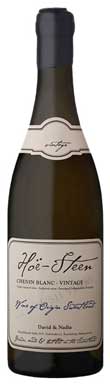

The oldest single vineyard that David and Nadia work with was planted in 1968 near Darling, its soils rich in iron and clay, overlaying limestone....
2022
David & Nadia

David & Nadia, Skaliekop, Swartland, South Africa, 2022
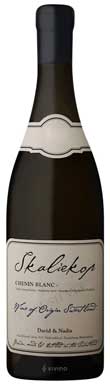
Although most of David and Nadia Sadie’s Chenin Blancs grow on granite, Skaliekop comes from an unusual outcrop of shale next to the Plat’bos vineyard....
2022
David & Nadia
David & Nadia, Plat'bos, Swartland, South Africa, 2022
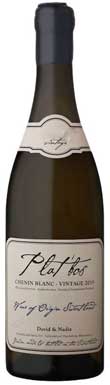
David and Nadia Sadie’s home vineyard on the Paardebosch farm next to their cellar is a classic example of Chenin Blanc grown on Swartland’s decomposed...
2022
David & Nadia
David & Nadia, Rondevlei, Swartland, South Africa, 2022
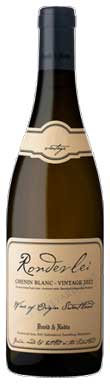
This Certified Heritage Vineyard, planted in 1984, produces a characterful, idiosyncratic wine from sandy soils to the west of Malmesbury, close to the Atlantic. David...
2022
David & Nadia
David & Nadia, Chenin Blanc, Swartland, South Africa, 2023
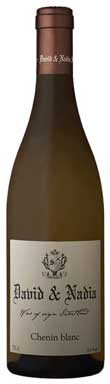
The basis for the estate Chenin Blanc is the granitic Plat’bos vineyard, but Swartland fruit from a variety of soils contributes to the final wine....
2023
David & Nadia
David & Nadia, Aristargos, Swartland, South Africa, 2022
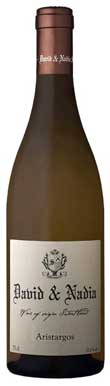
A classic Swartland white blend made with 47% Chenin Blanc, 11% Semillon, 9% Verdelho, 7% Clairette Blanche, 7% Roussanne, 6% Grenache Blanc, 6% Marsanne, 5%...
2022
David & Nadia
David & Nadia, Elpidios, Swartland, South Africa, 2021
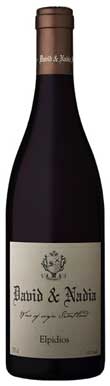
A wine that has evolved significantly over the years, moving from being mainly Syrah and Carignan to a Grenache-based blend. The 2021 comprises 54% Grenache,...
2021
David & Nadia
David & Nadia, Grenache, Swartland, South Africa, 2022
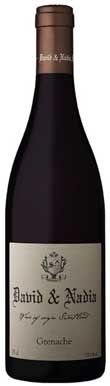
A gentle, mellow Grenache in a contemporary mould (note the alcohol), this is pale, pretty and utterly charming, with lots of raspberry, strawberry and cherry...
2022
David & Nadia
David & Nadia, Hoë-Steen, Swartland, South Africa, 2022
The oldest single vineyard that David and Nadia work with was planted in 1968 near Darling, its soils rich in iron and clay, overlaying limestone....
2022
David & Nadia
David & Nadia, Skaliekop, Swartland, South Africa, 2022
Although most of David and Nadia Sadie’s Chenin Blancs grow on granite, Skaliekop comes from an unusual outcrop of shale next to the Plat’bos vineyard....
2022
David & Nadia
David & Nadia, Plat'bos, Swartland, South Africa, 2022
David and Nadia Sadie’s home vineyard on the Paardebosch farm next to their cellar is a classic example of Chenin Blanc grown on Swartland’s decomposed...
2022
David & Nadia
David & Nadia, Rondevlei, Swartland, South Africa, 2022
This Certified Heritage Vineyard, planted in 1984, produces a characterful, idiosyncratic wine from sandy soils to the west of Malmesbury, close to the Atlantic. David...
2022
David & Nadia
David & Nadia, Chenin Blanc, Swartland, South Africa, 2023
The basis for the estate Chenin Blanc is the granitic Plat’bos vineyard, but Swartland fruit from a variety of soils contributes to the final wine....
2023
David & Nadia
David & Nadia, Aristargos, Swartland, South Africa, 2022
A classic Swartland white blend made with 47% Chenin Blanc, 11% Semillon, 9% Verdelho, 7% Clairette Blanche, 7% Roussanne, 6% Grenache Blanc, 6% Marsanne, 5%...
2022
David & Nadia
David & Nadia, Elpidios, Swartland, South Africa, 2021
A wine that has evolved significantly over the years, moving from being mainly Syrah and Carignan to a Grenache-based blend. The 2021 comprises 54% Grenache,...
2021
David & Nadia
David & Nadia, Grenache, Swartland, South Africa, 2022
A gentle, mellow Grenache in a contemporary mould (note the alcohol), this is pale, pretty and utterly charming, with lots of raspberry, strawberry and cherry...
2022
David & Nadia
