
A ‘monumental’ tasting of Petrus, Le Pin and Lafleur 1998 and 1999
Jane Anson reports on a rare tasting of two outstanding vintages from three legendary Pomerol estates, side-by-side...


It’s hard to think of a tasting I have enjoyed more this year than one held over Zoom last week comparing the three Pomerol powerhouses of Petrus, Le Pin and Lafleur across the 1998 and 1999 vintages.
Not just because the first of these is a truly legendary year on the Right Bank, and the second widely recognised as handing Pomerol the crown of best performing appellation.
Scroll down for Jane Anson’s Le Pin, Lafleur and Petrus tasting notes and scores
Rather, it was the build-up, the research, the countdown, the setting out of the glasses, the guessing which of the six would be performing best, and the sharing with friends afterwards.
It felt indulgent, liberating, rewarding – all things that have been in particularly short supply this year. But then these three names have long since traded on those emotions.
A tasting of one of them is something to remember, so gathering all three together was always going to be monumental. I can genuinely say that sharing the tasting samples with three friends after I had finished the Zoom – carefully splitting up what was perhaps 20cl per glass – was the best part. We each had a tiny amount, but wines with this much power, concentration and sheer flavour, it was enough.
If anything underlines how special the soils on the Pomerol plateau are it is that these properties are located within touching distance of each other. Petrus and Lafleur are neighbours, separated by a small road, with Le Pin at most a five-minute stroll through the vineyard of Vieux Château Certan.
They are wines known more by reputation than experience.
Even those who taste them during Bordeaux en primeur season are often hard-pressed to open older vintages. It’s not just the price – although you’d be spending somewhere north of £120,000 to buy a case each of these six particular wines – it’s also because the production is so limited.
Petrus is the largest at 11.7 hectares (ha), making around 4,000 cases per year. It’s followed by Lafleur at 4.58ha, producing close to 2,000 cases in a good year. Le Pin stands at 2.8ha after a gradual expansion but rarely breaks through 500 cases of its main wine.
There is a second wine of sorts at Le Pin, called Trilogie, which is even rarer than the main wine and comprised of three vintages in much the same way as Overture at Opus One.
Petrus similarly has an under-the-table, rarely-seen separate bottling that is distributed only to family and friends.
Lafleur is the only one of these three that regularly bottles and sells a second wine. Its Pensées de Lafleur dates back to 1987.
As you would hope from wines that sum up what we love about Pomerol, all three grand vins are utterly understated, without a sign telling you either how to approach them or that you have arrived. Three new, smart wineries have been discreetly unveiled over the past few years.
All three are also family-owned, and in each case the families have become legends through their ownership. The Guinaudeau family lives on-site at Lafleur, while the Moueix family is at Petrus and the Thienpont family at Le Pin.
The estates are currently led by Baptiste Guinaudeau, Jean Moueix and Jacques Thienpont respectively. Both Guinaudeau and Thienpont are also the winemakers, while at Petrus that title goes to Olivier Berrouet.
Trying to understand how they have cemented their reputations is a fascinating task in itself.
I’m not going to delve too deeply into the estates’ individual histories, because these stories have been told many times before, except to say that Lafleur is believed to be the oldest. It has a timeline dating back to the 15th century and was recorded as a plot within Château Le Gay.
It seems that both Lafleur and Petrus started life as named vineyards in the 19th century; both were recorded in local archives as farmhouses with vines, reflecting the low-key history of Pomerol compared to St-Emilion or the Médoc.
Le Pin, in contrast, was born in 1979 into a world that was starting to take wine seriously as an investment. Its succulent flavours quickly attracted critics, such as Robert Parker Jr. That, however, still came as a surprise to Jacques Thienpont, who had sold every bottle of his 1982 vintage before realising it was to become a legend of the 20th century.
It means that where Lafleur and Petrus took decades to come to prominence, Le Pin was jet-propelled within three years of arrival.
Comparing Petrus, Lafleur and Le Pin vineyards
Let’s look instead at the soils:
- Lafleur sits on a split of gravels and clay-gravels;
- Le Pin has a mix of heavy clays, gravels and sands;
- Petrus has a distinct mound (they call it a button) of dense, sticky ‘blue’ clay.
Le Pin is the most classically-Pomerol in its soil types, although a more pumped-up, intense version, while both Lafleur and Petrus have unusual soils that account for their distinctive personalities, made even more surprising because they sit directly next-door to each other.
There are other gravel-filled estates in Pomerol, but usually more densely mixed with clay, while in the maps that we recently published in Inside Bordeaux, you can clearly see that the singular clay of Petrus is found barely anywhere else in Bordeaux, probably accounting for 0.01% of the overall vineyard.
Most importantly in terms of their taste profile, the vineyards are worked with obsessive care, and contain diverse genetic materials in their vine stocks that encourage complexity.
Both Petrus and Lafleur preserved their old vines even when those around them were replanting first after the 1956 frosts, and then again during the fashions of the 1970s for modern clones.
In the case of Lafleur, this was largely because the Robins were unwilling to invest in uprooting and replanting. It meant when their cousin Jacques Guinaudeau (Baptiste’s father) arrived in 1985, he inherited vines that dated back to the 1920s – even if there were missing plants throughout that he slowly but surely filled in. These old vines are today used for massal selection.
Petrus owes its own old vines to the obsessive care of former owner Marie-Louise Loubat, who after the 1956 frost cut the damaged vines right down to their base rather than pulling them up, and so saved many of the plants that others lost.
And even Le Pin, although newly-christened in 1979, was working with older vines from the start. The estate was born from a tiny 1ha plot that Jacques Thienpont managed to convince his uncle and father to purchase with him from their immediate neighbour, Madame Loubie.
In all three cases, the old vines give naturally low yields, and provide an exceptionally high quality base for expressing the character of the sites.
Lafleur also stands out from both Petrus and Le Pin for its unusual grape blend. Where the others might just be the world’s most famous 100% Merlot bottlings, Lafleur is a near-even split of Cabernet Franc and Merlot, providing a neat yin/yang contrast to its closest neighbour.
In the cellar
In the cellar, there are also differences.
Petrus is fermented in concrete tanks, while Le Pin and Lafleur use stainless steel. Both Lafleur and Petrus are extremely careful with new oak, never going above 50% – with Lafleur often far less than that.
Le Pin was one of the first properties in Bordeaux to carry out full integral malolactic fermentation in-barrel, at first because there was simply no room in the winery to keep all these stages separate, and not enough vats to make room for all the grapes as they came in to the cellar. It also uses a higher percentage of new oak, which reaches 100% in many vintages.
Anyway, enough. The details, micro-details, vineyard choices and personalities behind the wines could occupy us for weeks, frankly.
But what this tasting showed above all else is that you don’t need to know a single thing about how they are made to be blown away by how good they are.
It was immediately clear that the individual characters of these wines had blossomed with a few decades in bottle, and each one was able to effortlessly claim and hold your attention.
Now at 22 and 21 years old, there was no mistaking their brilliance, although the 1998 was the better and more consistent vintage. Lafleur kept pace with the other two – the estate would go on to perform even better after coming under full ownership of the Guinaudeaus in 2002.
The Petrus 1998 was the overwhelming favourite in the tasting, which was organised (virtually) by London-based wine club 67 Pall Mall.
It received 60% of audience votes even when set against this extremely starry company.
It is simply impossible to argue with – to the point that the Le Pin 1998 (which is around double the price in the market than Petrus, standing at close to £40,000 for a case of 12 in the UK) would almost certainly have received an unblinking 100 points if it had not been tasted against Petrus.
At one stroke this shows how crazily reductive points are when it comes to describing wines, and yet also how useful they can be – that tiny extra nudge just seemed essential to somehow highlight the majesty of the Petrus. Le Pin had to be content with 99.
A blissfully ridiculous argument, of course, but one that I wouldn’t have missed for the world.
Tasting Petrus, Le Pin and Lafleur: The notes and scores
You may also like
Producer profile: Château LafleurBordeaux 2005 second wines: Tasting six of the bestTasting September releases: 50 world-beating wines set for the Bordeaux ‘Place’Tasting 20 years of Château Haut-Bailly: 1998-2018
Petrus, Pomerol, Bordeaux, France, 1998
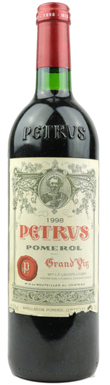

Richly scented like you wouldn't believe; earthy truffle, black olive and rosemary fill the glass and don’t let up right through the palate, providing waves...
1998
PetrusPomerol

Petrus, Pomerol, Bordeaux, France, 1999
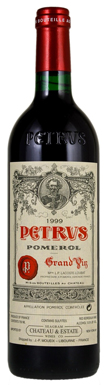
The velvety texture is clear even on the nose, with truffle and chocolate shavings giving a mouthwatering opener. This is a lighter-framed Petrus than the...
1999
PetrusPomerol
Château Le Pin, Pomerol, Bordeaux, France, 1998
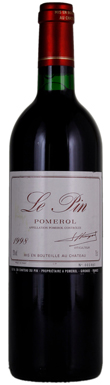
Richest of the lineup in terms of decadent black cherry and damson plum that seduce straight from the first hit and expand upwards and outwards...
1998
Château Le PinPomerol
Château Le Pin, Pomerol, Bordeaux, France, 1999
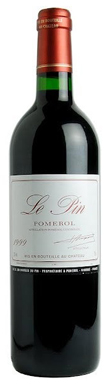
Expressive and rich, not as decadent as the 1998 but still in a class of its own in terms of concentration of menthol-laced plum and...
1999
Château Le PinPomerol
Château Lafleur, Pomerol, Bordeaux, France, 1998
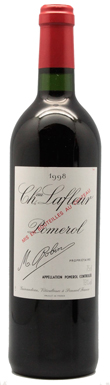
The depth and concentration of the vintage meant that Lafleur remained fiercely closed for a number of years, emphasising even more than usual how different...
1998
Château LafleurPomerol
Château Lafleur, Pomerol, Bordeaux, France, 1999
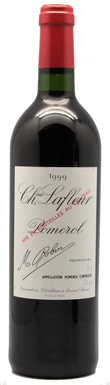
Violet edges flirt with a savoury tomato leaf aromatic, and this is an intellectual take on 1999 that demands your attention and holds it every...
1999
Château LafleurPomerol
