Ten reasons to rediscover Languedoc plus the wines to seek out
Decanter’s Regional Editor for Languedoc has spent a lot of time in the southern French wine region over the past year, and has been bowled over by the quality on offer. Here she gives us 10 of many good reasons to look at its terroirs, estates and wines through fresh eyes.


A region as vast and geographically complicated as Languedoc is difficult, if not impossible, to generalise about. With so many appellations, topographies, microclimates, grape varieties and terroirs, it’s more than just the sum of its parts. Languedoc has moved into a new era, extending beyond the tropes of ‘great value’ and ‘rustic, hearty reds’.
Now is the time to discover the cutting edge of what’s happening in this region. Run, don’t walk, to snap up the exciting wines of Languedoc.
Scroll down to see notes and scores for 10 Languedoc wines worth seeking out
1. Whites
Most famous for its reds, Languedoc’s white wines may surprise, in that they are becoming a real source of freshness, intrigue and deliciousness. There are still vast plantings of international varieties such as Chardonnay and Sauvignon Blanc in the region, but it’s the local varieties that make the most complex and interesting wines. Carignan Blanc and (the rare) Gris, Grenache Blanc and Gris, Terret, Bourboulenc, Rolle, Mauzac and Clairette are being used to great effect in blends, alongside adopted varieties such as Roussanne, Marsanne, Viognier and Chenin Blanc.
Some producers are honing in on single-variety styles, and when sourced from old vines this can work very well, giving great concentration and varietal definition. There’s one appellation that’s dedicated solely to the production of dry whites, Picpoul de Pinet, which since its ascension to appellation status in 2013 has become a huge commercial success.
Other whites of the Languedoc region look set to follow suit. Sometimes it’s an entire appellation that impresses, while at others it’s more about individual producers. The whites of La Clape – classy, saline and fresh – have risen in profile as a success thanks to signature variety Bourboulenc’s racy acidity; look out for those from Sarrat de Goundy and Château Rouquette sur Mer. Terrasses du Larzac, where white varieties thrive in Languedoc’s cooler reaches, is working on plans to have its appellation regulations updated in order to include white wines. Check out producers Domaine Le Clos du Serres, Les Vignes Oubliées and Mas Cal Demoura for some seriously aromatically complex whites. I’ve been impressed by some white Corbières, but here you do have to know your producers: don’t miss the elegant La Bégou from Maxime Magnon (2021, £38 Roberson), and the whites from Château La Baronne and Pierre Bories.
2. Individuality
As appellations work hard to show drinkers exactly what defines their wines, we are moving away from the region being seen as ‘one monolithic block’, says Amber Gardner, wine consultant and head of sales at UK importer Emile Wines. Each appellation has its own distinguishing features, and the resulting wines cater for varying tastes. The cooler, wetter Pic St-Loup, for example, focuses on Syrah (minimum 50% in red blends, 30% in rosés), and you’ll find refined wines from Clos des Reboussiers, Domaine de l’Hortus and Mas Bruguière; while the warm, dry Corbières, especially its cru Boutenac, goes crazy for Carignan (up to 50% in red blends, 40% in rosés).

Terrasses du Larzac is one of the most dynamic appellations, with a sense of community and mutual respect among its producers. The influx of newcomers over the last 10 years, welcomed by the appellation’s leading names (not always a given in Languedoc), has created a fusion of sharp minds, fresh ideas and consequently standout wines. According to the appellation authorities, three-quarters of producers here cultivate using organic methods, and it’s increasing each year. Pioneers such as Mas Jullien have paved the way for ambitious boundary pushers like Domaine Flo Busch, Domaine Romain Portier and Mas d’Amile.
In his 2023 book The New French Wine (US$28.99 Ten Speed Press), Jon Bonné highlights St-Chinian and Faugères as showing ‘some of the strongest evidence of specific terroir identity in the region’, and while some still feel too extracted and heavy for modern times, there are elegant, satin-textured wines to be found from the likes of Domaine de Pech-Ménel and Terres Falmet in St-Chinian and from Domaine de Cébène and Clos Fantine in Faugères.
3. The outliers
While the appellation system lends structure and points of reference, Languedoc is also alive with producers ploughing their own furrow. Perhaps it’s what some see as excessively strict, outdated appellation rules, confusing classification hierarchy, or the obscurity of some appellations to consumers that have given rise to a host of outliers and artisans, of punks and wild warriors, pushed to cut themselves loose from the shackles of precise grape variety percentages and controlled yields. This is cowboy territory.

Labelling wines under one of Languedoc’s many regional IGP designations, or even Vin de France (which permits the blending of grapes with no region-based restrictions), is increasingly common, but shouldn’t be seen as a downgrade in quality. Often, it’s the opposite. Some famous names – Mas de Daumas Gassac and Domaine de la Grange des Pères – have done this for years, as have those in the more underground scene such as Domaine Ledogar, Les Sabots d’Hélène (with a wine called Anticonstitutionnellement: £24 Pure Wines) and Mas Coutelou. Scratch beneath the surface and you’ll reveal a whole other world. Look for whites with extended skin maceration, which works particularly well with Muscat, such as those from Clos du Gravillas (A Fleur de Peau 2021, £27 Sip Wines) and Domaine Mamaruta (Trafalgar or Zuru Zuru).
4. Experimentation
The rule-breaking artisan winemakers embody the Languedoc bywords of freedom and experimentation. Take, for example, the idea of blending white and red grapes, often from co-planted vineyards of local varieties. New from Clos du Gravillas is I’m Alive, a carbonic maceration Vin de France blend of the ancient Piquepouls Blanc, Noir and Gris, with a touch of Cinsault. Pale red in colour, the nose and palate are radiant with wild strawberry and tangy redcurrants, flecks of orange rind and dried thyme. Other producers playing with this technique include Domaine Jean-Baptiste Senat, Le Petit Domaine de Gimios and the tiny L’Absurde Génie des Fleurs.

The move away from new oak continues in earnest as a variety of vinification and ageing vessels step in to take its place. Eggs, amphorae, dolia and jars made from concrete, terracotta, stoneware and ceramic have become a common sight across the region. These help with textural complexity, as well as aiding microoxygenation without the intrusion of oak flavours. Small new oak barriques are an increasingly rare sight, nudged out by large foudre casks and even experimental barrels made from both oak and acacia, as at Domaine de la Dourbie.
Brigitte Chevalier of Domaine de Cébène admits that she wishes she had started using ceramic eggs and terracotta jars earlier than a few years ago, now saying: ‘I think that for the wines of Faugères, barrels are not justified.’
5. Lighter, fresher wines
Global wine consumption is decreasing – the OIV organisation reports that estimated consumption of 232m hl in 2022 marks a decrease of 2m hl on the previous year, furthering a decline from a peak of about 246m hl in 2017. With trade reports at the same time revealing increased consumer interest in lower-alcohol drinks of all kinds, Languedoc and its rising alcohol levels are in trouble. The way forward is lighter, fresher wines, which many winemakers are already achieving. As well as the blending of red and white grapes – which ‘helps to combat the rise in levels of alcohol brought on by climate change resulting in a fresher, crunchier style of red wine’, according to Ania Smelskaya, independent consultant and ex-sommelier – I’m also hearing more about infusion winemaking.
Often described by winemakers as the opposite of extraction, this gentle method of vinification uses whole bunches with very little punching down or pumping over, giving a lighter colour and less tannin but still with aromatic and textural complexity. This is contrary to the old image of the rich, overextracted, jammy Languedoc wine style: historically ‘people looked towards Languedoc when they wanted jam’, says Nicole Bojanowski of Clos du Gravillas.

One name has surfaced on numerous occasions during my travels across the region: Eric Pfifferling of Domaine l’Anglore. Over in the southern Rhône, his deep-hued Tavel rosés and delicate reds have garnered a cult following, and it’s to these wines that some forward-thinking Languedoc winemakers are looking. That this inspiration can be found so close to home – Tavel is almost within touching distance of Languedoc’s far-eastern border – shows there’s great potential for things to come. ‘This is the region’s future,’ says Bojanowski. If it’s freshness, elegance and supreme drinkability on the cards, count me in.
6. Greener drinking
The surface of certified organic vineyards in the Languedoc region has increased, according to L’Agence Bio, from 13,748ha in 2013 to 32,693ha in 2022, and the surface under conversion to organics from 3,857ha to 14,800ha. Many producers have embraced biodynamics and brought increased biodiversity to their vineyard ecosystem, while others carry out trials in vitiforestry – growing trees alongside or within vineyards – and regenerative viticulture, which focuses on the vineyard, its soils and surroundings as a whole ecosystem.
As unpredictable weather patterns, and in particular extreme drought, threaten the livelihoods of Languedoc’s winemakers, many are doing what they can to ensure their vines and wines survive in this new climatic era.
7. Old vines
‘They don’t have high yields, they’re hard to work. But the idea is to make good wine,’ says Maxime Magnon, whose white-variety vines in Corbières are 80-120 years old. There are many saviours of old vines in Languedoc, who nurture and protect their gnarled, misshapen charges with tenderness and devotion. Katie Jones, of Domaine Jones, tends almost exclusively old vines between 50 and 120 years old in Fitou, bottling most of them as single-variety wines. Her old-vine Carignan Gris cuvée is a wonderfully refined, complex wine. ‘You feel like you’re saving these old grape varieties,’ she says. The ‘(re-)valorisation of old-vine Carignan’, as wine writer and educator Heather Dougherty calls it, is seen in particular in Corbières-Boutenac, Minervois and Faugères.

8. Indigenous varieties
Once maligned, the native grape varieties of the south are resurfacing, and there are pockets of producers intent on bringing these back from oblivion, not only for their better resistance to dry conditions, which have become a catastrophic problem in the Languedoc region, but also to reconnect with local traditions. Thierry Navarre, in St-Chinian’s cru of Roquebrun, is a Ribeyrenc (or Rivairenc) evangelist.
‘Before phylloxera, this variety made up a third of plantings in some areas, particularly the Minervois,’ he says. Now there is only a smattering of vignerons with plantings, including the young Domaine Ampelhus, east of Montpellier. The variety is late-ripening, but the alcohol remains surprisingly low (Navarre’s pure Ribeyrenc cuvée only reaches 10%-11.5% abv and is light-coloured and juicy: 2021, £21.20 Theatre of Wine). The Bojanowskis at Clos du Gravillas in St-Jean de Minervois are well-known supporters of ancient local varieties, with Terret, Clairette and Piquepoul thriving on their limestone soils in the region’s west. The gris versions of these grapes are even rarer, but John Bojanowski says: ‘I’m convinced by pink grapes for making white wine.’ This diversity of vine material not only makes for more structural and aromatic complexity, but also acts as an insurance policy against increasingly unpredictable growing conditions.

Languedoc: Seven names to know
Beyond the names already cited, the following producers should also be on your radar…
CLOS DES JARRES, Minervois Vivien Hemelsdael makes fresh wines that sometimes stray away from the appellation norms.
DOMAINE DE VILLENEUVE, Pic St-Loup Softly spoken and a fount of knowledge, 28-year-old Victorine Fraisse is the new generation now heading up this family domaine.
ETIENNE FORT, Limoux Converting a portion of his family’s vineyards to organic and rescuing them from the cooperative, Etienne makes elegant, expressive Crémant and Blanquette. (+33(0)633434146)
LES HAUTES TERRES, Limoux A reference for high-quality still and sparkling in Limoux.
MAS COMBARELA, Terrasses du Larzac A relatively new domaine in the appellation, founded in 2016 by Olivier Faucon, and one to watch.
MAS FOULAQUIER, Pic St-Loup A biodynamic domaine in the northern reaches of the appellation, established by former architect Pierre Jéquier in 1998 and run since 2003 with his wife Blandine Chauchet.
YOHANN MORENO, Corbières A new young winemaker in Durban-Corbières, making waves in the natural wine scene. (@morenoyohann)
9. Imported grapes
On limestone above the village of Lagrasse in Corbières, Laurent Miquel has pioneered the planting of Albariño – the popular grape of Galicia in northwest Spain that Miquel had an inkling might work in Languedoc. He’s had great success, especially on export markets; his Albariño cuvées are hyper-refreshing, clean and precise (IGP Aude 2021, £12.50 Sainsbury’s, Waitrose). With climate change worsening, producers have been looking into grape varieties from other warm regions around the world. Château La Roque in Pic St-Loup has planted Malvasia Istriana and the Greek Assyrtiko grape, producing Vin de France bottlings of 1,700 and 600 bottles respectively in 2020. And in 2022, the AP Languedoc authority officially added Assyrtiko to its list of permitted subsidiary varieties, along with Italian Nero d’Avola and Montepulciano.

10. People & place
‘Languedoc has always been about people,’ says Marcel Orford-Williams, long-time buyer for UK merchant The Wine Society. ‘The key to knowing Languedoc and revealing its secrets is to know the people.’ Somewhat overwhelming, considering there are some 1,200 producers of all sizes in the region.
Complicating matters further are the cycles of newcomers and a new generation of youngsters taking over family domaines; but this just serves to inject the region with new energy, techniques, wine styles and ideas. Many of them have a sympathetic view of organic, biodynamic or regenerative practices, plus a strong concern for the environment, biodiversity and respecting the ecosystem in which they work. ‘They are going to bring a spirit of freedom,’ says Nicole Bojanowski in Minervois.

Land prices are slowly increasing in the region – figures from French agency Safer’s Le Prix des Terres arm show vineyard prices in the Aude, Hérault and Gard departments rising between 1% and 6% over 2021-2022. And prices per hectare of vineyard land in Pic St-Loup and Terrasses du Larzac are considerably higher than elsewhere in the region, averaging €72,000 and €27,500 respectively, compared with €16,000 in Faugères or €12,000 in St-Chinian, less elsewhere.
Yet Languedoc still remains affordable compared with many other French wine regions – 2022 values per hectare in Côtes du Rhône villages Rasteau and Tavel averaged €80,000 and €70,000, and for Bordeaux’s Haut-Médoc it was €60,000. Languedoc is therefore ‘bustling with creativity’, says Gardner at Emile Wines.
But there’s an ‘old-new’ generation that still acts as a reference point and as inspiration for the newbies, too; a selection of established names quietly beavering away making top-tier, modern wines have made space and shared their experience and expertise.
Rediscover Languedoc: 10 wines to tempt
Related articles
- Best Languedoc wineries to visit
- Riveting reds of the Languedoc
- Discovering the ‘micro crus’ of Provence plus 12 wines to try
Domaine de Mouscaillo, Brut Nature, Crémant de Limoux, Languedoc-Roussillon, France, 2020
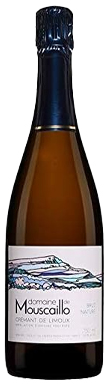

A new generation takes the reins here in young winemakers Thomas and Camille Fort. Their Crémant is delicious: it shows a warm and sunny ripeness of stone fruit, wildflower honey and grilled pineapple. Delicate florals appear on the palate, along with baked apple, buttered toast, hay and cashew butter. An elegant, creamy mousse rounds out the finish.
2020
Domaine de MouscailloCrémant de Limoux

Domaine Jones, La Perle Rare, Vin de France, Languedoc-Roussillon, France
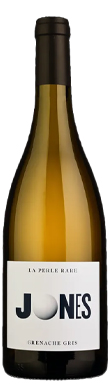
A special wine whose story begins in 2009 as a single barrel of Grenache Gris, shunned to the corner of the winery for being too oaky. Four years later, after vandals emptied all of Katie Jones' white wine tanks, the single barrel survived untouched, and had transformed into a complex wonder. A solera system has been continued since that vintage, with one barrel bottled each year. Intense, oxidative aromas of fresh hay, grilled peaches, preserved lemons, praline and a distinct smokiness. The palate is explosive, full of nutty complexity, almonds and walnuts, lemon oil and a real saltiness. Endless length. Organic.
Domaine JonesVin de France
Clos du Gravillas, L'Inattendu, Minervois, Languedoc-Roussillon, France, 2022
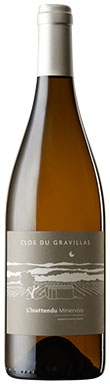
Grenaches Blanc and Gris, with some Macabeu, perform a delicate dance here, with inviting aromas that flit between white florals, wet rocks and a fine dusting of dried herbs. Firm, mineral and refined, with a light nutty note, this is a wine that's at once pure and powerful. The dry, hot 2022 vintage has not zapped this wine's consistent elegance. Fermented in 500-litre barrels and aged on lees, a little richness rounds out the finish. Organic.
2022
Clos du GravillasMinervois
Domaine du Pas de l'Escalette, Mas Rousseau, Pays d'Hérault, Languedoc-Roussillon, France, 2021
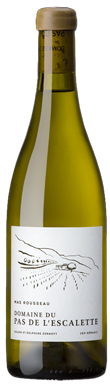
Fragrant white blossom, honeysuckle and rosemary honey aromas seduce and ensnare, transforming into crab apple and almond. Pure Carignan Blanc from a small plot planted via massal selection from the domaine's existing 90-year-old vines, in the far northern reaches of Terrasses du Larzac. A biodynamic white of great power and intensity, glinting and shimmering with energy and potential. Taut and mineral, with a saline, rocky edge.
2021
Domaine du Pas de l'EscalettePays d'Hérault
Laurent Miquel, Solas Albariño, Aude, Languedoc-Roussillon, France, 2022
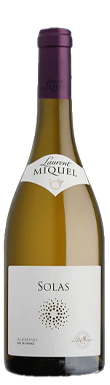
The idea was to create something really fresh, mineral and crisp, and get the purity of Albariño,' says Laurent Miquel, and he's done just that. From his plots of Albariño planted at some 200m on limestone in the Corbières. This vintage shows a peachy outline to the citrus fruit: bright lemon zest punches through a saline finish. Refreshing and drinkable.
2022
Laurent MiquelAude
Maxime Magnon, Métisse, Corbieres, Languedoc-Roussillon, France, 2022
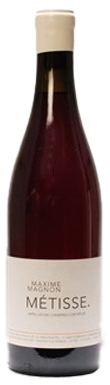
Maxime Magnon's concise range of wines from his little corner of the Corbières is quite extraordinary. He has made this rosé (more of a 'clairet') since 2011. Having met Eric Pfifferling in 2002, he realised that for him it was the rosés of Tavel that constituted a true rosé wine. Métisse is a maceration of Lledoner Pelut and Cinsault, blended with direct press Carignan, aged in a combination of old oak and stainless steel. It's light on its feet, with scores of cherry skin and crunchy red apple, finely textured on the palate with a lick of liquorice and a lifted, aerial finish.
2022
Maxime MagnonCorbieres
Domaine de Cébène, Les Bancèls, Faugères, Languedoc-Roussillon, France, 2020
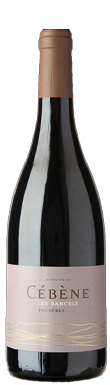
Les Bancèls means 'terraces' in Occitan. Winemaker Brigitte Chevalier takes Syrah and Grenache parcels from an exceptional, high terraced site with northern exposure, along with a bit of Mourvèdre, and masterfully blends them into this silky, refined wine. Scents of damsons and bramble mix with juniper and heather, perfumed with the wildness of the garrigue. Richness is balanced by a mineral, slatey core and fine-grained tannins. The 2020 is superb: approachable and delicious now, but bright acidity will prolong its life into the medium term. Biodynamic.
2020
Domaine de CébèneFaugères
Mas Bruguière, La Grenadière, Pic St-Loup, Languedoc-Roussillon, France, 2021
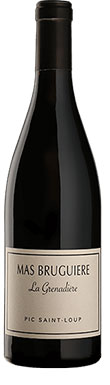
A beautiful expression of Syrah built on youthful black fruit, spanning black plums, forest berries and black olives. Textured like crimson silk, with clean, defined lines and a mineral, stony centre. It's concentrated and tightly structured, but so fresh and refined. At 90% of the blend, vinified in foudres, 40-year-old Syrah claims centre stage. 2021 was quite a fresh vintage in Pic St-Loup, leading to high acidities and good ageing potential. This will open out with another year in bottle. Organic.
2021
Mas BruguièrePic St-Loup
Domaine Balansa, Versicolore, Vin de France, Languedoc-Roussillon, France, 2021
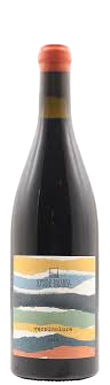
Céline Peyre and her partner Alexandre Gressent took over 14ha of old vines from the Peyre family domaine in the Hautes-Corbières, making their first vintage in 2017. This wine is 100% centenarian Carignan vinified in concrete and aged in old barrels. A bright expression of black fruit from the start, fragrant and bewitching. Fine-grained and intricately textured, with a slatey, mineral core and fresh acidity. The new generation and one to watch. Biodynamic.
2021
Domaine BalansaVin de France
Domaine Ledogar, Les Brunelles, Vin de France, Languedoc-Roussillon, France, 2022
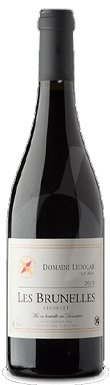
Brothers Xavier and Mathieu work this domaine, within the Boutenac cru of the Corbières, having inherited many old vines and converting to organics and then biodynamics. Les Brunelles is 100% Cinsault, from one parcel of 75-year-old vines with soils of red clay and galets roulets. It's harvested a little early, has one week of maceration, and has fairly low alcohol. It's a vibrant wine, alive and kicking, full of wild strawberries, crushed raspberries and the sweet earthy bitterness of apple skins. Breezy, refreshing and joyful.
2022
Domaine LedogarVin de France
