
Tenuta di Trinoro: Producer profile & 18 wines tasted
‘Tenuta di Trinoro is one of those wine estates that’s impossible to pigeonhole,’ says Decanter's Italy editor, James Button, as he takes a closer look at the Tuscan estate.


Tenuta di Trinoro is one of those wine estates that’s impossible to pigeonhole. Located in the almost deserted rolling hills of Sarteano in the Val d’Orcia in southern Tuscany – a UNESCO World Heritage Site since 2004 – the wines made here represent one man’s struggle (and now his son’s) to make things work in the face of what, at first, must have seemed like insurmountable odds.
Scroll down to see tasting notes and scores for a 13-wine Tenuta di Trinoro vertical & others
Before Andrea Franchetti’s arrival, the Orcia valley wasn’t considered suitable for vines. There were some scattered ancient Sangiovese vines to be found here and there, but the Val d’Orcia’s rolling hills were, and still are, characterised by fields of crops – cereals and legumes – as well as olive trees and dense woodland.
The main problem with growing vines here is not only the dense clay soils, but also the high rainfall and intense heat. When he made his intention to grow vines known, everyone Andrea spoke to thought he was crazy, but he was adamant. ‘I believe he fell in love with the place and wanted to make wine here,’ Andrea’s son, Benjamin, told me during a visit to the estate in March this year.
Having purchased a derelict farmhouse in 1980 using the proceeds from the sale of a painting by his uncle, American painter Cy Twombly, Andrea set himself the challenge to make world-class wine – against all expectations. He went to Bordeaux to study winemaking and returned with ‘suitcase clones’ of Cabernet Franc and Merlot liberated from St-Emilion, which he used to plant his first vineyards in 1991.
Andrea’s choice of varieties – not to say location – was at odds with what most other producers in Tuscany were doing at the time, but his decision was driven by his newfound knowledge of Bordeaux viticulture and winemaking, and his lack of enthusiasm for Sangiovese.
Andrea decided not to employ a consultant and instead spent his first decade at Trinoro creating the perfect ‘recipe’, dabbling with all sorts of vinification and maturation techniques.
In the 2000 vintage of the estate’s flagship wine, Tenuta di Trinoro, for example, current winemaker Lorenzo Fornaini noted that Andrea experimented with ‘double new oak’, using new barrels for malolactic fermentation before racking to more new barrels for maturation.
Andrea was as meticulous in his notes as he was in his winemaking, and this is a unique legacy that he leaves behind; an outlet for his creativity and love of nature as much as an aide memoire. Just one beautiful example is this extract from his notes on the 2020 vintage: ‘It is cold outside, but there is that distant sweetness in the air, like it happened every year in February when the moon is rising. It feels like a breeze from spring even in the middle of winter’s dark weather.’
Working biodynamically was part of Andrea’s vision for interpreting the nature of the place; the team use only natural treatments in the vineyard – such as copper, sulphur, clay, propolis, grapefruit seed extract and sheep manure – and they only bottle on a waning moon.
A new generation
‘My father was alone very much at the beginning of the process; trying the wines alone, and his psychology was subconsciously going into these wines,’ said Benjamin. ‘For me, Tenuta di Trinoro is a narrative, almost a diary, of his way of life. New chapters of this narrative have come into place since 2015: we have Lorenzo [Fornaini, winemaker], Calogero [Portannese, technical director] and myself.’ All in their 30s, this extraordinarily young technical team is now responsible for the fate of one of Italy’s most unique wine estates.
Andrea died aged 72 in 2021 and Tenuta di Trinoro (and sister estate, Passopisciaro in Sicily) passed to the second generation – siblings Baldassarra, Cody, Giordano and Benjamin.
Benjamin is the perfect person to steer the ship. He holds a PhD in Mechanical Engineering (from Imperial College London) and in 2018 co-founded Agricola Moderna, a forward-looking agriculture technologies company specialising in the vertical farming sector. His passion for scientific solutions and technological insight is bound to help Tenuta di Trinoro weather the incoming storm that is climate change.

The Trinoro style
Tenuta di Trinoro is a true superTuscan – made from international varieties matured in barriques and produced in small quantities at high prices, it regularly garners critical acclaim.
Key to its style is the high-density planting, à la Bordeaux, and heavy pruning which lowers yields even more to achieve superb concentration. Picking is done plot by plot as the grapes reach full maturity, which is typically in late September for the Merlot and mid-October for the Cabernet Franc – up to a month later than in Bolgheri.
Pressing is gentle and only the free-run juice is used. In naturally less concentrated vintages, the tanks may be bled – 20% was bled off in 2009, for example.
Micro-vinifications of the various plots are carried out in small stainless steel tanks, ranging from 10-70hl in capacity. In total, there can be 45 to 50 separate vinifications.
The individual wines then go through malolactic fermentation and six to eight months of maturation in French oak barriques and some larger-format wood. On average, 15-20% new oak is used today – much less than in the early vintages.
The final blend for Tenuta di Trinoro – comprised of the best barrels – is made in concrete tanks, where the wine is held for a further 12 months before bottling. From the 2020 vintage, the wine will be kept in bottle for an additional 12 months before release.
Vines in Val d’Orcia
Tenuta di Trinoro’s vines occupy both the flat land around the winery (nine hectares) as well as on the hillside slopes (14ha, plus another two hectares recently planted) at between 450 and 600 metres. The winery is located at one of the lowest parts of the valley, and cold air flows down from the 1,738-metre high Monte Amiata – which separates the Val d’Orcia from the Maremma – and the 1,148-metre high Monte Cetona – which separates the Val d’Orcia from the Val di Chiana – and pools here; frosts are common. The night of 5-6 April this year, for example, saw temperatures suddenly drop to -5°C and so the team responded by burning oil in the vineyards to protect the vines.
The soils in the Val d’Orcia are complex; largely composed of blue clay, limestone and gravel in varying amounts, with the valley floor featuring deep, alluvial soils and rounded river stones. One of Andrea’s first tasks when he set up in the valley was to identify the best sites for his vineyards – a mix of blue clay and gravel, rather than pure blue clay, was what he was looking for. ‘On its own, it’s not good,’ said Ben, explaining that the blue clay is too dense and impermeable, hindering the progress of the vines’ roots and preventing water drainage, ‘but when mixed with gravel and deep soils you have a really fantastic soil.’
Today, 25ha of the estate’s 200ha are planted to vines at densities of up to 10,000 vines per hectare on the flat land surrounding the winery. The slopes demand slightly lower densities. Benjamin explains that these high density plantings were originally conceived by Andrea to achieve concentration, but now they are considering lower density replantings since the summers are warmer than they used to be and the vines are older and naturally produce lower yields with more concentration. ‘You can have more space between the vines [to work] and now, with this climate, still maintain the quality.’
It may be warmer these days, but the growing season is still very long – the Cabernet Franc in Bolgheri is picked up to one month earlier than the Cabernet Franc grown here. The variety plays a central role at Tenuta di Trinoro, not only comprising the major part of the estate’s flagship wine but also flaunting site specificity in three 100% Cabernet Franc cru bottlings collectively known as I Campi: Campo di Magnacosta, Campo di Tenaglia and Campo di Camagi, first released with the 2014 vintage.
The estate’s other red wines are Le Cupole, the first wine to be released by Andrea with the 1995 vintage, and representing 70% of the estate’s annual production of approximately 120,000 bottles, and Palazzi, originally a Cabernet Franc and Merlot blend from 1997 to 1999 but, after a 10-year hiatus, it re-emerged as an all-Merlot bottling in 2009. Trinoro also produces Bianco di Trinoro, a 100% Semillon made in tiny quantities.

Route to success
Since 2017, Trinoro – the flagship wine – has been composed of just Cabernet Franc and Merlot, in varying proportions. However, this isn’t a set recipe and Fornaini hints that in 2022, ‘the Cabernet Sauvignon and Petit Verdot is beautiful,’ noting that their omission from Trinoro in recent vintages has been because they have been struggling to find the right amount of maturity in the grapes. Perhaps we will see a return to a ‘classic’ Trinoro blend for the 2022 vintage.
The ethos of the estate has always been to make wine in harmony with nature, come rain or shine, but its success has been the result of a tireless work of passion. And that sums Trinoro up – Andrea’s determination to make wine his way in a new place; much like he did when conquering Etna’s northern slopes with Passopisciaro in the early 2000s.
And while Andrea’s son, Benjamin and the young team he has built around him are confident in their abilities and aren’t afraid to make important changes where necessary, they remain loyal to Andrea’s legacy and endorse his unique route to success.

A taste of Trinoro: Tenuta di Trinoro vertical & others
Tasting notes are in vintage order, youngest to oldest, by wine cuvée.
Related articles
- Brunello di Montalcino 2018: full report plus top-scoring wines
- Barolo 2019: vintage report & 139 recommendations
- Passopisciaro: Producer profile
Tenuta di Trinoro, Toscana, Tuscany, Italy, 2020
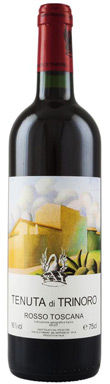

2020 continues the recent trend at Trinoro of only using Cabernet Franc and Merlot; but while 2019 represented the largest proportion of Merlot ever, 2020...
2020
Tenuta di TrinoroToscana

Tenuta di Trinoro, Toscana, Tuscany, Italy, 2019
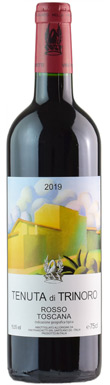
The Merlot was picked on 4-5 October during cool weather, before it warmed up in advance of the Cabernet Franc harvest, which commenced on 14...
2019
Tenuta di TrinoroToscana
Tenuta di Trinoro, Toscana, Tuscany, Italy, 2018
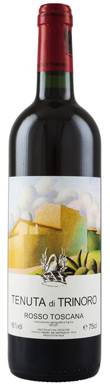
The vines had recovered well following the heat of 2017, thanks to plenty of spring rainfall. The summer was a mix of rain and sun,...
2018
Tenuta di TrinoroToscana
Tenuta di Trinoro, Toscana, Tuscany, Italy, 2016
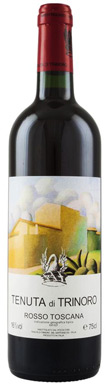
The highest percentage of Merlot in Tenuta di Trinoro (with the exception of 2019), thanks to a cool summer – and even some hail in early...
2016
Tenuta di TrinoroToscana
Tenuta di Trinoro, Toscana, Tuscany, Italy, 2015
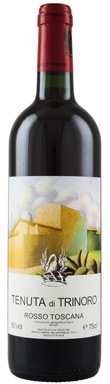
Andrea considered the 2015 to be ‘one of the great vintages of Tenuta di Trinoro,’ and I have to agree. A hot start to the...
2015
Tenuta di TrinoroToscana
Tenuta di Trinoro, Toscana, Tuscany, Italy, 2014
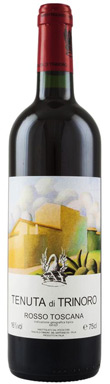
An astonishing 140 days from very early flowering on 15 May to picking of the last grapes on 28 October was the result of a...
2014
Tenuta di TrinoroToscana
Tenuta di Trinoro, Toscana, Tuscany, Italy, 2013
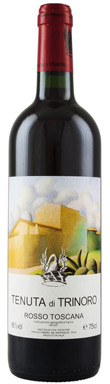
A cool year – summer temperatures were 10°C lower than usual – combined with vine vigour to result in a typical ripening period, yielding grapes with...
2013
Tenuta di TrinoroToscana
Tenuta di Trinoro, Toscana, Tuscany, Italy, 2010
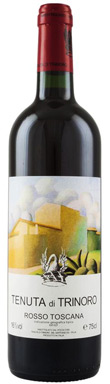
This right-bank Bordeaux blend from the Col D'Orcia in southeastern Tuscany is sourced from clay-limestone and gravel soils. At 16% abv, this is a beast,...
2010
Tenuta di TrinoroToscana
Tenuta di Trinoro, Toscana, Tuscany, Italy, 2009
Andrea felt that the 2009 was one of the best wines he ever made at Trinoro. Foreseeing a scorching summer, he cut back the canopy...
2009
Tenuta di TrinoroToscana
Tenuta di Trinoro, Toscana, Tuscany, Italy, 2008
The heat of the summer in 2008 led to the vines shutting down in September, once all the water reserves from a wet winter and...
2008
Tenuta di TrinoroToscana
Tenuta di Trinoro, Toscana, Tuscany, Italy, 2000
In contrast to the vibrancy of the 1998 and '99, the 2000 Trinoro has reached its apogee yet doesn't quite scale the heights of those...
2000
Tenuta di TrinoroToscana
Tenuta di Trinoro, Toscana, Tuscany, Italy, 1999
In 1999, Andrea added Merlot to Trinoro for a blend of 70% Cabernet Franc, 20% Merlot, 6% Cabernet Sauvignon and 4% Petit Verdot. Mostly fermented...
1999
Tenuta di TrinoroToscana
Tenuta di Trinoro, Toscana, Tuscany, Italy, 1998
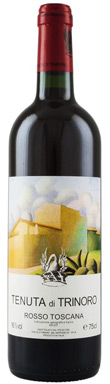
The second vintage of Trinoro, and showing incredibly well in this lineup. The summer was scorching and Andrea had to water the vines at night...
1998
Tenuta di TrinoroToscana
Tenuta di Trinoro, Palazzi, Toscana, Tuscany, Italy, 2020
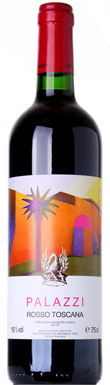
The 2020 vintage was cool and wet at the end of the growing season, following drought-like conditions through the summer. Vinified in stainless steel, it...
2020
Tenuta di TrinoroToscana
Tenuta di Trinoro, Palazzi, Toscana, Tuscany, Italy, 2019

Palazzi 2019 is a blend of three parcels of Merlot on blue clay, vinified in stainless steel and matured for five months in French oak...
2019
Tenuta di TrinoroToscana
Tenuta di Trinoro, Campo di Camagi, Toscana, Tuscany, Italy, 2019
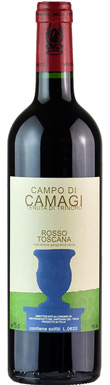
Camagi is a 1.5ha site at 550m planted in thin soils atop fragmented quartz and limestone. The tannins here are much more to the fore...
2019
Tenuta di TrinoroToscana
Tenuta di Trinoro, Campo di Tenaglia, Toscana, Tuscany, Italy, 2019
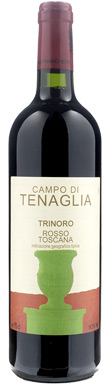
Tenaglia is a 0.8ha west-facing plot at 500m on decomposed limestone soils with a higher proportion of blue clay than at Magnacosta. 'The grapes are...
2019
Tenuta di TrinoroToscana
Tenuta di Trinoro, Campo di Magnacosta, Toscana, Tuscany, Italy, 2019
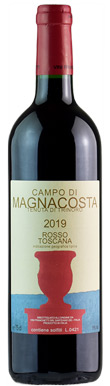
Magnacosta is a 1.5ha site planted over 20 years ago with Cabernet Franc cuttings from Pomerol. It's situated on the valley floor next to the...
2019
Tenuta di TrinoroToscana
