
The Terraces: 12 vintages of Esk Valley’s top Hawke’s Bay red
To mark the 30th anniversary of The Terraces, one of New Zealand’s premium red Bordeaux blends, Decanter was invited to an exclusive tasting of a dozen vintages with head winemaker Gordon Russell.

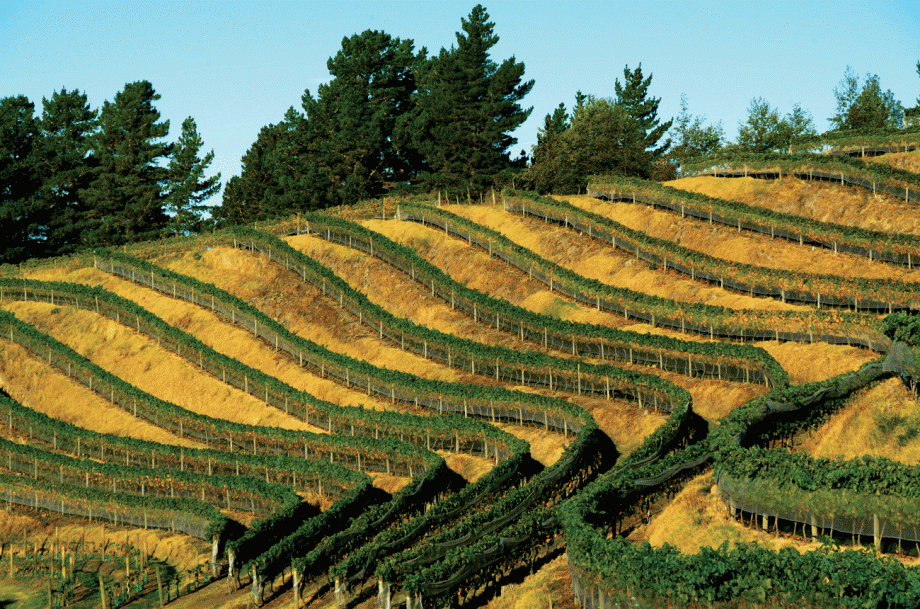
The story of Esk Valley and The Terraces label begins in 1933 when Robert Bird established Glenvale Winery & Cellars at Bay View in the north of Hawke’s Bay.
Producing mainly Port and Sherry wines, Bird built a successful business sourcing grapes from growers around the region as well as from his own site. This included a steep, north-facing, terraced vineyard that he planted in the 1940s.
Scroll down for tasting notes and scores from an exclusive vertical of 12 vintages of Esk Valley’s The Terraces
However the yields and cost of production became prohibitive. So Bird decommissioned the vineyard and replanted it with pine trees.
When the third generation of the Bird family inherited the company, they started making small quantities of varietal wine using Esk Valley as a new brand name. With a market shifting into table wines, the potential for wine production grew.
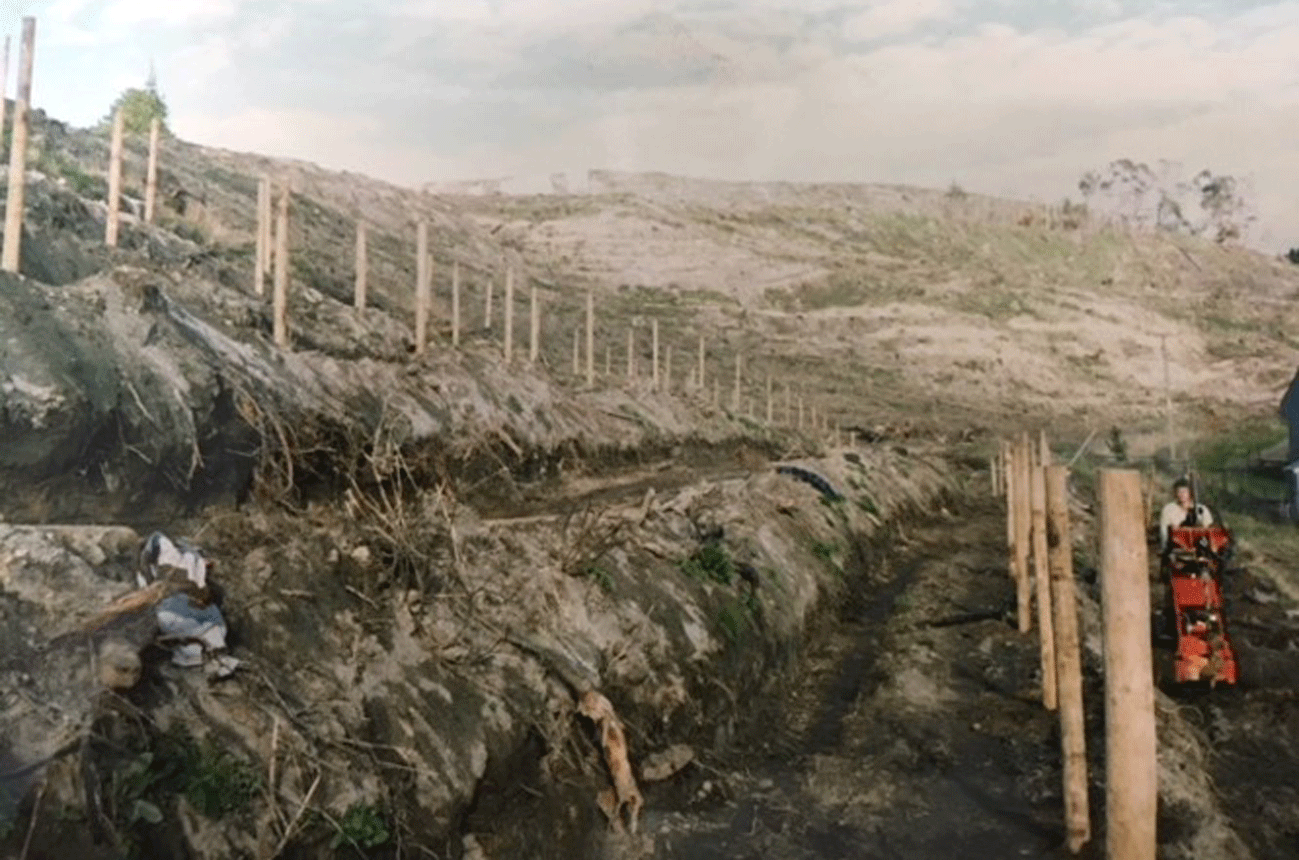
In 1986 Sir George Fistonich (who founded Villa Maria in 1961) purchased the Glenvale land and assets after it fell into receivership. Sir George transformed the company away from fortified production into boutique table wine solely under the Esk Valley name and, in 1988, made the decision to resurrect the former terraced vineyard.
The pines were felled, the terraces reformed and, in 1989, the 1ha vineyard was planted to Malbec, Merlot and Cabernets Franc and Sauvignon. With its north-facing aspect and mix of limestone, volcanic ash, clay and shell deposits, it is a unique site.
(In August, New Zealand’s largest contract winemaker, Indevin, announced it would acquire Villa Maria Estates. Villa Maria’s parent company, FFML, went into receivership in May 2021.)
Heipipi: the pinnacle of Esk Valley
While long known as just The Terraces, from the 2013 vintage (including on bottle labels) this organically managed, dry-farmed and low-yielding vineyard has been referred to as Heipipi.
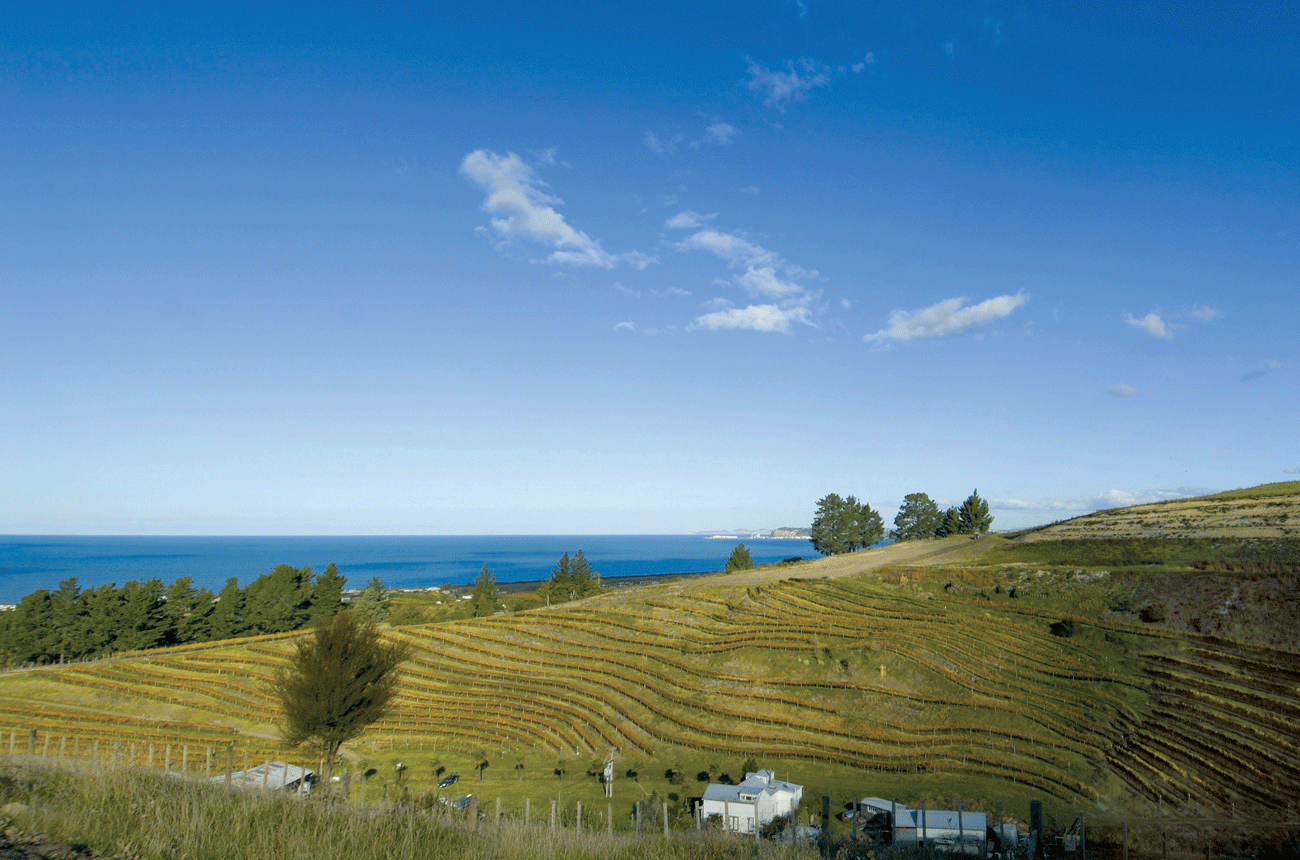
This is the Te Reo Mãori name for the top of the hill where the vineyards lie, and where a Pa (hilltop fortress) sat atop the terraces for more than 400 years. The Terraces is now the name of this iconic single-vineyard cuvée, with its second-label – The Hillside – also sourced from Heipipi.
‘Heipipi is a grand amphitheatre and the pinnacle of what we do,’ says head winemaker Gordon Russell. ’It never fails to impress and showcase what a grand site it is. It’s also still in good health which allows us to maximise the benefit of what are now old vines.’
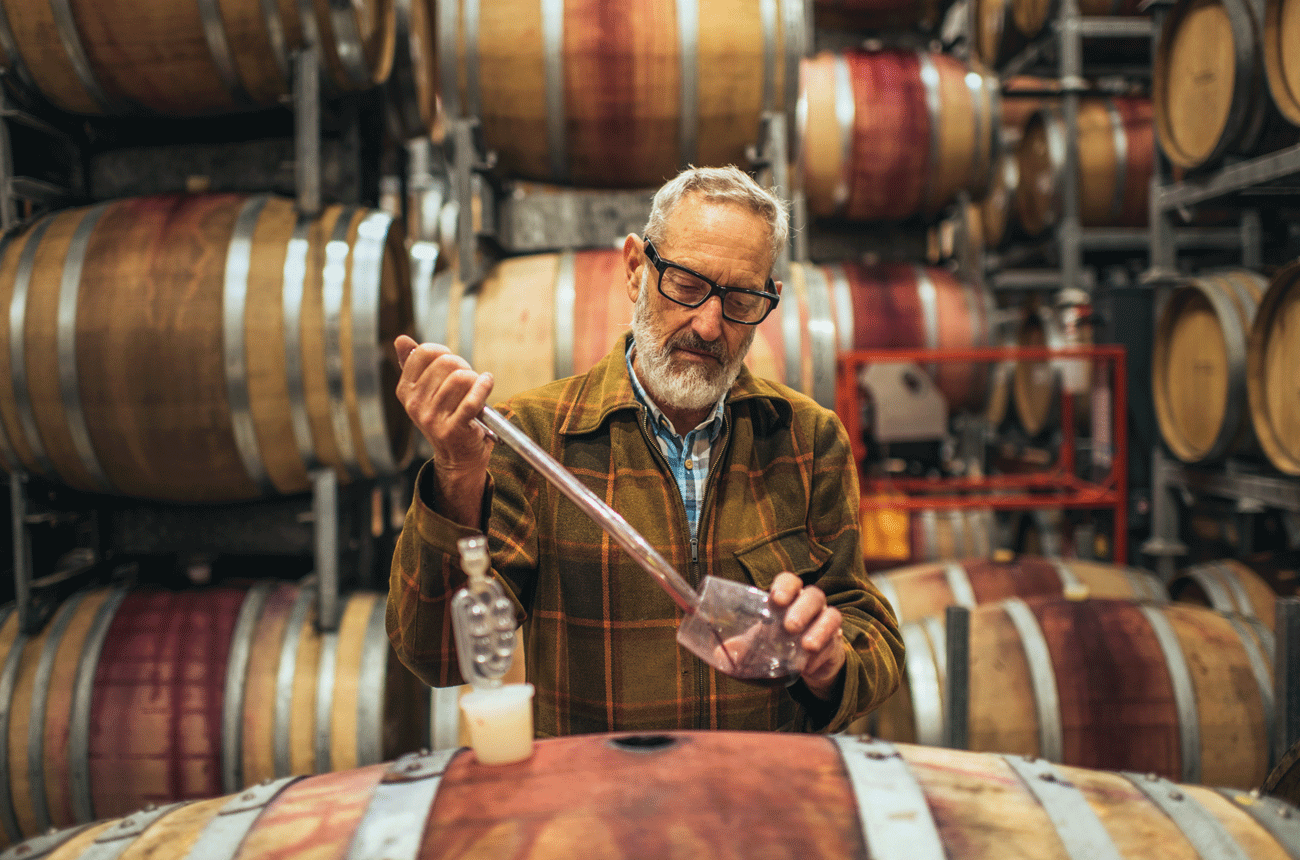
Russell joined the Villa Maria team in 1988 as a cellarhand, working with then chief winemaker Kym Milne MW. When an assistant winemaker position came up at Esk Valley (one of several brands in the Villa Maria portfolio), Russell moved to Hawke’s Bay in late 1989 to take up the role, under then head winemaker Grant Edmonds.
Russell was responsible for The Terraces from 1992, its second vintage, and became head of winemaking in 1993.
Making wine at Esk Valley presented Russell with a slew of new challenges. Not least of which was using concrete fermenters with no temperature control. But he soon learned this kind of treatment contributed subtle differences and complexities in each ferment.
‘The whole progression of winemaking for The Terraces aims to capture the grandeur and uniqueness of the site in bottle. When you taste the wine you are literally tasting the place,’ says Russell.
The Terraces: from grape to glass
The Terraces collection is something special. Tasting through 12 vintages reveals a consistent quality, timeline and rare look into the influences of vine age, vintage and climate from the very first 1991 vintage to the current 2018 release.
Fruit is hand harvested on one day, then sorted, destemmed and lightly crushed into a single open-topped concrete fermenter. Hand plunging gives full extraction of colour and tannin, and maturation is in new and one-year-old French barrels. It is racked as needed, then bottled after 17 to 22 months, depending on the vintage.
While the inaugural 1991 vintage was a blend of Merlot, Cabernet Sauvignon, Cabernet Franc and Malbec, from 2002 Russell dropped the Cabernet Sauvignon. He harvests the remaining three varieties (Malbec dominant since 2002) as a field blend and co-ferments them. Recent vintages make use of wild yeast and the wine is bottled without either fining or filtration.
The Terraces: 12 vintages of Esk Valley’s top Hawke’s Bay red
Related content
Get to know Central Otago Pinot Noir: good, better, best
New Zealand Sauvignon Blanc: 20 from 2020
Gimblett Gravels 2018: Assessing the vintage
Esk Valley, Heipipi The Terraces, Hawke’s Bay, New Zealand, 2018
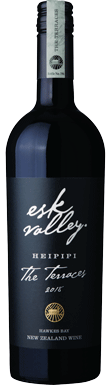

Fresh, bright, very youthful bouquet of flowers, cherries, plums, fresh blackberries, clove and vanilla oak. There's a natural smokiness from the soil and toastiness from...
2018
Esk Valley

Esk Valley, Heipipi The Terraces, Hawke’s Bay, New Zealand, 2016
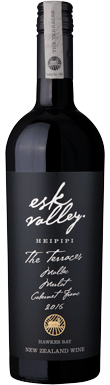
Youthful, fresh fruit-laden core but also very floral: violets, cassis, plums and black cherry then black berry and barrel spices. Vine age, dry farming and...
2016
Esk Valley
Esk Valley, Heipipi The Terraces, Hawke’s Bay, New Zealand, 2015
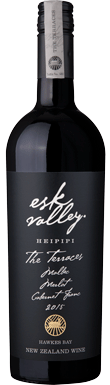
Powerful aroma, with the three varieties stamping their mark: plums then olives, blackberries then violets. The aromas of soil and place are strong, but perhaps...
2015
Esk Valley
Esk Valley, Heipipi The Terraces, Hawke’s Bay, New Zealand, 2014
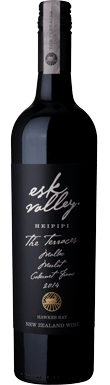
Distinctive core of fruit on the nose: blackcurrant, cassis, violets and plums with some dark chocolate and sweet black tea to follow. The voice of...
2014
Esk Valley
Esk Valley, Heipipi The Terraces, Hawke’s Bay, New Zealand, 2013
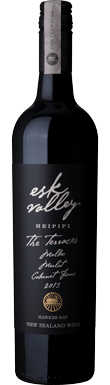
Powerful bouquet with a dense, rich core of blackberry and blackcurrant, juicy dark-skinned plums, violets, cassis and a touch of anise. A smoky charred oak...
2013
Esk Valley
Esk Valley, The Terraces, Hawke’s Bay, New Zealand, 2006
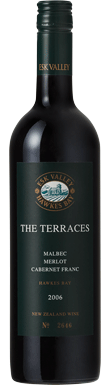
The signature of site is now cemented in place, evident from the first nose. The limestone and earth, mineral and hillside is clear, combining with...
2006
Esk Valley
Esk Valley, The Terraces, Hawke’s Bay, New Zealand, 2004
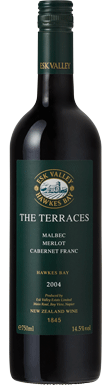
Aromas of dried red berries and hints of oxidation starting to show, along with herbs and hay, dried leaves and brown earth. On the palate,...
2004
Esk Valley
Esk Valley, The Terraces, Hawke’s Bay, New Zealand, 2002
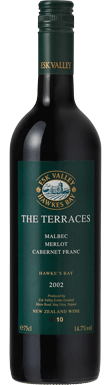
Earth and minerals, blackberry and blackcurrant juice and plenty of chocolate, anise and toasty-smoky barrel layers. Warmer and richer on the palate with a firm,...
2002
Esk Valley
Esk Valley, The Terraces, Hawke’s Bay, New Zealand, 1998
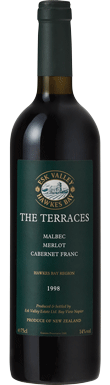
A complete bouquet: a wine that initially smells ready, but with a deep complexity and charm. There's plums, cassis, bitter chocolate and earth, with dark...
1998
Esk Valley
Esk Valley, The Terraces, Hawke’s Bay, New Zealand, 1995
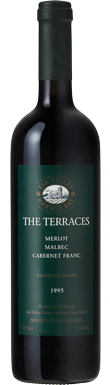
Very attractive aroma of primary and secondary fruits with a youthful, seductive, masculine complexity: fresh and roasted plums, anise, blackberry and olive. Plenty of new...
1995
Esk Valley
Esk Valley, The Terraces, Hawke’s Bay, New Zealand, 1992
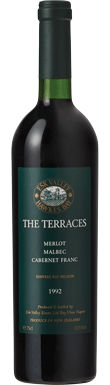
The bouquet shows change and challenges in the vintage. A deeper more savoury bouquet of hay and dried tobacco, dried berries and plums, old violets,...
1992
Esk Valley
Esk Valley, The Terraces, Hawke’s Bay, New Zealand, 1991
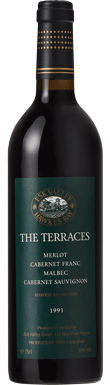
From two-year-old vines of Merlot, Malbec and Cabernets Sauvignon and Franc. Bottle age has not stopped their varietal signature and, though now faded with aromas...
1991
Esk Valley
