
Top Bordeaux 2017 wines in the bottle: Left Bank report
Jane Anson has found 'some great bottles' in a vintage that she revisited with caution, but the hits aren't evenly distributed. Read in-depth tasting notes and see ratings for 100 classified Left Bank Bordeaux 2017 wines.


We begin with the Bordeaux 2017 Left Bank wines.
Separate reports with top wines are available over the coming days for the sub-appellations including:
St-Estèphe, Pauillac, St-Julien, Margaux & Pessac-Léognan
Plus, Right Bank report and St-Emilion and Pomerol individual overviews
See all Left Bank 2017 in-bottle reviews by score
Looking back after tasting hundreds of Bordeaux 2017 in-bottle wines
This is an unusual vintage by many different measures.
First there was the frost, leading to a number of atypical blends and overall some of the lowest yields for Bordeaux on record; a full 40% down on 2016 for the reds, 50% for the whites, and 33% down on the 10-year average overall.
While the frost was undoubtedly devastating for many, several other difficulties followed and the Institute of Oenology said in its report that the ‘2017 vintage reminds us somewhat brutally of the risks associated with viticulture’.
In other words, frost was one part of the story, but this was no 1961, when freezing temperatures were followed by a perfect season that concentrated fully ripe flavours.
Tastings during en primeur back in spring 2018 had shown the variability of these wines. There were some unquestionable high points that the châteaux did their best to talk up. But, it was noticeable that, during the same tastings for the more highly regarded 2018 vintage, all similarities were drawn between 2018 and the powerhouse pairing of 2016 or 2015, with 2017 pretty much forgotten.
Weather conditions in 2017
Of the five conditions tracked each year to assess vintage quality, 2017 only managed between two and three of them in most cases, although did go up to four in others, according to the Institute of Oenology report.
Breaking these down more clearly, 2017 saw an early bud break followed by quick, even flowering and fruit set for those who were not affected by frost.
However, the temperatures that dropped down to -6°C on 26 and 27 April fell so unevenly across the region that, while some appellations were almost entirely spared, others saw many estates making no wine at all.
Rain followed sporadically, ensuring that many vines continued to produce leaves and green shoots for longer than is ideal. This left them less able to concentrate their energy on the grapes, and specifically on the colour change from green to red – known as veraison. Only the best draining soils avoided problems at this point of the season.
Although July and August were extremely dry, rains returned in early September. Overall there were high malic acid levels across the grapes, and less rich colour and tannin potential, mainly because of the 60-100mm rains in early September that put the brakes on ripening and led to difficulties for Merlot in particular.
The return of dry weather in mid to late September meant Cabernet fared better.
We concentrated almost entirely on red wines for these in-bottle tastings, but it is worth adding that both sweet and white wines had an easier time of things in 2017, frost aside, and that there are some exceptionally good wines in both of these styles.
How they are looking now
It’s always fascinating to re-taste a Bordeaux vintage 18 months down the line, after the majority of the wines have been bottled and shipped out to the market.
These are now finished wines, compared to en primeur when they are inevitably in varying states of undress.
Barrel samples are funny beasts, with plenty of complicating factors. Some are 100% the final wine, such as Lafite Rothschild or Haut-Brion, while other estates, such as Léoville Poyferré or Trotanoy, only complete their final blend a little later in the process.
And in years like 2017, when ripening was not happening evenly across the region, the differences between sample and final wines can be even more marked than usual.
With that in mind, I approached the tastings with caution. Around 180 wines later, it’s clear that 2017 is a vintage where the hits are not evenly distributed.
Many showcase winemakers’ skills, or lucky terroirs, and there are some great bottles out there.
In style, it is closer to 2011 or even 2001 than to the monumental 2010 or 2016s, and 2017’s greatest asset is that châteaux have almost invariably worked carefully with what they’ve got, and not tried to push for something more.
It is not a vintage for hedonists in the way that 2009 or 2015 can be. But it has classicism, precision, and some wonderfully balanced, nuanced wines that – ahem – have so far not shot up in price and can therefore be found almost always at their release prices on the market.
That is, of course, if you are not affected by currency fluctuations or tariffs or political instability or… yup, I think we all need a good glass of wine.
Talking of price…
Eleanor Wine, which studies prices across Bordeaux, found that, out of 280 wines, a full 35% were being offered below their release price as of February 2020, in euro currency terms, ex-Bordeaux.
Many wines were as much as 15% below the en primeur release price. It said that 56% had remained at their release price and just 9% were being offered above their initial release.
And of the 27 or so wines that have risen in price, only nine estates have increased more than 5%.
One of the likely reasons in my opinion is that high initial prices were due to low yields rather than intrinsic quality, which is never enough to convince the market to pay more.
The only appellations that have consistently risen in price are the stalwart favourites of Pauillac, where wines included in the study were up by 5% on average, and Pomerol, up 2% largely due to Le Pin and Petrus. Those two appellations did particularly well in my re-tastings.
Nowhere has dipped dramatically, with just two appellations showing a small 2% drop on average – St-Estèphe and Sauternes. It’s particularly a shame for the latter, because this is a good vintage for the sweet wines of Bordeaux.
In terms of individual wines, the second wines of the First Growths have shown the biggest price rises since release, as has been true for the past few vintages.
Carruades de Lafite 2017 was top, having risen by 70%, and Petit Mouton’s price has increased by 32%.
The biggest increase for a château’s main wine was Carmes Haut-Brion, which was up by 30%, continuing several strong years for this estate and something that is well deserved in my opinion. My re-tasting confirmed my earlier high opinion of the 2017 wine.
Beychevelle 2017 has risen by 23% and Calon Ségur by 8%, while Cos d’Estournel has dropped 3% since release. The latter received 100 points from some critics, but not from me. I gave no red wines from 2017 a perfect score.
Among the few Right Bank names studied by Eleanor Wine Index, Canon and La Violette were both up around 3% over the past two years. Clos Fourtet has also risen strongly, although was not covered by this particular index.
Looking over specific prices being offered by négociants on the Place de Bordeaux, you’ll find Angélus 2017 remaining at €275 per bottle ex-Bordeaux, equal to its en primeur release price and only €20 below the 2016, neatly highlighting one of the issues with 2017 pricing.
Beauregard – a good Pomerol that offers tonnes of pleasure – has dropped 7% since its release and was available on the Place for €39 per bottle, down from €42, while Château Villemaurine in St-Emilion was down 17% to €23 per bottle ex-Bordeaux.
Château Gazin remained at €58 and Brane Cantenac was unchanged at €46, with Lagrange still at €30 – this was one of the few that really did factor the frost into the price, coming down 25% from 2016.
Price rises, on an ex-Bordeaux basis, included Léoville Barton, up 1% at €53, Pichon Longueville, up 3% at €95, and Clerc Milon, which rose by 26% to €64. The latter is a wine that, as with Carmes Haut-Brion, is receiving plenty of deserved buzz.
Back to the wines themselves. How have they changed?
Between en primeur and bottling, you should expect any overt oak influence found in the early stages to have softened and integrated.
At the same time, the body should have filled out, with austere edges softened.
That said, we don’t want things to have softened too much, because what we are tasting here are, almost invariably, classified wines that should be built to last.
Overall, too many of the 2017s felt a little subdued, and this was nothing like re-tasting the 2016s at the same stage 12 months ago.
It’s clear that some of the early issues with 2017, seen during en primeur, have not been entirely ironed out by the extra ageing process.
Fruit character remains on the fresher end of the scale
This was true during en primeur and is still true with the bottled wines. Summer was dry for much of the time, but it wasn’t hugely sunny, particularly in July, and the fruit is mainly savoury and cool, packed with blueberry, raspberry and redcurrant flavours rather than figs or dried fruits.
There is exuberance here, but often it has been cleverly teased out during ageing.
There is plenty of beautiful balance to be found, and alcohols tend to be fairly restrained.
The best wines are sappy, mouth-watering and will only need another five to eight years in bottle, not the full 10 required in years like 2016.
Scores remain on the low side
In almost all cases I either kept the same score as during en primeur or lowered it slightly.
I have still not given any 100-point scores to the red wines, with the highest score being 98 going to Château Latour. A good crop of wines came in at 97.
Remember these are still ‘Exceptional’ wines in the Decanter scoring system, as is anything over 95 – there are 17 of these in my Left Bank re-scores alone, telling you clearly that there are plenty of wines in the vintage that I would be thrilled to crack open with friends one day.
Most, however, fall between 90 and 94, a range that meets the Highly Recommended criteria but is still a little disappointing for such a wide crop of classified estates. This clearly suggests that 2017 is a good year, but not a great once.
I have not tasted widely through the white wines at this point, but my only 100-point rating has gone to Pavillon Blanc, the white wine of Château Margaux, as it did during en primeur.
Promotions
That’s not to say there haven’t been clear improvements over the past 18 months in barrel.
I have upgraded a number of wines, including Haut Bailly, Pape Clement, Beauregard, Clinet, La Conseillante, Canon, Canon la Gaffélière, la Gaffélière and Rauzan Ségla. I would absolutely recommend all of these.
But compare these scores to a five-star vintage like Bordeaux 2010, which I also just re-tasted, with five 100-point wines and dozens scoring more than 95 points, and you can clearly see why it still pays to follow Bordeaux vintages closely, because they are not created equal.
Left Bank Overview
Overall, the Left Bank strip along the river lost less fruit to the frost in the early part of the year, and was able to better make use of the dry summer and long ripening period that returned after the rain in early September.
This limited the spread of any grey rot, and meant Cabernet Sauvignon was able to keep on ripening.
Having said that, you would still find that most grapes were safely in their cellars by the first week of October, making this an early vintage overall.
You are going to find some good wines up here, and certainly this is the place to look if you are intending to buy ‘blind’.
See Jane Anson’s top Left Bank Bordeaux 2017 wines in bottle
The list comprises wines which scored 96 or above.
You may also like
Bordeaux 2010: The top rated wines tasted 10 years onTop 10 Bordeaux 2015 winesAnson: Top five Bordeaux vintages ready to drink nowExpert’s Choice: Sauternes 2015
Château Margaux, Pavillon Blanc, Margaux, Bordeaux, France, 2017
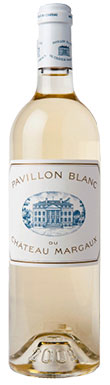

There is flesh here but it is so precise and well held together that it takes a minute to realise how much weight is in...
2017
Château MargauxMargaux

Château Latour, Pauillac, 1er Cru Classé, Bordeaux, France, 2017
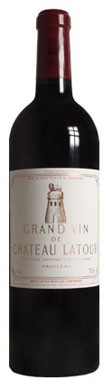
Smells gorgeous - highly scented with lots of floral notes and ripe blackcurrants - the aromatics burst out of the glass. Succulent and juicy, lively...
2017
Château LatourPauillac
Château Lafite Rothschild, Pauillac, 1er Cru Classé, Bordeaux, France, 2017
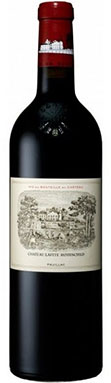
Deep ruby in colour but not so inky as to be impenetrable - that is not their style. Nose subdued at first, but on the...
2017
Château Lafite RothschildPauillac
Château Rieussec, Sauternes, 1er Cru Classé, Bordeaux, France, 2017
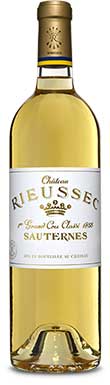
An exceptional wine, this is just stuffed full of exotic fruits, layers of apricot, saffron, truffle and citrus, all powering through the palate with a...
2017
Château RieussecSauternes
Château Léoville Las Cases, St-Julien, 2ème Cru Classé, Bordeaux, France, 2017
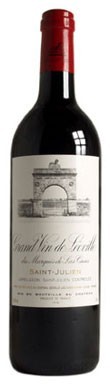
Rich ruby in colour if a little less inky than the 2015, 2016 or 2018. Clear layers of fruit, the nose is one of the...
2017
Château Léoville Las CasesSt-Julien
Château Palmer, Margaux, 3ème Cru Classé, Bordeaux, France, 2017
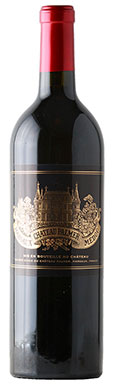
Beautifully powerful and precise with great depth and character to the fruit, despite the austerity that is more evident now than it was during En...
2017
Château PalmerMargaux
Château Ducru-Beaucaillou, St-Julien, 2ème Cru Classé, Bordeaux, France, 2017
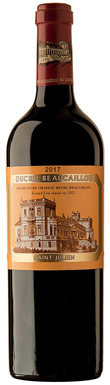
The 2017 Ducru-Beaucaillou is the first wine of the fantastic vertical tasting held by Bruno Borie. It has both a deep and elegant bouquet of...
2017
Château Ducru-BeaucaillouSt-Julien
Château Montrose, St-Estèphe, 2ème Cru Classé, Bordeaux, France, 2017
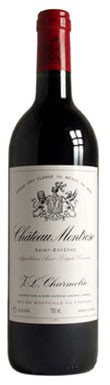
Montrose has solar panels and uses geothermal energy to manage temperatures in the barrel halls and vats. The 2017 is 76% Cabernet Sauvignon (with 20%...
2017
Château MontroseSt-Estèphe
Château Margaux, Margaux, 1er Cru Classé, Bordeaux, France, 2017
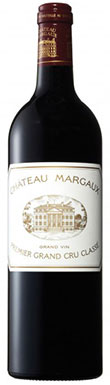
Extremely elegant and finessed spicing on the nose, this has beautiful aromatics, and a seductive lead in. It has added some flesh and creaminess over...
2017
Château MargauxMargaux
Château Mouton Rothschild, Pauillac, 1er Cru Classé, Bordeaux, France, 2017
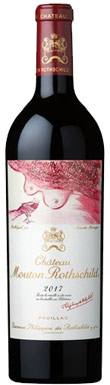
Graphite, black chocolate, pencil lead, blackberry and liquorice. This is serious, not holding back on its confident sense of power and depth. 100% new oak...
2017
Château Mouton RothschildPauillac
Château Haut-Bailly, Pessac-Léognan, Cru Classé de Graves, Bordeaux, France, 2017
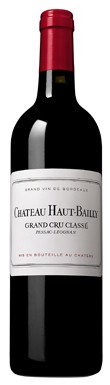
Grilled caramel notes set against sappy black fruit show classic Haut-Bailly balance, with savoury cassis and bilberry shot through with liquorice root and finely-spun tannins...
2017
Château Haut-BaillyPessac-Léognan
