
Walls: a drink with Château de Beaucastel’s César Perrin
Matt Walls talks to César Perrin about how biodynamic Château de Beaucastel in Châteauneuf-du-Pape is tackling the climate crisis head-on.


The Perrin family of Château de Beaucastel in Châteauneuf-du-Pape have always been ahead of the curve when it comes to sustainable viticulture.
They converted their 100ha estate to organics as early as 1950; biodynamics in 1974. And when it comes to facing the climate crisis, they’re not standing still; refurbishing cellars, planting trees, championing ancient varieties and developing new techniques in the vineyard.
Winemaker César Perrin explains…
‘The main reason we decided to construct a new cellar was to reduce the amount of energy we use. The climate is warming and every year we’re having to ramp up the cooling system. At three metres underground, however, the temperature stays between 12 and 14 degrees all year round naturally, so we wanted to make the most of these cool conditions by moving our cellar below ground.’
Scroll down for tasting notes and scores for six Château de Beaucastel wines
‘We’ve built two huge subterranean tanks to fill with rainwater. We can chill the water using energy created by solar panels and keep the cellar cool with a system of windmills worked by the mistral. And we’re using all the earth that’s dug out to build new walls.’
‘And we’ve also had to adapt our methods in the vineyard. If you come here in May, the grass between the rows grows a metre and a half tall. Then we flatten it down and it creates a kind of carpet, helping to reduce soil temperature and keeping it moist. After five years of observation, we’ve concluded that soils that are grassed over are seven to eight degrees lower in temperature than soils that have been ploughed.’
‘We’ve planted 4,000 trees at Beaucastel. It brings shadow to the vines. But we have to find species of trees whose roots dig down deep into the soil because otherwise they create competition for water with both the vines and the grass between the rows. We’ve planted big trees, small trees – around 30 different types. But never pines – their roots spread too close to the surface.’
‘Another innovation we’ve developed is spraying the vines with liquid clay. It helps to hold back photosynthesis a little. It’s 100% natural, it’s clay from the estate, the same clay you use for pottery, it sticks to the plants naturally.’
‘Grenache is a fantastic variety; it can produce great wines. But the problem is alcohol. We know nobody wants wine at 16%, so we’re increasing plantings of varieties like Mourvèdre and Counoise. The blend now contains 30% Grenache, 30% Mourvèdre, 10% Counoise – soon to be 15% Counoise – along with Syrah, Cinsault, Terret Noir and Vaccarèse along with some white varieties. Counoise gets ripe at 12.5%, it’s our Pinot Noir. Originally it was used for its acidity, but today it’s also useful in helping us to reduce alcohol levels in the blend.’
‘We’re really proud of our grandfather Jacques for having the foresight to plant so much Mourvèdre and Counoise. And in turn we’re hoping that all these projects we’re undertaking will make our children proud of us.’
See tasting notes and scores for six Château de Beaucastel wines:
Related content:
Walls: Tavel and its unexpected revolution
Lilian Bérillon: vine supplier to the stars
Walls: Tasting the classic 2001 Guigal La Las
Château de Beaucastel, Roussanne Vieilles Vignes, Châteauneuf-du-Pape, Rhône, France, 2020
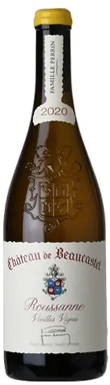

A little more reticent on the nose for now compared to other recent vintages – it's possibly entering a closed phase, in which case leave...
2020
Château de BeaucastelChâteauneuf-du-Pape

Château de Beaucastel, Châteauneuf-du-Pape, Rhône, France, 2020
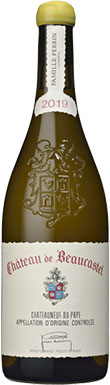
At the moment the aromatics are mostly centred around nutty oak and appealing scents of millefeuille pastry. Gently oily in texture, medium- to full-bodied, with...
2020
Château de BeaucastelChâteauneuf-du-Pape
Château de Beaucastel, Coudoulet de Beaucastel, Côtes du Rhône, Rhône, France, 2020
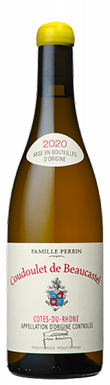
Currently quite closed on the nose - just a little pear, almond and anise - but lovely sense of intensity and precision on the palate....
2020
Château de BeaucastelCôtes du Rhône
Château de Beaucastel, Hommage à Jacques Perrin, Châteauneuf-du-Pape, Rhône, France, 2017
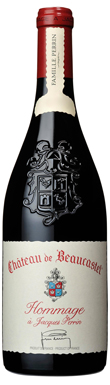
An immediate, dense fog of blackberry, violet and mashed blueberries rises up out of the glass. There's a touch of iodine, and that animal-tinged Mourvèdre...
2017
Château de BeaucastelChâteauneuf-du-Pape
Château de Beaucastel, Châteauneuf-du-Pape, Rhône, France, 2017
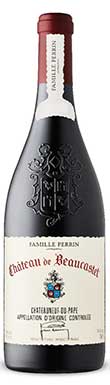
There's richness and amplitude to the forest berry fruits, blackberry, raspberry, blackcurrant bush. Amplitude on the palate too, this is very generous, mouthfilling, with enough...
2017
Château de BeaucastelChâteauneuf-du-Pape
Château de Beaucastel, Coudoulet de Beaucastel, Côtes du Rhône, Rhône, France, 2017
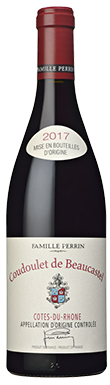
This is taking on a positive jam-like touch to the fruit now, blackberry pâte de fruits. Not overly powerful, but it has the stature of...
2017
Château de BeaucastelCôtes du Rhône
