Get our daily fine wine reviews, latest wine ratings, news and travel guides delivered straight to your inbox.
You are now subscribed
Your newsletter sign-up was successful
An account already exists for this email address, please log in.
Château Calon Ségur preserves its heart in a changing climate
Twenty years after arriving at this famous St-Estèphe third growth, director Vincent Millet is looking beneath the gravel as Calon Ségur confronts the challenges of a warmer, drier Bordeaux.
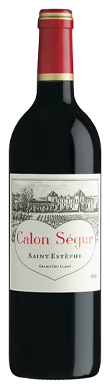
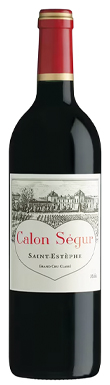
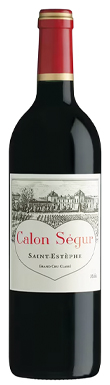
The heart on the label may be Château Calon Ségur’s most famous symbol. But after 20 years at the Saint-Estèphe Third Growth, technical director Vincent Millet is increasingly preoccupied by the less romantic issue of water shortages.
More precisely, he is interested in the clay beneath Calon’s gravel and its ability to retain water as Bordeaux faces hotter, drier growing seasons.
Millet arrived in July 2006 and, by 2008, had begun paying closer attention to variations within Calon’s 55-hectare vineyard.
Today he points to Terrace 3, towards the southern part of the estate near its historic wall, where the estate’s geologist has identified more argile lacustre, or lacustrine clay.
The prized geological gravel layer of Terrace 4 running close to the Gironde estuary receives more attention historically in the Médoc, but ask Millet which matters more in our era of climate change, and he compares the debate to something that would keep lawyers or economists arguing indefinitely.
More important is what the clay can do. ‘It is our hydric reserve,’ he says.
Put to the test
(Image credit: Château Calon Ségur)
The 2026 growing season provided a test. After a wet winter replenished reserves, spring and early summer turned hot and dry.
Decanter newsletter
Get our daily fine wine reviews, latest wine ratings, news and travel guides delivered straight to your inbox.
Just 22mm of rain fell in June and 26mm in July. As in 2025, Millet says, the lack of water contributed to very small grapes.
August brought relief: 42mm fell during the first 25 days, followed by another 49mm in the final six.
The rain came too late to increase berry size, but he says: ‘It certainly helped unblock ripening.’
More revealing was where the vines coped better. Despite temperatures well above seasonal norms compounded by water deficit, Millet observed no significant differences in yield between Calon’s various soil types ‘but as long as we have clay’.
On sandy soils, by contrast, ‘the vine suffers’.
For Millet, adapting to climate change is not yet primarily about planting different authorised grape varieties.
Water management is the immediate concern. If irrigation were required – subject to authorisation and depending on the age of the vines – Calon has a potential resource: a natural reserve collecting winter rainwater on the estate.
As Calon considers how it needs to adapt for the future, change is not new for an estate where continuity and evolution have long gone hand in hand.
Château Calon Ségur at a glance
(Image credit: Château Calon Ségur)
Appellation: St-Estèphe
Classification: Third Growth (Troisième Cru Classé) in 1855
Owner: Suravenir, a subsidiary of Crédit Mutuel Arkéa
Technical Director: Vincent Millet
Consultant oenologist: Éric Boissenot
Vineyard area: 55ha, with 50ha planted and 45ha currently in production
Soils: Quaternary gravel over predominantly Tertiary clay subsoil, with lacustrine clay beneath parts of the gravel plateau
Heart of the matter
(Image credit: Château Calon Ségur)
Calon’s origins have been associated with the Gallo-Roman period, its name thought to derive from calones, small craft that once navigated the Gironde.
Its modern identity owes much to the 18th-century Marquis de Ségur, the celebrated ‘Prince of Vines’, who also owned Lafite and Latour and is credited with declaring: ‘I make wine at Lafite and Latour, but my heart is at Calon.’
The heart eventually appeared on the château and, later, its labels. The vineyard itself offers another continuity: its footprint has remained largely unchanged since 1855, with a mere 0.4 hectares acquired from Château Domeyne in 2026 representing what Millet calls a ‘logical extension’ of Calon’s terroir.
The vineyard may have changed little in extent, but much has changed in how it is managed.
Since Millet’s arrival, the vineyard has increasingly emphasised Cabernet Sauvignon. Currently representing around 56–57% of plantings, it is intended to reach ‘roughly 70% by 2032’, he says, as the château continues a long-term programme of replanting, increased vine density, and massal and clonal selection.
‘I prefer the finesse of the Cabernet to the Merlot,’ Millet says, particularly Cabernet grown on Calon’s clay-gravel soils.
Of equal importance is precision. From 2008, Millet developed more detailed parcel and intra-parcel selection, allowing an increasing proportion of Cabernet Sauvignon into the grand vin.
That philosophy received a technological boost after Suravenir, a subsidiary of Crédit Mutuel Arkéa, acquired Calon-Ségur and neighbouring Château Capbern from the Gasqueton family in 2012.
Extensive investment followed.
Finding balance
(Image credit: Château Calon Ségur)
In 2016, a new gravity-fed vat room and renovated ageing cellar came into service. Production did not increase, but the number of vats doubled.
Today 75 stainless-steel vats, ranging from five to 120 hectolitres, permit grapes from individual plots, massal selections and even sections within a parcel to be vinified separately.
Grapes are destemmed, hand-sorted and cooled before descending by gravity into the vats, minimising the use of pumps and helping preserve intact berries.
The grand vin is subsequently aged for around 18 to 20 months.
The result, Millet says, is greater precision, but without losing the identity that has made Calon distinctive.
That balance between change and continuity defines the estate today. Climate has introduced a new variable, yet Cabernet is gaining ground and increasingly sophisticated tools allow Millet and his team to divide the vineyard more precisely.
The heart is Calon’s enduring symbol but, as it turns out, the real heart of the estate has indeed been its terroir all along.
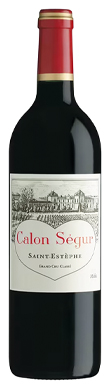
Château Calon Ségur, St-Estèphe, 3ème Cru Classé, Bordeaux, France, 2003
My wines
Stellar, first-growth level wine. 2003 is the infamous, heatwave vintage. Many critics point to heaviness and under-ripeness from hydric stress that led to blocked development....
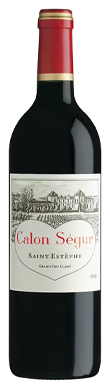
Château Calon Ségur, St-Estèphe, 3ème Cru Classé, Bordeaux, France, 2000
My wines
Interesting to compare with the 1995, which is less powerful and less energetic. A superior vintage, the 2000 delivers clearly riper fruit albeit with slower...
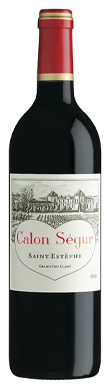
Château Calon Ségur, St-Estèphe, 3ème Cru Classé, Bordeaux, France, 1995
My wines
Now more than 30 years old, the 1995 marks a transition for Calon-Ségur. Following Philippe Capbern-Gasqueton’s death, his widow Denise – the formidable Madame Gasqueton...
Decanter Magazine, Wine Writer and DWWA Judge 2019
Panos Kakaviatos has been a published wine writer since 2001, writing in internationally recognized media including Decanter, but also Harpers Wine & Spirit, Meiningers Wine Business International and The World of Fine Wine.