Sweeping through the Médoc, up the vine-flanked D206 into Pauillac, you may well spot two things out on your right; a slender tower among the vines and a row of mulberry-pink buildings.
Those are the premises of Château Haut-Batailley, a Grand Cru Classé that few people noticed for a long time – now you can’t miss it.
When Château Batailley was classified as fifth growth in 1855, Château Haut-Batailley did not exist. Instead, it was born out of a division of the property by brothers Marcel and François Borie in 1942.
The western part kept the name Batailley and was retained by Marcel, and the eastern part went to François Borie and became Haut-Batailley.
As the new estate sprang fully-formed from vineyards already classified as fifth growth quality, both properties retained this cru classé designation.
In March 2017, however, the estate was sold to the influential Cazes family.
It was a surprising announcement to many. The family already owned Château Lynch-Bages in Pauillac and Château Ormes de Pez in St-Estèphe and was in the middle of the ambitious project of building the new cellar at Lynch-Bages.
Decanter newsletter
Get our daily fine wine reviews, latest wine ratings, news and travel guides delivered straight to your inbox.
But Haut-Batailley’s then owner, Françoise de Brest-Borie, was over 80 at the time, and none of her children wanted to take over the estate.
The two families were closely acquainted, so the Bories chose the Cazes as buyers but on the condition that none of Haut-Batailley’s vineyards would be absorbed into Lynch-Bages and the estate would remain a separate entity.
True to their word, the first thing Jean-Charles Cazes, director of the Cazes family properties, did was paint the winery buildings a shade of strikingly deep pink. He wanted a property that few people noticed from the road to be seen.
The paint was the most visible change, but the biggest one happened in the vineyard.
The vineyard grows
(Image credit: Château Haut-Batailley)
When the Cazes family took over, 22 hectares were planted and in production. A further 19ha carried the Pauillac appellation but had been fallow since the Second World War.
In 2018, the team dug about 60 soil pits before deciding what to plant where.
The study identified two main soil types: deep gravel that suits Cabernet Sauvignon and gravel over a bed of clay, which is ideal for Merlot.
Planting started in 2018, and within three years the vineyard doubled to 41ha.
At the time of the purchase, the blend was about two-thirds Cabernet Sauvignon and one-third Merlot. It now stands at 65% Cabernet Sauvignon, 32% Merlot and 3% Petit Verdot.
Julien Galland, the technical manager since 2020, runs the vineyard. He is from the Loire Valley and studied in Tours.
He worked in New Zealand and the United States before coming to Bordeaux, where he spent time at Château Lafaurie-Peyraguey in Sauternes, as well as properties in Fronsac and Graves. Haut-Batailley is his first position in Pauillac and an ambitious project.
‘Wine breathes its terroir,’ he says, and his work is mostly about the soil. The team uses no chemical products, and sows cover crops to improve soil structure.
They also keep bees and have planted hedges and trees among the vines. In 2022, more than 910 trees and shrubs of 14 varieties went in.
A light hand in the cellar
Technical director Julien Galland
(Image credit: Château Haut-Batailley)
Most of the investment went into the vineyard. The winery was in good technical condition when the Cazes took over, as the Bories had built a new vat room in 2004. The team has made few changes since.
Grapes are sorted by hand on two tables. Fermentation takes place in temperature-controlled stainless steel vats. For extraction, the team uses pumping over, rack-and-return and the AirPulse system.
The grand vin is aged for 16 months with of the barrels being 65% new oak. The oak is French only, from six different coopers, with a medium toast.
Galland aims to preserve the terroir’s identity rather than mask it with oak. The grand vin often shows the character of the bordering St-Julien: finesse, harmony and fruit purity.
Two wines, one tower
(Image credit: Château Haut-Batailley)
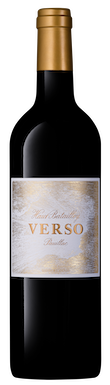
Verso, the second wine, was created when the Cazes arrived. It uses fruit from the young vines and is aged for 12 months in one-year-old barrels.
Currently, the split between the two wines is 55% grand vin and 45% Verso. The family aims to reach two-thirds of production going into the main wine and just one-third for Verso as the young vines mature.
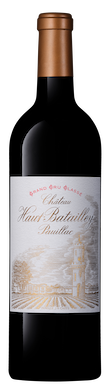
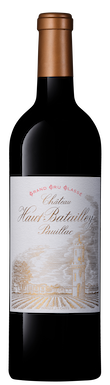
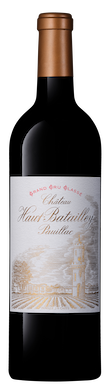
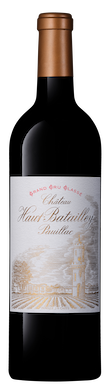
Both labels were redesigned. They now feature the Tour l’Aspic, the estate’s most recognisable feature, in a gold-line engraving inspired by Gustave Doré.
This pigeon-tower, folly and up-market tool shed was built in 1875 by the then-owners of the estate, the Averous sisters.
Incredibly devout, local legend says that they used to trade a barrel of wine with a barrel of holy water from the spring at Lourdes to bless their vineyards with. Anne-Françoise Averous later had a mini replica of the grotto at Lourdes made in nearby Artigues.
Today, the Cazes family continues to build the Haut-Batailley brand with the same devotion and conviction shown by the estate’s historic owners.
Though, there’s no word on whether they plan to bring the holy water back at any point.
Château Haut-Batailley, Pauillac, 5ème Cru Classé, Bordeaux, 2020
My wines
Deep ruby in the glass. Spicy and woody on the nose initially, very aromatic and powerful with nuances of blackcurrant, blackberries and almost jammy fruit....
Château Haut-Batailley, Pauillac, 5ème Cru Classé, Bordeaux, France, 2018
My wines
Deep ruby in colour. Rich and luscious on the nose, with nuances of bitter chocolate, liquored cherries against a background of tobacco and pencil lead....
Château Haut-Batailley, Verso, Pauillac, Bordeaux, France, 2022
My wines
Seductive nose of dark chocolate and liquored cherries with minty and sandalwood notes. Intense, dense, and powerful on the palate; voluptuous without being too plush;...
Widely experienced as a manager of and sommelier in hotels and restaurants from Russia to the Maldives, Valeria is now based in a village near St-Emilion. She writes for publications including VertdeVin in Bordeaux, and runs her own boutique export company, A la Volée Int