Sitting at the heart of the Mediterranean, the tumultuous history of Malta features a narrative told through wine.
We were walking across the barren landscape near Mġarr ix-Xini (‘Harbour of the Galleys’) in southern Gozo, with only the occasional hunters’ hide built from honey-coloured limestone visible in the distance.
Then we found it – surrounded by prickly pears – the oldest-known rock-cut wine press in Malta, believed to date back to around 500 BCE.
This suggests that wine was once produced on a relatively large scale on the island, with grape vines likely planted nearby, said my guide, Joséf Bonello, the brand ambassador for the wines of Malta and Gozo.
The history of wine trading, however, dates back even further to at least 700 BCE or so. Urns and amphorae that carry traces of wine, made from Maltese clay, were excavated from a Phoenician shipwreck from that era submerged 110m under the surface of the azure Xlendi Bay in Gozo (you can read more at phoenicianshipwreck.org).
Malta at a glance
Surface area, island of Malta 246 km²
Surface area, island of Gozo 67 km²
Total area under vine 420ha
Ingrained wine culture
This ancient wine press, located Mgarr ix-Xini bay on Gozo, is believed to date back to 500 BCE
(Image credit: Future/Sylvia Wu)
After successive periods of Roman, Arab, Norman, French and Spanish rule, the appetite for fine wine in Malta reached its peak under the Knights of St John (also known as the Knights Hospitaller), who became the new rulers of the archipelago in 1530.
At the lavish Inquisitor’s Palace in Birgu, on the island’s eastern side, the occupants’ demand for fine claret and Burgundy, alongside other Old World classics, is documented in meticulous detail in the palace’s administrative records.
Decanter newsletter
Get our daily fine wine reviews, latest wine ratings, news and travel guides delivered straight to your inbox.
‘Whatever fine wine was available to Europeans at the time, we had it here in Malta,’ said Liam Gauci, historian and senior asset development manager at Heritage Malta, pointing to the Bohemian wine glasses on display inside the Roman palace’s kitchen, with an underground cellar nearby.
Long exposure to European fine wines inspired a small but resilient domestic wine industry, which survived two centuries of Arab dominion and endured the uprooting of vineyards in favour of cotton during the early decades of British rule in the 19th century, phylloxera and the devastation of World War II, before Malta gained its hard-earned independence in 1964.
Joining the EU in 2004 brought funding and booming tourism, and the demand for Maltese wines soared.
Small vineyards
Jeremy Cassar, fourth-generation owner of Marsovin, in Marnisi Estate’s new winery Sylvia Wu
(Image credit: Future/Sylvia Wu)
And the elements seem to align for winemaking on the breezy, sun-baked islands of Malta and its neighbour Gozo, about 100km south of Sicily.
The climate couldn’t be much more Mediterranean, with mild winters and dry, hot summers.
The soils are typically shallow, over porous limestone bedrock; Gozo has cooler soils with a bit more clay than Malta.
Rain is in short supply (about 575mm per year on average, with Gozo receiving a slightly larger share), and there are no rivers or lakes – so drip irrigation is widely adopted, and new plantings are usually found on the cooler, north-facing slopes.
Sourcing grapes from small growers across the islands is common practice, as few producers own sizeable vineyard holdings in the densely populated archipelago, where tourists outnumber residents six to one.
Such is the case for Emmanuel Delicata, the country’s oldest surviving winery (established in 1907), which produces an extensive range of wines found on supermarket shelves as well as the wine lists of top restaurants.
The largest producer, Marsovin – established a little later, in 1919 – took a more site-driven approach.
Today, the family business owns five vineyard estates across Malta and Gozo, covering 199 tumuli (about 22.4ha) of vines.
Among them is Marnisi Estate, planted on terra rossa soils in Marsaxlokk, in the far southeast, where a new winery and cellar door have just been completed.
The country’s largest single vineyard, however, belongs to Antinori-backed Meridiana – a 19ha estate planted at Ta’ Qali, a former Royal Air Force base in central Malta, in 1994-1995.
Further south, boutique family winery Ta’ Betta planted a terraced 4ha vineyard at 200m elevation in 2003 – now also a popular wedding venue.
Or maybe settle in for a sunset picnic in the vineyards at Ta’ Betta, a family estate perched at 200m with sweeping views towards Mdina and the Grand Master’s Palace.
EAT Hidden on the edge of the main square of the ancient city of Mdina, Michelin one-star de Mondion is housed within the Xara Palace Relais & Châteaux boutique hotel. Modern Mediterranean cuisine showcasing Maltese produce is served alongside a compelling wine list that features some older-vintage gems.
Also with one Michelin star, Fernandõ Gastrotheque, nestled in a stylish side street in the northeastern coastal town of Sliema, is a fantastic option for tasty, Asia-inspired Mediterranean dishes.
LEARN Hear the extraordinary story of the Knights Hospitaller on a guided tour at St John’s Co-Cathedral, and stay for Valletta Resounds:
The Caravaggio Experience, a 40-minute live music and theatre performance that takes place in the cathedral’s Oratory.
Grapes, local & imported
Mark Borg, winemaker at Markus Divinus
(Image credit: Future/Sylvia Wu)
Two native grapes – the subtle, peachy Girgentina and cherry-fruited Gellewża – once dominated the domestic wine scene, but have largely given way to international varieties for the more reliable quality and complex styles they offer, although both are now being revived in fresher expressions.
Today, 10 or so producers across the archipelago are making some exceptionally ripe and silky reds based on Syrah, Merlot and Cabernet.
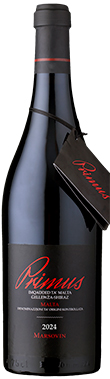
Marsovin also crafts a mesmerisingly succulent blend of sundried Gellewża and Syrah (see recommendations).
Vermentino and Chardonnay are the star white varieties, but producers such as Delicata, Marsovin and Gozo-based Tal-Massar are championing the fresh, light-hearted Girgentina, with popular summer bottlings.
More endemic varieties are being studied at Malta’s National Viticulture and Oenology Centre, and the small-berried white Insolja Bajda is regarded as one of the rising stars.
The archipelago also has its own ‘cult’ wine lineup. At Markus Divinus, self-taught winemaker Mark Borg handcrafts some of the archipelago’s super-premium wines from 25 carefully selected plots at his garagiste winery.
From Girgentina-led pét-nat to refined, velvety reds, many made in just a few hundred bottles, his wines have already earned a serious following among connoisseurs in the know.
This June, the archipelago welcomed its first direct flight from the US, further opening up the islands to some of the world’s highest-spending travellers.
Yet local producers seem to share the same concern: they simply don’t have enough wine to sell.
Indeed, Malta only makes about 1.3 million bottles of wine per year, compared to 12 million bottles imported annually – meaning that many of its sophisticated, concentrated reds are drunk young, long before they’ve reached their full potential.
Limited arable land – much of it held in the hands of generational farmers who are unwilling to give it over to vine planting – is among the key factors curbing growth, said George Delicata, a pioneer behind the modernisation of Maltese wines.
But advocating for vine growing could prove to be more than a commercial move – as shown by many arid wine regions.
It could help to preserve agricultural landscapes and combat soil erosion, something of extra value in an archipelago facing life on a warming globe.
The next chapter of Malta’s wine story may prove to be its most important yet.
<p>Tal-Massar is a family-owned boutique winery based on the calcareous terraces of the Għarb village in Gozo, with Sicily just visible to the north on...
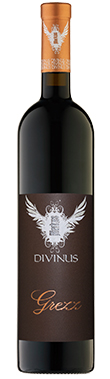
Markus Divinus, Grezz, Island of Malta, Malta 2021
My wines
<p>Only 625 bottles made – this ultra-rare Bordeaux blend was hand-selected from some of Malta's finest vineyard sites and carefully crafted by Mark Borg at...
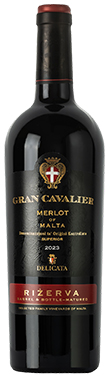
Delicata, Gran Cavalier Merlot Riżerva, Malta 2023
My wines
<p>Produced by one of Malta's biggest wine producers, with a history tracing back to 1907, it sits under Delicata's flagship Gran Cavalier range within the...
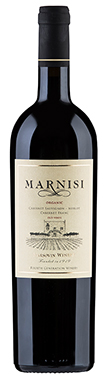
Marsovin, Marnisi Organic Cabernet Sauvignon-Merlot-Cabernet Franc, Island of Malta, Malta 2022
My wines
The estate wine is sourced from an organically grown single-vineyard site featuring Terra Rossa soil in Marsaxlokk, southeastern Malta, close to the sea. Aged for...
Crafted by one of the country's oldest and largest wine producers, Marsovin, with a history tracing back to 1919. Inspired by Amarone della Valpolicella, Prinus...
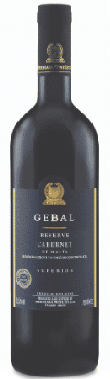
Meridiana, Gebal Reserve Cabernet Franc Superior, Island of Malta, Malta 2021
My wines
With its roots dating back to 1985 and now owned by the Antinori family, the Maltese estate's sundial motif hints at its sun-drenched southern Mediterranean...
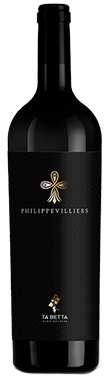
Ta Betta, Philippe Villiers, Island of Malta, Malta 2019
My wines
<p>Savoury, with Mediterranean herbs, dark spices and meaty dark fruits on the nose. On the palate, ripe, silky tannins, more savoury spices and dark-roasted coffee...
Editor, Decanter China & Regional Editor - Asia and Northern & Eastern Europe
Sylvia Wu is Decanter's Regional Editor for Asia and Northern & Eastern Europe. She also works as the Editor of Decanter China platforms, overseeing Decanter’s China-focused editorial operation.