Get our daily fine wine reviews, latest wine ratings, news and travel guides delivered straight to your inbox.
You are now subscribed
Your newsletter sign-up was successful
An account already exists for this email address, please log in.
Roero: A renewed source of great value Nebbiolo
This up-and-coming part of Piedmont has become, almost unnoticed, the new source for value Nebbiolo reds, offering style and flavour alternatives to the region’s most famous and established names.
Looking at the Tanaro valley, you can’t help but think of Robert Redford’s movie based on Norman Maclean’s novel A River Runs Through It.
Even though we’re not in Montana, the Tanaro river – one of the longest in Italy, meeting the Po southwest of Milan – flows northeast through a uniform landscape of hills in southern Piedmont, creating a green landscape of vineyards.
From a wine perspective, however, the Tanaro seems to separate rather than unite: the hills on its right/south bank form the Langhe area, producing Barolo and Barbaresco, while those on the left/north belong to another wine district that is just beginning to take off: Roero.
Roero encompasses about 20 small villages perched on steep hills, centred around Canale in a fertile valley.
Winemaking here runs deep; it’s worth noting that Piedmont’s most common grape, Nebbiolo, was first mentioned in a land lease contract in Canale back in 1303.
Nebbiolo was considered a prized grape even in the past, resulting in the widespread habit of growers planting aromatic white grapes at the ends of the rows of Nebbiolo to ʻdistractʼ the greedy birds.
That grape was Arneis, a native variety which gradually gained favour with the winemakers who planted more and more of it at the expense of Nebbiolo itself.
Decanter newsletter
Get our daily fine wine reviews, latest wine ratings, news and travel guides delivered straight to your inbox.
The soils of Roero have some unique features. When the ancient Pliocene basin seas retreated, they left a sandy floor rich in shells and minerals, from which local wines derive their finesse and lightness – traits historically appreciated more in white wines.
In the 1970s and 1980s, the Arneis phenomenon really took off thanks to investments on the rive gauche from prestigious wineries in the Langhe, such as Vietti, Bruno Giacosa and Ceretto – the latter with its famous Blangè made with Arneis planted in Roero, even though it’s labelled as Langhe DOC Arneis.
The future of Roero’s wines appeared decidedly white – until Matteo Correggia arrived on the scene.
Inspirational figurehead
Giovanni Correggia at the family winery
(Image credit: Matteo Correggia)
In the early 1990s, this young winemaker from Canale, fascinated by the exploits of the ‘Barolo Boys’ (a renowned group of forward-thinking winemaker friends who developed a new and, to some, contentious approach to the production of Barolo in the 1980s and 1990s), decided to go against the tide and bet everything on Roero Nebbiolo.
At that time, the DOC regulations [Roero became a DOCG in 2004] permitted the red Roero wine to include 2%-5% of Arneis – a nod to the tradition of mixed vineyard rows.
But Correggia adopted the approach of the Langhe ‘modernistsʼ for his wines: strict vineyard thinning, ageing in barriques and single-vineyard selections.
The results showed that his instincts were right; the Nebbiolo from Roero – somewhat unfairly dubbed Nebiulin (‘little Nebbioloʼ) – combined the power and tannins typical of the variety with the elegance and freshness conferred by the loose, sandy soils.
Encouraged by Correggia, other young producers started making red Roero wine using the same techniques.
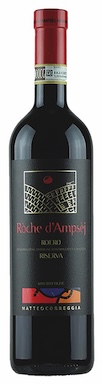
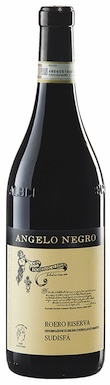
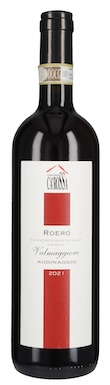
A symbolic year for this new wave is 1996, which saw the release of labels that became icons in the qualitative growth of Roero’s reds: Ròche d’Ampsèj by Correggia, Sudisfà by Angelo Negro and Audinaggio by Cascina Ca’ Rossa.
The latter is produced in the Valmaggiore sub-zone, a spectacular amphitheatre of mostly terraced, south-facing vineyards in the municipality of Vezza d’Alba.
Rapid rise
(Image credit: Angelo Negro)
Matteo Correggia’s work was as significant as it was brief: the winemaker died in 2001, not yet 40, in a tragic work accident, leaving his colleagues without their charismatic and talented leader.
But the path was set, and Roero never looked back. In 2004, the shift from DOC to DOCG brought some amendments to Roero’s production rules and the previously permitted fraction of Arneis was removed, to be replaced by native red varieties instead.
Unlike Barolo and Barbaresco, 100% Nebbiolo is not mandatory for Roero, but the trend among producers became to vinify Nebbiolo in purity.
Today, despite Arneis covering 1,007ha compared to Nebbiolo’s 363ha (according to the Roero DOC consorzio’s most recent data), it’s the red wine that winemakers are focusing on.
The Langhe remains an overwhelming point of comparison, yet Roero offers a distinctive palette of floral and balsamic aromas, delivering immediate drinkability and hitting the market just 20 months after harvest (32 months for Riserva), compared to 38 months for Barolo and 26 for Barbaresco.
Older vintages prove Roero can age just as well as Barolo and Barbaresco, with the bonus of usually coming with a lower price tag.
The approval, from the 2017 vintage, of 134 menzioni geografiche aggiuntive (MGA – specific, named locations added to the main denomination name) completed the territorial enhancement pioneered by Correggia et al 30 years ago.
Right time, right place
Luca Faccenda and Carolina Roggero at Valfaccenda, based just north of Canale
(Image credit: Letizia Cigliutti)
The feeling you get strolling through the villages on the left side of the Tanaro river is that the Roero district is finding its own identity.
Tourists seem drawn not only to the area’s culinary and wine delights, but also to its history, represented by the picturesque castles scattered across the hills, and to its biodiversity, with dense forests and rocche (deep chasms and sandy peaks) crossed by a network of engaging hiking trails.
With its juicy, contemporary red wine, Roero is primed and ready to become the next Italian destination to discover.
If you’re already in the hotspot of Langhe, all you need to do is cross the Tanaro and take a look.
After all, that’s how it works: all things merge into one, and a river runs through it.
Cascina Ca' Rossa, Valmaggiore Audinaggio, Roero, Piedmont, Italy, 2022
My wines
Within the vast Valmaggiore MGA, the Audinaggio vineyard stands out: a southwest-facing plot so steep and sandy that it’s hard to stay upright. From its...
This Roero’s grapes come from a majestic southeast-facing vineyard about 350m asl, surrounded by woods that aid cooling. For the founder of the winery, it...
Tiziano Gaia is a writer, director and film producer from Turin, Italy. From 2000 to 2008 he organised the publications and events of the international Slow Food movement. In particular he curated the Italian Slow Food-Gambero Rosso Wine Guide and the Extra Virgin Olive Oil Guide. He collaborated with Giancarlo Gariglio and Joe Bastianich to create Grandi Vini: An Opinionated Tour of Italy’s 89 Finest Wines. In 2013 he directed a wine documentary called ‘Barolo Boys’, focusing on regions most influential producers.