Get our daily fine wine reviews, latest wine ratings, news and travel guides delivered straight to your inbox.
You are now subscribed
Your newsletter sign-up was successful
An account already exists for this email address, please log in.
Why Burgundy's Hautes-Côtes will be the region's next 'big thing'
The lofty Hautes-Côtes were historically the poor cousins of the wines of the Côte d'Or but changing weather and fresh approaches are creating a space ripe with potential.
The cool climate and wide-open spaces of Burgundy’s Hautes-Côtes make it the next big thing.
The Hautes-Côtes region of Burgundy oozes charm, with its rolling hillsides populated by more cows than people and tiny villages strung together by country roads that weave through dramatic hillsides most visitors never see.
The wines, too, are easy to love: crisp, clean whites, and structured, sometimes slightly rustic reds that recall the Burgundy of an earlier era.
The Hautes-Côtes has long been a dreamy country idyll, a respite from the excitement of the mainline Burgundy villages.
Today, however, with its ‘Horizon Hautes-Côtes’ initiative, the Burgundy wine establishment is trying to make the Hautes-Côtes the next big thing.
A recent press conference about the initiative highlighted some surprising facts: more than 1,800 hectares are currently planted here, and another 2,600 hectares that are classified for AOC wine have not yet been planted.
These cooler, high-altitude sites offer an increasingly attractive profile as global warming accelerates.
Decanter newsletter
Get our daily fine wine reviews, latest wine ratings, news and travel guides delivered straight to your inbox.
With the weight of the BIVB behind it, this appellation may be the wave of the future.
Where are the Hautes-Côtes?
Curtil-Vergy, in the Hautes Côtes de Nuits
(Image credit: Alamy / Ian Shaw)
The term Hautes-Côtes refers to the high-altitude slopes west of the main Côte d’Or, mainly at elevations between 300-460 metres, a region that had far more vines in the early 19th century than it does today.
When the vineyards were replanted after the phylloxera epidemic, however, many growers planted grapes for making inexpensive wines, where yield, not quality, was the objective.
The effect was that wine production was at a nadir from the end of the 19th century until after WWII.
Although the regional appellation Bourgogne was codified in 1937, the distinction of a separate appellation for the Hautes-Côtes did not occur until 1961.
The region is large, spread across 47 villages that produce an average of nearly 9 million bottles of red, white, and rosé wine.
The Hautes-Côtes de Beaune are stretches across the hills from Corton down to Maranges, south of Santenay.
The Hautes-Côtes de Nuits is more compact, confined to the hills above the southern portion of the Côte de Nuits from Chambolle-Musigny to Nuits-Saint-Georges. One village, Magny-lès-Villers, is split between the two appellations.
Coming to grips with this vast expanse can be daunting. The first exposure for many are the delicious cuvées made by well-known growers in the mainline Côte d’Or, such as Anne Gros, Pierre-Yves Colin-Morey, Thibault Liger-Belair, Emmanuel Rouget, Sylvain Cathiard, and Etienne Sauzet.
Domaine Leflaive has planted vines in the Hautes-Côtes, and even Domaine de la Romanée-Conti tried their hand at it, vinifying several vintages of grapes grown at the Abbaye Saint-Vivant de Vergy before the vines were pulled up.
Building an identity
(Image credit: Getty Images / Moment / Yann Guichaoua-Photos)
As the region grows collectively, however, there is with relatively little name recognition for individual villages.
As head of the Hautes-Côtes growers union, Nicolas Thévenot, points out, there are important differences.
He says: 'Every valley is a separate terroir; there are sites that a very steep and others that are on a plateau.
'Many vines are planted on clay and limestone soils similar to those found at lower elevations in the Côte d'Or, although it is also possible to have granite soils in the south near Maranges. The one common element is the elevation.’
Despite the distinctiveness, however, there is still work to be done to gain recognition, particularly in export markets, where négociant houses will often buy grapes that qualify as Hautes-Côtes but sell them as a simple Bourgogne.
Others, however, are highlighting the advantages of the Hautes-Côtes, including Laurent Delaunay, co-president of the BIVB and head of Maison Edouard Delaunay, based at the Château de Chaumont in l'Étang-Vergy above Nuits-Saint-Georges.
Fickel fame
(Image credit: iStock / Getty Images Plus / Cornutus)
Most village names in the Hautes-Côtes elicit a blank stare from wine lovers.
One that broke the mould was Saint-Romain, which was once classified with the Hautes-Côtes and is now a stand-alone cru in its own right.
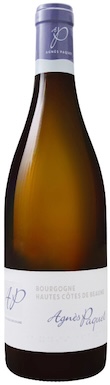
Perhaps the village with the most potential to pull forward is Meloisey, an ancient village with an exciting mix of winemakers, including Denis Carré, Agnès Paquet, Alexandre Parigot, and others.
The current crop of winemakers in this village includes both those at historic domaines and passionate young people starting new properties, something that is still possible in the Hautes-Côtes.
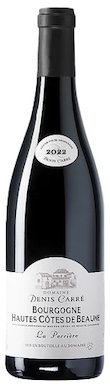
Although few highlight Meloisey per se, many use vineyard names on the label, such as La Perrière.
Other nearby sites include Les Dames Huguettes and En Bully, both located within Nuits-Saint-Georges but classified as Bourgogne Hautes-Côtes de Nuits.
High and wide
(Image credit: Alamy / Per Karlsson - BKWine)
One of the most distinctive characteristics of the region is the training system 'haute et large' (high and wide).
The Hautes-Côtes was among the first regions to experiment with this low-density planting system.
The most apparent advantage of the ‘haute et large’ training system is that the vines are less exposed to the danger of frost, which will settle near the base of the vines.
The system also enables a more complete usage of cover crops, is easier to work, and facilitates the use of mechanical harvesters.
It is also thought that if conditions remain dry and hot, the vines will be better able to resist drought stress at lower densities.
Exact statistics on the use of this system are not available, but Nicolas Thévenot, president of the union of Hautes-Côtes winegrowers, estimates that approximately 40-50% of the vines in the Hautes-Côtes are trained in this fashion.
Biodiversity and business
(Image credit: Alamy / Linda Caldwell)
The purpose of the Project Horizon Hautes-Côtes initiative is to manage growth while respecting the region's traditions and biodiversity.
More than 85% of the surface in the wine-producing portions of the Hautes-Côtes is also protected under European law as a Natura 2000 nature preserve, which were established by Brussels to protect endangered species of birds, animals, and plants.
The project is mapping the region from multiple perspectives to ensure sensitive development.
Renowned geologist Françoise Vannier will map the underlying geology and environmental consultant Marc Ouvrié is mapping the climate risks including frost and hail.
The information will be used with Natura 2000 data to protect the environment and target 'smart' development.
The combination of cool, high-elevation sites, room to grow, and an exciting crop of young talent combine to make the Hautes-Côtes one of the premier destinations for top-quality yet still-affordable Burgundy wines.
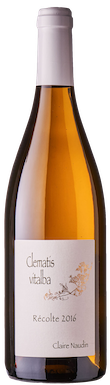
Domaine Naudin Ferrand, Clematis Vitalba, Hautes Côtes de Nuits, Burgundy, France 2024
My wines
Seductive notes of gooseberry, green plum, and nectarine lead the attack of this delicious Hautes-Côtes from Claire Naudin. The texture is lively and fresh, with...
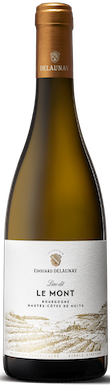
Edouard Delaunay, Le Mont, Hautes Côtes de Nuits, Burgundy, France 2022
My wines
The Hautes-Côtes Le Mont from Delaunay charms with bright lemon peel aromas, hints of white flowers and spice, and great finesse. The wine feels surprisingly...
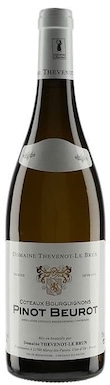
Thévenot Le Brun, Pinot Beurot, Coteaux Bourguignon, France 2024
My wines
This deliciously different wine from 100% Pinot Gris charms with spicy aromas, hints of Mirabelle plum, and a suggestion of smoky reduction on the nose...
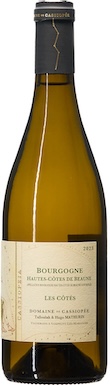
Domaine de Cassiopée, Les Côtes, Hautes Côtes de Beaune, Burgundy, France 2022
My wines
Enjoyed recently with Japanese food at a restaurant in Beaune, this elegant Hautes-Côtes delights with aromas of fresh and dried stone fruit, white flowers, and...
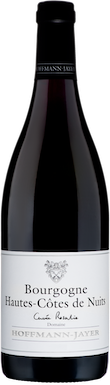
Domaine Hoffmann-Jayer, Cuvée Rosalie, Hautes Côtes de Nuits, Burgundy, France 2022
My wines
This powerful, concentrated wine impresses initially with ripe mulberry fruit, floral notes, and hints of spice and smoke. There is lovely concentration on the palate...
Domaine Denis Carré, La Perrière, Hautes Côtes de Beaune, Burgundy, France 2023
My wines
The Hautes-Côtes La Perrière from Denis Carré leads with exuberant plummy fruit, but there is depth behind it, with hints of earth, spice, and smoke....