
Bordeaux first growths: How the 2000 vintage tastes now
Jane Anson reports on how the vaunted 2000 vintage wines from Mouton, Lafite, Latour, Haut-Brion, Margaux and also Château d'Yquem are looking today, and what has changed at the estates over two decades.


‘Good grapes, good luck and a little savvy’, is how The Times newspaper described the Bordeaux 2000 vintage at the time.
Over the following 20 years, those who bought the wines have had to be patient, as this much-touted millennium vintage has proved one of the more stubborn years to reach its drinking window, reflecting its richly tannic structure that proved awkward at times.
Scroll down to see Jane Anson’s tasting notes for the Bordeaux 2000 first growths
This is why the 2001, with its slightly fresher and more sculpted tannins and fruits, has proved the more appealing of the two in so many tastings over the past two decades.
But, the 2000 is now coming round, underlining that the standard 10-year rule in Bordeaux needs instead a vintage-by-vintage approach.
And this is even more true when looking at the Left Bank first growths, always among the most structured and slow-ageing wines of Bordeaux, built to slowly reveal their potential and to reward patience.
This tasting, covering all five 1855 first growth reds plus first growth supérieur Château d’Yquem, showed the truth of this, and revealed some useful information for those wondering when to open up their bottles.
Release prices
The average rise in release prices 1999 to 2000 reflected the optimism in quality, as well as a recognition of the power of the three zeros.
The rise was 22%, with the first growths coming out at €141 per bottle ex-Bordeaux, up to €380 for the third ‘tranche’ of releases.
It was an incredible price at the time; the same wines in 1996, just four years earlier, had released ex-Bordeaux at closer to €46 ex-Bordeaux for their first tranche. Yet all have proved good investments.
Mouton 2000 ahead of the pack
Mouton has seen the highest price rise since release, available on the market today for somewhere close to £1,800 in bond per bottle. It was helped along the way by the marketing genius of Baroness Philippine de Rothschild, who commissioned the infamous black and gold ‘Augsburg Ram’ commemorative bottle that quickly became a collectors’ item.
An Imperial of Mouton 2000 sold for £14,300 at auction in 2017 and has proved to be the most popular of all First Growth commemorative bottlings that have appeared at various intervals over the past few decades.
In the glass, Mouton 2000 is a sumptuous wine, but the estate had not yet reached the heights that would be attained following the arrival of Philippe Dhalluin four years later.
For the other Firsts, Lafite is not far behind Mouton in price, at around £1,200 in bond per bottle. Latour is around £850, Margaux £800 and Haut-Brion £650. Based purely on this tasting, those last two offer particular value.
Yquem, which was not released en primeur at the time, can be found at around £300 per bottle in bond; in general, add around 20% to the in-bond prices to get current market prices in the UK.
What has changed at the châteaux?
This tasting also highlighted the changes that have taken place at Bordeaux’s top estates over the past two decades.
Below is what has happened to vineyard size since 1996:
- Haut-Brion has remained the same size and shape at 53 hectares (ha);
- Château dYquem has remained the same size and shape at a rather larger 113ha;
- Lafite has increased from 94ha to 110ha;
- Mouton has increased from 59ha to 83ha;
- Latour has increased from 65ha to 92ha;
- Margaux has decreased from 90ha to 82ha.
All six have kept the same owners over the past 20 years, even with changes at the top.
Five of the six are family-owned, although by extremely well-heeled families that tend to have powerhouse businesses behind them. For example, one has two branches of the Rothschilds at Mouton and Lafite, François Pinault of luxury group Kering at Latour, Prince Robert of Luxembourg at Haut-Brion, and Corinne Mentzelopoulos at Margaux.
Only Yquem is something of an outlier here; luxury goods group LVMH having acquired a majority stake in the family-owned Sauternes estate at the close of the 20th century.
Back in 2000, Margaux was owned by Mentzelopoulos in partnership with the Agnelli family of Fiat; she would take full ownership as of 2003.
Paul Pontallier was her director and right-hand man, with the success of that partnership obvious in the glass, but current director Philippe Bascaules had already been there for 10 years, starting out in research and development and quality control and providing continuity today.
At Lafite, Baron Eric de Rothschild was owner and figurehead, but today his daughter, Saskia de Rothschild, is leading the estate. Working alongside the Baron were Christophe Salin as CEO and Charles Chevallier as estate director and winemaker, a team that has now passed over to estate director Eric Kohler – already with the Rothschild family in 2000 – and Jean-Guillame Prats as CEO, who was just next door at Cos d’Estournel 20 years ago.
Haut-Brion has also seen a generational shift at the top. In 2000, the estate manager and winemaker was Jean-Bernard Delmas, father of current director Jean-Philippe. On the ownership side, Joan Dillon, Duchess de Mouchy, led the estate 20 years ago and has since passed on the baton to her son, Prince Robert of Luxembourg.
Mouton was headed up by Baroness Philippine de Rothschild, mother of the three current co-owners, Philippe Sereys de Rothschild, Camille Sereys de Rothschild and Julien Beaumarchais de Rothschild.
François Pinault arrived at Latour in 1993, and current director Frédéric Engerer was also already in place.
At Yquem, current winemaker Sandrine Garbay had arrived in 1998 and was on her second vintage in 2000.
As noted above, current owner Bernard Arnault of LVMH had already arrived as a shareholder in 2000, but the property was still run by Alexandre de Lur Saluces, whose family had been in place since 1785. Pierre Lurton was appointed CEO of Yquem in 2004, with Lur Saluces becoming an advisor to LVMH around its wine business interests.
All in all, a fitting reminder that these estates have a power that outlasts specific generations, even specific families, generating their own momentum and sense of history.
See Jane Anson’s Bordeaux First Growth 2000 vintage tasting notes and scores
You may also like
Château Palmer wines: The ‘5’ and ‘0’ vintages from 1990 to 2015Five Bordeaux vintages ready to drink nowPomerol vertical: Château La CabanneMouton Rothschild interview: MD Philippe Dhalluin to retireRobert Parker’s 100-point wines: Then and now
Château Haut-Brion, Pessac-Léognan, 1er Cru Classé, Bordeaux, France, 2000
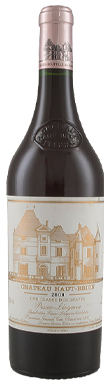

Superb and already immensely delicious, yet decidedly youthful and only beginning its evolution. The colour is dark, and the ripe plummy fruit resounds with notes...
2000
Château Haut-BrionPessac-Léognan

Château Margaux, Margaux, 1er Cru Classé, Bordeaux, France, 2000

This thrilling wine from a textbook year is dark in colour and shows pronounced aromas of ripe mulberry and black plum fruit, with hints of...
2000
Château MargauxMargaux
Château Latour, Pauillac, 1er Cru Classé, Bordeaux, France, 2000
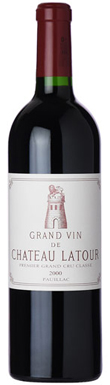
Dense and complex, this shows layers of dark fruit with aromas of plum, fig and blackcurrant overlaid with spice, leather and earth. It is not...
2000
Château LatourPauillac
Château Mouton Rothschild, Pauillac, 1er Cru Classé, Bordeaux, France, 2000
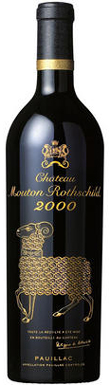
A little more open than the other four Firsts in the vintage, with undergrowth, baked earth and gentle spice alongside the truffles, smoked caramel, spice...
2000
Château Mouton RothschildPauillac
Château Lafite Rothschild, Pauillac, 1er Cru Classé, Bordeaux, France, 2000
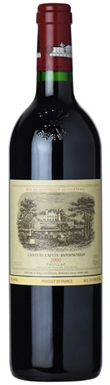
The bouquet is amazingly open and forward at this stage, with a ripe black fruit character on the nose just beginning to open up and...
2000
Château Lafite RothschildPauillac
Château d'Yquem, Sauternes, 1er Cru Classé Superieur, Bordeaux, France, 2000
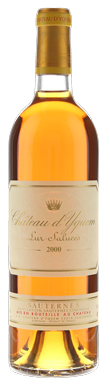
Things were more difficult in Sauternes than in the rest of Bordeaux in the 2000 vintage, with a brilliant first picking in early October that...
2000
Château d'YquemSauternes
