Bordeaux’s style counsel: The perpetual rise of the region’s white wines
Bordeaux’s diverse range of fresh and vibrant dry white wines are surging in popularity. Andy Howard MW dives deeper to reveal the secrets behind their success.
Get our daily fine wine reviews, latest wine ratings, news and travel guides delivered straight to your inbox.
You are now subscribed
Your newsletter sign-up was successful
Bordeaux is famous for its ageworthy reds, but its dry white wines are having a moment.
To crib from a well-known US folk artist, ‘the times they are a changin’ with regards to these typically Sauvignon Blanc– or Semillon-dominant white wines.
Although close to 90% of Bordeaux’s 110,000ha under vine are still made up of red grape varieties, production and demand for the region’s dry whites continues to rise.
Scroll down for notes and scores of 12 scintillating white wines from Bordeaux
A new regional chapter
While the Left Bank is a stronghold for dry white Bordeaux, there is more to the region than just Pessac-Léognan and Graves, with many emerging areas where specific cooler sites – often freshened by the presence of limestone – yield exciting, vibrant wines.
Indeed, a new Médoc Blanc appellation has been approved for wines bottled in 2025 (subject to an objection period). And while in Sauternes and Barsac sweet wines still reign, there’s a growing trend for dry styles there, too.
On the Right Bank, white grapes are grown on diverse plots in St-Emilion and Fronsac, with high-quality wines also found in Blaye, Francs and Côtes de Bourg.
And, with close to 7,000ha under vine (about 1,600ha of white grapes), the Entre-deux-Mers remains a powerhouse for dry whites.
Get our daily fine wine reviews, latest wine ratings, news and travel guides delivered straight to your inbox.
Originally oriented to entry-level wines and higher volumes, a new wave of wines is emerging. These balance keen pricing with a fresh, modern style, often with floral, grassy Sauvignon Blanc characters leading the way.
Left Bank activity
The new 2025 Médoc Blanc appellation shows how things are changing.
Christophe Gouache, owner of early white pioneer Château Loudenne, observes: ‘The Médoc has been home to small quantities of high-quality dry whites since Loudenne was planted with white grapes in 1880.’
In fact, in the past, this area was better known for whites than reds.
Premium wines, including Château Margaux’s Pavillon Blanc (first vintage 1920, although white wine has been produced at the chateau since 1710), Mouton Rothschild’s Aile d’Argent (1991) and Cos d’Estournel Blanc (2005), have led the way, but the opportunities for new and innovative blends (Château d’Issan has begun production of a Rhône-style white blend, Jardin d’Issan), many at easier price-points, will likely shape Bordeaux’s dry whites for years to come.
According to Hélène Larrieu, director of ODG, the Médoc wine producers’ representative organisation, there are some 225ha planted to whites in the Médoc across 90 producers, with about half (120ha) likely to qualify for the new AP.
Larrieu says that ‘the objective is to differentiate the wines of Médoc from others in Bordeaux’, describing Médoc whites as ‘wines characterised by notes of exotic fruit together with salinity from proximity to the Gironde estuary and Atlantic ocean’.
Jacques Lurton (pictured, above), president of the Syndicat Viticole de Pessac-Léognan and president and winemaker of Vignobles Famille André Lurton, which owns five white wine-producing estates across Bordeaux, is enthusiastic about prospects for these dry gems.
He notes: ‘Historically, there were three key areas: Entre-deux-Mers was oriented to entry-level wines often dominated by [zesty, tropical] thiol characters, together with the Graves and Pessac-Léognan.’
Lurton credits the creation of the Pessac-Léognan AP 37 years ago with raising the white wine quality bar ‘as high as possible in Bordeaux – on the quality level of [Burgundy’s] Côte d’Or and [Champagne’s] Côte des Blancs’.
Lurton is also a fan of dry whites from producers in Sauternes and Barsac. ‘They already had a great understanding of their grapes, together with knowledge of barrel fermentation,’ he says.
Semillon is more significant here, resulting in a richer, less aromatic style with great ageing potential.
Changing styles & grapes
Stylistically, there’s a marked move away from oak-influenced wines across the Bordeaux region. Still a key component for top-end wines, oak is less evident, with many cuvées aged in steel or cement tanks, sometimes combined with the use of clay amphorae.
‘The idea is to keep freshness, bring balance and vibrancy,’ says Séverine Bonnie of Château Malartic Lagravière.
The presence of limestone in soils adds freshness, as shown by producers such as the Guinaudeau family of Château Lafleur in Pomerol.
Their Les Champs Libres is a top-end Right Bank white capable of competing with those from Pessac-Léognan, albeit with a markedly different texture.
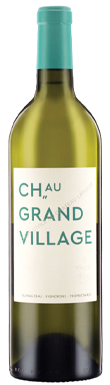
And recent vintages of the family’s more entry-level Grand Village Blanc (see recommendations, below) show the great strides being made on cooler sites and represent real value.
Bordeaux is also embracing new disease-resistant hybrid ‘Piwi’ varieties such as Floréal and Souvignier Gris.
These can be used as ‘experimental’ varieties up to 5% individually in a blend (no more than 10% in total); and even more in the new Médoc Blanc AP, where Chardonnay and Alvarinho will also be permitted.
Although unlikely to take over from Sauvignon Blanc and Semillon any time soon, the development of new varieties such as these shows the scope for even more diversification in years to come.
Five benchmark Bordeaux whites to look out for
Château La Garde Blanc
A fresh, modern Pessac-Léognan white, primarily Sauvignon Blanc on deep limestone with some Semillon, vinified in oak to balance zesty citrus and mineral notes with a chiselled texture.
Château Valandraud Blanc
A rare, opulent St-Emilion white from Jean-Luc Thunevin, blending Sauvignon Blanc, Semillon and Sauvignon Gris, crafted with barrel and tank fermentation, and new oak-ageing for rich, tropical fruit and soft, rounded flavours.
Le Cygne
An insider’s secret Bordeaux Blanc from Listrac-Médoc’s Château Fonréaud, made from Sauvignon Blanc, Semillon and Muscadelle, hand-harvested and fermented in barrels (30%- 40% new) with lees aging for a complex, peachy and floral profile.
Le Petit Cheval, Blanc
An extremely limited St-Emilion white, made from 6ha planted 80/20 Sauvignon Blanc and Semillon, fermented and aged in oak barrels to produce a refined, mineral-driven wine with citrus and floral complexity.
Les Hauts de Smith Blanc
A vibrant and great-value second wine from Château Smith Haut Lafitte, made from 100% Sauvignon Blanc, fermented in oak barrels (less new oak than the grand vin) for a crisp, mineral-driven wine with lemon rind, apple and aniseed notes.
Semillon-dominant
The classic Bordeaux blend is a mix of Semillon and Sauvignon Blanc, fermented in barrel and given extended ageing in wood. Muscadelle and/or Sauvignon Gris may also be used in the blend, adding extra floral lift or weightier, exotic notes.
The wines are distinctive, often with a waxy texture adding an extra dimension to the ripe white/yellow peach fruit, with a burst of lemon and lime zest acidity.
Semillon-dominated blends will often have plenty of concentration and ageing potential. Pessac-Léognan leads the way, with many top-quality wines that are a match for the better wines of the Côte d’Or.
Although blends will vary from vintage to vintage, Semillon is usually the dominant variety in Château La Mission Haut-Brion Blanc – a wine produced in tiny quantities and selling at extremely rarefied prices.
Dry wines from Sauternes and Barsac often have a high proportion of Semillon, with the barrel-fermentation and maturation in wood more restrained than in leading wines from Pessac-Léognan.
Sauvignon Blanc-dominant
Wines in which Sauvignon Blanc dominates often have more forceful, fruit-driven, grassy and floral notes than the creamy-textured character seen with significant additions of Semillon. Lemon, lime and grapefruit characters combine with vibrant acidity to create a palate with freshness and drive.
Grapes grown on cooler, limestone-oriented sites may also display mineral or salty notes on the finish.
Wines produced at entry- to mid-price levels are often vinified in steel, aiming to preserve freshness.
Wood may be used in more premium wines, usually with an emphasis on subtlety so that the texture and flavours imparted don’t diminish Sauvignon Blanc’s natural vitality.
Howard’s pick: A 12-wine tour of Bordeaux’s dry white styles
Related articles
- A new dawn beckons for the Médoc’s white wines
- Bordeaux: Building the future
- My Bordeaux: 10 city hotspots to seek out
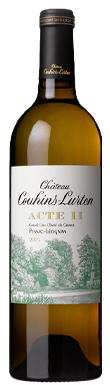
Château Couhins-Lurton, Acte II, Pessac-Léognan, Bordeaux, France, 2022

Having taken over from his father André, Jacques Lurton is focused on taking the quality of white Bordeaux to greater heights. From a single Sauvignon...
2022
BordeauxFrance
Château Couhins-LurtonPessac-Léognan
Château Grand Village, Blanc, Bordeaux, Bordeaux, France, 2021

Fresh citrus and lime zest combine with almost imperceptible nuances of oak, which gradually emerge as the wine is aerated. Mineral-driven finish. On a quality...
2021
BordeauxFrance
Château Grand VillageBordeaux
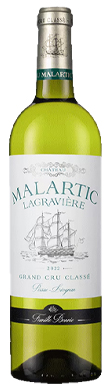
Château Malartic-Lagravière, Blanc, Pessac-Léognan, Cru Classé de Graves, Bordeaux, France, 2022

As usual, this shows the property's distinctive style – herbal, grassy characters, with fresh citrus adding plenty of acidity and a slightly bitter, grapefruit edge....
2022
BordeauxFrance
Château Malartic-LagravièrePessac-Léognan
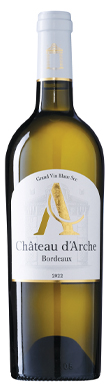
Château d'Arche, A Blanc Sec, Bordeaux, Bordeaux, France, 2022

Complex, refined and poised dry wine from a well-known Sauternes château. Partly matured in casks used for the maturation of d'Arche's sweet wines, there is...
2022
BordeauxFrance
Château d'ArcheBordeaux
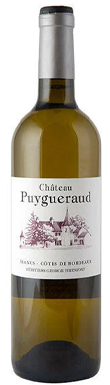
Château Puygueraud, Blanc, Francs Côtes de Bordeaux, Bordeaux, France, 2021

Tight and precise; you can almost feel (and taste) limestone here. Pale colour but no shortage of density and concentration. Sauvignon Blanc provides the floral...
2021
BordeauxFrance
Château PuygueraudFrancs Côtes de Bordeaux
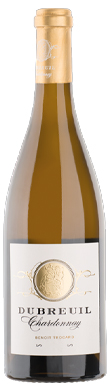
Clos Dubreuil, Chardonnay, Vin de France, Bordeaux, France, 2020

Founded by Benoit Trocard in 2002 and currently owned by Texan Ralph Eads, with Alain Raynaud consulting. Chardonnay planted on limestone on what would otherwise...
2020
BordeauxFrance
Clos DubreuilVin de France
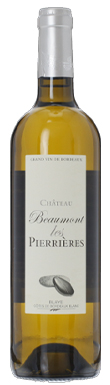
Château Beaumont Les Pierrières, Blanc Sec, Blaye Côtes de Bordeaux, Bordeaux, France, 2023

Beaumont is an 18ha family-owned estate in the heart of the Premières Côte de Blaye with 1.5ha of white grapes, planted on clay-gravel. Barrel-fermented in...
2023
BordeauxFrance
Château Beaumont Les PierrièresBlaye Côtes de Bordeaux
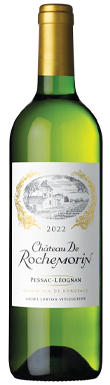
Château de Rochemorin, Blanc, Pessac-Léognan, Bordeaux, France, 2022

Another fine dry white Bordeaux from the Lurton stable. 100% Sauvignon Blanc, precise, focused, crisp and fresh. Subtle oak on the palate. Clean, bright, aromas...
2022
BordeauxFrance
Château de RochemorinPessac-Léognan
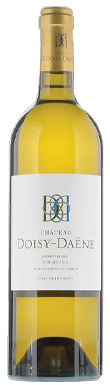
Château Doisy-Daëne, Blanc Sec, Bordeaux, Bordeaux, France, 2021

The Dubourdieu family purchased top Barsac estate Doisy-Daëne in 1924. In the time since it has grown from 14ha to 25ha, 10ha of which is...
2021
BordeauxFrance
Château Doisy-DaëneBordeaux
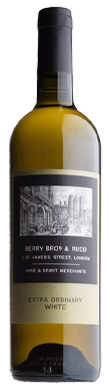
Berry Bros & Rudd, Extra Ordinary White, Graves, Bordeaux, France, 2022

Produced by Château de Chantegrive, this marks a new style for this long-established Berry Bros & Rudd label. Now matured in stainless steel, adding extra...
2022
BordeauxFrance
Berry Bros & RuddGraves
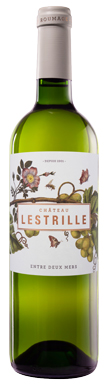
Château Lestrille, Blanc, Entre-Deux-Mers, Bordeaux, France, 2023

If you thought of Entre-deux-Mers as cheap, thin and acidic entry-level Bordeaux, think again. Very fresh on the palate with brisk lemon/grapefruit notes combining with...
2023
BordeauxFrance
Château LestrilleEntre-Deux-Mers
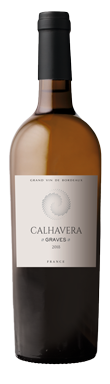
Les Vignerons de Tutiac, Calhavera, Graves, Bordeaux, France, 2022

89
Those who prefer their white Bordeaux to be Sémillon rather than Sauvignon Blanc-dominant will enjoy this 100% Sémillon wine from the Graves appellation. A single-vineyard wine that has spent eight months in oak, it displays subtly smoky, clean lemon peel purity and a good length. The name 'calhavera' means a small pile of pebbles and stones, and is a reference to the famous gravelly soils of the Graves. Mix-six price: £12.99
2022
BordeauxFrance
Les Vignerons de TutiacGraves

Andy Howard MW became a Master of Wine in 2011 and runs his own consultancy business, Vinetrades Ltd, which focuses on education, judging, investment and sourcing.
He previously worked for Marks & Spencer as a buyer for over 30 years and was responsible as wine buyer for Burgundy, Bordeaux, Loire, Champagne, Italy, North and South America, South Africa, England, Port and Sherry.
Although his key areas of expertise are Burgundy and Italy, he also has great respect for the wines of South America and South Africa, as well as a keen interest in the wines from South West France
He is a Decanter contributing editor and is the DWWA Regional Chair for Central Italy. Andy also writes a regular column on the UK wine retail trade for JancisRobinson.com.