Building a Priorat legacy: Interview with Scala Dei’s Ricard Rofes
Located by the site of a 900-year-old former monastery, Cellers de Scala Dei is a winery immersed in the robust history of Priorat. Sarah Jane Evans MW meets the winemaker who is eloquently telling the region’s story – and paving the way for its future – through its wines...


Vineyard visits with Ricard Rofes guarantee car sickness and excitement in equal measure. Car sickness, because we lurch almost vertically up unmade roads, sweeping walkers out of our path and cornering sheer drops. And excitement because of the heart- stopping views.
The reason for the drama is that we are in Priorat. Rofes’ lofty vineyards, belonging to Priorat’s oldest winery, overlook the gloriously isolated valley.
Scroll down for Scala Dei tasting notes and scores
Priorat was reborn in the 1990s when five winemakers together made international headlines. Rofes remembers: ‘I was 21 when I made my first wine, and in those days I wanted to be a famous winemaker.
Priorat was all about René [Barbier], Alvaro [Palacios], Carles Pastrana, Daphne Glorian and Josep Lluís Pérez. Then when I came to Scala Dei, “click!”, I realised the protagonist is not the person, but the place. The weight of tradition, that legacy, can’t be modified by someone who is spending 10 or 20 years there. There have been many people before you, and there will be many after you. The best you can do is to leave it as good or better than you found it.’ He stresses: ‘The wines of Ricard Rofes don’t exist. It’s the wine made by the land and the grapes.’
Rofes has become one of the leaders in Spain’s Garnacha revival, producing some exceptional wines. ‘The irony is that in my first job at Masroig all the wines were based on Cariñena. It’s much warmer in Montsant, and Cariñena has more acidity, tension and a lower pH. I didn’t like Garnacha at all.’
On his second day at Scala Dei, owner Manuel Peyra took him into the vineyards. ‘They were Garnacha, Garnacha, Garnacha, Garnacha. “Madre mía,” I thought. “What have I come to?” After visiting 28 fincas, I asked: “Señor Peyra, where is the Cariñena?” To my alarm, he replied: “We’ve never had it.” I was at a loss. But when the fruit came into the winery that autumn, I didn’t recognise it as Garnacha. It had freshness, fruit, tension. From that moment I became a Garnachista.’ The key to its freshness was, of course, the altitude (vines planted up to 800m), and the combination of soils, particularly red clay and calcareous clay. Scala Dei is thoroughly Priorat, but its high vineyards have nothing to do with the llicorella slate for which Priorat is known.
Ricard Rofes at a glance
Born 31 October 1974, Tarragona, Spain
Education Degree in Winemaking & Wine Marketing, Jaume Ciurana School of Oenology, Falset; degree in specialist winemaking studies, Rovira i Virgili University, Tarragona
Career 1997: Celler El Masroig cooperative in Montsant, winemaker 2007: first vintage at Cellers de Scala Dei; 2008: first vintage of RAR; 2014: first vintage at Abadía de Poblet
Family Married to oenologist Magda Pellicer; two children Guillem (10) and Bernat (8)
Hobbies Mountain-biking, reading, eating out
Drawing from the past
The winery opens onto a village square, just below the former Carthusian monastery of Scala Dei, ‘the stairway to heaven’. It sits beneath the impressive range of Montsant, ‘the holy mountain’.
On my first trip to Priorat I remember Alvaro Palacios talking about the mystical quality of Priorat. It seemed theatrical, but at the same time true. Rofes agrees: ‘I’m not in the least superstitious, but there is something profound about the place. It’s what brought the monks here in 1194, and without them we would not have had the vine and the knowledge of how to cultivate it.’
After the dissolution of the monasteries in 1835, four families bought the estate. They were interrupted by phylloxera and the civil war, but in 1974 re-founded Cellers de Scala Dei. Rofes has old documents. ‘There is one from a monk, written in 1624. It says: “Not all plants are good, nor do they ripen when grown in cold land. As for red varieties, only Grenache and Mataró are recommended.” So we know Garnacha was in the vineyards even then. But we can’t be sure what Mataró was. It could be Monastrell/Mourvèdre. But we have no proof.’
He started to research Scala Dei’s history. ‘We tasted the wines from the 1970s and found they were more alive than later vintages. Obviously in recent times they were using Cabernet rather than Garnacha, because it was fashionable, not because it suited the site. We looked at the winemaking. They did not have the equipment [for destemming] so it was all 100% stems, fermented in concrete, with no temperature control. I’m imitating these old ways – for instance, letting fermentation temperatures go up and down, as they would have done then. The first time I tried it, I didn’t know how it would turn out.’
Rofes has been fortunate with his colleagues, who have encouraged his experimentation. He has had the freedom to produce his own wine. RAR currently comes from his own 4ha in Priorat, though he is soon to include wine from his family vineyards in DO Montsant, which he and his wife have restored and replanted. ‘The company president, Carles Peyra, said: “Your project doesn’t bother me, because I know that anything you learn you’ll apply to Scala Dei.”’
Arthur O’Connor, former director of winemaking for the Codorníu Group, which became a partner in the property in 2000, reminisces: ‘Ricard wanted to trial concrete tanks. He said: “I think they will work well with Garnacha.” I disagreed. I said: “I’ve worked with concrete. It’s hard to clean and makes reduced wines.” Three months later I walked through the winery and there was a concrete tank. I said: “What’s that doing here?” Ricard replied: “I thought you said I should do a trial.”’ Rofes’ latest successful experiment is Heretge – a heretical wine, for it’s a return to Cariñena from the winemaker who became a Garnachista.
Rofes is a winemaker’s winemaker. For a long time he sailed under the radar, though his wines are getting him international attention now. O’Connor points to his importance as a ‘local’ in Priorat – Rofes is from a small village in the mountainous part of DO Montsant, and currently lives in L’Aleixar, a town between Scala Dei and the city of Reus. ‘Ricard took on the role of a leader in the winemaking community, which in my opinion had been missing from Priorat,’ O’Connor explains. ‘René Barbier was an icon but not a leader any more; Alvaro did a great job, but there was a need for people who had grown up there.’
There have been, says Rofes, three mentors in his own career. The first is Joan Asens, the winemaker and biodynamic specialist who ran Alvaro Palacios’ Priorat vineyards for almost 20 years, and taught Rofes at the oenology school in Falset. ‘Es un duende,’ he says of Asens. It’s a word we find difficult to translate, given that Google suggests ‘elf’. We finally agree on ‘someone who achieves the impossible with wines, with an ease which mere mortals cannot’. The second is O’Connor. ‘Es un maestro,’ according to Rofes. ‘He always said: “Go for it.” And if it didn’t work, he’d say: “Let’s see why.”’ The third is Australian winemaker Steve Pannell. ‘I went to McLaren Vale in 2008 and I learned a lot from him about Garnacha.’

Building a legacy
Now Rofes is becoming something of a godfather to a new generation. Fernando Mora MW says: ‘He’s serious – he wants people to learn.’ In 2017, Roc Gramona Simó, the next generation of the Gramona family, biodynamic growers and makers of traditional-method sparkling wines, worked with Rofes as assistant winemaker. ‘Ricard is very accessible. He’s humble. He’s from the region. He’s like Joan Asens – he gives you freedom, he’s not a control freak. Working with Ricard you learn to be so much more respectful of the fruit.’
O’Connor is full of praise for the ‘gentle, political ability to drive change without anyone noticing’, that Rofes has. ‘One of his first genius moves was to start running all the vineyards. Doing this was an amazing feat that few people ever saw, the results of which are now apparent in the bottle.’ O’Connor explains that, prior to Rofes, the growers were all owners in the family business. They harvested their grapes when they wanted and sent them to the winery ‘in a chaotic fashion’.
So Rofes negotiated with them. The winery would lease their vineyards and take over their crews; he would manage it all. ‘In doing so, he removed the need to constantly negotiate with the owners, and was able to pick at the time that best suited the grapes, not the owners,’ O’Connor continues. ‘He negotiated that the owners would not receive any payment for the first years, so that he could put all their returns back into the properties, replanting and returning them to their former glory.’
Rofes now also makes wine at another historic monument, the monastery of Poblet, burial place of the kings of Aragón. It’s a UNESCO World Heritage Site, with a monastic community, and it requires that same political skill and sensitivity to run a commercial winery within this religious setting.
Rofes’ ‘maestro’ and friend, O’Connor, is currently working as a winemaker and consultant in the US. He reflects: ‘During my goodbye dinner with Carles Peyra and Ricard, I encouraged them to focus their efforts on getting Scala Dei up to where it really should be. My view is that there is only one winery in the world they need to emulate, a winery that has no tasting room, and that has access to the best vineyards which the monks identified: Domaine de la Romanée-Conti. Spain lacks such a pure, terroir-driven winery. Scala Dei clearly has the vineyards, and the absolute authority, granted by the monks. And it has a winemaker who expresses the vineyard and terroir rather than his private, idealised wine style, as so many other winemakers do.’
Originally published in the March 2020 issue of Decanter magazine.
See the Scala Dei tasting notes and scores, tasted by Decanter experts
You may also like
First-taste: Torres Mas de la Rosa 2017 and latest releasesSpanish wines you should have in your cellar: The top 24Exciting new wave wines from SpainThe new classification of DOQ Priorat
Scala Dei, Massipa, Priorat, Catalonia, Spain, 2018
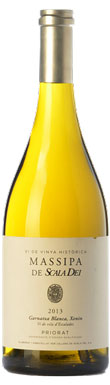

Massipa is a single vineyard, red clay with gypsum soils, planted 1974. It’s Scala Dei’s only white, and fairly uncommon in the predominantly red area...
2018
Scala DeiPriorat

Scala Dei, Massipa, Priorat, Catalonia, Spain, 2014
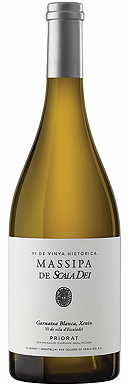
The most striking wine of the tasting was the 1991 Scala Dei white, from a region known for its reds; with almost 30 years of...
2014
Scala DeiPriorat
Scala Dei, Cartoixa, Priorat, Catalonia, Spain, 2016
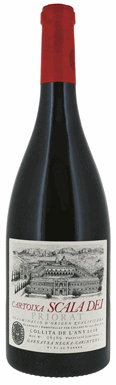
Elegant with discreet intensity, full of punchy, energetic savoury notes with fennel and red fruits. Long, harmonious finish.
2016
Scala DeiPriorat
Scala Dei, Garnatxa, Priorat, Catalonia, Spain, 2019
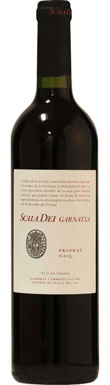
Scala Dei’s youthful offering to ‘Garnachistas’, presenting a direct expression of fruit and terroir. Youthful Garnacha (vines aged 15 to 25 years) and red clay...
2019
Scala DeiPriorat
Scala Dei, Heretge, Priorat, Catalonia, Spain, 2016
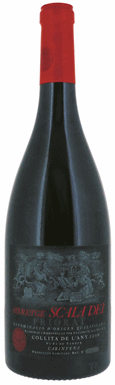
The oldest winery in Priorat, Cellers de Scala Dei are known for bottling the first Priorat wine in 1878, and their remarkable cellars date back...
2016
Scala DeiPriorat
Scala Dei, Masdeu, Priorat, Catalonia, Spain, 2017
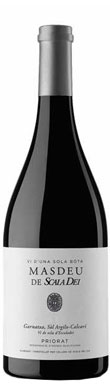
A Priorat wine that comes from clay and limestone soils, instead of classic licorella (slate). The wine is very different to its licorella cousins: brighter,...
2017
Scala DeiPriorat
Scala Dei, Massipa, Priorat, Catalonia, Spain, 2017
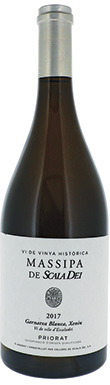
Aromatically delicate with a floral freshness. Full bodied, broad and rich on the palate, with alluring acidity and a long, memorable finish.
2017
Scala DeiPriorat
Scala Dei, St Antoni de Scala Dei, Priorat, Catalonia, Spain, 2016
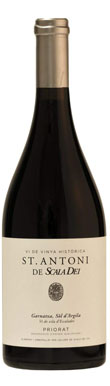
The Carthusian monks of the monastery of Scala Dei in the valley below had vineyards up on the slopes of Montsant some four centuries ago....
2016
Scala DeiPriorat
