
Cap Classique: 50 years of South African premium sparkling wine
Cap Classique, South Africa’s traditional-method sparkling wine, celebrates its 50th anniversary this year. Tina Gellie chats to winemakers who pioneered this premium fizz and recommends some great-value bottles to try.

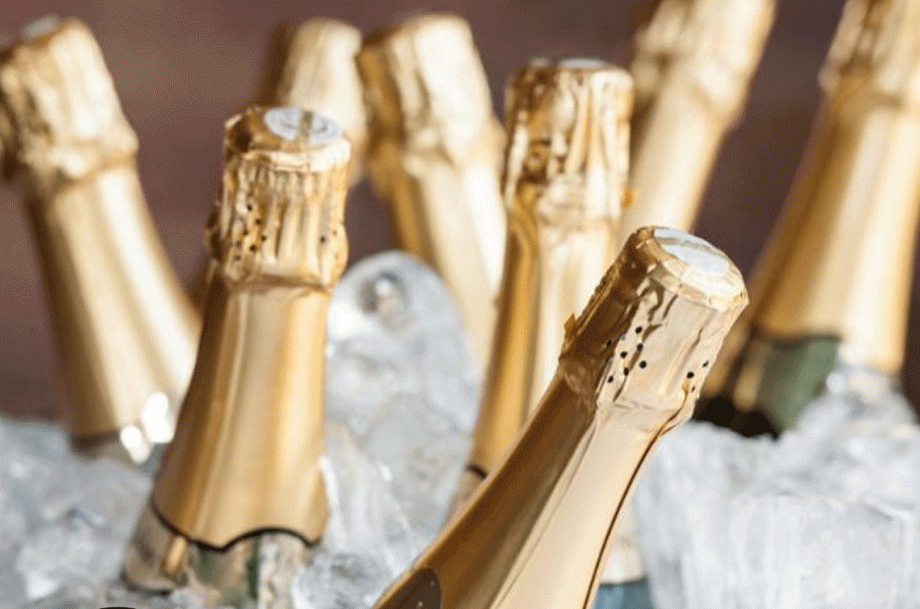
South Africa’s premium traditional-method sparkling – Cap Classique – marks its half-century this year, first made at Simonsig in 1971.
Simonsig’s winemaker Johan Malan (son of Frans Malan, who made that first wine, see below) joined Pieter Ferreira, the winemaker at Graham Beck and chair of the Cap Classique Producers Association (CCPA), and five other producers to celebrate the anniversary in an online tasting.
Scroll down for tasting notes of Cap Classique wines to try
‘Cap Classique has a place among the world’s best sparkling wines,’ says Ferreira. ‘The challenge is getting the Cap Classique name better known and promoting the class and quality of our product.’
‘The sweet spot is above Prosecco but below Champagne and English Sparkling Wine,’ he explains. ‘Between £15 and £25 South Africa can own this category in traditional-method sparkling. But we need to remain aspirational – a wine style that punches above its weight for the price.’
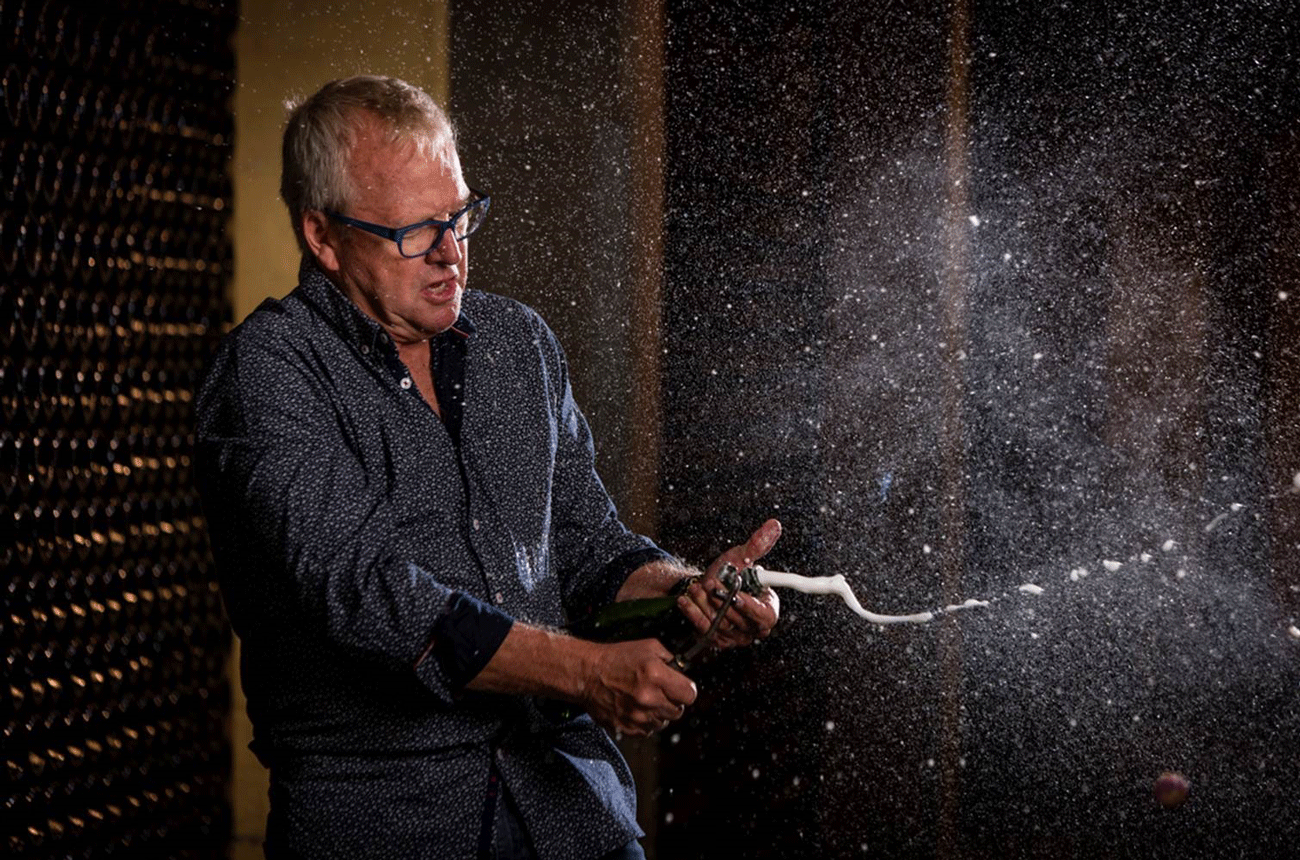
Malan agrees: ‘My fear is that we end up where Cava is. We need to be premium from the start.’
‘We are not making a copy of Champagne,’ Malan adds. ‘We’re making a sparkling wine that tells the story of its South African origin. Of course you need the freshness and acidity, but we have sunshine in the Cape, so you have to be able to taste that sunshine in Cap Classique.’
What is Cap Classique?
Today, there are 84 members of the CCPA. Formed in 1992, it was the first organisation of its kind in South Africa to represent a specific wine style. It differentiates the members’ premium product from the huge volume of cheap tank-fermented and carbonated bubbly produced in the country.
Members of the CCPA produce 9.25 million bottles annually of their traditional-method sparkling. That’s small fry when you compare it to the 302 million bottles made in Champagne every year. However it is the fastest-growing category of South African wine, with production doubling every 4.5 years.
Exports are just under 2 million bottles, of which the UK is the main market.
The USA, Sweden, the Netherlands and Norway follow. And it seems the pandemic created a lot of thirst for the style, with exports to the UK alone increasing by 36% year-on-year from 2020 to 2021.
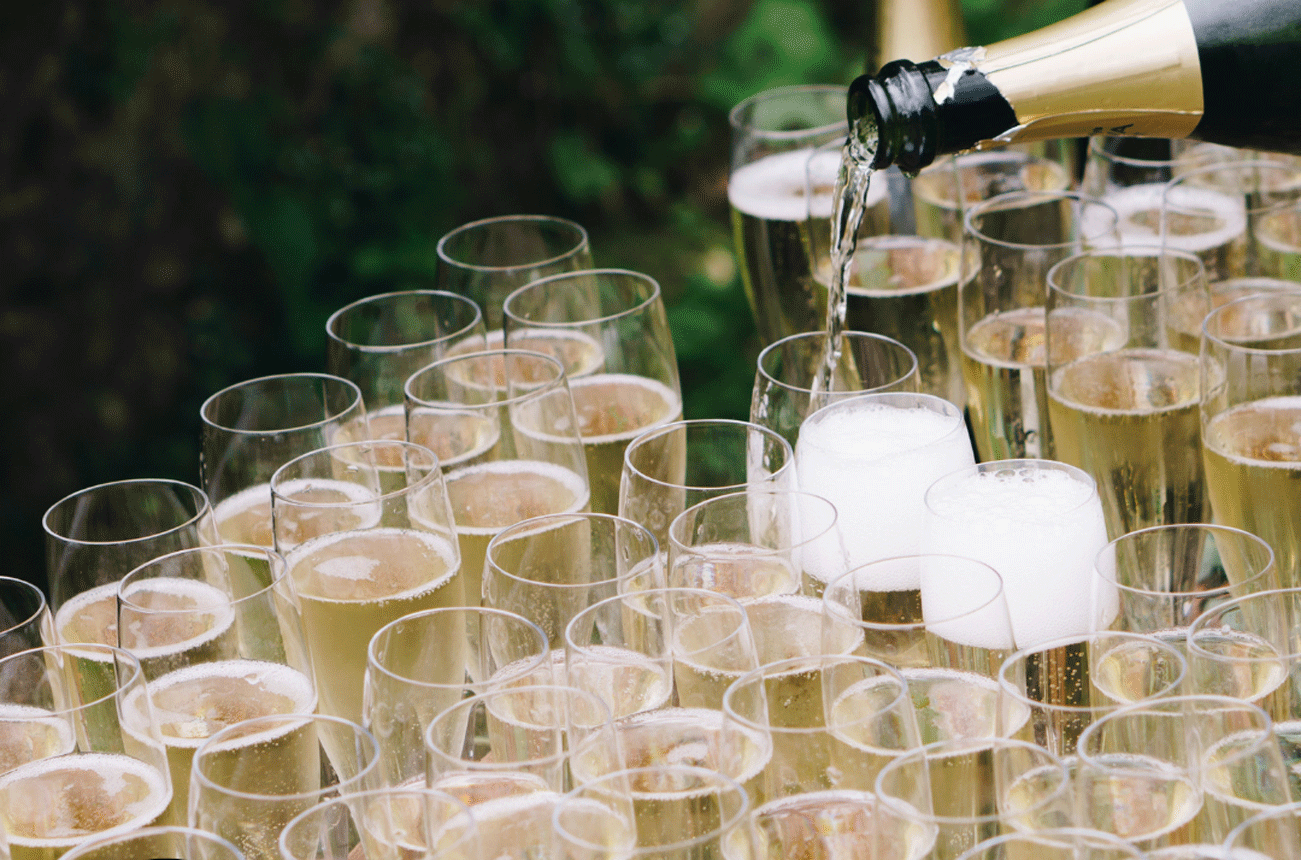
To earn the Cap Classique name, a wine must ferment on its lees in the same bottle it is sold in. Lees ageing must be a minimum of nine months (though the CCPA recommends 12 months), and from June 2021 there are plans to introduce a new category for wines that mature for a minimum of 15 months.
There are no legal restrictions on permitted grape varieties, but the CCPA recommends Chardonnay, Pinot Noir and Pinot Meunier.
While Brut (below 12g/L residual sugar), Extra Brut (below 6g/L) and Brut Nature (below 3g/L) remain the mainstays of production, the big development in Cap Classique is Nectar, a subcategory of Demi-Sec, for wines with 20gL-40g/L of residual sugar.
Where it all began
In 1953, Frans Malan took over from his father-in-law as proprietor of a wine farm that then became Simonsig in 1968. Soon after, he visited Champagne and decided he could use Chenin Blanc to make a traditional-method sparkling wine.
In 1971 he released the first vintage of Kaapse Vonkel (meaning Cape Sparkle). Made as a brut, it was unique in a market where most of the sparkling wines were sweet and carbonated.
‘Kaapse Vonkel was the most expensive white wine in South Africa at the time,’ recounts Frans’ son Johan Malan. ‘It sold for 3 Rand a bottle, when a 12-bottle case of Simonsig’s best-selling red sold for 6 Rand!’
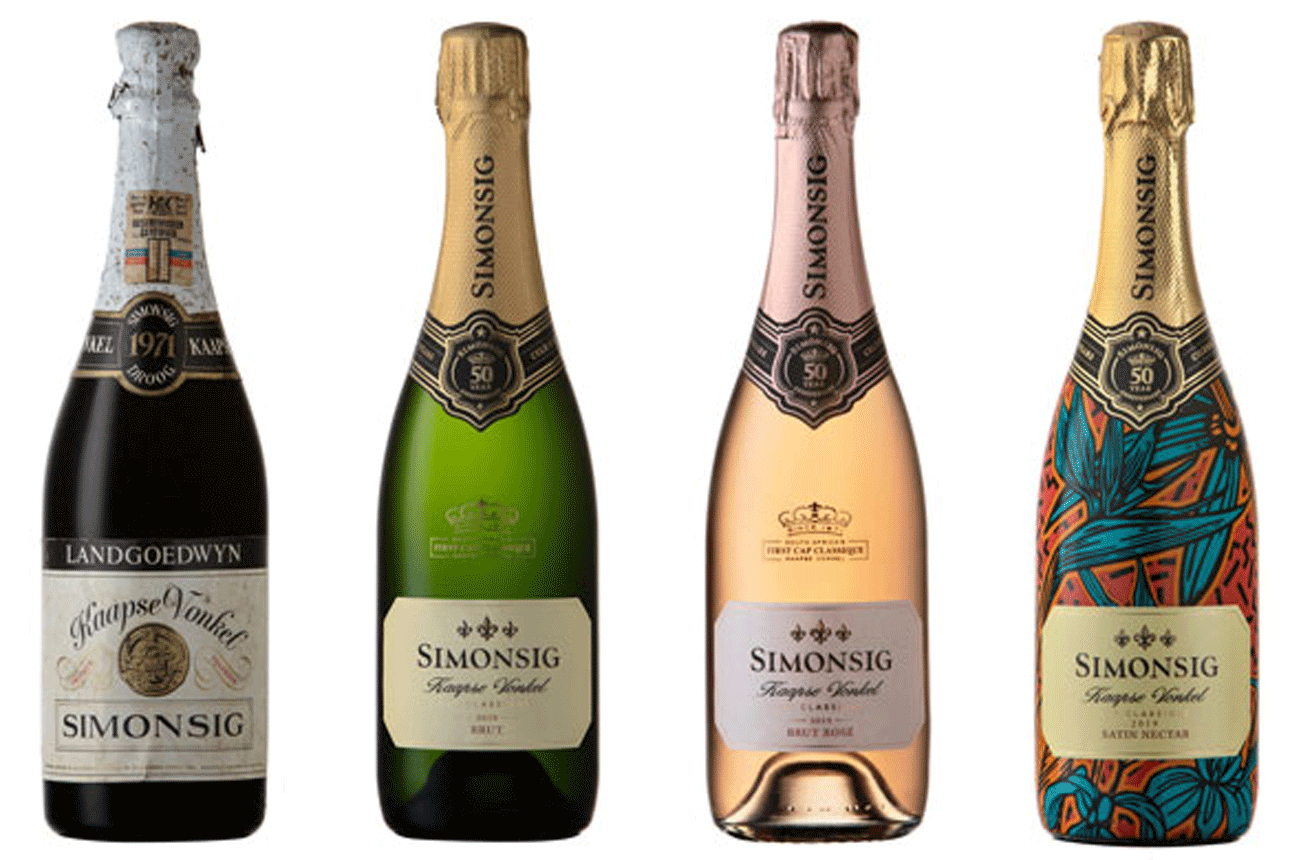
It stood out for other reasons too, reveals Malan. The first bottles his father imported from Portugal not only had a distinctive blue tint, they were also 800ml. The next bottles Simonsig sourced came from Germany but, because they were for Sekt, the pressure of the fizz in Kaapse Vonkel caused many to explode.
It wasn’t until the early 1980s that another winery – Boschendal – made a traditional-method sparkling. But by the end of that decade there were enough producers trying their hand at the style that they gathered together to taste each other’s base wines, share knowledge and discuss ideas.
From these annual meet-ups they created the Méthode Cap Classique name and, in 1992, founded the Cap Classique Producers Association.
Cap Classique: the wines to try
You might also like…
Boekenhoutskloof: tasting the 2018 wines
Lady May: a taste of Bordeaux in South Africa
New World sparkling wines under £20
Villiera, Tradition Brut, Western Cape, South Africa
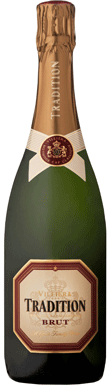

<p>Villiera has been making Cap Classique since 1984 when winemaker Jeff Grier partnered with Champagne's Jean-Louis Denois to hone the estate's focus on traditional-method sparklings....
Villiera

Simonsig, Cuvée Royale Blanc de Blancs Brut, Stellenbosch, South Africa, 2017
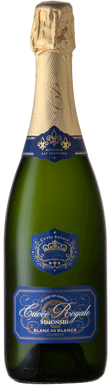
Things have come a long way since 1973, when Simonsig, under Frans Malan, launched the first Cap Classique. Now made by his son Johan, there...
2017
Simonsig
Graham Beck, Brut, Western Cape, South Africa
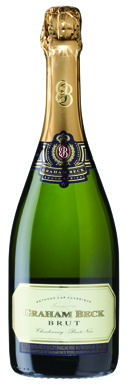
Made by Pieter 'Bubbles' Ferreira, president of the Cap Classique Producers' Association, this even blend of Chardonnay and Pinot Noir is the UK's biggest selling...
Graham Beck
De Grendel, Brut, Cape Town, South Africa, 2016
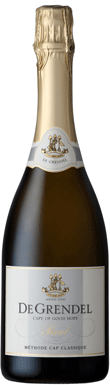
This estate made its first Cap Classiques under cellarmaster Charles Hopkins in 2007. Always a Chardonnay-dominant cuvée, this vintage is 64%, and just 2,000 cases...
2016
De Grendel
Kleine Zalze, Brut, Western Cape, South Africa
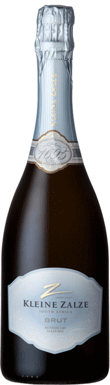
An approachable fizz whose 9g/L dosage and full malolactic fermentation gives it a round, honeyed sweetness that makes it a crowd-pleasing style. With just over...
Kleine Zalze
Domaine Des Dieux, Rose of Sharon, Walker Bay, South Africa, 2011
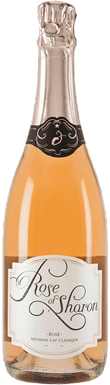
Sharon Parnell, after whom this wine was named, was the first in Hemel-en Aarde to make Cap Classique wines from her family's now 20ha of...
2011
Domaine Des Dieux
Boschendal, Rosé Brut, Western Cape, South Africa
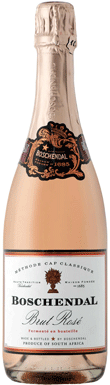
Pinot Noir always forms the core of this blend, but in this iteration winemaker Danielle Jacobs increased it to to 72%, along with 10% Pinotage,...
Boschendal
