
Anson: A Château Cos d’Estournel tasting masterclass
Jane Anson tastes Cos d’Estournel wines, including the highly regarded 2016, 2010 and 1996 vintages, during a Decanter virtual masterclass held with the estate's technical director, Dominique Arangoïts.


Decanter’s second virtual masterclass, held with Château Cos d’Estournel, was as international as the first, with attendees joining from Belgium, Czech Republic, Estonia, France, Hong Kong, Hungary, Ireland, Netherlands, Norway, Portugal, Romania, Sweden, Switzerland, United Arab Emirates, United Kingdom and the USA.
The tasting was led by the second growth estate’s technical director, Dominique Arangoïts, and held from the château itself in St-Estèphe.
Scroll down to see Jane Anson’s tasting notes and scores from this Château Cos d’Estournel masterclass
Arangoïts is originally from the Basque region of France, and joined Cos in 2000, the same year that French entrepreneur Michel Reybier bought the property.
I spoke with Michel Reybier a few years ago about how it felt to arrive at one of Bordeaux’s most prestigious estates as an outsider, even one with vast experience in the luxury hospitality business.
‘It’s tough to enter a new industry’, he told me.
‘The bureaucracy of any French business is difficult. In many ways, Bordeaux has its own language, and perhaps the Bordelais don’t always see how lucky they are to be here. Coming from the outside, that was clear to me.’
He added, ‘To succeed, you need a bit of humility and a bit of luck, but you also need to remember that some things don’t change – namely, you need a team that believes in the same things that you do and is prepared to work hard.’
Château Cos d’Estournel Factfile
1855 classification: Second growth
Wines produced: Cos d’Estournel, Pagodes de Cos, Cos d’Estournel Blanc.
Total area under vine: 100 hectares (ha) – 87ha in 2018.
Grape mix in the vineyard: 56% Cabernet Sauvignon, 40% Merlot, 4% Cabernet Franc, 1% Petit Verdot.
Owner: Michel Reybier since 2000.
Director: Dominique Arangoïts.
Cellar master: Angélique Meynieu.
History: Named after Louis Gaspard d’Estournel, who inherited a few plots of vines from his father in 1791 and built it up into one of the region’s most prestigious and distinctive estates.
Construction of the Château in 1820 (complete with sandstone turrets and pagodas) was inspired by his many trips to India and a love of the Taj Mahal. A bronze of Louis-Gaspard sits in the estate’s gardens.
Winery: Designed by architect Jean-Michel Wilmotte, the winery is one of the most modern in Bordeaux, covering 2,000 square metres of floorspace with split levels and a full gravity-flow system, with 84 stainless steel tanks of various sizes to allow plot-specific winemaking. Took five years to build, with the first harvest in 2008.
Other Reybier-owned estates: Hetszolo (Tokaj), La Mascaronne (Provence), Champagne Michel Reybier.
Tasting the Cos d’Estournel wines
This tasting was organised to show the progression of the estate over the past two decades, including the impact of greater precision in the vineyard and in the approach to winemaking, together with investments in a technologically-advanced, gravity-led cellar.
Watch the video of the Cos d’Estournel virtual tasting
The tasting opened with the 2017 vintage of Cos d’Estournel Blanc, a white wine label that was introduced in 2005 and is produced only in tiny quantities; between 500 and 800 cases are made annually depending on vintage.
This was followed by the 2016 and the 2010 vintages of both Cos d’Estournel and Pagodes de Cos, allowing us to compare the difference in fruit structure and composition between not only these two vintages but also first and second wine.
It finished with the Cos d’Estournel 1996, an exceptional year for the estate and a wine that is perfectly in its drinking window – and that shows the great terroirs of the 1855 Classification have a magic that transcends individual owners.
The Cos d’Estournel vineyards
‘The choice of plots for Pagodes and Cos are not set each year,’ said Arangoïts.
‘For example, as vines age and deepen in complexity, they may be moved from Pagodes into Cos, or in certain vintage conditions different parts of the vineyard may be used for one or the other.
‘There is also less new oak in the Pagodes, because the vines are often younger and produce less tannic, concentrated wine. They therefore don’t need to same amount of oxygen exchange that barrels provide during ageing to soften the tannins.’
He added, ‘There are 19 different soils types across the 100ha of Cos d’Estournel’s vineyard, which explains the incredible complexity in the wines’.
To the south lies the Jalle du Breuil stream, which separates St-Estèphe from Pauillac, and Cos from neighbouring estate Lafite Rothschild.
‘The water from this Jalle is also extremely important for regulating temperature and allowing the vines to access nourishment in hot summers, such as we have had recently,’ said Arangoïts.
A ‘hands-on’ approach
He also discussed the importance to the estate’s overall philosophy that comes from Michel Reybier owning a number of luxury hotel and restaurants, including La Réserve in Paris, Zurich and Geneva, the Intercontinental in Davos and La Maison d’Estournel in St-Estèphe.
This last property was once the family home of Cos founder Louis Gaspard d’Estournel, and has recently been repurposed into a hotel and restaurant.
‘Being part of a hospitality group means we have direct contact on a regular basis with the people that are drinking our wines,’ said Arangoïts.
‘[This] gives us a connection to them, something that is not always true in the system of Bordeaux, where négociants sell the wines rather than the châteaux directly.’
It also helps that Michel Reybier and his son, Raphaël, are hands-on owners, spending much of the year at the property.
‘Many château owners don’t seem to go out into the vineyards enough to see the process of growing the grapes, to really check on the quality of their raw material,’ Reybier told me in our earlier conversation.
‘But today, simply having a high price is not enough, even for classified growths. Consumers want to know what stands behind the price, and an owner needs to be able to answer those questions.’
Friday night’s masterclass finished with a round of questions, when Arangoïts was asked for his favourite vintage of Cos.
He chose the 1985, which he said remains a model of excellence in winemaking for him even today.
‘I prefer to drink wine I didn’t make,’ he said. ‘You know, when I make wine I am working, I don’t like that, I feel stressed.’
Jane Anson’s tasting notes on Château Cos d’Estournel wines in this masterclass
Coming up next…
We are very excited to announce that the next Decanter Virtual Masterclass will be exploring the legendary Super Tuscan estate Ornellaia. Decanter Premium subscribers will be able to take advantage of priority booking from Friday 5th March at 12noon GMT. We recommend keeping an eye on your inbox as we expect high-demand once again for this exclusive virtual masterclass.
Not a Decanter Premium subscriber yet?
You may also like:
Comparing Cos d’Estournel wines from 2000 to 2016 (published 2018)
How the 1990 Bordeaux first growths taste now
Tasting the celebrated Sauternes 2001 vintage nearly 20 years on
Château Cos d'Estournel, Cos d'Estournel Blanc, Bordeaux Blanc, Bordeaux, France, 2017
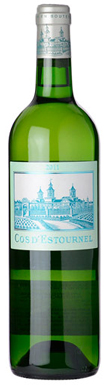

The cool temperatures during the growing cycle made 2017 an excellent vintage for white Bordeaux, allowing for high aromatics. Now four years old, there are...
2017
Château Cos d'EstournelBordeaux Blanc

Château Cos d'Estournel, Les Pagodes de Cos, St-Estèphe, Bordeaux, France, 2010
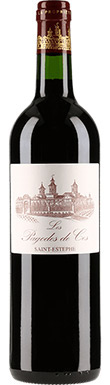
Brambled black fruits open on the attack, with a salty caramel edge, sweet tobacco and smoked saffron. It is now at a great moment to...
2010
Château Cos d'EstournelSt-Estèphe
Château Cos d'Estournel, St-Estèphe, 2ème Cru Classé, Bordeaux, France, 2010
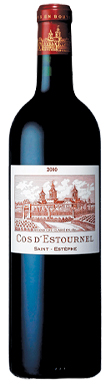
Darkly fragranced, with chocolate, blackcurrants and violets, ripe fruit and soft woody touches. Tense and compact, tannins with a lovely texture. Nice weight and balance....
2010
Château Cos d'EstournelSt-Estèphe
Château Cos d'Estournel, Les Pagodes de Cos, St-Estèphe, Bordeaux, France, 2016
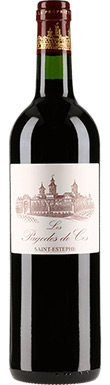
Proof that in the great vintages, the smart money should be seeking out second wines of classified growths for wines that are guaranteed to deliver....
2016
Château Cos d'EstournelSt-Estèphe
Château Cos d'Estournel, St-Estèphe, 2ème Cru Classé, Bordeaux, France, 2016
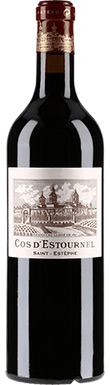
Cos continues to cement its place at the top of the second growths. It has moved on from the emphasis on heft and ripeness to...
2016
Château Cos d'EstournelSt-Estèphe
Château Cos d'Estournel, St-Estèphe, 2ème Cru Classé, Bordeaux, France, 1996
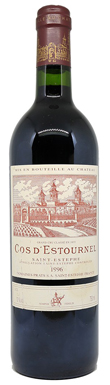
A brilliant year for Left Bank Bordeaux. This was stubborn in its youth and took time to open, but now stands as one of the...
1996
Château Cos d'EstournelSt-Estèphe
