Exploring the Aglianico triangle
Its wines were once dubbed, simply, the ‘Barolos of the south’, but Aglianico, an ancient grape, is in fact hugely varied in its expression. An understanding of its nuances, and seductive heights, is aided by a mapping of its three principal territories.


Across Campania and Basilicata, the Aglianico grape dominates all serious wine discussion. Thick-skinned and capable of long ageing, it’s southern Italy’s leading red variety and deserves its place on the country’s fine wine scene.
For years it was lazily compared to Nebbiolo, its wines bearing misleading labels such as ‘the Barolo of the south’. Nevertheless, the association has gradually encouraged interest, and over the last decade growing trade support has led to more consumer exposure and a deeper understanding of the grape’s stylistic breadth.
Although other areas are improving fast, these three territories have traditionally provided the most important expressions of the grape’s potential.
Scroll down to see notes and scores for six sublime Aglianico wines
Distinctive character
Late-ripening and full of tannin and acidity, Aglianico gives structured, dense wines that can be very powerful when young. While it isn’t easy to cultivate, producers believe it outperforms other regional red varieties in concentration and longevity.
It’s one of the last varieties to be harvested in Italy and the long growing season, aided by significant diurnal temperature swings, helps Aglianico achieve phenolic ripeness and aromatic complexity.
Of course, the extra autumnal hang time means there’s potential for more to go wrong climatically, but when things go well, and with low intervention in the cellar, its wines evolve with distinctive characters of black cherry, prune, liquorice, violet, anise and balsam, before taking on more herbal characteristics.
The idiosyncrasies of terroir undoubtedly lend a fascinating aspect to this variety and the resulting styles that emerge from these very different regions show Aglianico to be a wonderful interpreter of its environment.

Aglianico del Vulture
Nowhere is this more evident than in the north of Basilicata, where the presence of an extinct volcano and resultant mineral-rich soil have a defining influence on the wines. Here, grape-growing elevations reach 800m, and in the surrounding foothills, vines grow on well-ventilated slopes that provide welcome relief from extreme summer heat and autumnal rains.
In Barile, where historic wine cellars have been hollowed out of the hillsides, Aglianico del Vulture finds its heart.
Neighbouring villages differ subtly in microclimates and soil composition, but throughout the denomination, volcanic terrain imparts the most meaningful sensory characteristics into the wine.
Elena Fucci (pictured below), who has emerged as the leading name in the Vulture, notes that while the area’s vineyards are rooted entirely in black earth, the variation is endless: ‘We have soils that boast different stratifications of lava, ash, lapilli, all interspersed with clay and each giving different nuances to the wine.’
The Vulture’s long geological history is critical to Aglianico’s personality here. Entirely different to those in Taurasi and Taburno, the region’s wines are typically fresh and vibrant, with lifted floral aromas.
Fabio Mecca, the Vulture’s most accomplished oenologist, offers a wealth of technical knowledge when it comes to Aglianico. He learned his trade at the iconic Paternoster winery and, despite its sale to Amarone producer Tommasi, in 2016, Mecca continues to oversee the estate and its consistently excellent Don Anselmo release.
He reflects: ‘On Vulture, the volcanic composition of the soil is the determining factor, particularly when it comes to the aromatic qualities of the wines, and especially when detecting notes of ash.’

Taurasi
Heading west to Taurasi, the village that lends its name to a wider appellation encompassing a further 16 villages, we enter the verdant hills of Irpinia. The area has a long viticultural tradition and during the 1990s and early 2000s was the driving force behind southern Italy’s premium red wine production.
It offers an altogether different proposition to that of Vulture. Aglianico grown here is typically more powerful, more muscular, and requires greater maturation to soften its formidable tannins and astringency. Mastroberardino’s 1968 vintage of Taurasi Riserva has achieved legendary status among collectors of Italian wine and remains a key reference as to what can be achieved.
Harsh winters, cool summers and a long viticultural cycle that extends into November are common vintage traits. Some 15% of vineyards are cultivated below 300m, and almost 20% are above 500m, from which the wines are likely to be more austere and requiring a longer ripening period.
That leaves the bulk of Aglianico grown in between, where calcareous clay and limestone soils sit with sand and volcanic ash. These conditions inevitably play a key role here, but according to Federico Basso, owner of Villa Raiano, nobody has actually carried out a serious study of Taurasi’s micro-terroirs.
‘The villages of Castelfranci, Montemarano and Paternopoli are rich in clay and marl, and ostensibly yield leaner, rustic wines,’ he explains. ‘These need longer to mellow, whereas in Taurasi itself, the wines are more elegant, sweeter and more approachable in youth.’
He illustrates his point with the inescapable Barolo comparison. ‘Taurasi feels more like [the Barolo commune of] Verduno, while the aforementioned villages resemble Serralunga d’Alba commune.’
It’s worth noting that the destructive vine pest phylloxera didn’t reach some of Taurasi’s more elevated sites. Consequently, the concentration of old-vine parcels, some of which were planted more than 100 years ago, adds unique heritage to the story.
This diversity is exciting and the wines can be excellent, but compared with the Vulture, they are undoubtedly more robust and require greater patience in the cellar.
Taurasi’s rules stipulate a minimum of three years of ageing before release, of which at least one must be in wood. Given the power of the average wine, the Riserva category becomes more relevant here, necessitating four years of ageing, of which 18 months must be in barrel.
Ilaria Petitto (pictured below) of the Donnachiara winery in Montefalcione has a reputation for producing lighter, more fruit-forward wines. She believes Taurasi is the great red of the south, but perhaps sums it up best when conceding: ‘Taurasi is capable of the good, the bad and the ugly.’

Aglianico del Taburno
Just west of Benevento is the Taburno massif, a key landmark in the cultivation of Aglianico del Taburno wines.
In the chalk and tufa-rich hills that descend towards the plains, sheltered by the Matese mountains to the northwest, Aglianico takes on a different expression. The calcareous soil and lower elevations result in wines typically fuller and rounder, with earthy black fruit, leather and menthol aromas.
Structurally, these wines have less grip than those of Taurasi, but are far more muscular than those from the Vulture.
Aglianico del Taburno DOC was created in 1986 and was elevated to DOCG status in 2011 – a reflection of both distinctive terroir and a growing catalogue of quality wines. With only 127ha registered for the appellation, it is the smallest region in the Aglianico triangle.
Located inside the bigger Sannio DOC, this is a region in which a tradition of growing fruit for sale in the bulk market still looms large. Many vineyard owners prefer cooperative membership than the financial commitment of independent fine wine production.
The winemaking rules stipulate two years of ageing before release, and three for Riserva.
As in Taurasi, Taburno is sometimes a victim of stylistic pursuits that no longer align with consumer tastes. Big, robust reds with high alcohol levels and excessive extraction, often cynically masked by barrique ageing, remain prevalent.
Smoothing the variety’s rough edges is important though and there are plenty of good wines that benefit from a lower oak ratio. Alessandro Russo, CEO at Elena Catalano, is emphatic that, ‘Aglianico absolutely requires refinement, with a long passage in wood, to enhance its potential and complexity’.
An excellent introduction

Located in Torrecuso, the most important village in the appellation, Fontanavecchia is known for producing some of the best expressions of Aglianico del Taburno, including the excellent single-vineyard wines Vigna Cataratte (US$42 AOC Selections) and Grave Mora.
Owner Libero Rillo (pictured above) states: ‘Here, we make grands vins, alongside almost 30 other producers that take advantage of the village’s breezy exposure and modest altitudes.’
Fattoria La Rivolta, another of Torrecuso’s key names, tends more towards an international style; bold and loaded with inky-black fruit, its wines are well made and reassuringly consistent.
The wines of Taburno are generally approachable from around five years after vintage and can provide a sensible introduction to the Aglianico grape. They have a shorter lifespan than Taurasi, but the best wines are still fresh after 20 years.
With fewer than a million bottles produced annually, however – compared with a little above two million from the Vulture, according to producer estimates – Taburno’s limited supply marks it as the least accessible production zone of the three.
That being said, these wines generally command lower prices, meaning a well-chosen Aglianico del Taburno can represent exceptional value for money.
Origin matters
Despite the immense potential of all three areas, organisational constraints are part of the story. The decision to keep the original Aglianico del Vulture DOC and create an additional DOCG for a Superiore version can be seen as an attempt to placate the commercial interests of both large and small producers, but has mostly diluted the territorial brand and confused international consumers.
In Taurasi, the range of terroir, winemaking approaches and past vintages still languishing in the market have created huge variation on the shelves, and those without the time or expertise can find buying Taurasi a stylistic lottery.
In Taburno, meanwhile, reconciling the cost of producing premium wines with the consumer’s perception of its quality can become a vicious circle.
Despite these issues, the best Aglianico wines can be sublime, and looking at the grape variety through the lens of these three principal locations can help wine lovers to understand its varied personality and origins.
It is only a matter of time before the Aglianicos of these different subregions are unequivocally recognised as being among Italy’s finest and, more importantly, most enjoyable wines.
Caputo’s pick: Aglianico reds from the three top locations
Related articles
- Rating the Barolo vintages of the noughties
- Chianti Classico: Panel tasting results
- Decanter’s rare finds: A journey through Italy’s lesser-known varieties
Elena Fucci, Titolo, Aglianico del Vulture, Basilicata, Italy, 2022
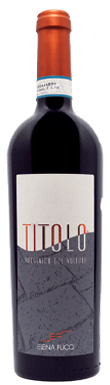

A refined, elegant expression of Aglianico. Lifted floral aromas of rose and violet are accompanied by fresh cherry scents. The palate is vibrant and energetic; youthful bramble fruit dominates. Still very young, with plenty of grip and notable minerality, this has many years ahead of it. Aged for 12 months in first- and second-use barriques with various levels of toasting.
2022
Elena FucciAglianico del Vulture

Paternoster, Don Anselmo Superiore, Aglianico del Vulture, Basilicata, Italy, 2017
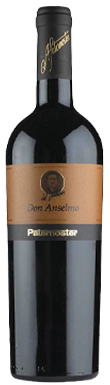
Don Anselmo is Paternoster’s flagship wine. Sourced from 50-year-old vines at 600m in Barile, the fruit is destemmed and fermented, before 12 months in Slavonian oak with a touch of second-use French barrique. It has a brooding nose of black cherry, balsam, clove and vanilla, with some tobacco in the background. The palate is full and powerful, with prominent tannins and a long, refined finish of dark fruit compote and a note of violets.
2017
PaternosterAglianico del Vulture
Donnachiara, Taurasi Riserva, Campania, Italy, 2020
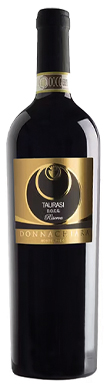
Grown in clay soils in the village of Montefalcione, this Riserva has bramble fruit, fresh cherry, tobacco and chocolate aromas. The palate is medium-bodied, with ripe fruit giving way to vanilla and clove, then mature fruit and sweet spice on the finish. Restrained and approachable, it's a crowdpleasing Aglianico.
2020
DonnachiaraTaurasi Riserva
Villa Raiano, Taurasi Riserva, Campania, Italy, 2015
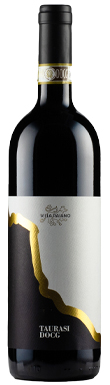
Produced with grapes from a 1ha plot of almost 80-year-old vines in Castelfranci, at 450m, this wine ages in 10hl Slavonian oak barrels for 24 months, followed by 12 months in steel tanks and a further 48 months in bottle prior to release. Attractive, concentrated dark fruit compote mingles with herbal, earthy tones. A long finish displays its brooding power.
2015
Villa RaianoTaurasi Riserva
Fontanavecchia, Aglianico del Taburno, Campania, Italy, 2018
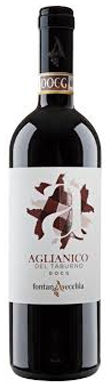
The estate’s entry-level interpretation is made with Aglianico grown in Torrecuso. With time in the glass, it opens up to reveal plum, Morello cherry and liquorice, supported by faint notes of earth, chocolate and tobacco. Full-bodied, plush and velvety; a year in French oak has softened it, but it still displays plenty of tannins and acidity.
2018
FontanavecchiaAglianico del Taburno
Elena Catalano, Vigna Monte Pino, Aglianico del Taburno, Campania, Italy, 2019
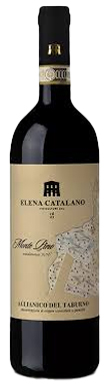
One of Taburno’s great-value wines, with grapes grown on a hilly position right on the edge of Benevento. Destemmed fruit is fermented in stainless steel, then the wine matures in barriques for 12-14 months followed by another year of bottle ageing. Starting to soften, it displays layers of dark fruit and sweet spices. A touch of pepper adds complexity to notes of violet and black cherry.
2019
Elena CatalanoAglianico del Taburno
