
Malvasia: A guide to this ancient grape and its sprawling worldwide family
If ever a grape was hard to pin down, it’d be Malvasia. Indeed it’s not even a single grape variety. In all of its many varied, and often completely unrelated guises, it has been the mainstay of popular wine styles across the centuries. Our expert takes a closer look.


It seems that everywhere you turn in the wine world, you’ll find a grape called Malvasia – according to the ultimate scientific grapevine database VIVC.de, there are as many as 290 of them. And many are delicious, so are definitely worth exploring.
The name ‘Malvasia’ is widespread across the Mediterranean basin and into the Atlantic as far as Madeira and the Canary Islands, and it would be logical to assume there’s a family connection.
However, in these days of DNA analysis, there are no dark family secrets and scientists have worked out that most grapes going by the name Malvasia are unrelated to each other – and in many cases, the name has been attached to other grapes entirely. The mystery is why Malvasia became such a popular name and where it came from.
Scroll down to see notes and scores for 12 outstanding Malvasia wines to seek out
Centuries of history
There are several colourful historical tales about Malvasia. In Richard III, first published in 1597, Shakespeare refers to the Duke of Clarence being drowned in a butt of Malmsey wine (the name for the sweetest Malvasia wine from Madeira).
In 1498, Leonardo da Vinci had a small vineyard of 16 rows of vines in Milan granted to him by Duke Ludovico Maria ‘Il Moro’ Sforza, as a reward for his works as he was completing The Last Supper. Genetic analysis of traces of vine roots suggests that the vines were Malvasia di Candia Aromatica – the vineyard has been replanted with Malvasia and makes wine again today.
But written history goes back much further, to 1214, when there is a reference to Malvasia wine being served ‘in abundance’ at a church delegation in Constantinople, so it was already likely to have been a prestigious wine by then.
At that time, it was closely connected to Monemvasia in Greece, a Byzantine fortress town built on a rock in the Laconia region of southeast Peloponnese. It was also the trading centre of the larger administrative area of Monemvasia. The Venetian rulers of the fortress of Monemvasia named it Malvasia and used the name for the wine that they exported.
It seems that only sweet wine from sundried grapes, or sometimes boiled must, was stable enough to be shipped long distances, and by the 14th century, records indicate that the wine from this region was called Malvasia in the markets of Venice; even wine shops were named Malvasie.
Originally this name referred to its origin – it was considered excellent, with a reputation so good that it became a luxury product under the name Malvasia-Monemvasia. As trade grew, the region couldn’t keep up with demand and traders started to ‘franchise’ the brand to places in Greece beyond Laconia (Paros and Crete).

At the peak of trade, the quantities required were so large that Muscats and other indigenous grape varieties were being used, and by the end of the 16th century, only a handful of pure Malvasias from the original grape were still being produced.
Gradually the name became a description of style rather than geographical origin – something that has happened numerous times elsewhere with names such as Champagne, Sherry, Port and Burgundy, before the EU became protective.
By 1540, the Monemvasia area came under Ottoman rule, which disrupted wine production here; however, due to steadily increasing demand, wines of similar style were produced even more widely around the Mediterranean and marketed as Malvasia.
Possibly Greek varieties had been introduced to establish vineyards, but over time, domestic varieties took over, probably better suited to local growing conditions. In time, if the wines were especially admired, the name Malvasia became linked to a designation of origin (eg, Malvasia Istriana or Malvasia Dubrovačka – see ‘Key Malvasia varieties to know’ box, below). And over time, wine styles shifted towards drier and more aromatic examples.
Modern manifestations
Many of the grapes called Malvasia are often hidden as part of blends or behind denomination names – just a few examples include Malvasia del Chianti as a permitted minor blending component in red Chianti DOCG, or Frascati, which must be 70% Malvasia di Candia and/or Malvasia di Lazio (known as Malvasia Puntinata locally).
The focus here will be on wines that feature Malvasia in their name.
One highlight has to be the revival, or as close as possible, of sweet PDO Monemvasia-Malvasia wine in its birthplace after a gap of five centuries. This was born from the dream of Yorgos and Elli Tsimbidi to recreate this ancient style, with the support of the late Dr Stavroula Kourakou Dragona, and the Universities of Athens and Thessaloniki.
The first release of this wine was the 2010 vintage, and the second was the 2012, bottled in 2016 after long ageing. It’s a Vin Liastos made from grapes sundried for at least two weeks on racks or on straw (an unusual hazard is wild boar, which have a taste for these sweet grapes).
It’s a blend of 60% of the Monemvasia-Malvasia grape variety with other local grapes that bring acidity to balance the natural luscious sweetness in this stunning piece of history in a glass.

Key Malvasia varieties to know
Malvasia Istriana
Main synonyms: Malvazija Istarska, Malvazija.
Main countries & area planted: Croatia 1,551ha, Slovenia 987ha.
Malvasia Dubrovačka
Main synonyms: Malvasia de Lipari, Malvasia de Sitges, Malvasia de la Palma, Malvasia di Bosa.
Main countries & area planted: Italy – Sicily 170ha & Sardinia 115ha, Spain – Catalonia 128ha & Canary/Balearic Islands 213ha, Croatia 32ha.
Malvasia Bianca Lunga
Main synonyms: Maraština, Malvasia del Chianti, Malvasia Toscana, Rukatac, Pavlos.
Main countries & area planted: Italy – Tuscany 1,247ha, Croatia 315ha, Greece [insufficient data].
Malvasia Bianca
Main synonyms: Malvasia di Rioja.
Main countries & area planted: Italy – Lazio 4,300ha.
Malvasia Bianca di Candida
Main synonyms: Malvasia Candia.
Main countries & area planted: Italy – Lazio 9,685ha, USA 486ha, Brazil 165ha.
Malvasia Volcanica
Main synonyms: Malvasia di Lanzarote.
Main countries & area planted: Spain – Canary Islands 786ha.
Malvasia del Lazio
Main synonyms: Malvasia Puntinata, Malvasia Gentile.
Main countries & area planted: Italy – Lazio 680ha.
Malvasia Riojana
Main synonyms: Alarije.
Main countries & area planted: Spain 4,905ha.
Malvasia Fina
Main synonyms: Boal, Malvasia Fina do Douro.
Main countries & area planted: Portugal 3,282ha.
Monemvasia-Malvasia
Main countries & area planted: Greece 81ha.
Malvasia Nera di Brindisi
Main synonyms: Malvasia Nera di Lecce, Malvasia Nera di Bari.
Main countries & area planted: Italy 1,264ha.
(Sources: Vinistra, Vivc.de, Slovenian official data, OIV; Quattrocalici. Compiled by Dr Kristijan Damijanic, October 2023. Based on data from 2020-2023).
Lost origins
No one quite knows when Malvasia switched to typically being dry wine – which is the main style today. There’s an intriguing story that features Malvasia Volcánica on the island of Lanzarote, where this is the predominant grape.
The El Grifo winery was founded in 1775 and is the oldest on the island, but it broke new ground recently with the first-ever winter-harvest wine in Europe made from Malvasia Volcánica, named Vendimia de Invierno.
Hard pruning after the harvest in September enabled a spring harvest in February 2023 from vines by the coast, where temperatures had already reached 25°C. The vine pest phylloxera isn’t present on this volcanic island and most vines are planted at 250m or more, benefiting from a distinct Atlantic influence.
The winter harvest wine (now all sold) was made by carbonic maceration of whole berries, but the producer also has classic wines: typically fresh, saline and vibrant, often with an aromatic orange blossom character.
The Istrian approach
Malvasia Istriana, or Malvazija Istarska as it’s more commonly known in Croatia and Slovenia, may be the most important Malvasia to take pride of place on wine labels.
Its origin remains a mystery due to a lack of close relatives in Croatia or abroad. Professor Ivan Pejić (University of Zagreb) explains: ‘Based on my previous research, the genotype of Malvasia Istriana is to some extent related to rare Croatian native varieties from Kvarner and the Dalmatian hinterland. However, up to now, we have not found any direct parent-offspring relationship and no links with Italy or Greece at all.’
The current best theory is that Istria is its homeland. And Malvasia Istriana has certainly made a home here as a superstar variety. In Croatia, it’s the second most important grape, despite only growing in Istria.
It only came to prominence between the world wars, when a meeting in 1931 identified it as a priority for the region for producing premium and luxury wines. Sadly, it went through a difficult socialist period as a volume workhorse, but several visionary producers rescued it in the 1990s and today it’s proving its mettle across all styles.

Malvasia Istriana is an adaptable grape with high quality potential, though fresh, fruity, steel-fermented styles account for about two-thirds of production. These are perfect for summer drinking by the sea, but even such ‘simple’ wines can defy expectations and keep for up to two decades.
At lower yields and from the best sites, it suits judicious use of oak, skin contact and even orange wines (see recommendations). It can display a slightly honeyed, jasmine character that can work well with fermentation and ageing in acacia wood.
To complete the picture, there are good traditional-method sparkling (such as Kabola’s Re Brut and Agrolaguna’s Festigia Blanc de Moi Brut) and even rare passito sweet wines such as Benvenuti’s Corona Grande.
Malvasia Istriana is also found in Slovenia’s part of northern Istria, producing nicely mineral, saline versions. It also does well inland, where it’s usually just labelled Malvazija.
The grape arrived in the Brda hills (abutting the border with northeast Italy) when the area was part of the Venetian Republic (ended 1797), and in the past, it was used to add aromatics to blends with the more neutral Rebula grape. In the 20th century, Malvasia Istriana survived socialism as it was planted in the lower, more frost-prone areas, since it’s more cold-resistant.
Malvasia Istriana is also gaining popularity as a single variety as it does well in sites with more clay, which don’t suit Slovenia’s flagship Rebula variety. It’s also able to ripen in drought years, thanks to the moisture in the clay.
Aleks Simčič (of Edi Simčič winery) describes it as having more Mediterranean herbal notes, typically rosemary and thyme, and white pepper aromatics, compared to the fruitier, floral coastal versions.

Other Malvasias to know
Croatia also has other Malvasias that aren’t related to the Istrian version, nor have they been found in Greece. Near Dubrovnik, Malvasia Dubrovačka (see ‘Key Malvasia varieties to know’ box) has quite a story of rescue.
The variety lays claim to being the oldest indigenous Croatian grape mentioned in writing, as an archive document from 1383 kept in Dubrovnik refers to it. Malvasia Dubrovačka had almost disappeared and was down to just 250 vines in 2001, yet it has now been revived to 40ha all around the Dubrovnik region.
It’s also being brought back in Sitges on Spain’s Catalonian coast, where the planting has gone from 2ha to 128ha. Vinified as a mineral, orange-scented dry wine in Croatia, it also makes great sweet wines and even orange wines in Lipari, off the northern coast of Sicily.
Then there’s another grape with a complex history of travel around the region. The variety called Maraština in Croatia is at least five centuries old and has been found to be genetically identical to Malvasia Bianca Lunga and Malvasia del Chianti. Plus, in Italy, there are several black-skinned Malvasia grapes, such as Malvasia Nera di Casorzo (Piedmont), di Basilicata, di Brindisi and more.
Gathering pace
The Malvasia story could continue further. There’s even an annual wine competition in Croatia, The World of Malvasia, organised by Istria’s producer association Vinistra, which aims to bring together as many versions of the grape as possible.
Twelve countries have entered their wines so far, including unexpected places such as Germany, Brazil, the USA and Australia, as well as better known Malvasia countries. In 2024, there were 340 entries from 11 countries.
Although the mystery may not be 100% solved, it’s clear that Malvasia is a name with a long, complex story, and in its many forms is worth exploring, whether for a snapshot of its glorious history or a taste of its amazing modern faces.
Gilby’s pick: 12 of the best from the heartlands of Malvasia
Related articles
- Grape spotlight: Malvasia de Sitges
- Born of ash and fire: A taste of Lanzarote’s volcanic wines
- Croatian winemakers celebrate record-breaking performance at the Decanter World Wine Awards
Pilato, Malvazija Sur Lie, Istria, Coastal, Croatia, 2020
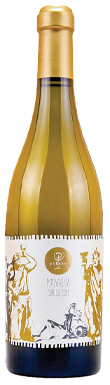

From a single vineyard site on red soil, this wine was spontaneously fermented and aged in barrel, adding textured layers and complexity. It shows fine...
2020
Pilato

Benvenuti, Anno Domini, Istria, Coastal, Croatia, 2020
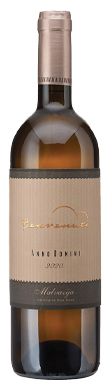
From two plots of vines, planted in 1946 and 1962, near the medieval town of Motovun, this is a smart, elegant wine with a silky...
2020
Benvenuti
Matošević, Alba Robinia Riserva, Istria, Coastal, Croatia, 2020
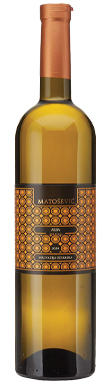
From a chalky slope at 200m and picked at just 1kg per vine. Quick pressing with no skin contact to highlight finesse, then fermentation and...
2020
Matošević
Agrolaguna, Festigia, Istria, Coastal, Croatia, 2022
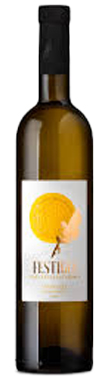
A classic example of Istrian Malvazijia from selected vineyards. Honeysuckle and white peach aromas are followed by a bright fresh palate with saline lemon, meadow...
2022
Agrolaguna
Edi Simčič, Malvazija, Goriška Brda, Primorska, Slovenia, 2022
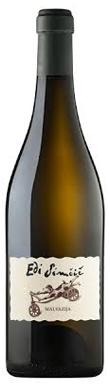
An inviting bouquet of Mirabelle and meadow herbs with fine well-integrated oak. To taste there are hints of honeydew, lemon peel and a touch of...
2022
Edi SimčičGoriška Brda
El Grifo, Lías, Lanzarote, The Islands, Spain, 2022
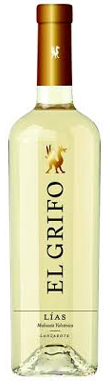
Inviting and delicate nose of apricot with a whiff of lemon blossom. To taste, it's whistle-clean, pure and juicy with hints of Asian pear, creamy...
2022
El GrifoLanzarote
Gasper, Malvazija, Goriška Brda, Primorska, Slovenia, 2022
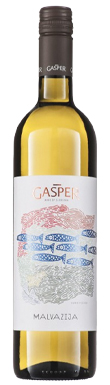
Green melon and lightly herby notes lead onto a mouthwatering and appealing dry wine with fresh lemon, crunchy apple and a vibrant mineral finish.
2022
GasperGoriška Brda
Kabola, Amfora, Istria, Coastal, Croatia, 2020
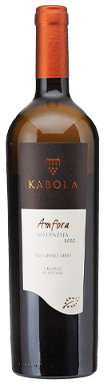
An intense golden yellow wine from the pioneer of amphora wines in Istria. It has a complex bouquet of golden plum, ripe apple, orange oil...
2020
Kabola
Cantina Orsogna, Spiritus Terrae, Terre di Chieti, Abruzzo, Italy, 2021
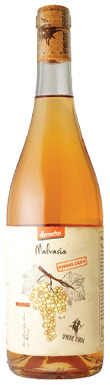
Vivid mid-orange wine with expressive notes of ripe peach, mango, rosewater and orange blossom. The palate is super-fresh and grapey with lots of orange blossom,...
2021
Cantina OrsognaTerre di Chieti
Crvik, Blasius, Dalmatia, Croatia, 2022
Wild yeast-fermented on skins for nine months in a large oak barrel, resulting in a beautifully drinkable orange wine. Enticing aromas of mock orange, nectarine...
2022
Crvik
Monemvasia, Vin Liastos Monemvasia-Malvasia, Monemvasia, Peloponnese, Greece, 2012
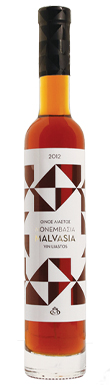
A gorgeous sip of history in a glass, descending from the sweet wines produced as far back as the 12th century in this peninsular sub-region...
2012
MonemvasiaMonemvasia
Cantine Colosi, Nurah Naturale, Malvasia delle Lipari, Sicily, Italy, 2022
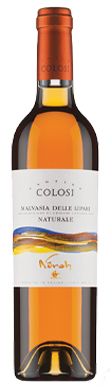
Produced from late-picked grapes grown on volcanic soil, gently sundried then fermented in stainless steel for purity of fruit expression. A deliciously sweet mouthful of...
2022
Cantine ColosiMalvasia delle Lipari
