
Ned Goodwin MW: In pursuit of regional identity in Australian Chardonnay
From the extreme expressions of the past to nuanced individuality, Ned Goodwin MW reflects on the changing style of Australian Chardonnay and recommends 12 bottles that demonstrate diverse regional character.


Australian Chardonnay has come of age. Since the bumptious iterations swaddled in oak of the 1990s, via the anorexic prototypes of the mid-2000s, the idiom has moved away from liminal extremes, to one that nestles comfortably between tension and ebullient fruit, with increasingly clear regional demarcations.
While effete comparisons with Burgundy’s best were often buoyed by the parochial drumbeat of the Australian press, there has long been something about Australian Chardonnay that is distinctly, well, Australian.
Scroll down to see 12 expressive Australian Chardonnays
Defining character
For a time it was the compulsive pursuit of lower alcohol levels, a knee-jerk reaction to external criticism – be it excessive fruit or alcohol – by an isolated wine culture held ransom to export success.
While racy, the results were skeletal wines nudging 12% alcohol with brittle edges, often exacerbated by zero to minimal malolactic fermentation in order to retain acidity.
Next, was excessive reduction. Reduction became a means for many producers to impart a sense of tension to their wines, giving an impression of greater freshness to the drinker.
This was achieved with oxygen-starving techniques, including attenuated natural ferments, extended lees handling and strategic injections of sulphur dioxide.
Some producers believed, often misguidedly, that resultant sulphidic notes in the wines, often called ‘flinty’ or ‘match-strike’, paid homage to the mineral torque of Chablis.
The infatuation with these stylised, winemaker-driven expressions, lingered for a decade or so. So different to anything prior, this ‘New Australia’ felt exciting.
But the leanness of the wines eventually became monochromatic, obfuscating regionality rather than celebrating it.
Reinventing Chardonnay
Despite it all, Australia’s isolation breeds a courageous, chameleonic capacity for reinvention. While reduction remains a balancing beam across which fruit and acidity are draped, it is handled more judiciously today. Oak handling is superior and lees work, more exacting.
Moreover, organic and biodynamic bonafides are on the rise, complementing better site selection, more astute viticulture and less interventionist winery practices.
Ripeness and extract are plied to confer textural complexity, rather than supine fruit flavours, or the vapid mantra ‘varietal typicity’, an oxymoron when it comes to a grape as inherently neutral as Chardonnay!
Indeed, well-hewn phenolics in Chardonnay are embraced in Australia, suggesting that the paint-by-numbers rubric of leaner styles has been superseded by more laissez-faire approaches to celebrating what a vineyard delivers.
A meld of fruit intensity and textural detail is the postcard that conveys regionality, according to winemaker Patrick Sullivan.
He posits: ‘Texture comes first and foremost from the vineyard and the concentration of fruit from long hang time, mineral rich soils and full malolactic.’ (Rather than stunting it with filtration and losing texture as a result.)
Sullivan also believes that an oxidative approach to firstly crushing and then pressing the grapes goes a long way to elevating texture, over gentler whole-bunch pressing, long the Australian norm.
Expressions of regionality
The best performing regions? Margaret River, Adelaide Hills, Tasmania, Macedon, Yarra Valley, Mornington Peninsula, Geelong pockets of central and south-western Victoria, Gippsland and sub-alpine Beechworth. Victorian regions clearly dominate.
I conducted a blind tasting to determine regional characteristics. The wines were all from the cool La Nĩna years.
Far from comprehensive, my tasting nevertheless represented a cross-section of Australian Chardonnay, while assuming that premium expressions are likely to showcase regionality over larger volume, entry-level styles made to a flavour profile. Certain regions were better represented than others due to volumes made and samples received.
Margaret River’s voice was loud and clear, with intense stone fruit flavours underpinned by maritime freshness. Or as Vasse Felix winemaker Virginia Willcock asserts: ‘The al dente phenolic infusion of the thicker-skinned Gingin clone, with its incredible high natural acid and flavour richness.’
Beechworth, too, offered ‘powerful precise wines that have an ethereal character with phenolics’, according to Savaterre winemaker, Keppell Smith.
Beechworth’s extreme Continental climate, dominant granitic geology and vineyards nudging 800m, impart a chiaroscuro of ripeness underlain by a stern mineral carapace.
I got a sense, too, of Tasmania’s rapier-like intensity, the citric thrum of the Adelaide Hills and orchard fruits of the Yarra. Yet, despite its diminutive production, it was the dialect of Gippsland that intrigued.
Gippsland’s ancient volcanic soils are aerated by giant earthworms. The picking window is some six weeks later than many other regions, particularly in the far western zone.
This attenuated ripening window is dictated by the arctic stepping stone of Bass Strait and its ferocious winds, cold currents and diurnal extremes.
The best Gippsland wines feel pushed by these margins and dialled up, with a DNA of textural swagger and baritone depth, rather than a soprano pitch to the fruit commonplace elsewhere.
Here, variegated winemaking approaches feel subsumed by the inimitability of place. These wines could not come from anywhere else and it is only a shame that there is not more to go around.
Goodwin’s pick: 12 must-try regional Chardonnays
Related articles
- By Farr: Revered Australian Pinot Noir and Chardonnay
- First taste: Giant Steps 2022 single-vineyard Chardonnays and Pinot Noirs
- Vintage report: Margaret River Chardonnay 2022 and Cabernet Sauvignon 2021
Vasse Felix, Heytesbury Chardonnay, Margaret River, Wilyabrup, Western Australia, Australia, 2022
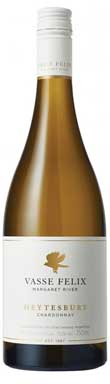

Sleek, taut and bursting with energy and succulence, this is excellent Chardonnay. A real thoroughbred, standing head and shoulders above all else in the tasting....
2022
Vasse FelixMargaret River

Bass Phillip, Premium Chardonnay, Gippsland, Victoria, Australia, 2022
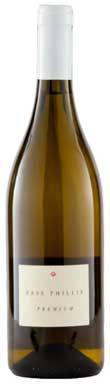
The first vines were planted at Bass Phillip in Leongatha, the heart of Gippsland dairy country, in 1979. Burgundy luminary Jean-Marie Fourrier began consulting for...
2022
Bass PhillipGippsland
Mount Mary, Chardonnay, Yarra Valley, Victoria, Australia, 2021
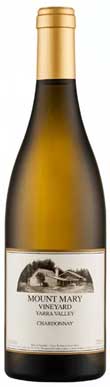
Tight out of the gates, with reductive hints of match strike. Edgy. Tensile. Yet the fruit unravels with a workout in the glass, lathering chewy...
2021
Mount MaryYarra Valley
Savaterre, Chardonnay, Beechworth, Victoria, Australia, 2022
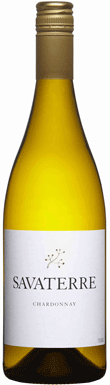
A wine that could be accused of being excessively reduced, this pushes the envelope. Yet the match-strike notes settle with air, integrating white peach, nectarine,...
2022
SavaterreBeechworth
Cullen, Kevin John Chardonnay, Margaret River, Wilyabrup, Western Australia, Australia, 2023
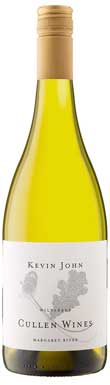
From the first whiff, this is an extremely intense wine. Quintessentially Margaret River, such is the palate-staining nature of it all, with brûlée, white peach,...
2023
CullenMargaret River
Domenica, Chardonnay, Beechworth, Victoria, Australia, 2023
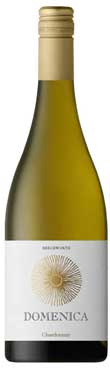
A mid-weighted Chardonnay of impressive power and just the right amount of reductive tension. Riffs on salted caramel, mirabelle, pungent mineral undertones and subtle flecks...
2023
DomenicaBeechworth
Leeuwin Estate, Art Series Chardonnay, Margaret River, Western Australia, Australia, 2021
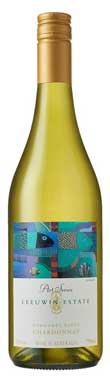
A stand-out of clarity, tension, textural precision and impressive concentration. Stone fruit, grapefruit, nougatine and anise, underlain by a wet pebble stone pungency. Flinty, yet...
2021
Leeuwin EstateMargaret River
Murdoch Hill, The Tilbury Chardonnay, Adelaide Hills, South Australia, Australia, 2023
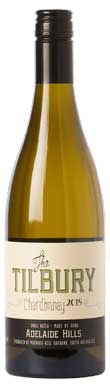
A crushed rock flintiness to oyster shell brininess, melding with verdant hints of mint and other garden herbs, smattered amid orchard fruits and citrus. Demur,...
2023
Murdoch HillAdelaide Hills
Patrick Sullivan, Baw Baw Chardonnay, Gippsland, Victoria, Australia, 2023
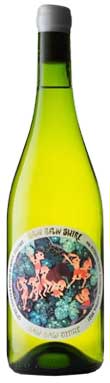
Notes of hazelnut, brûlée and salted liquorice, with flecks of candied lime, ginger and curry leaf. A thrust of extract and parry of juicy acidity...
2023
Patrick SullivanGippsland
Tolpuddle, Chardonnay, Coal River Valley, Tasmania, Australia, 2022
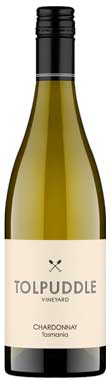
Yellow plum, grapefruit, kaffir lime, salted quince and beeswax. A little high acid-sour and angular across the finish as it stands, but there is concentration...
2022
TolpuddleCoal River Valley
Crittenden Estate, Kangerong Chardonnay, Mornington Peninsula, Victoria, Australia, 2022
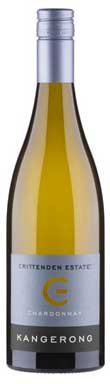
An easy drinking Chardonnay, if not a little loose around the seams in the context of the tasting. Notes of salted caramel, quince and peach...
2022
Crittenden EstateMornington Peninsula
Yarra Yering, Carrodus Chardonnay, Yarra Valley, Victoria, Australia, 2022
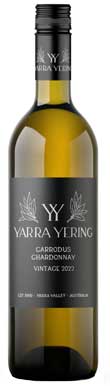
Notes of nougat and canned stone fruits. There is ample concentration to this mid-weighted expression, yet it lacks the requsite detail, finesse and poise of...
2022
Yarra YeringYarra Valley
