
Portuguese icon wines: 10 names you need to know
With its long winemaking history, Portugal is home to world-class wineries and winemakers, who are producing a varied range of icon wines. Sarah Ahmed profiles 10 producers you need to know.


The following list details 10 producers creating Portuguese icon wines with two tasting notes for each producer listed at the end; the first, higher-scoring wine is their must-try icon wine; the second is their benchmark style.
Scroll down to see tasting notes and scores for Portuguese icon wines to try
Adega Cartuxa
Wines bearing the Pêra-Manca label are steeped in history.
Rooted in Evora, Alentejo, they were mentioned in a letter from Evora Town Council to King João II in 1488 and, reputedly, aboard Pedro Alvares Cabral’s ship when he claimed Brazil for the Portuguese crown in 1500.
During the 19th century, Pêra-Manca reds won gold medals in Bordeaux. In 1990, Adega Cartuxa revived the label for its ambitious flagship red and white wines, celebrating native grapes. They swiftly won cult status.
The full-bodied white – Hermitage-like with age – was at the vanguard of prestige modern white winemaking in Alentejo.
Alvaro Castro

When monopolistic legislation concentrated Dão wine production in the hands of cooperatives for half a century, Alvaro Castro’s father dropped the winemaking baton.
Fortunately, his son’s take on the region’s potential was shaped by family friend Alberto Cardoso Vilhena, a luminary of Dão’s viticulture and oenology institute: Centro de Estudos Vitivinícolas de Nelas (CEN).
‘Full-bodied, never heavy or with much alcohol, always with acidity,’ his wines were Castro’s ‘target’ when he resumed winemaking at Quinta da Pellada in 1980, leading a vigneron renaissance.
Flagship Touriga Nacional, Carrocel, is the ultimate tribute to Cardoso Vilhena, a champion of the region’s emblematic grape.
Casa Ferreirinha

Meaning ‘House of little Ferreira’, Casa Ferreirinha has arguably outshone its parent, Ferreira Port House.
Upon foundation in 1952, the first dedicated Douro wine producer made Barca-Velha, Portugal’s icon of icons. Today, chief winemaker Luís Sottomayor has 170ha at his disposal (including Quinta da Leda, the backbone) ‘to compose the best blend possible’.
Built to age (indeed only declared after several years’ bottle-ageing), Sottomayor sticks to the original formula, sourcing grapes from different elevations for concentration, balance and structure.
Following the most draconian selection, only 20 vintages of Barca-Velha have been declared. ‘When it arrives, it says I’m here,’ glows Sottomayor, comparing its presence to a lion.
José Maria da Fonseca
Owned by the Soares Franco family since the 1820s, José Maria da Fonseca is Portugal’s oldest, most venerable producer of Moscatel de Setúbal, Portugal’s other world-class fortified wine.
Created in 1849, the Moscatel de Setúbal brand (made from Muscat of Alexandria) won a gold medal at the Universal Exhibition of Paris in 1855.
‘Our Moscatel de Setúbal was consumed in Europe’s principal royal houses,’ says António M Soares Franco.
Rare stocks of exceptionally concentrated, complex centenarian wines are highly sought after.
Sourced from the Serra da Arrábida clay/limestone slopes, this vinous nectar retains remarkable freshness. Maceration on skins enhances structure. Lengthy ageing in barrel lends great concentration and complexity.
Luís Pato

Since producing his first Baga in 1980, Bairrada’s boutique pioneer has put this highly strung grape variety on the map.
The self-described ‘classicist and rebel’ conceived his flagship red with typical derring-do. Challenged by a friend to grow Baga on less favourable sandy soil, he planted ungrafted (Pé Franco) high-density vines at his family estate, Quinta do Ribeirinho in 1988.
These shy-bearing vines produce fuller-bodied, more concentrated Baga, with firmer tannins and acidity than the region’s classic chalky clay (which produce Pato’s other Bagas, including Vinha Barrosa and Vinha das Valadas, his second, riskier ungrafted vineyard).
Formidable, Quinta do Ribeirinho Pé Franco is exceptionally long-lived.
Niepoort

Founded in 1842 by Franciscus Marius van der Niepoort, in 1991 his great-great-grandson Dirk Niepoort added a fresh, now equally prestigious string to the Port house’s bow, launching Redoma – Niepoort’s first Douro wine.
Unlikely as it sounds, a trip to the dentist inspired Charme, a boundary-pusher for elegance. But then Jan-Erik Paulson is also a leading authority on mature wines.
Niepoort says Paulson’s bottle of La Tâche 1991 prompted him to ask: ‘How is it possible that the wine is so aromatic, yet so fine?’ Picked early, Charme is fermented with 100% stems to ‘fool everyone and make the wine look like it has more acidity than it actually does’.
Quinta do Crasto
Niepoort is not the only producer to take inspiration from Domaine Romanée-Conti.
‘We want Vinha Maria Teresa to be Portugal’s DRC,’ says Miguel Roquette of Quinta do Crasto.
His family, long-term Port wine growers, produced their first Douro wines in 1994 and, by 1998, had ring-fenced two flagship parcels, Maria Teresa and Ponte. Located on the steep terraced slopes of a spur overlooking the Douro river, Maria Teresa enjoys the most dramatic location.
With over 50 native varieties, this centenarian field blend vineyard produces wines of mind-blowing opulence, balance and longevity in top years. Sourced primarily from both parcels, Vinhas Velhas Reserva – a smart buy – is robust, less ‘glossy’.
Quinta do Mouro

Miguel Louro acquired Quinta do Mouro in Alentejo in 1979 with help from his poker game winnings.
The winning streak deserted the dentist when he tried to rear cattle, but returned after he planted the vineyard in 1989, gambling on Cabernet Sauvignon in addition to Portuguese varieties.
Louro took his inspiration from Bordeaux, Barolo and Rioja, as well as local classics, including Mouchão (whose lead grape – Alicante Bouschet – also steers Mouro’s blends).
Grown at 400m elevation on lean, schist soils, Quinta do Mouro and, especially Quinta do Mouro Rótulo Dourado (‘Gold Label’, launched in 2000), are well-structured, long-lived and complex.
Quinta do Vale Meão
For centuries, the Douro Superior was a seat of agriculture, not viticulture. Harbouring ambitious plans to make fine table wines there, Dona Antónia Adelaide Ferreira acquired Quinta do Vale Meão in 1877.
She did not see her plans for the 30th, final estate in her glittering Douro portfolio come to fruition. However, named after the diminutive lady (‘little Ferreira’), Casa Ferreirinha Barca Velha was originally – and for many years – made and principally sourced from Meão.
Owned by her great-great-great-grandson, Francisco Javier de Olazabal and his children since 1994, they started making Quinta do Vale Meão in 1999 which, like Barca Velha, gloriously vindicates Dona Antónia’s vision.
Viúva Gomes
The old-fashioned spelling of Colares (Collares) on the beautiful labels of Viúva Gomes bottles speaks to the distinguished winemaking history of this region, dating back to 1908. And you can taste it.
Having bought the winery lock, stock and barrel in 1988, the Baeta family still sell ethereal examples of this austere classic from the 1960s.
Continuing the faith, they champion the unique Ramisco (red) and Malvasia de Colares grapes from the DOC’s precious remaining 12ha of ungrafted vines, now with sympathetic elevage in used French oak.
For the new Pirata label, old vine cuttings transplanted from sand to calcareous soils provide ‘a different perspective from the classics’, says winemaker Diogo Baeta.
See tasting notes and scores for 10 Portuguese icon wines to try
Wines are listed alphabetically by producer. The first, higher-scoring wine is their must-try icon wine; the second is their benchmark style.
You might also like:
Rare museum wines from Portuguese icons
Top 20 Portuguese Atlantic whites to try
Adega Cartuxa, Pêra-Manca White, Évora, Alentejo, Portugal, 2018
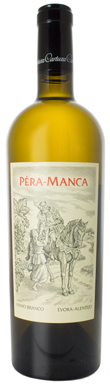

Hand-picked grapes from older vineyards produce an opulent nose and palate, with ripe but muscular apricot and pineapple, zesty lime shred and lifted lime blossom...
2018
Adega Cartuxa

Adega Cartuxa, Tinto Reserva, Évora, Alentejo, Portugal, 2015
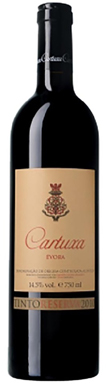
Deep opaque crimson, the oak (100% new) initially on top, the fruit dark and brooding. Opening up, the black berry and currant fruit is buffed...
2015
Adega Cartuxa
Álvaro Castro, Quinta da Pellada Carrocel, Serra da Estrela, Dão, Portugal, 2015
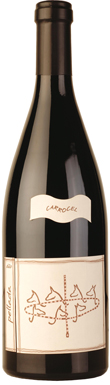
Old Touriga Nacional clones from 45-year-old vines produce violet and bergamot-laced summer compote fruits: blackberry, blueberry, plum and red cherry. Originally aged in new oak,...
2015
Álvaro Castro
Álvaro Castro, Quinta de Saes Reserva Estagio Prolongado, Serra da Estrela, Dão, Portugal, 2015
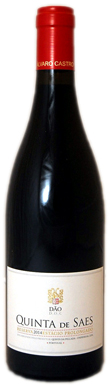
From the estate’s oldest 50-year-old field blend vines with 30% of Touriga Nacional, the supple strawberry and raspberry fruit is creamy yet fresh and juicy...
2015
Álvaro Castro
Casa Ferreirinha, Barca Velha, Douro Superior, Portugal, 2011
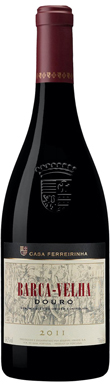
Terrific structure, depth of colour and flavour articulate an outstanding year. Great warp and weft of ripe fruit (blackberry, strawberry, plum, dried fig and jam)...
2011
Casa Ferreirinha
Casa Ferreirinha, Quinta da Leda, Douro Superior, Portugal, 2016
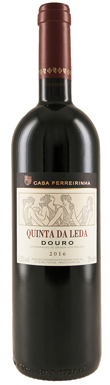
A particularly elegant expression from the estate which forms the backbone of Barca Velha. Fragrant, with lifted violets and bergamot, petrichor minerality, subtle smoky clove,...
2016
Casa Ferreirinha
José Maria da Fonseca, Moscatel 1919 Kingsman Edition, Setúbal, Portugal, 2019
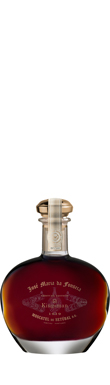
Cellared by José Maria da Fonseca for over a century in seasoned 500-litre oak barrels, this 500-bottle release is ultra-concentrated and unctuous, with molasses, raisins,...
2019
José Maria da Fonseca
José Maria da Fonseca, Domingos Soares Franco Private Collection (Cognac), Setúbal, Portugal, 2001
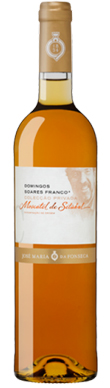
Bright amber with pronounced floral lift to the fresh, persistent nose and palate. A backbone of grapefruit acidity brings line and length to its marmalade,...
2001
José Maria da Fonseca
Luis Pato, Quinta do Ribeirinho Baga Pé Franco, Bairrada, Portugal, 2015
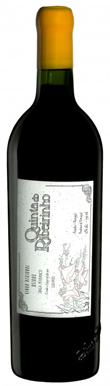
From an experimental ungrafted, close-planted vineyard that was planted in 1988. Intriguing ink, iodine and earth notes and, with air, glimpses of clove and cassia,...
2015
Luis Pato
Luis Pato, Vinha Barrosa, Bairrada, Portugal, 2016
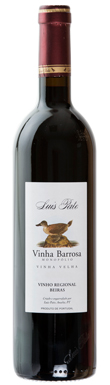
Reflecting the forest surrounding Pato’s oldest vineyard, this translucent crimson Baga reveals pine needle, chinato herb and anise notes to its jewel bright, crunchy pomegranate,...
2016
Luis Pato
Niepoort, Charme, Cima Corgo, Douro Valley, Portugal, 2018
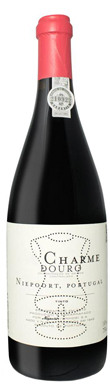
Inspired by La Tâche, elegance and precision, intensity not density, are the goals. Early-picked grapes from centenarian vines are whole-bunch fermented and aged with just...
2018
Niepoort
Niepoort, Redoma Tinto, Cima Corgo, Douro Valley, Portugal, 2018
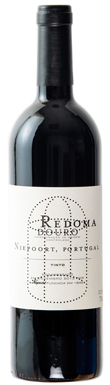
Barely there oak and delicate cedar, cinnamon and anise spices highlight the shift to whole bunch ferments and ageing in old wood. The strikingly fluid...
2018
Niepoort
Quinta do Crasto, Vinha Maria Teresa, Cima Corgo, Douro Valley, Portugal, 2017
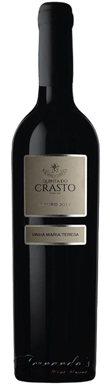
This potent expression of Vinha Maria Teresa (a 4.7ha parcel) is loaded with dry extract. Sculpted beneath the corset of perfumed, kid glove oak and...
2017
Quinta do Crasto
Quinta do Crasto, Vinhas Velhas, Cima Corgo, Douro Valley, Portugal, 2017
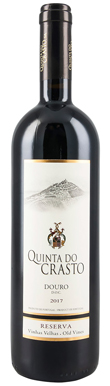
Sourced from vines averaging 70 years, with a robust backbone of tannin, Crasto’s pioneering red retains a ruggedness, despite the toasty, creamy oak (including 15%...
2017
Quinta do Crasto
Quinta do Mouro, Gold Label, Alentejano, Portugal, 2013
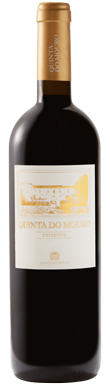
Layer upon layer of deliciously mellow aromas and flavours unravel in this Estremoz estate’s rich, well-structured, best barrels blend. Blackcurrant, blackberry, strawberry, dried fig, sweet...
2013
Quinta do Mouro
Quinta do Mouro, Tinto, Alentejano, Portugal, 2014
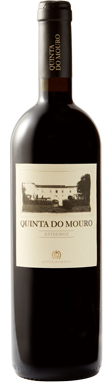
A smart buy – the same vineyard and varieties as Mouro Gold, but aged in French and Portuguese oak (50% new), rather than 100% new...
2014
Quinta do Mouro
Quinta do Vale Meão, Tinto, Douro Superior, Portugal, 2018
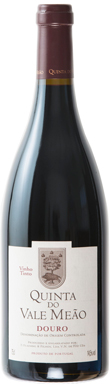
A touch lighter in hue and palate-weight than previous vintages, but no less confident, the 2018 is a vibrant, immensely appealing vintage. It reveals this...
2018
Quinta do Vale Meão
Quinta do Vale Meão, Meandro, Douro Superior, Portugal, 2018
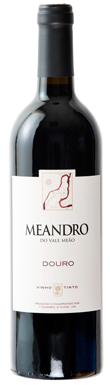
A little reduced on the nose, with graphite-edged black berry and cherry fruit to nose and palate, dried herbs, bergamot and toasty oak nuances. Still...
2018
Quinta do Vale Meão
Viúva Gomes, Collares Branco, Colares, Portugal, 2019
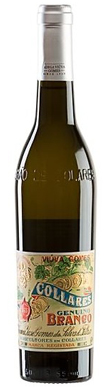
Yellow/gold, with iodine and grapefruit to the nose and a bone-dry palate, with freshly cut apple, salted lime and incipient orange peel and dried honey...
2019
Viúva Gomes
Viúva Gomes, Pirata da Viúva Malvasia, Portugal, Portugal, 2019
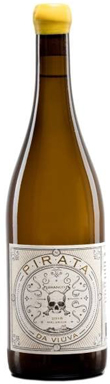
From young vines on Sintra’s clay/limestone (not Colares DOC sand), grafted to the unique Malvasia de Colares clone. Crisp mouth-watering acidity animates the bosky (brine-edged)...
2019
Viúva Gomes
