
Producer profile: Château Lafleur
With a history stretching back several centuries and an understated yet focused approach to maintaining the highest standards in both vineyard and winery, Pomerol estate Château Lafleur is a producer to seek out. Jane Anson reports...


Within five minutes of arriving for my first visit to Château Lafleur back in 2010, I was crouched down alongside a random (to me, although definitely not to then-owner Jacques Guinaudeau, who was explaining its importance) Cabernet Franc vine, hands by turn in the soil then examining the leaves, nodding away vigorously.
Scroll down for Jane Anons’s Château Lafleur tasting notes and scores
Many of us know that Pomerol has its own rules that operate on an entirely different level to those in the rest of Bordeaux, but there are a few that you specifically need to keep in mind if you are planning a visit to Lafleur.
First of all, the estate follows the appellation’s adage that the prestige of a property is inversely proportional to the fanfare with which it announces itself. That means you’re not going to find any trace of a sign or nameplate, so make sure you have detailed directions.
And next up, remember that all of the action almost every time you visit will be outside in the vineyard, so make sure you dress accordingly. You can get away with heels in the Médoc, but not here.
This is true for everyone. When you arrive at Lafleur, you are just as likely to see the owners Baptiste and Julie Guinaudeau – who have now taken over from Baptiste’s parents, Jacques and Sylvie – with their boots on and secateurs in hand as you are any other member of the small team that works here.
Château Lafleur at a glance
Size 4.58ha (out of 800ha in Pomerol total)
Second wine Les Pensées de Lafleur, from a specific 0.68ha plot
Owners Baptiste and Julie Guinaudeau as of 2012, having taken over from Baptiste’s father Jacques
Cellarmaster Omri Ram (though the team here works across all tasks)
Consultant Vincent Dupuch
Other wines produced Château Grand Village, Les Champs Libres, Les Perrières de Lafleur (previously Acte) – all Bordeaux Supérieur
Master of understatement
Things are low-key, obsessively so, everyone casual and friendly but laser-focused on the job in hand. Even the beautiful new winery – completed for the 2018 vintage – is resolutely understated, made up of a series of small functional rooms but without the killer space that you routinely expect to see in the Médoc or in St-Emilion.
What you have instead are small signs, subtle flashes where you can intuit that something special is happening.
The neighbours provide one big clue (although most of them have forgone signs also, so you have to know what you’re looking for). There’s Château La Fleur-Pétrus off to one side, Petrus on the other, Vieux Château Certan just a stone’s throw behind that.
This is prime Pomerol plateau, that section of land that runs between 30m and 40m altitude and covers about 25% of the appellation’s total 800ha surface area. That means about 200ha studded with some of the most sought-after and prestigious vines in the world, each hectare worth at least €2m, and probably far more, if any were ever to come up for sale.
Château Lafleur holds a special place on this plateau, forming as it does a yin and yang with its neighbour Petrus. If you don’t believe in terroir in Bordeaux, you could do a lot worse than to walk through these two vineyards, which touch in places and yet manage to produce such different wines in the glass.
Where Petrus is pure sticky clay, 100% Merlot and all about powerful generosity, at Lafleur the clay is shot through with gravel, quartz and flint. This gives its wines a more austere start in life, where the full 50% Cabernet Franc (going as high as 60% in 2010) gives a monastic, almost Left Bank feel when young, until it uncurls to reveal the most magical, heart-stopping aromatics and slate-textured minerality that get the blood racing like few other wines in the world.

Price stability
Despite this, Lafleur doesn’t reach quite the same heights on the secondary market as its neighbour.
Even though there is less of it (4.5ha to Petrus’ 11.7ha, making about 1,000 cases each year compared with 2,000 or more at Petrus), its prices have tended to be a little more stable, although this is changing as the secondary market catches up.
You’re looking at more than £1,000 per bottle for the 2015 and 2016 vintages in the UK market right now (the 2016, according to Kristian Nooitgedagt of Eleanor Wine, has risen in price more than 150% since release).
Other vintages, notably the 2013 and 2014, have remained more stable since release, with the 2014 available at less than £500 per bottle and the 2013 at under £250 (the only vintage in recent years that has dropped below release price, according to Liv-ex figures, although the same trading platform shows that while wines on the Liv-ex 100 as a whole have risen an average of 4% over the past 20 physical vintage releases, the average rise for the last 20 physical vintages of Lafleur has been 22.33%).
Lafleur doesn’t sell through the usual négociant system of Bordeaux, instead choosing to keep distribution controlled.
Until 2019 it worked with Pomerol powerhouse JP Moueix for a part of its distribution (the same company looked after the vineyards for a few years before the Guinaudeaus arrived), but the team has now decided to take all decisions in-house, selecting the importers for different markets to ensure they stay as close to the end consumer as possible.
‘We are looking for stable prices and long-term relationships,’ cellarmaster Omri Ram says, explaining the decision to take full control of selecting the estate’s commercial partners. ‘We keep about 15% of production back each year for our own library, and the overall production is small and pretty stable in volume from year to year. We are not big fans of low yields and do not believe that it is essential for quality, and certainly not for balance in the wine. So we don’t artificially crop low, but our vineyard naturally gives about half a bottle of wine per vine (compared with most red-grape vines, which give one bottle), partly because of the soils and partly because we have old vines and they simply don’t produce huge quantities of fruit.’

Family affair
And, just like that, we are neatly taken back to where those at Lafleur feel most comfortable – the vineyard. This is a place with a long history, first recorded in the 15th century, that has been in the hands of the Guinaudeau family and their ancestors for nearly 150 years. This particular branch has been making the wine since the mid-1980s, but did not become sole owners until 2002.
‘My parents inherited a vineyard that had never seen any weedkillers or fertilisers, and that had none of the new Merlot clones that had been so fashionable in the 1970s and 1980s,’ says Baptiste Guinaudeau. ‘All we had to do was keep practising the same careful, conservative approach.’
‘The Guinaudeaus are an essential part of the three pillars of Lafleur,’ says Ram, calling out their modesty. ‘First is the terroir. Then the vine material, these incredible old vines that date back in some places over a century. And they are the human factor. They are workaholics, they never take holidays. I know Jacques and Sylvie took their first real break since taking over in 1985 during the summer of 2003, when they went to Ireland. But after two days they came back because they felt that the heat of that summer would mean the vineyard needed them. They see themselves as gardeners rather than viticulturists.’
Attention to detail
And, like gardeners, the exact make-up of the soil is essential. A study in 1999 revealed 13 different soil types at Lafleur, and finding ways to get the most out of them is what drives the obsessiveness of the team. Much of what they do goes against received wisdom, because the hotter, gravel-dominant sections are given over to the early-ripening Merlot, while on the cooler clay-heavy sectors they plant Cabernet Franc – they call it by its 19th-century name Bouchet, reflective of their own genetic strain of the variety that dates from the early 20th century and is used for massal selection (taking cuttings from existing old vines to propagate new ones, aiming to preserve the best-quality plant material and clonal diversity within a vineyard or site).
And to get an idea of just how carefully they follow the needs of individual vines at the estate, you only need to know that the second wine, Les Pensées de Lafleur, comes from a single diagonal strip of 0.68ha of sandy-gravel-clay soils that runs across the handkerchief- shaped vineyard and gives a more easily seductive style of wine, compared with the powerful grapes for the first wine.
The difference between the two is almost invariably in the intensity, the texture and the weight in the mouth – they are made in the same winery, with the same methods, and both see 20% new oak, which is one of the lowest percentages for this level of château across the whole of Bordeaux. The exact proportion of the two wines changes slightly from year to year, with a few vines on either side of the strip making it into Lafleur or Les Pensées, depending on the specific conditions of the vintage.
‘The margin for progression in great wines is in the nuance,’ is how Guinaudeau puts it.
Meanwhile, Ram has an even simpler explanation: ‘It’s a combination of intuition, experience and luck, but mostly just being there and paying attention.’
Château Lafleur: a timeline
15th century First records of a Lafleur plot within Domaine de Gay
Mid-19th century Village of La Fleur recorded, with a farmhouse that grew vines
1872 Henri Greloud (the owner of nearby Château Le Gay and great-great- grandfather of Jacques Guinaudeau) purchased a small plot of vines from a Monsieur Bernier
1915 André Robin, nephew of Greloud, becomes owner
1946 Marie and Thérèse Robin inherit the estate from their father André
1982 Moueix family begins looking after the property
1985 Jacques Guinaudeau begins renting the vines after the death of his great-aunt Thérèse Robin, taking over from the Moueix family
1987 First vintage Les Pensées de Lafleur (no Lafleur made)
1999 Soil study shows 13 different soil types on the Château Lafleur estate 2001 Marie Robin dies, aged 90
2002 Full ownership passes to Jacques Guinaudeau, with the family selling its shares in Château Le Gay to fund the purchase
2005 Jacques’ son Baptiste begins working alongside his father
2018 The new winery is completed
See Jane Anons’s Château Lafleur tasting notes and scores
You may also like
Bordeaux first growths: How the 2000 vintage tastes nowTaking exciting new directions: 10 Bordeaux producers to watchChâteau Palmer wines: The ‘5’ and ‘0’ vintages from 1990 to 2015Pomerol vertical: Château La Cabanne
Château Lafleur, Pomerol, Bordeaux, France, 2002
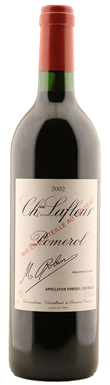

Always one of the most aromatic of Bordeaux wines, the 2002 is on its way to becoming a classic Lafleur, effortlessly overperforming the vintage. 2002...
2002
Château LafleurPomerol

Château Lafleur, Pomerol, Bordeaux, France, 2001
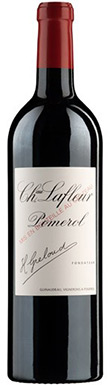
This captures the magic of Lafleur and is utterly moreish. It is so silky, with hints of truffle, tobacco and sweet blackberry fruits from the...
2001
Château LafleurPomerol
Château Lafleur, Pomerol, Bordeaux, France, 2007
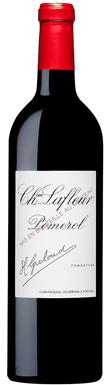
A winemaker's vintage ('extreme Oceanic' is how Lafleur's cellar master Omri Ram put it), where you really had to know how to react to the...
2007
Château LafleurPomerol
Château Lafleur, Pomerol, Bordeaux, France, 2003
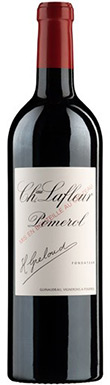
From the first minute your nose hovers over the glass, you get a burst of saffron and black pepper spice. This is a different interpretation...
2003
Château LafleurPomerol
Château Lafleur, Pensées de Lafleur, Pomerol, Bordeaux, France, 2010
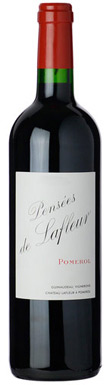
Les Pensées comes from a tiny 0.7ha finger of vines that reaches across the vineyard of Lafleur. It has been made since Jacques Guinaudeau took...
2010
Château LafleurPomerol
Château Lafleur, Pomerol, Bordeaux, France, 2010
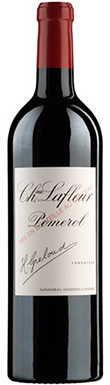
The paradox of Bordeaux is that some of the greatest vintages are almost unapproachable until they are 20 years old or more. 2010 almost certainly...
2010
Château LafleurPomerol
Château Lafleur, Pensées de Lafleur, Pomerol, Bordeaux, France, 2013
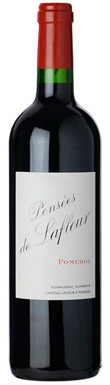
Confident stuff to finish the tasting with a pair of 2013s; not just the main wine but Pensées also. This is clearly still young in...
2013
Château LafleurPomerol
Château Lafleur, Pomerol, Bordeaux, France, 2013
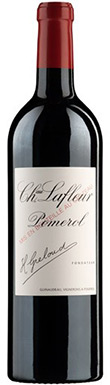
The reticent blackberry nose has lift and charm, and the palate is medium-bodied rather than intense and powerful. It's graceful and stylish, yet doesn't lack...
2013
Château LafleurPomerol
Château Lafleur, Pomerol, Bordeaux, France, 2016
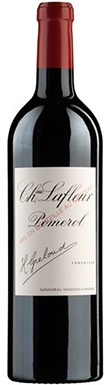
A long way from being ready to go – I would suggest at least another six years – but it is going to be worth...
2016
Château LafleurPomerol
Château Lafleur, Les Pensées de Lafleur, Pomerol, Bordeaux, France, 2005
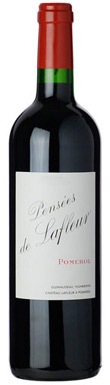
The Château Lafleur in this vintage is just an incredible wine, but I also strongly recommend trying the Pensées, which is absolutely ready to drink:...
2005
Château LafleurPomerol
Château Lafleur, Pomerol, Bordeaux, France, 2000
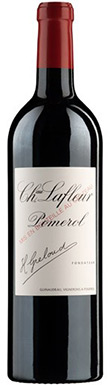
A legendary wine, with reason. I have only tasted this once, at the home of a very kind friend, exactly as it should be drunk...
2000
Château LafleurPomerol
