Get our daily fine wine reviews, latest wine ratings, news and travel guides delivered straight to your inbox.
You are now subscribed
Your newsletter sign-up was successful
An account already exists for this email address, please log in.
These indigenous-owned wineries in California add extra layers to the idea of 'terroir'
As the state’s wineries increasingly embrace sustainability, indigenous-led producers offer a perspective on terroir shaped by generations of stewardship.
The Yocha Dehe Wintun Nation’s Séka Hills property encompasses several crops, including olive trees for olive oil, whose products are featured in the tasting room.
Terroir, or sense of place', is one of wine’s most enduring ideas. While many drinkers equate it with soil and climate, indigenous-owned wineries across California offer a broader interpretation of what terroircan mean.
Drawing on long-standing traditions of stewardship and care for the land, these producers are expanding the conversation around sustainable farming while crafting distinctive wines and visitor experiences.
At Bellacana Vineyards, owned by the Dry Creek Rancheria Band of Pomo Indians, the vineyard – whose name combines ‘beautiful’ in Italian and ‘river’ (‘cana’) in Southern Pomo – is part of a much older story.
The tribe has 55 hectares (138 acres) planted in Sonoma County’s Alexander Valley, and Lisa Lellis, board member and tribal member, describes the property as more than a vineyard.
When she looks across the vines, she also sees wildlife, a salmon run and native plants and oak trees that fed her ancestors.
'The vineyard is really the newest chapter in a much older relationship with this place,' she says.
A centuries-old introduction to wine
At the Mission at San Juan Capistrano, a painting on display depicts what Acjachemen life might have been like before first contact with Spanish missionaries.
That idea that a vineyard can be incorporated into a much older relationship with the land is important when considering California’s wine history.
Decanter newsletter
Get our daily fine wine reviews, latest wine ratings, news and travel guides delivered straight to your inbox.
While indigenous tribes foraged from wild grapevines, Spanish missionaries began planting the first recorded wine grape varieties in the state and making wine in the 1770s, as part of the Mission system.
Often left out of that story are the native hands that planted and tended those vines.
For Chris Lobo of Native Hands Wines, that history is personal. His ancestors, members of the Juaneño Band of Mission Indians, Acjachemen Nation, built the mission at San Juan Capistrano.
Hundreds of his family members are buried there, and it has been the site of marriages, baptisms and funerals for generations of his family.
‘The mission system has been an extremely sensitive topic‘, he says, ‘But I don’t have the luxury to not talk about it.’
Rather than avoiding that history of coercion and exploitation, Lobo, who can trace his lineage for nine generations through the mission’s sacramental records, wants to bring greater historical accuracy to the story.
An ancient connection to the earth
The Pomo Indians have long used sustainable farming techniques, such as cover crops between the vines, to preserve the health of the land.
(Image credit: Courtesy of Bellacana Vineyards)
For indigenous producers, re-establishing a relationship with the land does not necessarily begin with planting a vineyard.
At Séka Hills, owned by the Yocha Dehe Wintun Nation, agriculture is at the centre of the tribe’s enterprises.
In their Patwin language, 'séka' means 'blue', referring to the Blue Hills along the west side of the Capay Valley in the tribe’s homeland, northwest of Sacramento.
Jim Etters, the Nation’s director of land management, has spent 23 years working with the Tribal Council to develop agricultural operations that include almonds, tomatoes, olives, wine grapes and other crops, as well as cattle ranching.
The tribe has 11ha (29 acres) planted to grapes, but does not handle winemaking.
Etters reports monthly to a committee of 15 tribal citizens who share their vision and insight.
He describes the Nation’s relationship with the land as ‘unlike anything I’ve ever seen – it’s bigger’.
He also goes on walkabouts with tribal elders. ‘To walk with them, and to watch them, as they look over the landscape, it’s really something special,’ he says.
Terroir as a living ecosystem
Camins 2 Dreams co-owners Tara Gomez, a member of the Santa Ynez Band of Chumash Indians, and her wife, Mireia Taribó
(Image credit: Courtesy of Camins 2 Dreams)
That idea of interconnectedness also informs the wines of Tara Gomez, a member of the Santa Ynez Band of Chumash Indians and owner of Camins 2 Dreams with her wife, Mireia Taribó.
The couple makes minimal-intervention wines, partnering exclusively with organic, biodynamic and regenerative vineyards in San Benito and Santa Barbara counties, with a focus on Sta Rita Hills.
For Gomez, terroir extends beyond soil, climate and geography. It also includes animals, farmers and vineyard workers, as well as the generations that came before.
The goal is not simply to take from the land, but to work in harmony with it and give back.
Darin Winton, owner and winemaker at Cellar 13 Winery in Livermore, is one-quarter Cherokee and a registered, voting member of the Cherokee Nation.
Winton looks at the vineyard holistically as an ecosystem rather than something to be controlled.
When dealing with pests, he does not want to eradicate one species – squirrels, for example – only to harm another animal such as owls, which play a role in the vineyard environment.
Culture also shapes how these wineries tell their stories. At Séka Hills, the checkered pattern incorporated into the logo references the basketry for which the Yocha Dehe Wintun Nation is known.
Bellacana’s logo centers on a Pomo basket based on an actual basket from the tribe, incorporating grapes to represent abundance, along with oak branches and acorns.
The native oaks are part of the landscape around the vineyard, and acorns were an important food source for the tribe’s ancestors.
At Cellar 13 Winery, Winton incorporates Cherokee names for the wines and original label artwork by his uncle, John Balloue.
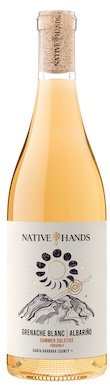
Native Hands gives each wine an English name and a Native name, with the labels representing a time, place, ceremony or position of the Mission Indians before first contact.
Lobo’s grandmother was one of the last fluent speakers of Uto-Aztecan from the Takic Branch.
At Camins 2 Dreams, Gomez approaches the visitor experience through ‘restorative hospitality’, a core element of her tribe.
It is about welcoming people into their space, sharing what they have, and sending them home with something they learned.
‘I try to incorporate my culture in a way that feels natural and not forced,’ Gomez says.
For her, language and the stories behind the wine names offer a way to share a little of her Chumash culture and where she comes from.
Perhaps that is another way of thinking about sense of place. It is not simply what you can taste in a glass, or what you can measure in soil, climate and geography.
It can also be the history, people, language and relationships that connect a vineyard to the place where it grows.
Camins 2 Dreams, Fiddlestix Vineyard Grüner Veltliner, Sta Rita Hills, Santa Barbara County, California, USA, 2024
My wines
From the renowned Fiddlestix Vineyard in Sta Rita Hills, this Grüner Veltliner comes from a cool, maritime site. The nose shows grapefruit, stone fruit and...
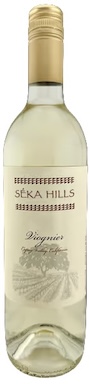
Séka Hills, Viognier, Yolo County, Capay Valley, California, USA, 2024
My wines
This 100% Viognier opens with classic Viognier aromas of ripe peach and apricot, layered with tangerine and a subtle floral lift. The palate delivers the...
Camins 2 Dreams, Paicines Ranch Mencía, San Benito County, Central Coast, California, USA, 2024
My wines
Mencía, native to northwestern Spain and Portugal, is known for its vibrant acidity, savoury character, and aromatic depth. This 100% Mencía from San Benito County...
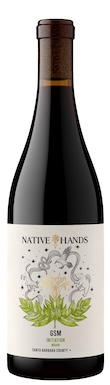
Native Hands Wines, Initiation / Máani, GSM, Santa Barbara County, California, USA, 2024
My wines
This GSM blend opens with an intoxicating bouquet of purple and blue flowers, layered with vibrant blueberry and raspberry aromas. The palate is a bit...
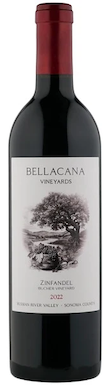
Bellacana Vineyards, Bucher Vineyard Zinfandel, Sonoma County, Russian River Valley, California, USA, 2022
My wines
This Russian River Valley Zinfandel opens with a juicy, candied fruit profile that immediately announces its varietal character. The palate bursts with vibrant red fruit...
Brianne Cohen is a Los Angeles-based event producer, wine educator, and wine writer. She now offers both in-person (and virtual) wine-tasting experiences for her corporate clients while highlighting diverse (i.e. Black, BIPOC, female, and LGBT) owned wineries. Brianne regularly judges at international wine competitions, including the International Wine Challenge (IWC) in London and holds the WSET Diploma certificate. She writes on her own blog and for outlets such as Decanter, Monarch Wine, Matador, SommTV, and Edible. She also holds a Master of Business Administration from Loyola Marymount University.