José Ignacio Maturana, Maturana (left), with his brother Sebastián
(Image credit: Maturana)
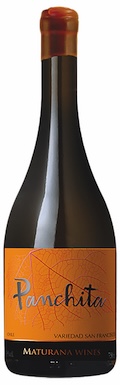
Maturana Winery was founded in 2011 by brothers José Ignacio and Sebastián Maturana.
Based in Colchagua but sourcing fruit from across the country, the brothers have sought out historic dry-farmed vineyards, overlooked grape varieties and distinctive terroirs.
‘The best wine is the one that honestly expresses the place it comes from,’ says winemaker José Ignacio.
That philosophy extends into the cellar, where concrete eggs, clay amphorae, stainless steel and oak are selected according to the character of each vineyard rather than to create a uniform house style.
The result is a range that celebrates Chile’s diversity through wines of freshness, authenticity and a clear sense of place.
As the winery has grown, so too has its vision. Recognising that today’s consumers increasingly seek experiences alongside great wine, Maturana has embraced wine tourism and cultural initiatives designed to deepen that connection.
‘Our goal has never been to sell wine,’ José Ignacio says. ‘Our goal is to inspire more people to fall in love with the world of wine.’
Decanter newsletter
Get our daily fine wine reviews, latest wine ratings, news and travel guides delivered straight to your inbox.
Among its latest ventures is Andes Colchagua, a collaborative initiative that brings together wineries, boutique hotels and local attractions to showcase the region as a unified destination.
Their approach is refreshing, forward-thinking and just what Chile needs.
‘Innovation is not about abandoning tradition,’ Sebastián says. ‘It is about finding new ways to help more people discover and enjoy the world of wine.’
These are wines that are packed full of personality, local character and passion.
JP Martin
(Image credit: JP Martin)
JP (José Pablo) Martin’s winemaking journey has taken him from southern Chile to some of France’s most established wine regions, but it’s in the country’s far north that he has found his greatest inspiration.
Born in Osorno in Chilean Patagonia, with family ties to one of the pioneering pisco producers of the Elqui Valley, Martin studied agronomy and oenology before gaining experience across Chile, including in Cauquenes, San Fernando and Maipo.
He later worked vintages in St-Emilion, Cognac and the Loire Valley. His return to Chile in 2006 saw him join Viña Tamaya in the Limarí Valley as technical director.
Working with the region’s limestone soils and under the cooling influence of the Pacific, he became convinced that Chile’s Norte Verde (which encompasses Limarí, Elqui and Huasco) offered a distinctive expression of coolclimate viticulture.
That conviction led him to establish his own project in 2017 after Viña Tamaya closed, planting vineyards in the Huasco Valley with business partner Daniel Llorente Viñales of Buena Esperanza.
The inaugural JP Martin wines, released from the 2021 vintage, comprise Chardonnay and Pinot Noir, varieties Martin believes best capture the region’s character. There’s now also a superb Grenache, as well as a Syrah, a Carmenère and a Pedro Jiménez produced in Limarí.
Huasco presents a compelling combination of extremes: vineyards on alluvial limestone soils at the edge of the Atacama desert, moderated by the cold Humboldt Current and the proximity of the Andes. These conditions produce naturally fresh wines with notable tension and precision.
In the winery, intervention is deliberately restrained. Native yeast fermentations, limited use of oak and ageing in neutral vessels, including concrete and stainless steel, are intended to preserve site expression rather than shape it.
The wines are bottled unfiltered, or with only minimal filtration, to maintain texture and purity.
These are some of the most exciting wines to have been released in recent years in Chile and they help to shine a light on what is without question one of the country’s most exciting regions.
Ana María Cumsille
Ana María Cumsille
(Image credit: Sebastian Utreras)
For Ana María Cumsille, the Itata Valley is far more than a place to make wine – it’s a landscape of history, tradition and remarkable old vineyards that deserves wider recognition.
After studying agricultural engineering and oenology in Chile, Cumsille continued her training in Bordeaux before returning to work at Viña Indómita, Viña Altair and later Viña Cucha Cucha in Itata.
When Cucha Cucha closed, she chose to remain in Itata, launching her own label in 2020. What began with just 500 bottles of País and Cinsault has grown to around 20,000 bottles.
‘The philosophy behind this project is to capture the essence and soul of the Itata Valley in every bottle,’ says Cumsille.
‘Its centenarian vineyards, its people, its traditions and the deep history behind each wine.’
Working with old-vine País, Cinsault and other heritage varieties, she seeks to express the valley’s identity while celebrating the growers who’ve cared for these vineyards across generations – thus their names appear on the labels.
‘For them, the vineyard is not simply a business, but a family heritage,’ she explains.
Although reluctant to name a favourite wine, Cumsille admits País holds a special place. ‘It was a personal challenge to truly understand the variety and achieve the wine I envisioned,’ she says.
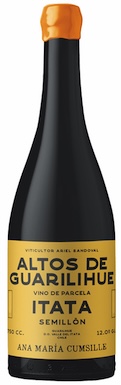
‘Learning how to interpret it while preserving its essence has been a beautiful and long journey.’ And then there’s the Semillon, which is consistently one of Chile’s finest examples.
Today, alongside her current role as chief winemaker at Viña Carmen, Cumsille continues to champion the Itata Valley, producing wines that are designed to honour one of Chile’s oldest and most expressive regions.
Andes Plateau
Felipe Uribe
(Image credit: Andes Plateau)
Felipe Uribe’s path into winemaking has taken him across continents. After beginning his career in San Pedro, he travelled to Madrid to complete a master’s degree in viticulture and oenology before returning to Chile for harvest.
He later gained experience in the US before spending four and a half years at William Fèvre Chile, refining his approach to producing elegant, expressive wines.
Founded in 2012, Andes Plateau has always been guided by three principles: family, passion and the Andes. The aim has never changed – to produce wines that reflect both the dramatic landscapes and the people behind them.
Uribe’s philosophy is to let each vintage speak for itself. Rather than pursuing trends or overmanipulating the wines, the focus is on preserving natural alcohol levels, freshness and the influence of altitude.
These are wines of great purity and clarity that harness the natural advantages of the Andes and of high-elevation vineyards. They’re wines that truly belong on the table, with vibrant acidity, poise and effortless drinkability.
Uribe’s enthusiasm is equally engaging; he speaks with a conviction that’s backed up by deep knowledge, yet always with humility and understated confidence.
When asked to choose a favourite, he highlights the 700 Chardonnay as the clearest expression of the estate’s style, combining purity, delicacy and bright acidity.
I have to agree, it combines tension, as well as underlying richness and concentration; and it possesses, as crazy as it may sound, a crystalline purity that gleams and glistens like Andean meltwater.
Casa Bauzá
Natalia Poblete
(Image credit: Casa Bauza)
For Natalia Poblete, great wine begins not in the cellar but in the vineyard. After studying at the Pontifical Catholic University of Chile, she honed her craft through harvests across Chile, California and Australia before returning home determined to make wines of greater clarity, elegance and authenticity.
That vision found its home at Casa Bauzá where, alongside owner Rodrigo Bauzá, she has helped redefine both the estate and one of Chile’s most misunderstood grape varieties.
Founded in 2011 in the warm northern Maipo sub-region of Til Til, Casa Bauzá initially focused on rich, oak-driven wines. Under Poblete’s guidance, however, the estate has embraced a more terroir-led philosophy.
‘We aim to guide every stage of the process so the grapes can express the full potential of their terroir with the greatest possible purity,’ she says.
Nowhere is that more evident than in Carmenère. Challenging the long-held belief that the variety requires heavy oak and late harvesting, Poblete has championed a fresher, silkier style that boasts vibrant fruit, finesse and remarkable drinkability without sacrificing complexity.
The search for greater nuance has also taken Casa Bauzá south to the Rapel Valley, where vineyards in Colchagua and Cachapoal benefit from granite soils, maritime influence and cooler growing conditions.
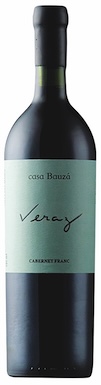
The resulting wines combine freshness, refined tannins and a vivid sense of place. While Carmenère has become the winery’s signature, Poblete retains a particular affection for Cabernet Franc, showcased in the Veraz cuvée.
Yet whatever the variety, her philosophy remains constant: ‘Wine carries our signature, but the true protagonist is always the terroir from which it comes.’
The result is a portfolio of wines that have such drinkability but always with softness and an understated exuberance.
La Despensa
Matt Ridgway
(Image credit: La Depensa)
There are few straight lines in wine; Matt Ridgway’s journey began not in a vineyard but with a backpack. Arriving in South America in 2003 as a young English teacher, he could scarcely have imagined that a chance move across the continent would eventually lead to one of Chile’s quirkiest boutique wine projects.
After several years in Argentina and Chile working in real estate, the pull of the countryside proved irresistible. Having grown up in rural England, Ridgway found something familiar in the rolling landscapes of Colchagua.
A small parcel of land purchased in 2011 was planted with vines two years later, initially with no commercial ambitions. The plan was simply to exchange grapes for finished wine.
Instead, a single barrel produced in 2015 ignited a passion that would see him take full control of the winemaking by 2020. Today, the wines offer a refreshing counterpoint to Colchagua’s reputation for powerful Cabernet Sauvignon and Carmenère.
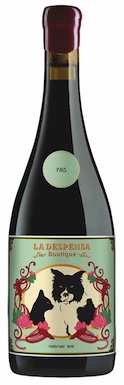
Grenache, Syrah, Mourvèdre, Cinsault, Sangiovese and Rhône white varieties share the vineyard, with fruit also brought in from an old País planting located about 20 minutes from the winery, together producing wines defined by energy, purity and drinkability rather than weight or oak influence.
That same approach extends to the vineyard. Farmed organically, though not certified, the estate runs entirely on solar energy and is home to hundreds of newly planted native trees, reflecting a commitment to thoughtful stewardship rather than marketing credentials.
Fourteen rescue dogs complete a property that feels every bit a (slightly chaotic!) working farm.
Looking ahead, Ridgway is expanding both his Rhône-inspired white wines and the estate’s wine tourism offering.
Alcohuaz
Rosario Fillol
(Image credit: Alcohuaz)
At first glance, the vineyards of Alcohuaz seem almost impossible. Perched at about 2,000m in Chile’s Elqui Valley, they cling to steep mountain slopes where intense sunlight, arid conditions and dramatic diurnal shifts test both vines and those who farm them.
Yet it’s precisely this unforgiving landscape that inspires winemaker Rosario Fillol (pictured above), whose mission is to capture the essence of one of South America’s most distinctive terroirs.
‘The goal is to express this place,’ she says. ‘We work with minimal intervention to demonstrate just how expressive this territory can be.’
Since joining Alcohuaz in 2021, Fillol has brought an international perspective shaped by harvests in Chile, Napa Valley, New Zealand, Barolo, Oregon and Burgundy, as well as winemaking roles at Viña Aresti and Viña Santa Carolina.
But it’s the extremes of Elqui that continue to fascinate her. ‘You see the vines facing permanent stress, yet the final wines are incredibly expressive,’ she says.
Planted in 2005, Alcohuaz has steadily refined its understanding of this high-elevation site, embracing organic viticulture, albeit without certification.
The result is a collection of wines that speak as much of granite, altitude and relentless sunshine as they do of grape variety.
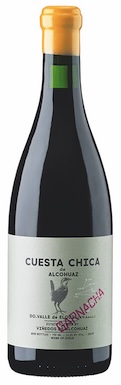
Plantings include Syrah, Grenache, Petit Verdot, Malbec, Petite Sirah and Carignan. Fillol’s favourite of the Alcohuaz wines is the Cuesta Chica Grenache, whose fruit, grown at 2,179m, bears little resemblance to more familiar Chilean expressions of the variety.
Here, Grenache trades weight for the perfumed, fresh and tense style that can come with increased elevation.
The future looks equally ambitious. Orange wine, rosé and fortified styles are all under development, while the estate is investing in wine tourism and conservation.
The vision, however, remains rooted in the mountains: creating wines that could only come from Alcohuaz, a truly special site.
Clos de Luz
Gabriel Edwards
(Image credit: Bajoeltablero.cl)
For Gabriel Edwards, the road to founding Clos de Luz began far from the vineyards of his childhood.
After graduating with a degree in economics, he chose to pursue his passion for wine, studying in the master’s programme at ESC Dijon in Burgundy (now the Burgundy School of Business) before gaining experience at Moët & Chandon in Champagne.
Yet his ambition was always to return home to Almahue in the Cachapoal Valley. In 2015, with limited resources but a clear vision, he established Clos de Luz to showcase Almahue’s old, dry-farmed vineyards.
His aim was not simply to make fine wine, but to reveal the distinctive identity of a region that’s quickly turning into one of Chile’s finest.
That sense of purpose extends beyond the winery. Edwards sees Clos de Luz as part of a broader effort to elevate Almahue’s reputation, protect its viticultural heritage and encourage his neighbours to pursue quality.
Success, he believes, should benefit the entire valley. While tradition remains at the heart of the project, innovation continues to shape its future.
Prizma, a new vermouth inspired by Almahue’s native botanicals, was launched earlier this year and the estate is expanding its wine tourism experiences.
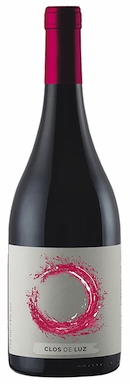
Among the portfolio, the Azuda Carmenère perfectly captures the Clos de Luz style. Fermented and aged in concrete, it’s a vibrant, pure and thrilling expression of Carmenère, highlighting freshness, spice and elegance.
These are wines that are elegant, supremely confident and expressive at the same time.
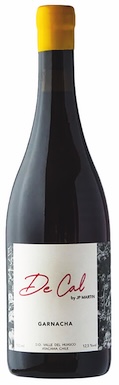
JP Martin, De Cal Garnacha, Huasco Valley, Atacama, Chile, 2024
My wines
Wow, such an attractive nose, with crunchiness, spice, rosehip and forest fruits – the whole-bunch note is clear. The palate is all about texture, saltiness...
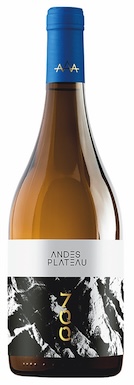
Andes Plateau, Cota 700 Chardonnay, Bío Bío Valley, Chile, 2024
My wines
A really inviting and impressive nose, with such density, herbal notes and peach skin. Mouthwatering acidity marks the entry, followed by anise and peach. Then...
Alistair Cooper MW writes for various wine publications, including Decanter, Wine Business International and Drinks International. Following several years working for wineries in Chile and Argentina, he moved back to the UK in 2006. He currently consults, judges, hosts events and educates in both the UK and Chile. He was a judge at the 2019 Decanter World Wine Awards (DWWA).