
Pinot Progress: South American Pinot Noir finds its footing in extreme terroirs
Evolving understanding of the finicky variety’s needs and the exploration of different, often more extreme terroirs has brought Pinot Noir’s great potential in South America to the fore.
Pinot Noir has been cultivated almost as long as Malbec in Argentina, Cabernet Sauvignon in Chile, or Tannat in Uruguay.
Yet only recently have South American winemakers begun making Pinot Noirs that stand confidently alongside their flagship reds.
For much of the 20th century, the continent’s simple viticulture and robust red-wine traditions suited the hardier Bordeaux and Basque varieties better.
Pinot Noir demanded another level of precision in the vineyard and winery.
That learning curve has taken more than two decades to navigate, but it has positioned South American Pinot Noir in its most exciting phase yet.
A shift of focus
‘When we arrived in Chimbarongo [in Colchagua], we found these really old vines of Pinot Noir and knew we had a treasure on our hands – old vines, and a variety that no one was focusing on in Chile at the time,’ recalls Matías Ríos, winemaking director at Cono Sur one of the world’s largest producers of Pinot Noir and a key champion of the variety in Chile since the mid-1990s.
‘Our first experiences were a little traumatising, though,’ he admits. ‘We were treating it like a Bordeaux variety! But then we started getting advice from winemakers in Burgundy, and focusing on different winemaking.
Get our daily fine wine reviews, latest wine ratings, news and travel guides delivered straight to your inbox.
'But most importantly, we started looking for different terrains – going to cooler regions and looking for the right clones to plant there.’
That shift – away from simply planting Pinot Noir anywhere and towards understanding what those specific vines needed – was decisive.
The first leap in quality in Chile became apparent in the early 2000s, as much of the original genetic material, often better suited to sparkling wine, was replaced with clones selected for still Pinot Noir and for specific terroirs.
The story was similar in Argentina.
‘The first major lesson was understanding which plant material works best under our conditions,’ explains Roy Urvieta, winemaker at Domaine Nico, Laura Catena’s boutique Pinot Noir project in Mendoza.
Some early assumptions proved wrong. Clones that had become fashionable elsewhere, such as Dijon 777, weren’t always the best fit for Argentine conditions, while other clones and massal selections (from cuttings from existing vine stocks) began showing greater promise.
If I’ve lost you at clone, the point is simple: South American producers have invested heavily in understanding not only where Pinot Noir should grow, but what Pinot Noir should be planted there.
That, combined with the search for cooler sites and a deeper understanding of South America’s unique geographies, has driven the recent quality boom.
Quest for cool
Roy Urvieta, winemaker at Domaine Nico
Today, the focus for Pinot Noir is on cooler climates, whether through coastal influence, latitude, elevation or some combination of all three.
Chile’s coastal regions have seen the greatest expansion. Casablanca and San Antonio were the first focal points, where coastal hills receive the cooling influence of the Humboldt Current and morning camanchaca fog, which keep average temperatures low while allowing bright, sunny afternoons.
‘We have great luminosity and solar radiation in the coastal regions, but also these really cool temperatures,’ says Ríos, whose top-of-range Ocio Pinot Noir comes from vineyards in San Antonio.
‘That is the fingerprint of Chilean Pinot Noir. With low yields, the right clones and the right sites, we get vibrancy and freshness but also complexity.’
The search has since moved both north and south along the coast.
From Aconcagua Costa, the next coastal wine region north of Casablanca, the Errazuriz Las Pizarras bottling has emerged as a sanguine Pinot Noir grown on schist soils (pizarra literally meaning ‘slate’); while in Limarí, some 250km further north, Tabalí’s calcareous marine terraces have become one of Chile’s most exciting sources of taut, chalky Pinot.
Even the coastal Atacama, in the form of JP Martin (winemaker José Pablo Martin’s own project) and Ventisquero’s Tara wines, is beginning to show promise, its desert luminosity tempered by cold Pacific influence.
Atlantic influences
Cerro del Toro’s vineyards in Piriápolis, Maldonado, Uruguay
In Uruguay, too, the focus for top-quality Pinot Noir has moved closer to the cooling influence of the coast, albeit facing the more moderate Atlantic than the cold Pacific.
With its clay-calcareous soils, Canelones – Uruguay’s main wine region surrounding capital Montevideo – has long been considered well suited to Pinot Noir, but Maldonado – the neighbouring coastal region to the east – has come increasingly to the fore, with breezier conditions and a diverse range of soils, from granites and schists to calcareous and gneiss.
Site selection alone, however, hasn’t been enough. Producers have also had to refine viticulture, learning where the variety’s tipping points lie.
In Uruguay, third-generation winemaker Santiago Deicas of Familia Deicas says yield has been one of the most important lessons.
‘Following many tests, on different soils and microclimates,’ he says, ‘we believe you can’t produce Pinot Noir at more than 5,000 kilos per hectare in Uruguay, otherwise it loses its finesse.’
In a country better known for the structure and generosity of Tannat, Pinot Noir has required a different approach, one based on restraint, balance and precision.
New heights
Miguel Torres Chile’s Empedrado vineyard, the source for Escaleras (‘Stairs’) de Empedrado
In Argentina, Pinot Noir was one of the varieties that drove the first high-elevation plantings in Mendoza’s Uco Valley in the 1990s.
Although much of the production was initially destined for sparkling wine, cooler temperatures at altitude soon became a focus for still wines, too.
Today, some of Argentina’s top Pinot Noirs come from the Uco Valley, particularly Gualtallary, Paraje Altamira and San Pablo. Elevation doesn’t only bring cooler temperatures.
‘Each parcel has different soil, plant material and climate conditions,’ explains Urvieta, whose Domaine Nico wines each have the relevant parcel’s elevation marked on the label.
‘Every parcel was selected because it was clearly different from the others. In Villa Bastías, at around 1,100m, the profile is more black fruit, earthy, with more concentration and finer texture; whereas Le Paradis at about 1,500m is a very cold site with stony-calcareous soils and the profile is more austere and floral, with a finer and slightly richer texture and marked acidity.'
Chile’s Pinot Noir is more coastal than Andean, but there are exceptions.
Laberinto in Maule and Sierras de Bellavista in Colchagua both show how cooler mountain sites can produce refreshing, lightly herbaceous Pinot Noirs, shaped by elevation and the biodiversity found on the lusher Chilean side of the Andes.
Pushing into Patagonia
Juan Pablo Murgia of Bodega Otronia by Lake Musters in Patagonia
The other frontier is towards the far south. Patagonia is becoming one of the most thrilling territories for cool-climate varieties, especially Pinot Noir, with projects on both sides of the Andes.
On the Chilean side, the rainier climate does make viticulture more challenging, but Malleco, Ranco and Osorno are producing increasingly exciting Pinot Noirs from producers including Undurraga, Morandé, Trapi del Bueno, Casa Silva and Vinos Baettig.
Further south, in Chiloé and Chile Chico, the wines emerging are still few, but they point towards an even cooler future for Chilean Pinot Noir.
On the Argentine side, Río Negro has long been synonymous with top-quality Pinot Noir.
The old, ungrafted vines of the region, which lies at a similar latitude to Malleco in Chile, inspired Sassicaia heir Piero Incisa della Rocchetta, to establish Bodega Chacra in 2003 – its single-vineyard wines, including ’32 and ’55, named for the year the vineyards were planted, helped set a modern benchmark for Argentine Pinot Noir internationally.
Further south still, Otronia is pushing the limits in Chubut with one of the southernmost commercial vineyards in the world.
On the shores of lake Musters, lying at about 45°S, the cold climate and intense luminosity combine to produce Pinot Noir with electric acidity, pure fruit and floral lift.
It remains extreme, with winds rising to 150km/h and repeated frost events, but it’s also one of Argentina’s most promising new sources of Pinot Noir.
In the cellar
Eduardo Jordán, technical director at Miguel Torres Chile
Understanding where to plant Pinot Noir, and which clones to use, was only part of the challenge. Equally important has been learning how to approach the variety in the cellar – not by replicating Burgundy or any other Pinot region, but by finding what works for each specific site.
‘Our Pinot Noir for Escaleras de Empedrado is on slate soils, which gives us much darker colour and more acidity,’ says Eduardo Jordán, technical director at Miguel Torres Chile, whose dramatic Empedrado vineyard is planted on slate terraces in Maule Costa, some 120km southwest of Curicó.
‘Over the years, I learnt that you have to respect the place. In our terroir, you can’t try to make a lighter Pinot Noir like Burgundy does. Empedrado always has a deeper colour and more tannin.’
For Jordán, this has changed both cellar and vineyard decisions. Maule Costa may be cooler than Burgundy in terms of average temperatures, but higher peaks of heat and luminosity can produce firmer tannins and sharper acidity in the wines.
The response has been greater sensitivity: gentler extraction, more precise picking decisions and protective canopy management. These lessons haven’t been learned in isolation.
Working together
Santiago Deicas at Familia Deicas
One of the advantages of Pinot Noir’s recent quality push is that it has largely happened in the hands of a new generation of winemakers, many of whom are open to tasting, sharing and learning together.
In Uruguay, a group of winemakers have met each February for almost a decade to taste Pinot Noir blind, including wines from around the world alongside experimental lots from their own cellars.
‘It has really helped us discuss the wines openly, exchange ideas and understand what we were each doing,’ says Santiago Deicas, who instigated the tasting. That shared learning has built confidence.
‘In the winery, we used to fear macerating Pinot too much,’ he adds. ‘But by working with the skins more, we have learnt how to extract more, but in a delicate way. Without being scared.’
This growing confidence – in viticulture, in cellar work, and above all in interpreting Pinot Noir via South American terroirs rather than European templates – has driven the recent leap in quality.
The clonal investigation and exploration of new regions came first. Now the continent is beginning to see the fruit of that labour, tantalisingly in parallel with greater experience in the cellar.
‘Each year we notice the quality of our Pinot Noir improving,’ says Deicas. ‘Not because we are necessarily changing anything dramatically in the winery now, but because the vines are getting older – and Pinot Noir is a variety that really shows the benefit of vine age.’
Steady progression
Viviana Navarrete of Viña Leyda
The same sentiment is echoed across the continent. The steepest learning curves have already been climbed.
New vineyards have been planted, many existing vineyards entirely replanted, and sites shaped by the accumulated knowledge of the last two decades are only just starting to reach maturity.
For Urvieta at Domaine Nico, the lessons today are more subtle than they once were.
‘Since we started the project, we have not made many dramatic changes, but every year we learn something new – it is part of understanding how we can interpret each place so as to express our landscape more clearly,’ he says.
‘The vines are getting older, and so are we.’
That combination of vine age, accumulated experience and a deeper understanding of South America’s cool-climate terroirs means Pinot Noir is not only enjoying its strongest moment on the continent so far – the best may still lie ahead.
For wine lovers, that is exciting news. South American Pinot Noir remains remarkably affordable compared to many other regions, yet the quality gap is narrowing with every vintage.
The secret is no longer hidden. The only question is how much longer it will remain one.
Upper echelon: Amanda’s pick of 12 South American Pinot Noirs
Related articles
Blended Revolution: How South American winemakers find terroir expression through more than just one grape
Our expert recommends 18 brilliant light-bodied South American reds
Winemaker to watch: Argentina’s Juan Pablo Murgia
Otronia, Pinot Noir, Chubut, Patagonia, Argentina 2021
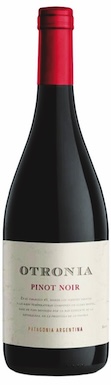
One of the most exciting new terroirs for Pinot in the most extreme south of Argentine Patagonia. The 2021 is my favourite vintage to date....
2021
PatagoniaArgentina
OtroniaChubut
Cono Sur, Ocio, San Antonio, Chile 2023
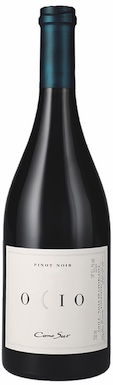
The top wine from Cono Sur is increasingly confident and poised in its expression. A wine which delivers beautifully on all fronts: seductive and immediately...
2023
San AntonioChile
Cono Sur
Undurraga, Trama Pinot Noir, San Antonio, Chile, 2024
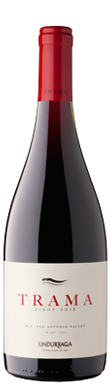
Undurraga offers serious value through its two Terroir Hunter Pinot Noirs – an earthier rendition from Malleco and a more floral expression from Leyda. Trama...
2024
San AntonioChile
Undurraga
Leyda, Origin Pinot Noir, Leyda Valley, San Antonio, Chile 2024
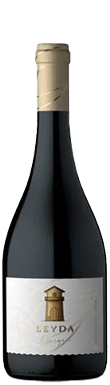
Viviana Navarrete has been laser-focused on Pinot Noir at Viña Leyda for almost a decade, and Origin is the result of that dedication. Crunchy red...
2024
San AntonioChile
LeydaLeyda Valley
Domaine Nico Soeur et Frères, La Savante Pinot Noir, Gualtallary, Uco Valley, Argentina 2024
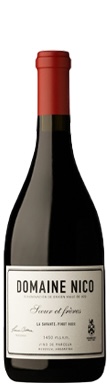
One of the single-parcel wines in the Domaine Nico range, La Savante comes from the first Pinot Noir planted in the Catena family’s prized Adrianna...
2024
MendozaArgentina
Domaine Nico Soeur et FrèresUco Valley
Bodega Chacra, Cincuenta y Cinco Pinot Noir, Río Negro, Patagonia, Argentina 2023
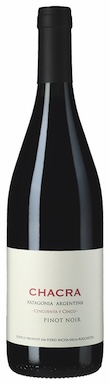
Chacra is all about the old vines of Río Negro, and Cincuenta y Cinco is one of my favourites, sourced from vines planted in 1955....
2023
PatagoniaArgentina
Bodega ChacraRío Negro
Cerro del Toro, Fuego Pinot Noir, Maldonado, Uruguay 2023
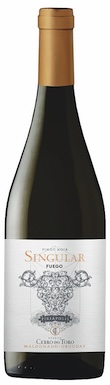
Coming from a particularly stoney spot at the top of the hill, Fuego is a parcel selection of Cerro del Toro’s most coastal vineyard –...
2023
MaldonadoUruguay
Cerro del Toro
Miguel Torres Chile, Escaleras de Empedrado, Maule Valley, Chile 2021
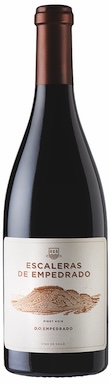
Coming from the slate terraces of Miguel Torres’ coastal vineyard in Maule, this cool climate Pinot Noir is schistous, mineral and beautifully fresh, with dark...
2021
Maule ValleyChile
Miguel Torres Chile
Un Lugar en los Andes, Pinot Noir, Tunuyán, Uco Valley, Mendoza, Argentina 2022
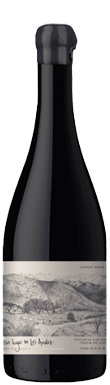
Gaucho Walter Scibilia was the first to plant vines at these extraordinary heights on his estancia in San Pablo, at 1,700 metres above sea level....
2022
MendozaArgentina
Un Lugar en los AndesUco Valley
Errazuriz, Las Pizarras Pinot Noir, Aconcagua Costa, Aconcagua Valley, Chile 2024
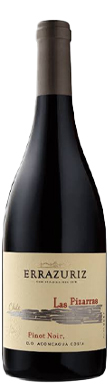
Sourced from a schist parcel in Errázuriz’s coastal Aconcagua vineyard, the 2024 is fresh and supple, with notes of sweet-sour cherry, crunchy red fruit and...
2024
Aconcagua ValleyChile
ErrazurizAconcagua Costa
Familia Deicas, Cru d’Exception Pinot Noir, Uruguay 2024
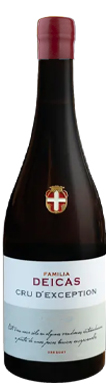
Deicas has a strong range of Pinot Noirs, but the Cru d’Exception is where things step up a gear. Drawn from two vineyards – one...
2024
Uruguay
Familia Deicas
Tabalí, Talinay Pinot Noir, Limarí Valley, Chile, 2025
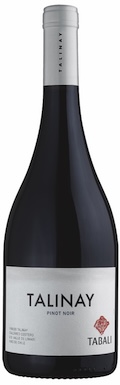
Coming from one of the leading producers in Limarí, Talinay is a top-value Pinot Noir from the chalky marine terraces of Tabalí’s coastal vineyard. You...
2025
Limarí ValleyChile
Tabalí
Amanda Barnes is an award-winning wine journalist and expert in South American wines and regions.
Based in Mendoza since 2009 she is a regular South America correspondent, critic and writer for Decanter, as well as other international wine publications, and she is the author and editor of the South America Wine Guide.
She has been awarded by Born Digital Wine Awards, Millesima Blog Awards, Great Wine Capitals Best Of and Young Wine Writer of the Year.
She has received a fellowship from the Wine Writers Symposium, a scholarship for the Wine Bloggers Conference, and the Geoffrey Roberts Award.