Most wine lovers would dream of having a cellar so capacious you could lose 18 bottles of Champagne in it.
Lyonnais chef, and French national treasure, Paul Bocuse, did exactly that, though.
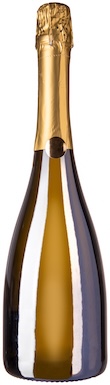
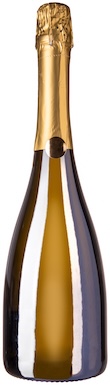
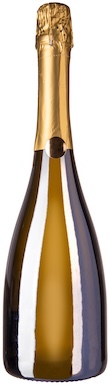
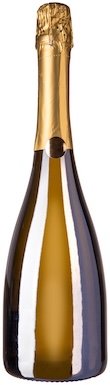
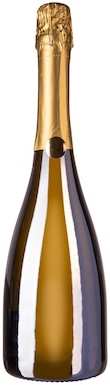
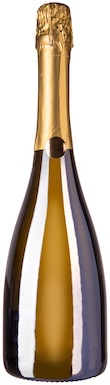
Tucked away, forgotten in a corner of his restaurant’s cellar, were 18 bottles of Ruinart 1926, bought to celebrate the year of Bocuse’s birth.
The story of how these wines were tasted for the first time outside the maison is one marked with poignancy, though.
Not only were the wines only discovered after Bocuse’s death in 2018, but the dream to generously open some with friends of the maison belonged, originally, to Fréderic Panaïotis, the Ruinart Chef de Cave who tragically passed away in 2025.
Panaïotis and Bocuse tasted two bottles together, reporting a ‘remarkable’ wine of 'ripe fruit, apricot, candied lemon and candied orange' according to the house’s new Chef de Cave, Caroline Fiot.
An unexpected boon
French chef Paul Bocuse being served 1926 Ruinart
(Image credit: Ruinart)
Their discovery comes as a boon to the house, whose library is a little thin on older vintages, explained Fiot.
Decanter newsletter
Get our daily fine wine reviews, latest wine ratings, news and travel guides delivered straight to your inbox.
‘When Fred heard about the 1926 bottles it was big news because it is the oldest vintage stored in our cellars,’ she explained.
‘After the Second World War we only had 10,000 bottles left in the cellars because of all the wines that were taken by the German Army. Afterwards the philosophy was to sell the wines, not to keep them.’
At the time, there was no Dom Ruinart or Blanc de Blancs, arguably the most famous wines of the house today.
In fact, the concept of ‘prestige’ Champagnes did not really exist, and Ruinart’s main offering was, as was common in Champagne, restricted to a non vintage and – as discovered here – a vintage.
With little information available, Fiot was not sure exactly what the 1926 contained by way of a blend or ageing time.
Panaïotis did some laboratory analysis which showed the ripeness at harvest was an impressively ripe one, likely 'between 9.5 and 10 degrees' of potential alcohol at harvest, with the final release dosed at 17 g/l of sugar – dry for the time, but above today’s ‘Brut’ category.
A daring feat – fresh disgorgements
(Image credit: Rachelle Simoneau)
After the second fermentation in bottle, Champagnes rest for a number of years before being ‘disgorged’ – having the dead yeast removed.
It is a process which oxygenates and provokes ageing, both positive but ultimately potentially negative, in the wine.
Before disgorgement, though, the wine being ‘on lees’ can hold the evolution in check quite profoundly.
Save for the 1926 which was an original release, disgorged and dosed back in the 1930s, most of the wines were disgorged the very morning of the tasting.
Chef de Cave Caroline Fiot clearly senses the excitement of the moment as a small group is gathered at the maison to taste through a selection of Ruinart vintages ending with ‘6’, heading backwards from 2016 all the way to 1926.
'I am tasting these for the first time, with you!' she remarked.
The decision to pour fresh disgorgements of the older wine paid off, especially with a stunning 1956 which confounded even the most experienced Champagne tasters among us with its scarcely believable youthfulness.
By keeping these bottles undisgorged up until the moment of tasting, though, Ruinart rolled the dice – there’s no chance to add dosage, to prepare more like a ‘commercial’ release of the library wines.
We were tasting them completely naked, fresh, woken abruptly from their slumber.
Still, the technical hurdles for these wines to tackle to render drinkable, let alone enjoyable, wines for many, many decades longer than their creators would have imagined are considerable.
A moment a century in the making
(Image credit: Rachelle Simoneau)
A few – such as the 1966 – didn’t quite make it, victims in some cases of oxidation or degradation during the lees ageing stage.
Others, such as 1996 or 1986, were sound yet at points where the strengths of the vintages were starting to be outweighed by the weaknesses.
Anyone lucky enough to enjoy such bottles as the 1926, 1956 and 1976 will take the lows, though, to experience the highs; and this was a tasting where the most venerable bottles were the stars.
As we reached the 1926, Fiot was feeling the pressure – quite literally – as the foil was gingerly removed and the original cork gently prised out.
'Will we get a ‘pop?' she wondered.
The answer was as most expected, no. Pressure drops as Champagne ages, and this journey was simply too long.
What the wine absolutely wasn’t, though, was dead; yes, there is overt oxidation, yes plenty of sherry-type aromatics, yes the sort of flavours that, in a younger wine would evidently be considered flaws.
What there was, though, was life. Drinking pleasure. To someone lucky enough to have tasted many Champagnes of half its age rich in complexity, yet devoid of such essential drinkability, the 1926 was an unforgettable experience.
Will the current 2016 live quite as long?
As a very small release in Ruinart’s portfolio, few outside France even get to taste this cuvée.
What this tasting proved beyond doubt was that quality, and ageability, make it one worth hunting down.
Ruinart, R de Ruinart, Late Disgorgement, Champagne, France 2006
My wines
An 'intense and generous' harvest according to cellar master Caroline Fiot, who presented a late-disgorged bottle which outshone a less pristine original release. Quite a...
Ruinart, R de Ruinart Millésime, Champagne, France, 1996
My wines
Three versions of the 1996 were presented at Ruinart’s vertical tasting of vintages ending with ‘6’. It was this, disgorged on the morning after ageing...
Ruinart, R de Ruinart Millésime, Champagne, France, 1986
My wines
Once again, the edition of this cuvée disgorged on the morning of the tasting outperformed the original release, disgorged in 1993. Chardonnay was strongest in...
Ruinart, R de Ruinart Millésime, Champagne, France, 1966
My wines
A hot, dry Indian summer saved this difficult vintage, which featured fine degrees of ripeness but rather low yields. The variability of older vintages was...
Ruinart, R de Ruinart Millésime, Champagne, France, 1956
My wines
Among the most remarkable bottles of old Champagne I have ever encountered, the Ruinart 1956 freshly disgorged without dosage was almost impossibly pristine and graceful,...
Tom Hewson writes about Champagne and sparkling wine. He authored the Tim Atkin Champagne Special Report in 2022, featuring over 600 wines and insights from five weeks spent in the region. As well as writing freelance, reviewing and presenting sparkling wines, Tom runs his own newsletter Six Atmospheres, reaching Champagne and sparkling wine enthusiasts all over the world every week.