
Beyond just whites: Colli Orientali is crafting thrilling reds from Friuli’s native varieties
Famous for its world-class whites, Colli Orientali is quietly producing some thrilling reds from revived native varieties.
Mention Friuli and most wine lovers immediately think of white wine. Yet, in Colli Orientali, there is a flourishing production of some of the most fascinating native reds in Italy's northeast.
The Colli Orientali (‘Eastern Hills’) of Friuli is the natural geographical extension of the Collio DOC, separated only by an administrative boundary.
While Collio lies in the province of Gorizia, Colli Orientali belongs to Udine.
The two regions share a great deal: predominantly hilly terrain, similar elevations, and the same calcareous marl soil locally known as ponca. They also share the white grape varieties that made Friuli famous.
What truly sets the Colli Orientali apart, however, is red wine. While a marginal presence in Collio, red wine accounts for around a quarter of the Colli Orientali DOC production, according to the Consorzio Tutela Vini Friuli Colli Orientali.
More significantly, while Collio lacks its own local red varieties, Colli Orientali boasts a trio of native red grapes that are vital to its terroir: ageable Pignolo, dark and fruity Refosco, and dry, spicy Schioppettino.
Refosco: The late-ripening survivor
Refosco is not a single variety, but rather a family with at least half a dozen members in the Colli Orientali alone.
Get our daily fine wine reviews, latest wine ratings, news and travel guides delivered straight to your inbox.
Historical references date back to the 18th century, though the generic use of the name makes its exact lineage uncertain.
Peduncolo Rosso
Today, the most widely planted iteration is Refosco del Peduncolo Rosso, named for its unusually red stems. This vigorous, thick-skinned variety is late-ripening and demands abundant sunshine.
While under-ripe versions can suffer from dominant acidity and harsh tannins, it is currently thriving thanks to a string of warm vintages.
When it succeeds, the variety boasts a bright, deep ruby-violet colour, vibrant cherry and raspberry fruit, and a vigorous mid-weight palate.
Because it can suffer from reduction if aged solely in stainless steel, judicious barrel-ageing is highly recommended.
Nostrano
A lesser-known family member, Refosco Nostrano, shares only a name with Peduncolo Rosso.
It is an entirely different variety, yielding highly attractive wines with less rugged tannins and greater finesse.
The DOC even includes a sub-denomination, Refosco di Faedis, dedicated to Nostrano wines from this specific village.
Schioppettino
Extensively grown in the upper Judrio valley until World War I, Schioppettino subsequently vanished, likely due to its delicate nature, irregular flowering, and susceptibility to disease.
In 1977, pioneering wine writer Mario Soldati reported finding only three or four remaining producers making wine from this variety.
Paolo Rapuzzi of the Ronchi di Cialla estate is widely credited with saving Schioppettino from extinction.
He perilously planted an unauthorised vineyard from old vine cuttings, risking government mandated grubbing-up.
Fortunately, the vines survived, and Schioppettino entered the national grape register the same year Soldati visited.
Highly site-specific, Schioppettino rarely travels outside the village of Albana and the neighbouring Prepotto, which boasts its own DOC sub-zone.
Like Refosco, it ripens late and retains high natural acidity, but features much more refined tannins.
The wines pour a pale ruby colour, offering dark berry fruit on the nose and a mid-weight palate that finishes with distinctive peppery spice.
Approachable in its youth, it acquires a silky elegance with age that distinctly recalls mature Pinot Noir.
Among the region's native grapes, it has made the most significant strides in both volume and quality in recent years.
Pignolo
Wine writer Ben Little famously subtitled his book on Pignolo ‘Cultivating the Invisible’ (self published in 2021). It perfectly captures the paradox of this grape: despite being grown by around 60 producers, it accounted for a mere 44 hectares in the 2024 Colli Orientali vineyard register.
Rescued from obscurity around the same time as Schioppettino, Pignolo's trajectory has been slower.
Once highly regarded in historical texts, it lost ground by the mid-20th century and practically vanished by the 1950s, until it was rediscovered at the Rosazzo abbey, where monks had preserved a few surviving vines.
Pignolo is notoriously complicated to grow: it suffers from low, irregular yields, is prone to disease, and is incredibly fussy about its site due to its late-ripening nature.
The resulting wine is equally uncompromising, possessing high acidity, potentially high alcohol, and – thanks to small bunches and thick-skinned berries – a massive concentration of tannins, comparable to Sagrantino.
The plus side of this structural intensity is that Pignolo has a prodigious capacity for ageing.
The DOC mandates a minimum of three years, at which point the wine typically displays dark berry fruit and a dense, tactile palate.
It starts to come to life after five or six years, and at eight to 10 years I have tasted fascinating examples of complex, mature wines of classic stature.
The road ahead for Colli Orientali’s native red grapes
Two decades ago, red grapes made up 40% of Colli Orientali's surface area, led predominantly by Merlot.
While red wine may not easily regain that kind of volume, producers nevertheless feel that a renaissance of kinds is underway.
Interestingly, this new momentum is not driven by the former champion, Merlot, but by the distinctive, characterful native grapes of the region.
Watch this space!
Buyer's guide: Top wineries for each native variety
Refosco:
- Aquila del Torre
- Borgo delle Oche
- Belluzzo
- Cà di Bon
- Gigante
- La Sclusa
- Petrussa
- Ronc dai Luchis
- Vignai da Duline
Schioppettino:
- Antico Broilo
- Le Due Terre
- Monviert
- Petrussa
- Pitticco
- Ronchi di Cialla
- Ronco Severo
- Spolert
- Vigna Lenuzza
- Vigna Traversa
Pignolo:
- Butussi Valentino
- Castel Santanna
- Dorigo
- Gigante
- Guerra Albano
- Livio Felluga
- Moschioni
- Rodaro
- Ronco delle Betulle
- Tunella
12 wines to highlight Colli Orientali's red potential
Related articles
Trentino emerges: A whole new world to discover in the Dolomites
Try these 10 wines from Piedmont's microscopic Nebbiolo outposts
‘What if Friulano’s true vocation was as a component in a blend of local grapes?’
Livio Felluga, Eremita Pignolo, Rosazzo, Friuli Colli Orientali, Friuli-Venezia Giulia, Italy 2013
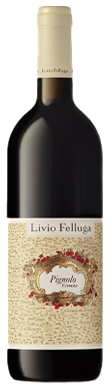
Extraordinary layered complexity on the nose, which maintains the purity of dark mulberry fruit alongside aromas of graceful maturity; dried herbs, moss, tamarind, fig leaf,...
2013
Friuli-Venezia GiuliaItaly
Livio FellugaFriuli Colli Orientali
Le Due Terre, Schioppettino, Venezia Giulia, Friuli-Venezia Giulia, Italy 2022
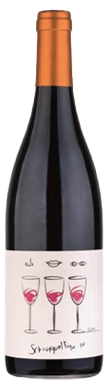
Understated, but very precise on the nose, with crushed bilberry fruit, newsprint, and a hint of white pepper. The palate is midweight, dry and compact,...
2022
Friuli-Venezia GiuliaItaly
Le Due TerreVenezia Giulia
Pitticco, Minò Schioppettino, Prepotto, Friuli Colli Orientali, Friuli-Venezia Giulia, Italy 2023
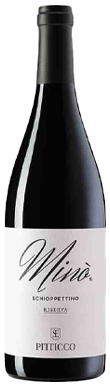
Sweet, ripe raspberry fruit with nicely etched floral touches of iris and violets. Big, positive impact on the palate follows through soft and round, with...
2023
Friuli-Venezia GiuliaItaly
PitticcoFriuli Colli Orientali
Vigna Lenuzza, Schioppettino, Prepotto, Friuli Colli Orientali, Friuli-Venezia Giulia, Italy 2023
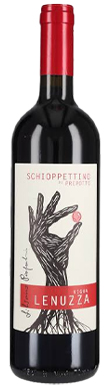
Pale cherry shade. Intriguing complexity on the nose, with a mix of sour black cherry, aromatic herbs and the distinctive black pepper note of the...
2023
Friuli-Venezia GiuliaItaly
Vigna LenuzzaFriuli Colli Orientali
Vini Belluzzo, Graziano Refosco dal Peduncolo Rosso, Friuli Colli Orientali, Friuli-Venezia Giulia, Italy 2022
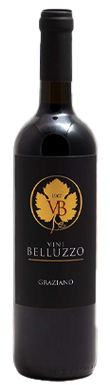
Intense, persistent aromas of fresh plums and cherries, and delicate spicy touches of cinnamon and white pepper. Silky, with great purity of fruit, super-fine texture...
2022
Friuli-Venezia GiuliaItaly
Vini BelluzzoFriuli Colli Orientali
Vignai da Duline, Morus Nigra Refosco dal Peduncolo Rosso, Friuli Colli Orientali, Friuli-Venezia Giulia, Italy 2023
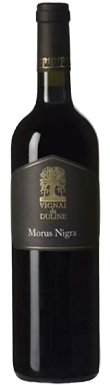
Leafy, slightly stalky aromas initially dominate the fruit that emerges second time around with an energetic swirl. Midweight and completely dry on the palate, it...
2023
Friuli-Venezia GiuliaItaly
Vignai da DulineFriuli Colli Orientali
Guerra Albano, Matteo 1 Pignolo Riserva, Friuli Colli Orientali, Friuli-Venezia Giulia, Italy 2019
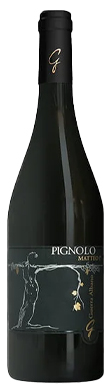
Intense wild berry fruit and graphite on the nose, with a distinctly smoky nuance. This is a big, broad, fleshy mouthful with dense tannins, perhaps...
2019
Friuli-Venezia GiuliaItaly
Guerra AlbanoFriuli Colli Orientali
Cà Lovisotto, Schioppettino di Prepotto, Prepotto, Friuli Colli Orientali, Friuli-Venezia Giulia, Italy 2022
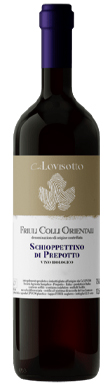
Typical pale cherry shade of the variety. Very precise on the nose with dark mulberry fruit and a subtle hint of exotic spices. The palate...
2022
Friuli-Venezia GiuliaItaly
Cà LovisottoFriuli Colli Orientali
Monviert, Refosco dal Peduncolo Rosso, Friuli Colli Orientali, Friuli-Venezia Giulia, Italy 2020
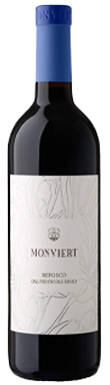
Very deep, bright ruby. The nose is fresh and lively with juicy raspberry fruit and a hint of undergrowth in the background. Dry, midweight and...
2020
Friuli-Venezia GiuliaItaly
MonviertFriuli Colli Orientali
Ronc dai Luchis, Refosco, Faedis, Friuli Colli Orientali, Friuli-Venezia Giulia, Italy 2023
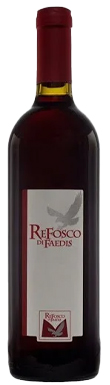
Immediately expressive on the nose, with fresh rose petal scents and lots of red cherry fruit. On the palate, this is bright and lively with...
2023
Friuli-Venezia GiuliaItaly
Ronc dai LuchisFriuli Colli Orientali
Cà di Bon, Refosco, Friuli Colli Orientali, Friuli-Venezia Giulia, Italy 2023
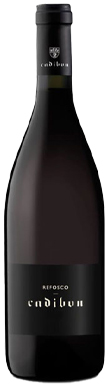
Deep ruby-violet shade typical of Refosco dal Peduncolo Rosso. Slightly earthy and phenolic on the nose, with notes of savoury herbs before the dark berry...
2023
Friuli-Venezia GiuliaItaly
Cà di BonFriuli Colli Orientali
Stroppolatini, Schioppettino, Friuli Colli Orientali, Friuli-Venezia Giulia, Italy 2020
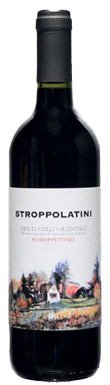
Ripe, sweet cherry and strawberry on the nose, with mature aromas of potpourri and mixed cooking spices. The palate is soft and round, supported by...
2020
Friuli-Venezia GiuliaItaly
StroppolatiniFriuli Colli Orientali

Richard Baudains was born and bred in Jersey in the Channel Islands and trained to be a teacher of English as a foreign language. After several years in various foreign climes, Baudains settled down in beautiful Friuli-Venezia Giulia, having had the good fortune to reside previously in the winemaking regions of Piemonte, Tuscany, Liguria and Trentino-Alto Adige. Baudains wrote his first article for Decanter in 1989 and has been a regular contributor on Italian wines ever since. His day job as director of a language school conveniently leaves time for a range of wine-related activities including writing for the Slow wine guide, leading tastings and lecturing in wine journalism at L’Università degli Studi di Scienze Gastronomiche and for the web-based Wine Scholars’ Guild.