
Carso-Kras: The windswept plateau home to one of Italy's most unique wine regions
It is not just Carso's compact dimensions that make it special. Richard Baudains explores the various indigenous grapes grown in this bijou region.
The windswept limestone plateau of Carso, overlooking the Bay of Trieste, is home to Friuli-Venezia Giulia’s smallest functioning DOC.
Carso-Kras, or simply Carso, has a mere 57 hectares of vines officially registered to the denomination, with production in 2025 of 199,000 bottles.
Yet these figures do not tell the whole story: only a small number of wineries in the area claim the DOC as most bottle their wines under the regional Venezia Giulia IGT.
Properties in Carso are small. Castelvecchio, the only relatively large estate, has 36 hectares, while Edi Kante has 17.
None of the other 21 members of the local growers’ association works with more than 10 hectares, and several have fewer than five.
Wines shaped by rock
Carso is an area of extreme viticulture, with native varieties strongly associated with the region.
It is also a border region, closely connected to neighbouring Slovenia through culture and language.
Get our daily fine wine reviews, latest wine ratings, news and travel guides delivered straight to your inbox.
Place names sound Italian, but family names are Slovene, and Slovene is the language most often spoken at home.
The environment puts strict limits on what can be cultivated in Carso. With bare rock often at the surface, little besides olive trees and vines can survive.
Luca Tomasig of the Castelvecchio estate recounts that it can take more than a month to break up the stone and prepare one hectare for a new vineyard. Consequently, vines are planted in small plots wherever soil can be found.
The deep underground streams typical of limestone karst do little for the surface. Thin soils retain little water, so drought is a constant threat.
These challenges, however, come with a silver lining. Doline – sinkholes where deep banks of red ferrous soil accumulate – provide soil that can be scooped up and used to prepare ground for cultivation.
And extraordinary underground cellars, such as those of Skerk and Zidarich, are carved into the rock to depths of up to 25 metres.
Two prominent features shape Carso’s climate: the nearby sea, which moderates summer temperatures, and the almost constant winds, which bring clear skies and high solar radiation.
These conditions also mean fungal disease is almost entirely absent. ‘I wouldn’t know what downy mildew looks like,’ producer Martin Merlak told me.
Together, Carso’s soil and climate produce naturally low yields of healthy, ripe grapes.
The resulting wines are vibrant, with low to medium alcohol, tense acidity and a distinctive mineral character.
The grapes of Carso
Chardonnay and Sauvignon were introduced to the area in the 1970s, when Friuli-Venezia Giulia’s wine industry was undergoing modernisation.
Although these varieties can make wines of great personality – Edi Kante, for instance, makes an outstanding Chardonnay – they have a marginal presence.
The grapes that define Carso are Malvasia Istriana, the native white Vitovska, and the red Terrano.
Malvasia
The Malvasia of Carso is the same grape that grows widely in the hills of Collio and Collio Orientali.
Thanks to its drought tolerance, it flourishes on the limestone soils of the karst. But its tender canes suffer if Trieste’s famous bora wind arrives in spring, further reducing already low yields.
The wines are lighter and more agile than those from other parts of Friuli or the Istrian coast, and the variety’s typical salty finish is accentuated in Carso.
Vitovska
Vitovska – also spelt ‘Vitouska’ for the Italian version of the name which appears in the national grape register – might be related to Malvasia Bianca Lunga and Glera. In any case, it is native to Carso and an area extending into Slovenia and the Vipaco valley.
Vinified conventionally without the skins, the wines are light and dry, with white-fruit character and delicate, appealing floral aromas, sometimes with a touch of sage or mint.
The variety is well suited to maceration, or skin contact. This style allows the wines to evolve for longer and gives them more substance on the palate and greater mineral intensity.
Terrano
Whether the red Terrano is a variety in its own right or a biotype of Refosco dal Peduncolo Rosso from the Colli Orientali remains an open question.
In Carso, though, it tastes very different from other Refoscos.
It has an impenetrable purple-black colour, sour wild-berry fruit, a low-alcohol palate, mouth-puckering malic acidity and bone-dry tannins.
Late picking and skilful use of oak can soften Terrano to an extent, but it remains an acquired taste. Personally, I find it irresistible.
A skin contact tradition
Wine-growing on the karst plateau has a long history. Pliny the Elder wrote of a wine called Pucinum from the northern Adriatic and associated it with Livia, the wife of Emperor Augustus.
In the 20th century, the region was devastated during WWI, but recovered enough for the Istituto Centrale di Statistica to estimate 1,606 hectares of specialised vineyards in 1938.
Production, however, declined again WWII, and recovery only really began in the 1980s. The Carso DOC was approved in 1985.
Traditionally, as in neighbouring Slovenia, all white grapes were crushed together and fermented with their skins.
When I asked Benjamin Zidarich when he had started macerating his white wines, he looked surprised and replied that he had always done it that way.
Edi Kante was the first to depart from tradition, making single-variety white wines using conventional modern vinification. Today, the two styles exist side by side.
Alongside Kante, the excellent Castelvecchio ferments white grapes without their skins.
Almost all the small artisan producers, however – including leading names such as Kocjancic, Lupinc, Merlak, Milic, Skerk, Skerlj and Zidarich – macerate their wines for varying lengths of time.
Skerk, Skerlj and Zidarich favour an extracted style with long skin contact, while others, such as Martin Merlak, macerate for shorter periods to preserve varietal freshness.
‘It might be macerated, but it still needs to taste like a white wine,’ Merlak argues. When handled sensitively, both styles work in Carso.
Although a handful of the most representative producers export small quantities, the best way to get hold of a few bottles is to visit this remarkable region – something I highly recommend.
Below is my selection of wines from Carso to look out for.
Wines from the Carso plateau
Wines are grouped by grape variety
Related articles
Orange wine quiz: How much do you know?
Panel tasting results: North Italian Pinot Grigio bursting with character
Beyond just whites: Colli Orientali is crafting thrilling reds from Friuli’s native varieties
Castelvecchio, Dileo Riserva, Carso, Friuli-Venezia Giulia, Italy 2023
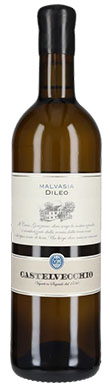
Freshness and great definition on the fruity and floral nose, which displays ripe peach, tropical notes of mandarin and pineapple, sweet spice and a touch...
2023
Friuli-Venezia GiuliaItaly
CastelvecchioCarso
Skerk, Malvazija, Venezia Giulia, Friuli-Venezia Giulia, Italy 2023
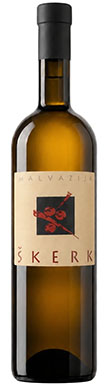
Golden straw in shade, with a complex nose that shows the aromatic side of the variety in its ripe fruit and spice aromas, alongside a...
2023
Friuli-Venezia GiuliaItaly
SkerkVenezia Giulia
Kante, Malvasia, Venezia Giulia, Friuli-Venezia Giulia, Italy 2023
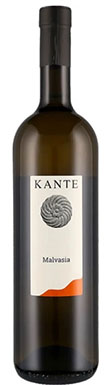
Bright, pale straw. On the nose, an intricate weave of rosehip, pressed flowers and mallow tea is followed by candied fruit, lime peel and a...
2023
Friuli-Venezia GiuliaItaly
KanteVenezia Giulia
Zidarich, Kamen Vitovska, Venezia Giulia, Friuli-Venezia Giulia, Italy 2023
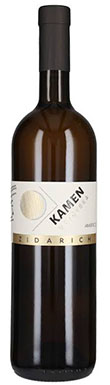
Bright, pale gold in colour. Great complexity on the nose, with ripe fruit, beeswax and notes of aromatic tea and camomile. Very decisive on the...
2023
Friuli-Venezia GiuliaItaly
ZidarichVenezia Giulia
Skerlj, 67, Venezia Giulia, Friuli-Venezia Giulia, Italy 2023
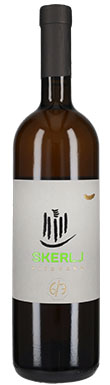
Deep straw in shade, with a big, expressive, faintly oxidative nose of lemon pith and savoury Mediterranean herbs. The palate is broad and substantial with...
2023
Friuli-Venezia GiuliaItaly
SkerljVenezia Giulia
Merlak, Vitovska , Venezia Giulia, Friuli-Venezia Giulia, Italy 2023
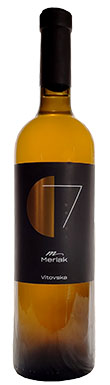
Very fresh and immediate on the nose, with benchmark Vitovska aromas of white currant, peach and sweet spring blossom. The palate opens light, juicy and...
2023
Friuli-Venezia GiuliaItaly
MerlakVenezia Giulia
Milic, LuNe Vitovska, Venezia Giulia, Friuli-Venezia Giulia, Italy 2019
A mature wine with the layered complexity that comes from long ageing in traditional barrels, showing aromas of dried apricot, baked apple, medlar, savoury herbs,...
2019
Friuli-Venezia GiuliaItaly
MilicVenezia Giulia
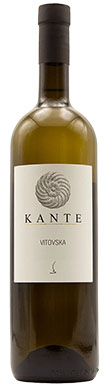
Kante, Vitovska, Venezia Giulia, Friuli-Venezia Giulia, Italy, 2023
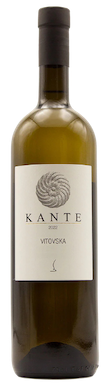
Bright, pale straw. The nose has the delicate floral notes and the pear and citrus peel of the variety framed by a touch of minty...
2023
Friuli-Venezia GiuliaItaly
KanteVenezia Giulia
Skerk, Teran, Venezia Giulia, Friuli-Venezia Giulia, Italy 2023
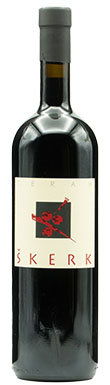
Youthful, bright violet shade with fresh and intense aromas of sour blackberry, violets, a touch of pepper, and a hint of saltiness. Big, tangy impact...
2023
Friuli-Venezia GiuliaItaly
SkerkVenezia Giulia
Zidarich, Teran, Venezia Giulia, Friuli-Venezia Giulia, Italy 2023
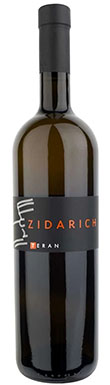
Bright, deep, uniform purple in shade. The exhilarating nose opens with sour wild berries, violets and iris, with a touch of green peppercorn in the...
2023
Friuli-Venezia GiuliaItaly
ZidarichVenezia Giulia
Skerlj, Terrano, Venezia Giulia, Friuli-Venezia Giulia, Italy 2023
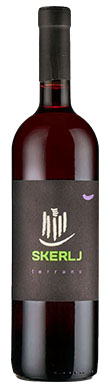
Deep inky purple in shade. Intense, sweet bilberry on the nose, with a touch of moss around the edges. The profile on the palate is...
2023
Friuli-Venezia GiuliaItaly
SkerljVenezia Giulia
Lupinc, Terrano, Venezia Giulia, Friuli-Venezia Giulia, Italy 2023
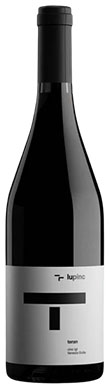
Deep ruby, with purple borders. On the nose, the fruit is ripe and plummy, with a touch of new oak adding a little sweet spice....
2023
Friuli-Venezia GiuliaItaly
LupincVenezia Giulia
Richard Baudains was born and bred in Jersey in the Channel Islands and trained to be a teacher of English as a foreign language. After several years in various foreign climes, Baudains settled down in beautiful Friuli-Venezia Giulia, having had the good fortune to reside previously in the winemaking regions of Piemonte, Tuscany, Liguria and Trentino-Alto Adige. Baudains wrote his first article for Decanter in 1989 and has been a regular contributor on Italian wines ever since. His day job as director of a language school conveniently leaves time for a range of wine-related activities including writing for the Slow wine guide, leading tastings and lecturing in wine journalism at L’Università degli Studi di Scienze Gastronomiche and for the web-based Wine Scholars’ Guild.