Merlot in Italy: A short history of its role in Italian winemaking and six to try
Widely planted in Italy today, Richard Baudains investigates Merlot's origins in the country and questions how it fares today.
Vittorio degli Albizzi is credited with being the first to introduce Merlot to Italy when he returned from Burgundy in 1855 and replanted his high-altitude Pomino estate in Tuscany with French varieties.
Some ampelographers, however, suspect that Merlot was retroactively grouped in with Chardonnay and Pinot Noir in the estate's records.
Whatever the truth, we know that Merlot only really got going in the region well into the second-half of the 20th century, when wide-scale planting of the variety took place.
The first fully verifiable reference to Merlot comes from records at the viticulture and oenology school in Conegliano in the Veneto in 1875.
In the neighbouring region of Friuli, the grape was being grown commercially by the 1880s, and it was from here that a certain Count Savorgnano won the first recorded prize for a Merlot wine in Italy, in 1896.
The variety quickly spread from Friuli to the plains of Veneto, where it gained a firm foothold as a workhorse variety by the end of the 19th century.
Today, Merlot is included in no fewer than 105 DOC/Gs up and down the country, and the latest national figures (ISMEA, 2024) show a total of 24,237 hectares planted.
Veneto is Italy's biggest source of Merlot, with 5,710ha (according to Reg. Veneto, 2025), followed by Tuscany with an estimated 3,000-4,000ha (according to Reg. Toscana, 2024).
Get our daily fine wine reviews, latest wine ratings, news and travel guides delivered straight to your inbox.
Numbers are much smaller in Friuli, but Merlot remains the most planted red grape in the region.
The height of Merlot planting in Italy was in the first decade of the 2000s, but since then it has declined considerably, especially in the northeast.
In 2010, Merlot accounted for 12% of the surface area of Veneto; now it is down to 5.5% (according to Reg.Veneto, 2025) as the industry moves increasingly towards commercial white wines.
The Merlot question
Two main themes are associated with Merlot in Italy. The first is to do with how it can best be used.
Merlot performs well in blends in many parts of the country. For example, in Veneto and Trentino – which was the first region in Italy to obtain a DOC for Bordeaux blends – it softens the often tough Cabernets.
In Tuscany, Merlot was planted widely in the 1980s and 1990s, initially with the function of bolstering Chianti Classico with its colour, fruit and body which was in demand at the time.
Merlot was an obligatory component of the first versions of the Bolgheri DOC, and it crops up in high profile wines of a similar style in many other regions.
The second question relates to Merlot's response to soil and climate.
Planted in 14 Italian regions, in the most diverse growing conditions, can we say that it is suited to all of them?
Mono-varietal Merlot is, of course, capable of greatness – but not everywhere.
The issue is that Merlot is very sensitive to terroir. It needs well ventilated sites with mid-range temperatures, and soils with good water retention since it is susceptible to drought stress.
It ripens quickly on warmer slopes, with a rapid accumulation of sugar and loss of acidity – but not necessarily mature tannins. In cooler climates, it can have bright, juicy fruit, but also a grassy edge.
Merlot's popularity is in part due its versatility; the same grape which produces famous wines such as Masseto on the blue clay of Bolgheri also makes the popular everyday drinking wines of the northeast.
Six Italian Merlot to demonstrate the variety's diversity
Related articles:
A decade of change: How Italian winemaking evolved between 2006 and 2016
Panel tasting results: Super Tuscans under £50
Parallel vines: Cabernet Franc stars across Ontario and New York State
Conte Brandolini d'Adda, Vistorta, Venezia Giulia, Friuli-Venezia Giulia, Italy 2019
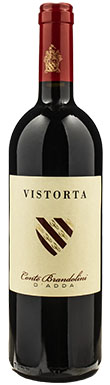
Vistorta is a micro-area with deep clay soils which are extremely rare on the gravelly alluvial plain of Friuli. The varietal character of the fruit,...
2019
Friuli-Venezia GiuliaItaly
Conte Brandolini d'AddaVenezia Giulia
Macchion dei Lupi, Profeta Merlot, Costa Toscana, Tuscany, Italy, 2019
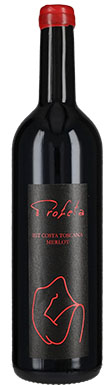
Suvereto is renowned for its structured, intensely flavoured Merlot, and the Macchion dei Lupi showcases these features in exemplary fashion; benchmark varietal fruit with a...
2019
TuscanyItaly
Macchion dei LupiCosta Toscana
Petrolo, Galatrona, Valdarno di Sopra, Tuscany, Italy 2019

While many questions remain about the suitability of Merlot to the Tuscan coast, the cooler Valdarno produces wines which have the elegance of the variety,...
2019
TuscanyItaly
PetroloValdarno di Sopra
Alois Lageder, MCMLVII Vecchie Viti Merlot, Alto Adige/Südtirol, Trentino-Alto Adige, Italy 2019
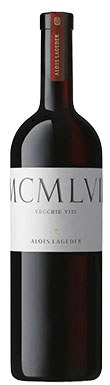
Trentino-Alto Adige Merlot typically has dark berry fruit with a distinctive herby, liquorice twist. This wine has the typical medium body of the wines of...
2019
Trentino-Alto AdigeItaly
Alois LagederAlto Adige/Südtirol
Arnaldo Caprai, Belcompare, Umbria, Italy 2019
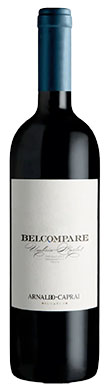
This Umbrian Merlot has the density and concentration which inevitably draws comparisons with the wines of Montefalco – certainly more generous in fruit and less austere,...
2019
UmbriaItaly
Arnaldo CapraiUmbria
Edi Keber, Merlot, Collio, Friuli-Venezia Giulia, Italy 2019
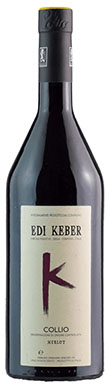
The calcareous marl soils of the Collio suit Merlot, and it ripens well in good vintages like 2019. Edi Keber’s wine has the direct fruit,...
2019
Friuli-Venezia GiuliaItaly
Edi KeberCollio
Richard Baudains was brought up on the formerly French-speaking island of Jersey (hence the French surname). He moved to Italy to teach, and his first article with Decanter was published in 1988. He has been writing about Italian wine ever since, currently with a monthly column on Decanter Premium. Judge and long-time regional chair at the Decanter World Wine Awards, Baudains is also on the editorial team of the Slow Wine Guide for Friuli Venezia Giulia, and has taught MA courses on Wine Journalism at the Università delle Scienze Gastronomiche. Baudains judges in wine competitions and leads tastings and educational seminars in various Italian regions. Outside of wine, he works as a Cambridge University English language examiner. He lives in Gorizia.