
‘It has been a defining decade for the Cape’s wine industry and the next 10 years are even more exciting’
Victoria Mason MW reflects on the changing wine scene in South Africa during a decade of buying bottles from the Cape.

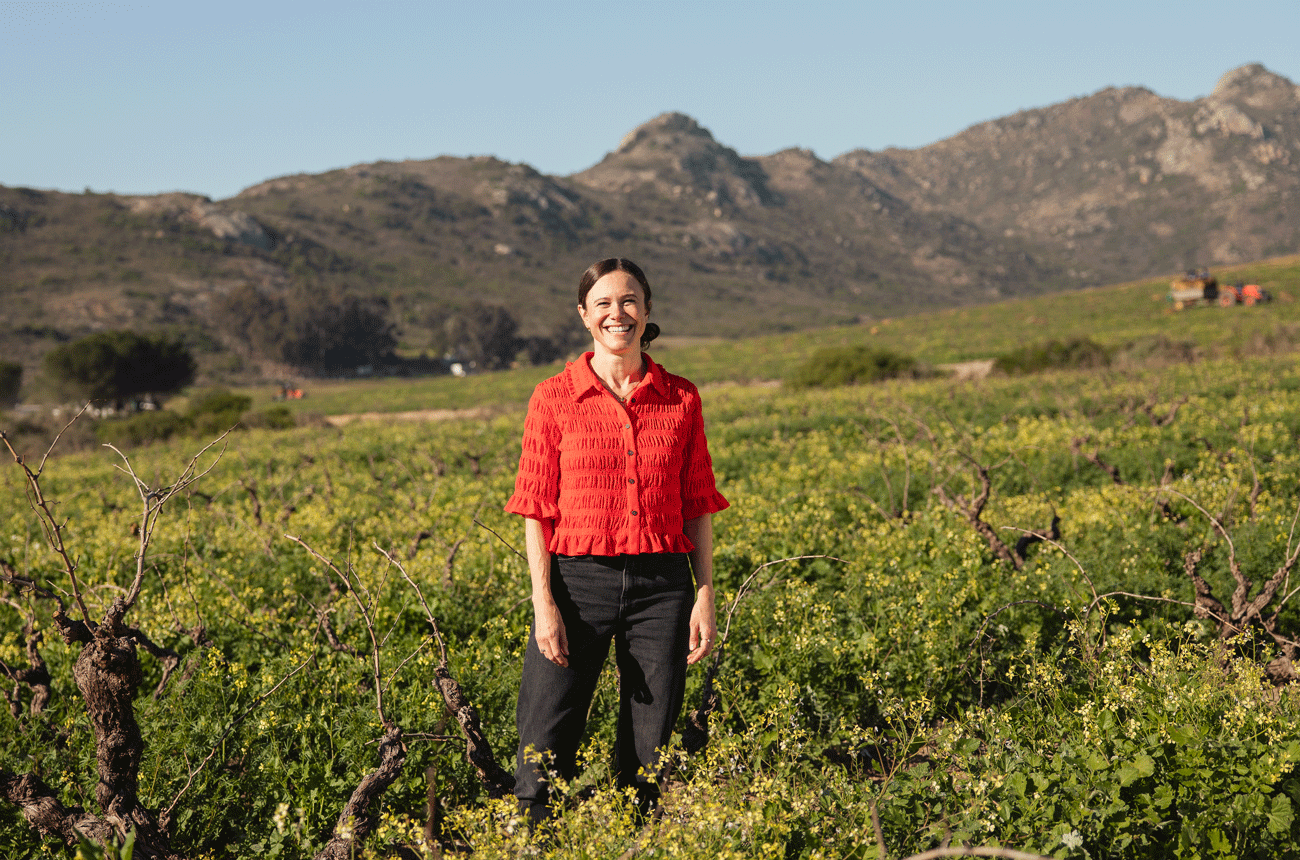
Victoria Mason MW started buying South African wine professionally in June 2016.
Since September 2025, she has been responsible for South Africa at The Wine Society, a role which, for her, feels like a synthesis of her two previous positions at Waitrose and Bordeaux Index respectively.
She now sources across the full spectrum of what South Africa offers wine wise, from inexpensive, uncomplicated easy-drinkers to the Cape’s finest and rarest bottles.
Ten years is a tiny fraction of South Africa’s now almost four-century-old history of growing vines.
Yet so much has happened since 2016; it has been a defining decade for the Cape’s wine industry.
When I started buying South African wine, the Swartland Revolution had been and gone but the energy it had unleashed was crackling through the Western Cape.
The ‘New Wave’ movement was in full flow and the atmosphere was electric, charged with potential and hope, commitment and resolve.
Get our daily fine wine reviews, latest wine ratings, news and travel guides delivered straight to your inbox.
I felt I had arrived in the eye of the storm, and I was engulfed by its power; moved at soul level by the wines, the people and the place.
Riding the New Wave

David and Nadia Sadie in the vineyard
The New Wave reached British shores via an inspired collaboration between the importers of this new generation of Cape winemakers.
A series of three tastings in London in 2015, 2017 and 2019 launched the UK’s perception of South African wine into an entirely different stratosphere.
They featured Alheit, Badenhorst, Beaumont, Boekenhoutskloof, Craven, Crystallum, David & Nadia, Keermont, Lismore, Miles Mossop, Momento, Mullineux, Newton Johnson, Rall, Reyneke, Restless River, Sadie Family, Savage, Storm, Thorne & Daughters and more.
These pivotal producers have now matured: side hustles have become full-time successful businesses; vineyards have been bought and rejuvenated; farming has been approached through a new lens of focus and care; winemaking approaches and philosophies have been subtly refined; single-vineyard wines have flourished.
There has been the steady growth in confidence, and belief, that comes with better knowing the land and themselves, but the relentless pursuit of improvement continues.
Vineyard and cellar
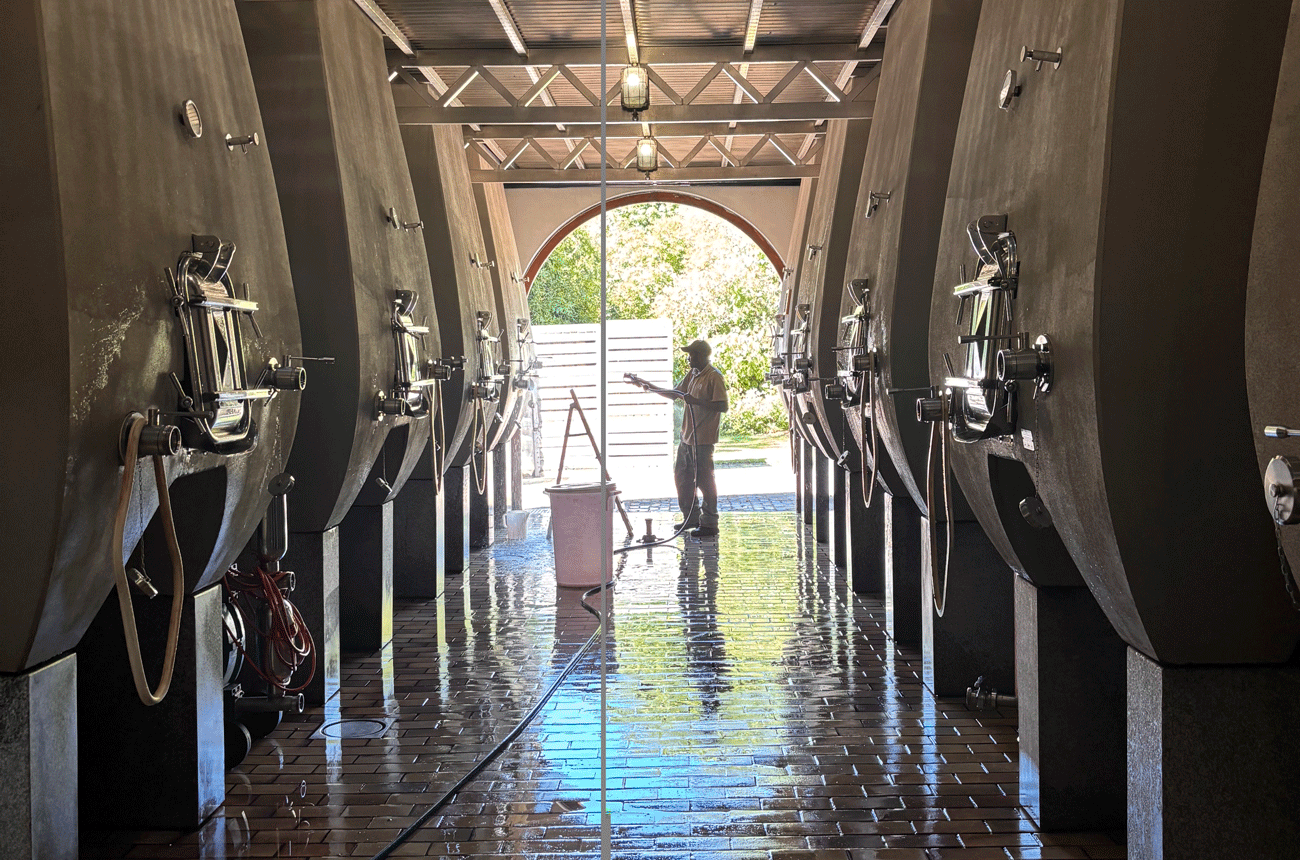
Inside the Boekenhoutskloof Cellar
There have been many changes besides the coming of age of the New Wave. Stellenbosch, the second oldest continuing viticultural region in South Africa, has been quietly going through its own evolution.
Taking the red Bordeaux varieties with which the region has made its name as an example: the precision of these wines, from both new-wave and historic producers, has ascended to another level – even where that level was already very high.
This has been driven both by improvements in the vineyard – getting really site-specific about what to plant where, fastidiously tackling leaf-roll virus, tailoring inter-row and canopy management practices to the plot and the variety – and in the cellar, with more gentle extractions and more judicious approaches to oak.
I believe that the 2025 vintage, when all of this work started to come together and coincided with a near-perfect season, is the watershed vintage for the region.
‘South Africa’s best Pinots are now world-class.’
Some of these changes of the last 10 years can be attributed to the simple passing of time, to realising the benefit of good decisions made two decades ago.
The vine age of Pinot Noir in the Hemel-en-Aarde Valley and wider Cape South Coast is another case in point.
The right clones on the right rootstocks planted on the right sites have, with the most recent vintages, started to reach an equilibrium.
The resulting wine quality, especially the texture of the tannins but also the length and resonance of the wines, has improved markedly and South Africa’s best Pinots are now world-class.
Growers step out of the shadows
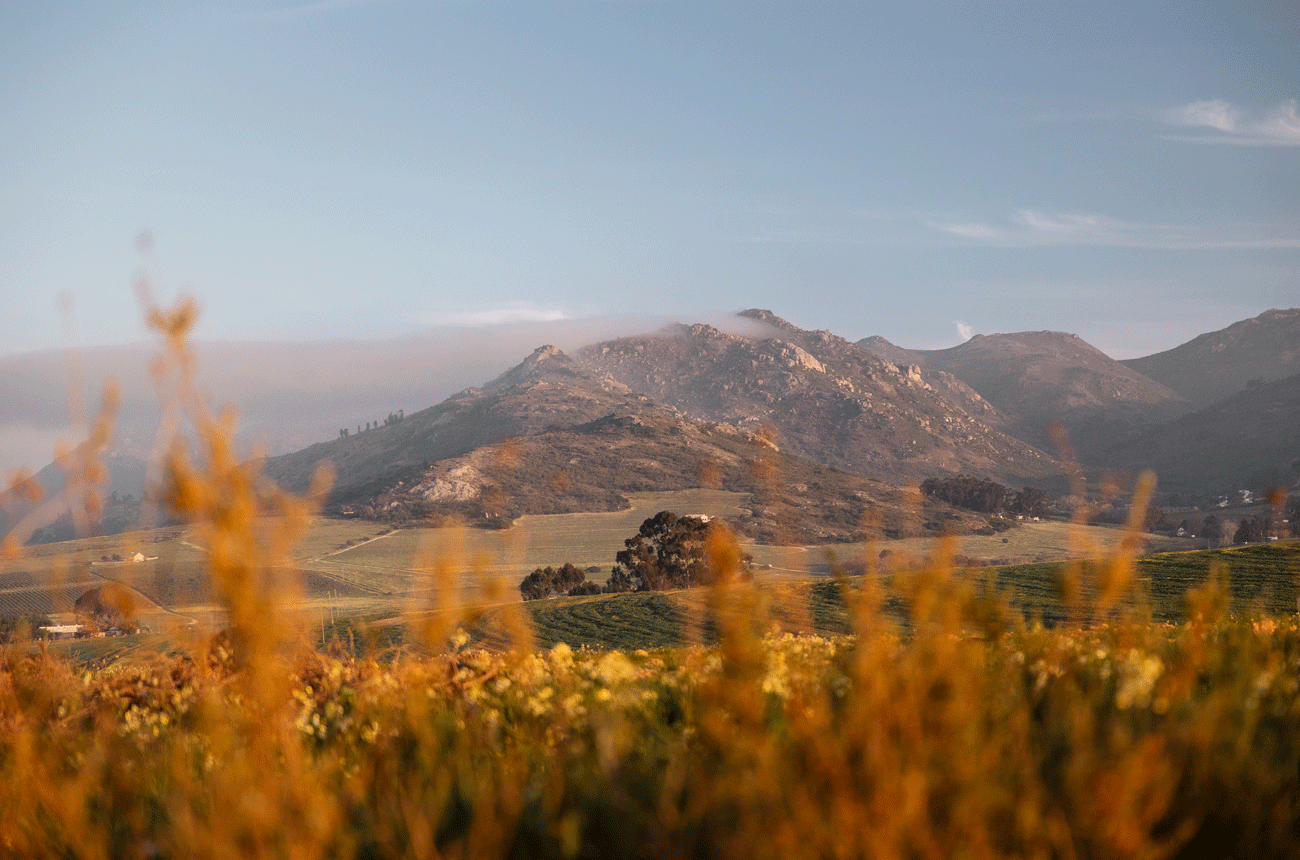
Growers from regions such as the Swartland are increasingly being recognised
One of the most positive Cape-wide changes has been the increased attention on growers.
We are now becoming familiar with the names of the farms that are home to some of the best vineyards; farms such as Rustenhof in Stellenbosch, Eikelaan in the Swartland, Oudam in Citrusdal Mountain.
Winemakers talk about where and who they source from, with some now signposting this on their labels. Mullineux including the farm on the front label of their Single Terroir series is one example.
We are now in the middle of an exciting turning point, with multi-generational primary grape growers starting to bottle their own wine from their own vines.
Growers such as Carinus Vineyards in the Polkadraai Hills were forerunners here, with more recent examples including Du Bois Vineyards in Bottelary and Steilpad in Paarl.
The significance of this is twofold. Firstly, when grape growers become winemakers, this changes their perspective on how they farm; yield is no longer the primary concern, with quality and site expression becoming bigger preoccupations.
Secondly, the economics of growing vines make more sense when the grower is able to produce and sell bottled wine, a value-added product.
Simplistically, if more money is flowing to the people managing the land, there is greater scope for farming in a way which replenishes the soil and allows natural biodiversity to thrive, creating a more resilient vineyard ecosystem.
The new generation
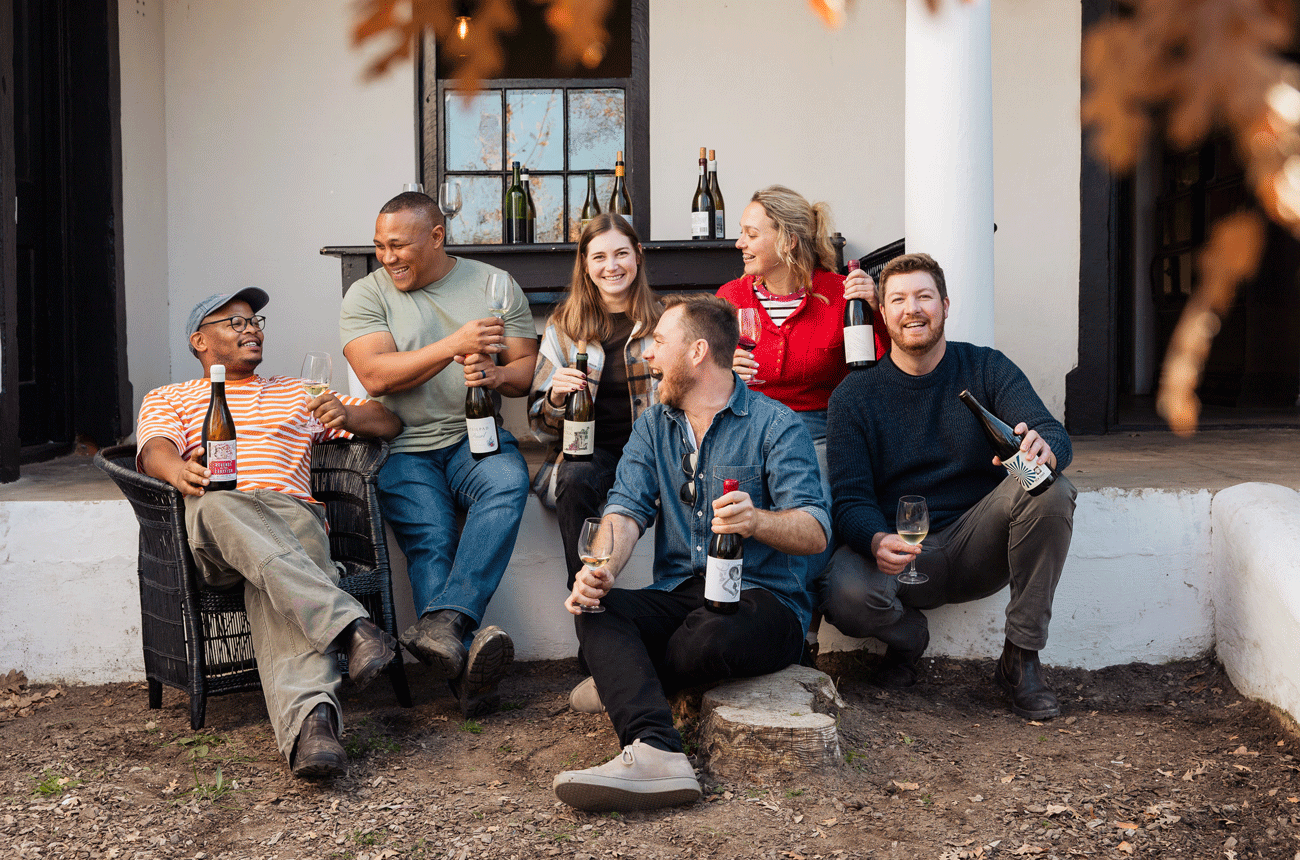
Left to right: Banele Vakele, Rüdger van Wyk, Natasha Jacka, Sakkie Mouton, Selma Willemse and Jorrie du Plessis
Another exciting development is the nascent next generation of producers. In The Wine Society’s recent ‘Spotlight on South Africa’ – a focus on the Cape’s contemporary fine wine scene – I assembled a collection of 13 rising stars.
All have independent labels and have released fewer than 10 vintages of their own wine.
In their 20s or 30s, this next gen gang are making exhilarating wines with a self-assuredness and an accomplishment that belie their years.
Critically, their backgrounds and their routes into wine are diverse, with three of these 13 brands owned by black winemakers: Banele Vakele’s Tembela, Natasha Williams’ Lelie van Saron, and Rüdger van Wyk’s New Dawn.
All three deserved to be in the mix not because they are black, but because their wines are utterly brilliant.
And there is a growing number of talented black winemakers like them, not all with their own labels, but working in important positions at established producers across the Cape.
Looking ahead
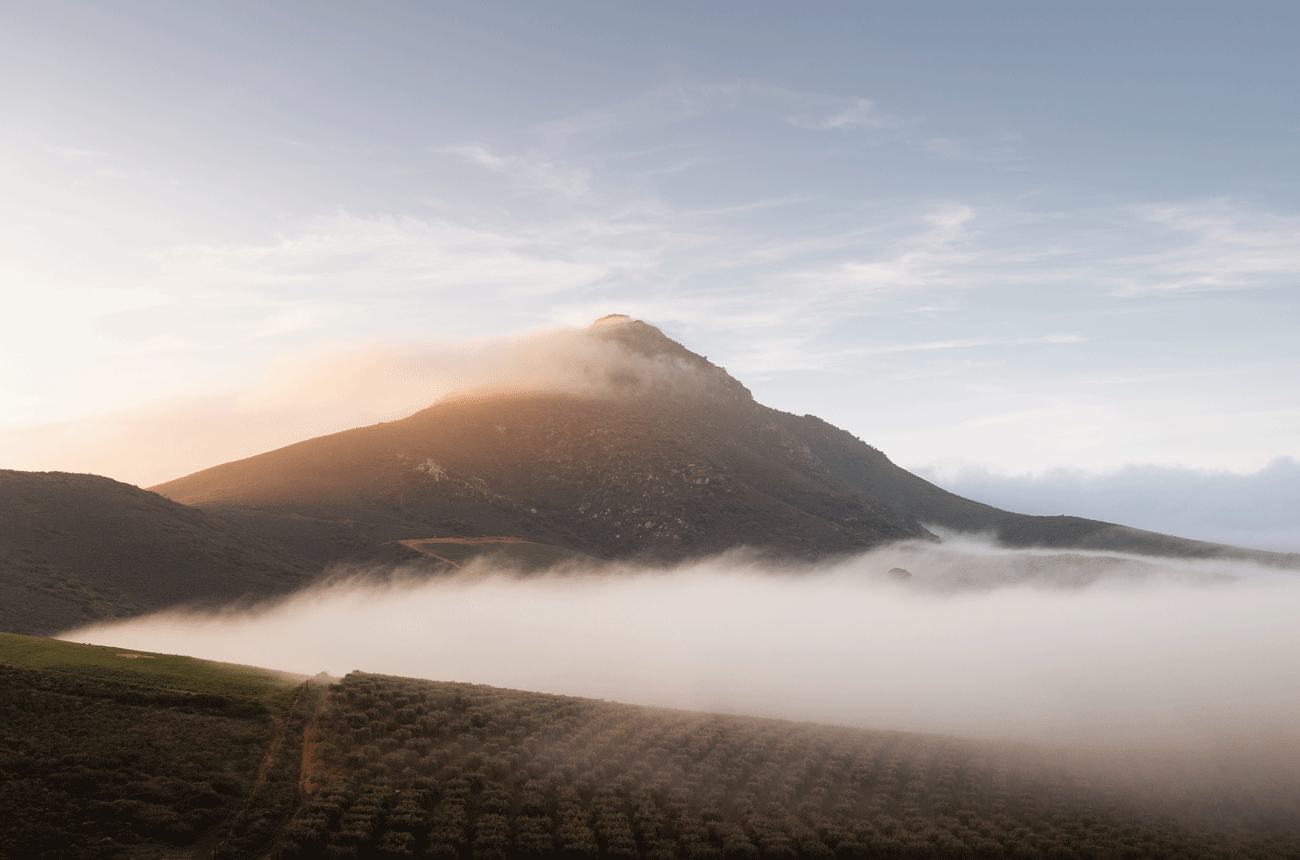
The Paardeberg mountain in Swartland is home to a treasure trove of old vines
We still have work to do, much work to do, and that responsibility lies with everyone in the supply chain, but the industry is slowly becoming more diverse and this is one of the most uplifting changes of the last decade.
I am just as charged with energy and hope for South Africa’s wine future today in 2026 as I was in 2016.
Of course there are myriad challenges to face into, but the resilience of South Africans is a thing to behold.
The industry is more dynamic and more ambitious than ever, and the breadth and depth of its wine offering is dazzling.
Some of the Cape’s greatest wines have emerged in the last 10 years and can now, with their track record, legitimately be called the 'greatest'.
I am excited when I think about the potential still to unfold in the next 10 years – and beyond.
In my glass this month
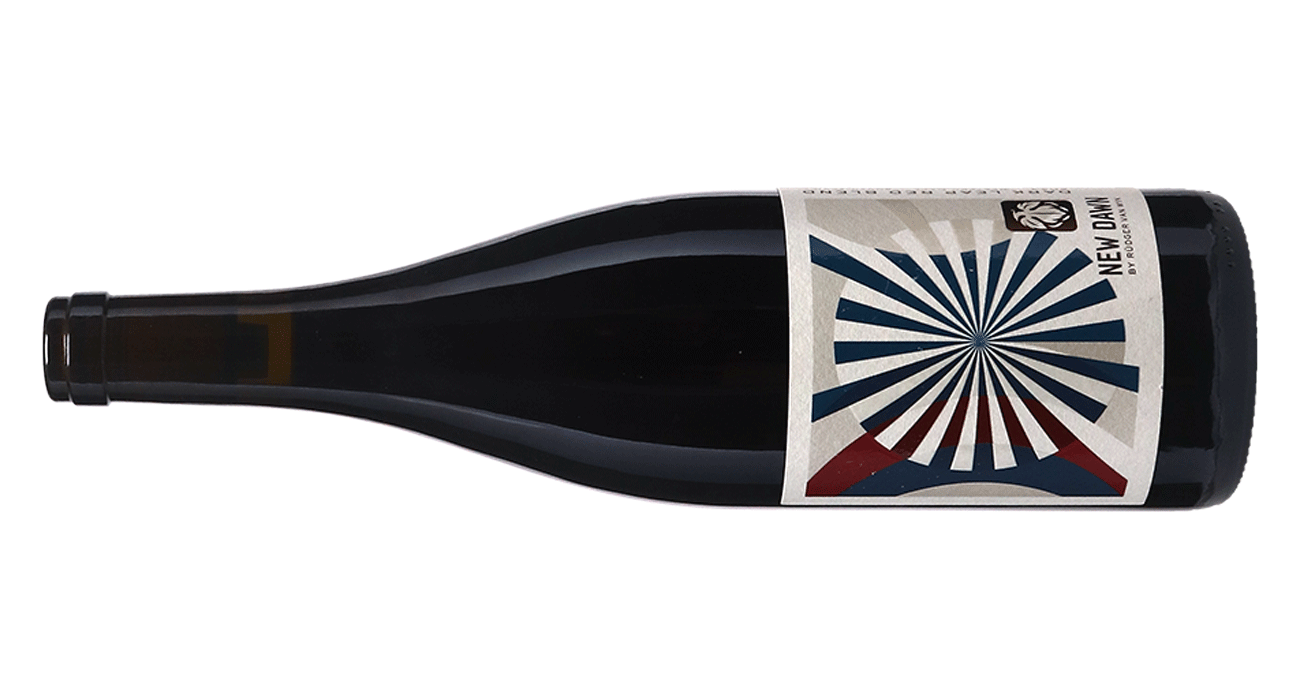
The debut vintage of Rüdger van Wyk’s New Dawn Dark Leap is a bold and characterful Mediterranean red blend.
Exuding black cherry and blueberry fruit with evocative savoury spice, and pulsing with a vibrant, juicy acidity, it is based primarily on Syrah from the Breedekloof, with Carignan, Grenache and Cinsault in support.
Rüdger is one of South Africa’s rising stars and his New Dawn brand represents what he calls his ‘leap of faith’ in founding his own business; he wants it to be a catalyst for a ‘New Cape movement’ centred on inclusivity and openness.
Related articles
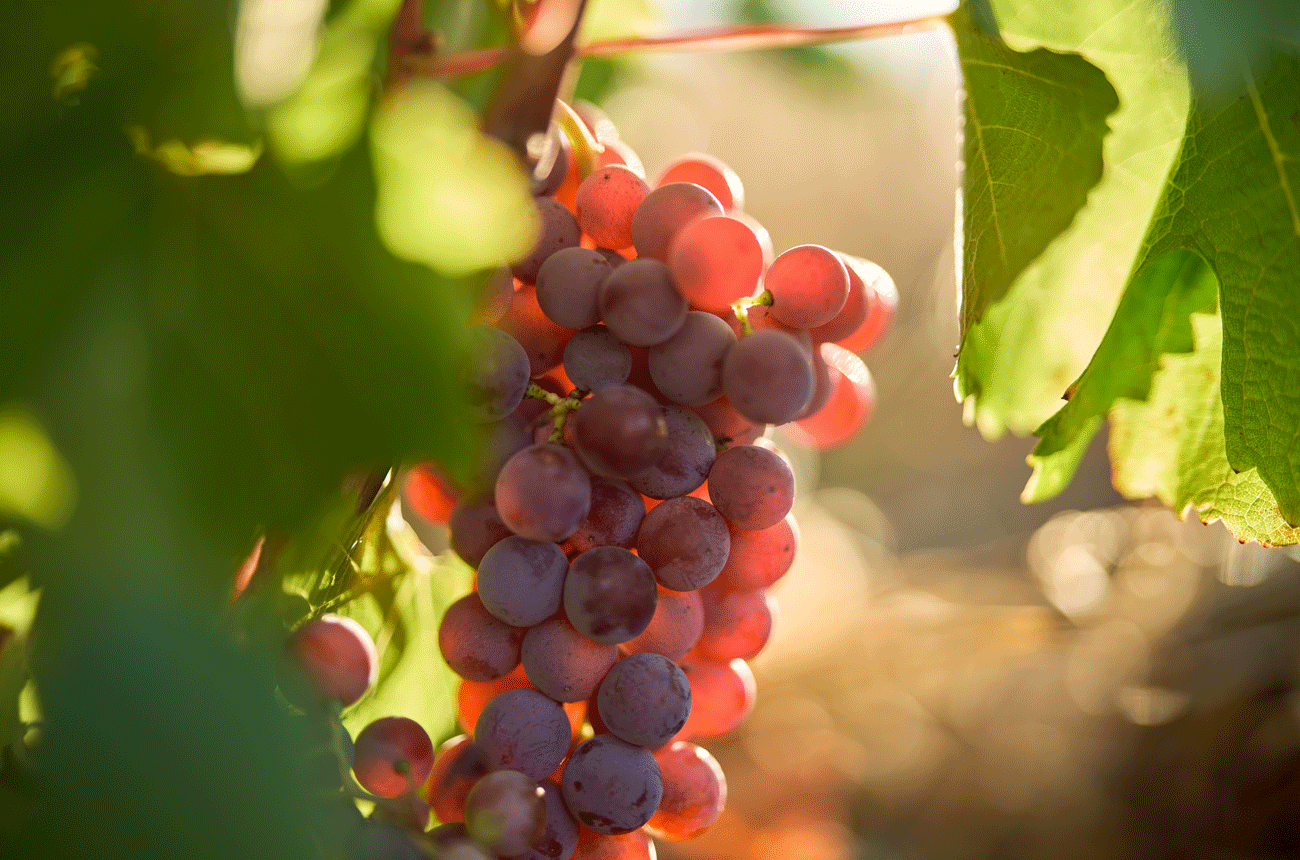
South Africa's Sémillon Gris is officially certified as a brand new variety
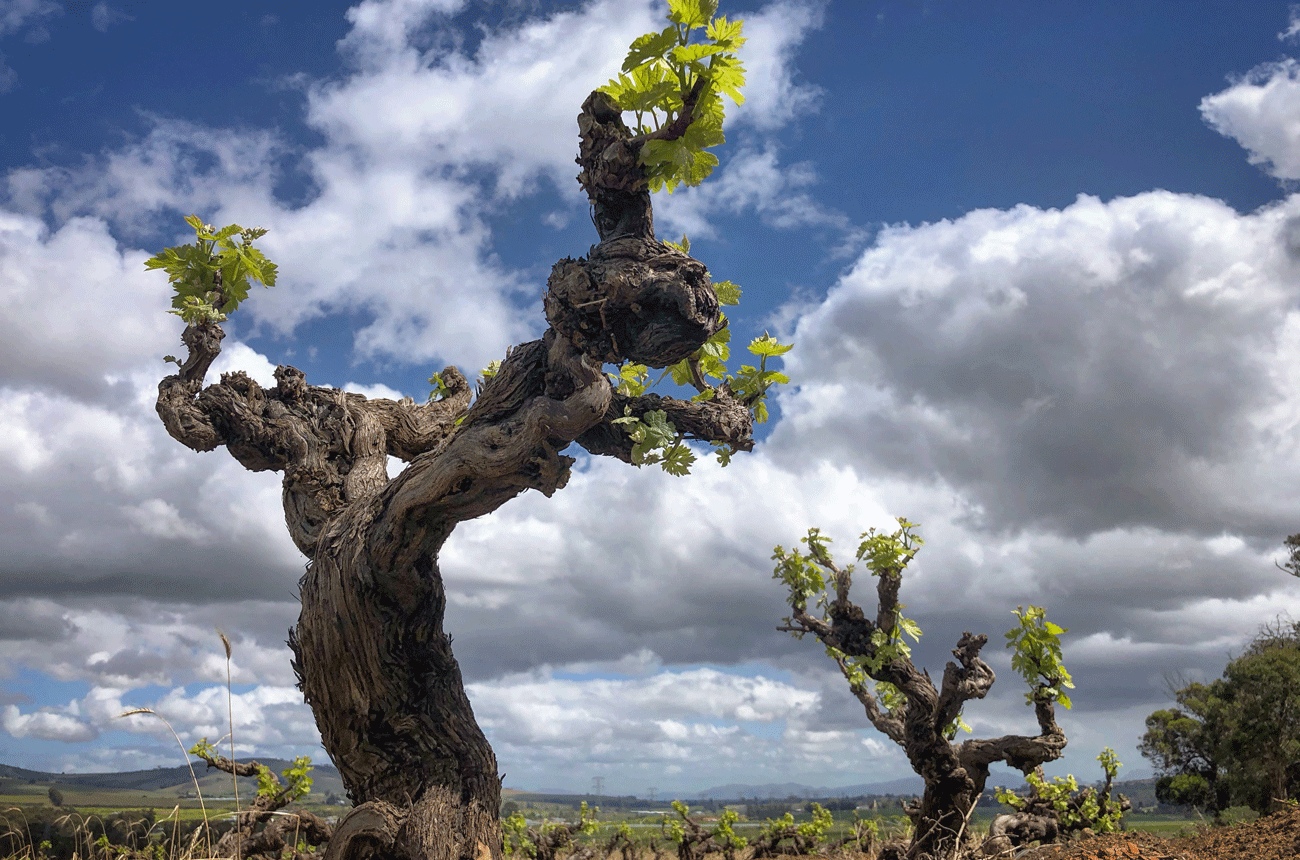
Get to know South Africa’s old vines in six wines

Sign up to the South Africa newsletter today!

Victoria Mason MW is a wine buyer covering multiple regions for The Wine Society. Formerly senior fine wine buyer at Bordeaux Index, she previously worked in retailer Waitrose’s wine buying team, where her regions initially included Loire and South Africa. She became a Master of Wine in 2024, winning the Quinta do Noval Award for the best research paper by a new MW, on regenerative viticulture in Stellenbosch, South Africa.