There’s a stretch of road I always dread when I’m on my way to Rioja from Castilla y León.
As the highway approaches Burgos, hundreds of trucks snake their way from the south of Spain towards the Basque Country, heading to the north-coast port of Bilbao.
Weaving in and out of this endless queue is exhausting. But exit 57 towards Pancorbo offers much welcome relief. The N232 meanders through the province of Burgos before giving way to La Rioja as the valley sweeps into view.
The road is quiet and gently winds its way eastwards, in the shadow of the rocky Cantabrian mountains to the north and the Sierra de la Demanda in the south.
In spring, a patchwork of green and yellow covers the valley floor as bud burst awakens the vines and vibrant rapeseed flowers come to life, and in autumn the fiery red and amber of the vine leaves form a kaleidoscope of colour.
It’s a majestic landscape, rooted in permanence yet alive with renewal.
Given its centuries of viticultural heritage, Rioja presents a somewhat surprising sense of dynamism and energy rarely found in the world’s most traditional regions.
Decanter newsletter
Get our daily fine wine reviews, latest wine ratings, news and travel guides delivered straight to your inbox.
A new wave of small growers and a younger generation are making vineyard-focused wines; indeed, a tasting in March in Madrid by VIR (Viticultores Independientes de Rioja) offered a diverse and fascinating overview of these producers.
Many of these wines fall outside the traditional classification system (Crianza, Reserva, Gran Reserva), many simply defaulting to the catch-all Genérico designation and embracing the new geography-based Rioja classification pyramid.
Yet in the broader market, both domestically and internationally, it’s often the larger, well-established or historic Rioja houses through which most consumers get to know Rioja.
Historic wineries such as Marqués de Murrieta, CVNE and Marqués de Riscal boast histories that date back well over 100 years.
In the 1980s, Roda became a new member of the band of bodegas in the old Barrio de la Estación in Haro and has helped build brand Rioja alongside its neighbours La Rioja Alta and Muga.
Staying relevant
So how do you adapt to changing tastes and a shifting wine scene?
Many wines have already achieved a high level of success through recognisable styles and critical acclaim.
For Victor Urrutia, owner and CEO of CVNE (Compañía Vinícola del Norte de España), the key is remaining relevant.
‘For us, it means perfecting the old, for instance our Gran Reservas, and inventing the new,’ he explains. ‘It sounds dramatic but it is quiet work, interpreting our vineyards as faithfully as possible, and through a different lens. That is how Contino got started 50 years ago as Rioja’s first single vineyard.’
And what is today’s fresh, modern interpretation of those vineyards?
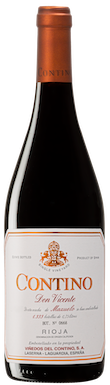
Contino, Don Vicente is a single-varietal wine made from a single plot of Mazuelo. It’s one of only a few wines in Rioja made solely from this variety, which producers are finding to be well suited to the changing climate.
As a late-ripening grape that retains acidity and is quite sturdy in the face of drought, Mazuelo offers potential beyond its classic blending capabilities.
Don Vicente 2021 is only the fourth vintage released and offers something surprising under the reassuring umbrella of the Contino brand.
‘So in effect,’ says Urrieta, ‘we side-step the issue of changing a well-established reference.’
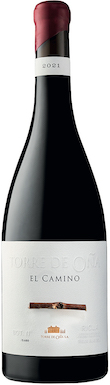
It’s a similar story for Torre de Oña, part of the group of wineries belonging to La Rioja Alta, which has now produced two vintages (2021 and 2022) of El Camino, a refreshing, elegant wine with serious poise and a chalky texture from parcels in Elvillar, far removed from the very recognisable, classically oaked styles of Viña Ardanza 890 and 904 from La Rioja Alta’s iconic range.
‘For a winery like La Rioja Alta, to innovate is not a challenge but a necessity,’ says head winemaker Julio Saénz. ‘To keep defending a style means you have to adapt to new situations like climate change. In the case of El Camino, the vineyard determined the style.'
Rooted in change
Luis Hurtado de Amézaga, technical director of Marqués de Riscal
(Image credit: Rafa Cabal)
For Luis Hurtado de Amézaga (pictured, above), technical director of Marqués de Riscal and sixth-generation of the bodega’s founding family, the future of his winery and the region lies in its soils.
Founded in 1858, the winery has a storied tradition of producing fine wines and impressive stocks of old vintages in its underground cellars, but for Hurtado the key to the future lies in its vineyards: ‘Only a living soil is capable of reflecting the personality of the terroir in the wines and enhancing their varietal character.’
Hurtado has overhauled the winery’s viticultural practices with a ban on herbicides, a new regime of cover crops, organic compost and a keyline planting system to combat erosion and improve access to water on both their own terraces and those of their partner suppliers.
‘It’s all about improving the biodiversity and microbiology of the soils,’ he explains. ‘In this way, old vines can be maintained for much longer with viable yields and the ability to produce high-quality wines.’
A paler shade of Rioja
Inside Roda’s 19th-century cellars in Haro
(Image credit: Daniel Acevedo)
Developments in the vineyards also extend to a shift in colour.
Whites have always been planted in Rioja, often playing an important role in old, co-planted vineyards (in which different varieties grow beside each other) exploited by some of the most historic wineries.
But the success of Rioja’s reds in export markets saw the area of white vineyards decline dramatically: in 1985, there were 9,094ha of white vineyards; by 2005, just 4,645ha remained.
That year, the Rioja consejo regulador (‘regulatory board’) authorised the planting of new white vines and now there are about 6,000ha producing some of Spain’s most thrilling white wines.
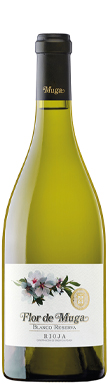
One of Rioja’s most recognisable estates, Bodegas Muga introduced a new white into its portfolio with the 2018 Flor de Muga Reserva Blanco. Now in its fifth release, it’s a modern approach to an oak-aged white that blends Viura with Garnacha Blanca and Maturana Blanca.
Fruit-focused, the wine reflects a wider trend in the region towards serious whites that combine classic cues with a contemporary focus on freshness.
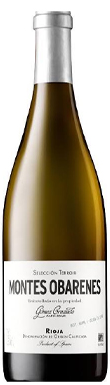
At the forefront of this movement was another foundational bodega of the Barrio de la Estación, Gómez Cruzado (founded in 1886), which released its first vintage of Montes Obarenes in 2013.
The 2021 vintage is a blend of Viura with Tempranillo Blanco, Malvasía, Garnacha Blanca and Calagraño. It continues to be one of the most characterful white wines of Rioja.
Another Haro winery, Bodegas Roda, has also introduced a white wine to its range – Roda I Blanco – launched in 2022 with the 2019 vintage.
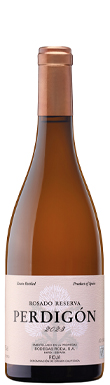
But it has also joined a growing number of producers championing serious, ageworthy rosés with the debut this year of Roda, Perdigón Reserva Rosado 2023 (see recommendations, below), a single-vineyard wine made from Tempranillo and Garnacha, and aged in French oak.
Beyond barrels
Vineyards at Marqués de Murrieta, with the winery visible in the background
(Image credit: Marqués de Murrieta)
Oak has always been an important part of Rioja’s wines and continues to be the ageing vessel of choice, but the reliance on wood as the driving characteristic of the wines has certainly diminished.
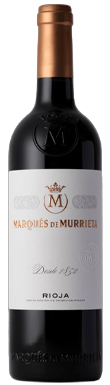
Marqués de Murrieta is one of Rioja’s oldest and most prestigious wineries, so even its most subtle stylistic shifts merit scrutiny.
The mainstay of the estate, the red Reserva is more elegant and finer in its current incarnation than ever before.
The completion of the new winery in 2021 has allowed for a more precise and careful treatment of individual parcels, including fermentation in concrete and ageing in a custom-built barrel room designed for detailed and delicate evolution.
The move to a prettier and more refined style is perhaps even more noticeable in the Dalmau cuvée, which hasn’t lost any of its concentration but now offers supple tannins and an inherent minerality that points to its freshness and lighter touch.
The new classics
So, who is fanning these winds of change? Are smaller growers and modern wineries shaping future trends or are historic producers with established reputations leading the innovation race? Perhaps the answer is yes and yes!
There’s energy, experimentation and a sense of renewal across the whole region.
But it’s certainly important that these prestigious, world-renowned wineries are adapting and challenging norms – they have the trust of their customers and often the means to market these changes.
Regions evolve and adapt to changing circumstances.
‘To maintain a style doesn’t mean always doing the same thing,’ explains Julio Saénz. ‘It’s one thing to be resistant to change, but another to maintain a style.’
As he acutely observes: ‘All the innovation that we are undertaking today in La Rioja Alta – in 10 years it will be seen as tradition.’
The new, modern wines of today will surely become the classics of tomorrow.
Classic Rioja producers shaping the future: Willard’s pick of six
Muga, Flor de Muga Blanco Reserva, Rioja, Spain 2022
My wines
Somewhat austere and sparse, this is yet another great, textural white Rioja. Viura, Garnacha Blanca and Maturana Blanca combine, in more or less equal parts,...
Production of this fine, oak-aged rosé made from Tempranillo and Garnacha, mostly from Roda’s Perdigón vineyard, was limited to 2,000 bottles. Following 15 months in...
One of only a handful of top-quality, single-variety Mazuelos, this relatively recent addition to the Contino range always impresses. With another year in bottle under...
The 2022 vintage of Murrieta’s Reserva continues on its path to elegance with this blend of 85% Tempranillo 7% Mazuelo, 6% Graciano and 2% Garnacha....
Beth Willard is a wine communicator and judge with a particular passion for the wines of Spain. A regular contributor to Decanter and one of the five Co-Chairs of the DWWA, she is also a member of the Gran Orden de Caballeros del Vino.