Get our daily fine wine reviews, latest wine ratings, news and travel guides delivered straight to your inbox.
Decanter newsletter
Get our daily fine wine reviews, latest wine ratings, news and travel guides delivered straight to your inbox.
You are now subscribed
Your newsletter sign-up was successful
An account already exists for this email address, please log in.
Three decades of Seña: A once-in-a-lifetime masterclass
Thirty years after the release of its first vintage, Seña celebrated its story and evolution – as well as the impact it had on Chilean wine as a whole – at the 2026 edition of the Decanter Fine Wine Encounter in London.
Since the event’s first edition in 1997 there have been many unique, once-in-a-lifetime tasting experiences and masterclasses that will always remain in the memory of those attending and of the teams involved in their organisation.
But it’s not often that our flagship London event itself becomes part of the history of an iconic wine.
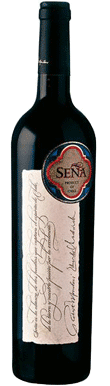
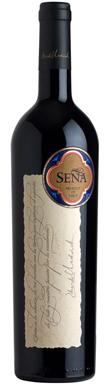
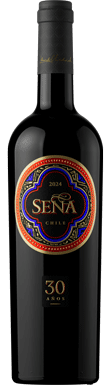
That’s precisely what happened at this year’s Encounter, where Chadwick Family Estates celebrated the 30th vintage of its flagship wine, Seña.
The Chilean producer opened its library for a singular masterclass that I had the pleasure of co-hosting with Georgie Crawley, UK director of Chadwick Family Estates, and Alejandra Chadwick, brand ambassador and third-generation, along with her sisters, at the helm of her family’s estates.
A catalyst for change
Although used to mark Seña’s landmark anniversary, the relevance of the event was much broader in scope.
The evolution and status of Seña as a fine wine – recognised for both its singularity and ability to stand alongside counterparts from the world’s most classical and established producers and regions – is the flagbearer for the wider establishment of Chile as a winemaking powerhouse.
Decanter newsletter
Get our daily fine wine reviews, latest wine ratings, news and travel guides delivered straight to your inbox.
Seña’s stylistic and technical evolution mirrors the blossoming of Chile as a source of fine wines with character, identity and self-assuredness; born in Chile and not wanting to be anything other than Chilean (why would they?).
It’s a big historical and symbolic responsibility; but it’s also a great source of freedom – a removal of the shackles of style to fully embrace heritage, terroir, creativity and enjoyment.
Mondavi and Chadwick: A serendipitous encounter
Regardless of the role it played in the evolution of Chilean modern wine, Seña’s is first and foremost the story of a serendipitous encounter between two men of matching entrepreneurial spirit and passion for wine.
When Robert Mondavi travelled to Chile on an explorative trip, his assigned driver was a young Eduardo Chadwick – their road trip proved to be a pivotal moment for both.
Mondavi infused Chadwick with an outsider’s, clear-eyed certainty that there was a potential, in Chile, to produce a wine no less iconic than Opus One.
A quest for the best terroir to produce its raw material began with a thorough analysis of soils and microclimates across the Aconcagua Valley.
This quest for terroir – rather than a style or commercial infrastructure – as the foundation for what would eventually become Seña was in itself revolutionary – and a clear statement of intent.
It shifted attention from man to nature, from winery to vineyard, from style to terroir expressiveness – a prescient approach that today we take for granted.
And that, at the time, stood in marked contrast with the other iconic wines from the so-called New World.
Truth and dare: the Judgment of Paris
(Image credit: Ellen Richardson for Decanter)
It was also with a revolutionary streak that, in 2004, Eduardo Chadwick challenged Decanter’s co-founder and celebrated wine writer Steven Spurrier to organise a Judgment of Paris-like tasting in which Seña would be pitted against the world’s best Bordeaux blends in a series of blind tastings.
It was a daring and risky proposition that, if gone wrong, would’ve forever compromised Seña ’s prestige.
In my view, this outcome also gave Chadwick a much-needed confidence to let Seña evolve along a path truer to itself, seeking better definition within its own parameters rather than emulating foreign models.
This ‘path to freedom’ was clear in the post-judgment vintages tasted at the masterclass.
On the other hand, the earlier vintages poured at the session – bolder in style and more tentative in their expression of a Chilean personality (i.e. still more informed by an international paradigm) – are crucial to understanding what, beyond vintage variation and/or stylistic evolution, defines Seña’s structural identity: vivid acid, elegant, poised tannins, aromatic detail and (astonishing) longevity.
Quest for identity
I’m sure few of the masterclass attendees, if tasting blind, would’ve placed the first vintage poured, 1998, in the 20th century. I know I wouldn't have.
Although brooding and earthy, with fig leaf, tobacco and musk clearly pointing to a mature wine, the quasi citric pull, purity of the plum and cherry fruit, acid verve and vibrancy of the tannins were remarkable.
The 1998 was followed by the 2009, 2012 and 2013, allowing an interesting analysis of the transition from Tim Mondavi’s to Francisco Baettig’s technical direction (and to Chadwick’s full ownership of Seña), as well as to the impact of vintage variation.
The latter is something that Baettig successfully embraced, leveraging it to better grasp the character of a terroir that is inevitably shaped by contrasting influences (the Pacific vs the Andes) and sharp climatic differences at the rhythm of the El Niño and La Niña cycles.
Pivotal vintage
(Image credit: Ellen Richardson for Decanter)
The evolutionary path during Baettig’s tenure had a pivotal moment in the 2015 vintage, in which – following the acknowledgement that Merlot did not perform at its best at Seña – the greater influence of Carmenere in the blend was consolidated and the oak influence decisively took a back seat.
It’s a vintage of great nuance and balance, still with a long life ahead of it. And an early promise of the greater things that have since followed.
Great things such as the 2016 and 2021 vintages also tasted at the masterclass. I’m partial to the latter’s playful fragrance and ballerina-like strong elegance – a wine that I’m eager to retaste 10, 15, 20 years from now.
The session closed with Seña’s latest, 30th release: the 2024 vintage. Still teasingly coiled, this is another bottle to revisit in the next decades.
What a joy to find, in the more recent vintages, a clear path towards the essence of a wine that could not be produced anywhere else – and is undoubtedly a modern classic, of the present and for the future.
For me, the consistency, definition, transparency and nonchalance shown by Seña as the project enters its maturity, reflect the overcoming of a need of external validation and the confidence (and freedom) to become true to an identity.
Next chapter
Alejandra (Ale) Chadwick, Ines Salpico and Georgie Crawley
(Image credit: Ellen Richardson for Decanter)
A few paragraphs above I used that infamous expression: ‘New World’. The definition – and its foundational nemesis, ‘Old World’ – is being rightfully contested (and finally contextualised within a broader post-colonial sensibility).
For all the moral and socio-historical arguments that make the case for overcoming the false, hierarchical dichotomy, the main reason for shedding them might be more simple than that: taste the most recent vintages of Seña and you will find an ‘Old World’ classicism and effortlessness is at its core.
The same classicism and effortlessness that so many ‘Old World’ regions are struggling to preserve in the face of climate change, on the one hand, and of a post-Parker hangover.
Perhaps the next chapter in Seña’s history is playing a central role in the necessary remapping of fine wine.
Brooding and deep, with cedar, tobacco, musk and camphor dancing in the glass, arm in arm with dried Parma violets, crushed rose petals, oregano and...
The first vintage of Seña produced exclusively with estate-grown fruit is the child of a hot vintage, and this is clear in its powerful concentration...
The gentlest sniff of this 2012 vintage of Seña – with its harmonic movement of dried flowers, ripe red fruit, mountain herbs, cedar and tobacco – will have you under its hypnotic, seductive spell. The palate follows with a playfulness that echoes the harmonic, dynamic nose. The mid-palate is ample and generous, but there’s also an energetic focus that gives the wine a linear verve. The tannins are soft yet decisive, giving the wine a textural, zesty grip that lingers with teasing freshness. A wine that emanates energy and joy, inviting the second glass with its laidback complexity.
Lovely transparency and definition to the cherry, blackcurrant and plum fruit, coated with dark chocolate and outlined by fine, silky tannins dusted with graphite and...
The lively notes of blueberry leaf, rocket, wild oregano and thyme give an energetic definition to this wine that is just so pleasurable and invigorating....
The sensuous playfulness that Carménère, Cabernet Franc and Petit Verdot (which, in tandem, contribute 25% to the blend) bring to Seña is on full display...
Ines Salpico is Decanter’s regional editor for Spain, Portugal and South America. Born and raised in Lisbon, Portugal, after moving to London in 2015, she decided to dedicate herself fully to the wine industry and joined the sommelier team at Michelin-starred Spring, Somerset House. Stints at Noble Rot and The Laughing Heart followed. Her work as a judge and writer eventually became her full time commitment and she joined Decanter in 2019 as wine database editor.