Top 50 US wines 2026: 10-1
The pinnacle of our list of the year’s exceptional wine releases: Even among 100-point wines and top names in their regions, these are the wines that stood out.


We have come to the culmination of our list, the Top 10 of Decanter’s Top 50 US Wines of 2026.
Even among the 100-point wines, regional icons and rising stars, these are the wines that stood out.
Why? Maybe it’s a winery that everyone knows, but that hasn’t rested on its laurels.
Maybe it’s an exciting new wine from an old name, or a relative value in a pricey category, or it showcases a grape or style that can excel in a region better known for other things.
Maybe it’s a winemaker who has coaxed the absolute best out of a variety that doesn’t get much attention on its own in a region that doesn’t have national recognition.
Or a winemaker who has asked the hard questions and is taking an approach that others might consider extreme.
Yes, wines 10 to 1 include Napa, Sonoma and Oregon. Yes, they cover Cabernet, Chardonnay and Pinot Noir.
But all of them have a unique, compelling story that makes these wines exciting to drink.
If you are lucky enough to own or find these wines, enjoy them over a long, leisurely meal with loved ones with plenty of time to contemplate what’s in your glass and how it got there.
To celebrate the release of the 2026 list, we’re giving away a pair of tickets to a 2027 Decanter Fine Wine Encounter Grand Tasting in New York of London.
The winner will get to sample the world’s best wines, meet the winemakers and try dozens of Decanter World Wine Awards winners. Don’t miss our prize giveaway. Enter here!
Wine No. 10

The slopes of the La Côte vineyard
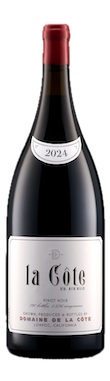
Domaine de la Côte, La Côte, Sta Rita Hills, Santa Barbara County, California, USA 2024
Run by Sashi Moorman, Domaine de la Côte focuses on expressing the character of the Central Coast’s Sta Rita Hills through a collection of vineyards at the Pacific Ocean–chilled western edge of the AVA.
Moorman is a sort of West Coast wonder of Pinot Noir and Chardonnay. After working at The Ojai Vineyard and Stolpman, he founded consulting company Provignage.
With partners, he invested in three properties to create elite, boutique wineries: Domaine de la Côte, which broke ground in 2006, Sandhi, in the same area of Santa Barbara County, and Evening Land, in Oregon’s Willamette Valley.
Roughly seven miles from the Pacific Ocean, whose winds shape the region’s character, Domaine de la Côte makes an estate wine and several single-parcel wines from plots with different soils and sun and wind exposure.
La Côte covers a steep southeast-facing slope that is largely sheltered from the winds, with soils that are more varied than in the rest of the estate. With these conditions, this cuvée was the highest-scoring of Domaine de la Côte’s wines in the 2024 vintage.
Two consecutive years of cold springs resulted in tiny yields in 2024 – in some places, only a half-ton an acre, a quarter of the already small crop typical of the estate.
As the grapes already had intense flavors and dense tannins, Moorman and the winemaking team treated them gently during the whole-cluster fermentation to ensure balance and elegance in La Côte, aged in 50% new oak.
For 2024, La Côte was bottled only in magnums (1,536 of them) for slower aging. The wine within should last nearly as long as the estate itself has been making wine and mature just as well.
Wine No. 9

HdV winemaker Guillaume Boudet
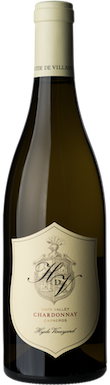
HdV, Comandante, Hyde Vineyard, Chardonnay, Los Carneros, Napa Valley, California, USA, 2023
Hyde Vineyard didn’t really need anything else to cement its prestige as one of California’s top vineyards for Chardonnay, providing grapes for the likes of Kistler and Ramey.
But family ties led to a partnership between grower Larry Hyde’s life’s work and Aubert de Villaine, who was, at the time, the longtime co-director of Domaine de la Romanée-Conti – one of the greatest names in all of Burgundy.
Hyde purchased his Home Ranch property in 1979, before Carneros was an AVA. With its rolling hills, shallow loamy soils, foggy mornings and cooling breezes from San Pablo Bay in the distance, the site was already ideal for cool-climate Chardonnay.
But he and his son Chris took it further, spending years fine-tuning the plantings based on their clients’ feedback and propagating their own distinctive Hyde clones notable for their tiny, flavorful berries and small clusters.
In 2000, Rick Hyde got his uncles Larry and Aubert together to found Hyde de Villaine, known as HdV, where he serves as president.
French-born, Bordeaux-trained Guillaume Boudet, who arrived at HdV as a harvest intern in 2011, is now the on-site winemaker, taking a minimal-intervention approach to the wines.
Chardonnay is the centrepiece of HdV, with a flagship estate bottling and Le Debut, from younger vines. Pinot Noir didn’t come until 2010, after 10 years spent determining the right site and clones.
Despite the Burgundy connection and Carneros location, HdV also makes Cabernet Sauvignon, a Cabernet-Merlot and Syrah from Hyde Vineyard. (Hyde also has its own label, launched in 2009.)
Comandante is a special barrel-selection wine – in the case of the 2023 vintage, eight barrels – that includes Hyde’s Old Wente clone plantings. (This means a lot to California grape geeks.) Boudet ages the Chardonnay for around 18 months in French oak, about one-third of it new.
The name honors a Spanish ancestor of the Hydes who was the Comandante of the Presidio of Santa Barbara in the early 1800s.
Not only did he plant some of California’s early vineyards, he also apparently hosted legendary parties. Opening bottles of Comandante for a party of your own would certainly make it legendary.
Wine No. 8

Stephan Hagen with some of his vineyard maintenance team
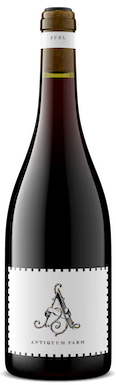
Antiquum Farm, Little Bud Pinot Noir, Willamette Valley, Oregon, USA, 2024
As you might guess from the name, this estate in the southern Willamette Valley is all about going back to older farming practices.
With a near-obsessive devotion to expressing the terroir in its purest form, Antiquum Farm founder Stephen Hagen has created a holistic farm centered around what he calls ‘grazing-based viticulture’.
Pigs, sheep, chickens, geese and ducks (protected by guardian dogs) do the work of controlling weeds and fertilising the land, rotating among the plots in a carefully plotted rhythm. (Hagen also sells fresh eggs, raw honey, grass-fed whole lamb and breeding livestock.)
Talking to Hagen provides a masterclass in soil microbiology from the perspective of a true farmer, one who isn’t so much growing grapes as he is nurturing a vast, healthy microbial community underground.
The way those fungi and other organisms interact with the vine roots is what shapes how the vines adapt themselves to the environment.
The result is grapes with colors and growth patterns that are not necessarily ‘typical’ of Pinot Noir, or their clonal selection or the Willamette Valley.
Little Bud, a name paying tribute to Hagen’s son, is an expression of the full Pinot Noir vineyard, a blend of 11 ‘voices’ among the farm’s 14.5 acres of the variety.
On a ridge at 800 feet above sea level, the vines are planted in the area’s unique bellpine soil, a volcanic and sedimentary composite.
There, the grapes develop thick skins and high levels of acidity, yet intense fruit flavors thanks to the sun exposure on the south-facing slope.
Our Oregon reviewer, Pete Holland, calls this a ‘thrilling, fascinating wine.’
Wine No. 7

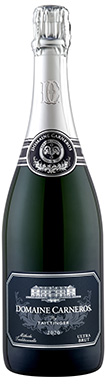
Domaine Carneros, Ultra Brut, Carneros, California, USA, 2020
Founded by Champagne’s Taittinger family in 1987, this sparkling wine estate has been making stellar bubbly from the beginning – a range later augmented by non-sparkling Pinot Noirs and Chardonnays as well.
Domaine Carneros is also notable for its history of female leadership and early adoption of sustainable farming and energy-efficient winemaking.
Then there’s the eye-catching chateau building and gorgeous tasting areas, a must-stop for any visitors to or passing through the Carneros appellation.
Domaine Carneros’s flagship bubbly is Le Rêve Blanc de Blancs, but its vintage-dated Ultra Brut, at a more affordable price, deserves your attention too.
This bone-dry style of sparkling wine has become much more popular in the US in the past decade, as drinkers have favored crisper, higher-acidity wines.
It has also become easier to make enjoyable Ultra Brut wines in traditionally cool-climate sparkling-wine regions, as warmer growing seasons have led to riper fruit flavors that don’t need support from added sugar in a traditional dosage.
Napa correspondent Jonathan Cristaldi calls Domaine Carneros's ‘laser-focused, and super expressive’ Ultra Brut ‘one of my favourite sparkling wines from Carneros outside Le Rêve’.
All of Domaine Carneros’ traditional-method sparkling wines come entirely from estate grapes. Director of vineyard operations Allison Wilson oversees 400 acres spread across six vineyards, all in Carneros, within four miles of the chateau.
Sparkling winemaker Zak Miller, who worked with founding winemaker Eileen Crane for a decade, blends the cuvées from the different blocks, aging the vintage-dated wines for at least three years on their lees. The 2020 vintage represents the first in which he held the lead winemaking role.
It’s also the year when Remi Cohen stepped in as CEO, succeeding Crane after a track record of winemaking and leadership roles at a half-dozen well-known wineries in Carneros and Napa.
She and Miller are clearly off to a great start.
Wine No. 6

Winemaker Scott Caraccioli in the Escolle Vineyard
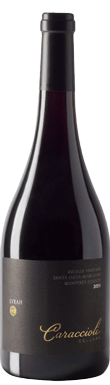
Caraccioli Cellars, Syrah, Santa Lucia Highlands,Monterey County, California, USA 2022
This pick was a discovery for me; I’ve long enjoyed Pinot Noir from the cool-climate Santa Lucia Highlands, but my experience with the region’s Syrahs has been limited. Our reviewer called this an ‘astounding Syrah’, one ‘that sings of Old World elegance’.
The Santa Lucia Highlands runs along the fertile Salinas Valley (‘The Salad Bowl of the World’), source of much of the produce enjoyed across the US.
The AVA sits on a series of long, narrow benchlands, rising in elevation from 100 to 1,700 feet and backed up against the steep Santa Lucia mountain range. Its windy maritime climate is influenced by nearby, deep, cold Monterey Bay.
Here, the Caraccioli family farms the 128 acre, certified-sustainable Estolle Vineyard, in the lower elevations of the northern portion of the AVA.
Though the family originally planted mostly Chardonnay and Pinot Noir in 2008, a decade later they grafted some over to Syrah in a parcel with the most granitic soils.
Its early promise prompted them to plant more of the variety, and they now have six acres.
When brothers Gary and Phil Caraccioli started the winery with their uncle Jim, their focus was on sparkling wine and its style was shaped by late winemaker Miguel Salgues, formerly of Roederer Estate.
The father-and-son winemaking team of Greg and Chris Vita have carried on his practices, while Gary’s son, Chris, now oversees operations, including the shift to all-estate grapes, the construction of a new winemaking facility and the introduction of additional varieties.
So far, the team’s work shows that Syrah is, as our reviewer put it, ‘undeniably a variety and style with a very bright future for the SLH’.
Wine No. 5

DJ Warner and Helen Keplinger
Keplinger Wines, Sumo, Shake Ridge Vineyard, Amador County, California USA 2023
The only Petite Sirah-based wine in our list, this comes from winemaker Helen Keplinger, a master of many appellations and varieties who has helped bolster the reputation of the Sierra Foothills wine region.
Along with starting her winery with her husband, DJ Warner, Keplinger has worked at cult Cabernet producers in Napa, such as Bryant Family and Grace Family, as well as at Carte Blance and Kerr Cellars.
Keplinger Wines’ lineup spans 16 wines, many of which earned scores of 95 points and higher this year. She makes everything from Sonoma Chardonnay and Napa Cabernet to Grenache and Syrah in Paso Robles, Santa Barbara County and Sonoma.
Her passion for and path to Rhône varieties came not from France, but from time working with Garnacha in Spain’s Priorat region
Her wines from Shake Ridge Vineyard, at an elevation of 1,750 feet in the Amador County portion of the Sierra Foothills, are particularly exciting.
The site, largely planted with Rhône varieties, is managed by Ann Kramer, who Keplinger says, delivers ‘perfect’ grapes.
Tannic, full-bodied, dark-fruited Petite Sirah is often a blending grape; in Sumo, it is the heavyweight. Keplinger co-ferments it with a small amount of Viognier, and blends it with Syrah, likewise co-fermented with Viognier.
The result is a mineral-driven red wine that our reviewer described as ‘rich and inviting, yet remarkably fresh and complex’.
Wine No. 4

Hirsch Winemaker Jasmine Hirsch
Hirsch Vineyards, Maritime Pinot Noir, Sonoma Coast, Sonoma County, California, USA 2023
Once a sheep ranch, Hirsch Vineyards became legendary as a source of grapes for Littorai, Kistler, Williams Selyem and Failla, each of which has made vineyard-designated wine from this remote, coastal ridge site.
The success of those wines prompted other producers to follow, finding similar Sonoma Coast locations above the fog line: Flowers, Martinelli and Marcassin, among them.
David Hirsch founded the property in 1978, planting vines in 1980, initially just for his personal use.
It wasn’t until the late 1980s and early 1990s that he got serious about commercial grape-growing, expanding his plantings substantially, to 72 acres eventually, with the help of vineyard manager Everardo Robledo, who has been with Hirsch since 1988.
But Hirsch and his wife, Marie, didn’t build a winery on the property until the 2000s. The logic behind that decision was that it would improve his grape-growing if he could make and taste wine from each of his 60 parcels.
Ross Cobb (featured earlier on this list) joined him as winemaker for six vintages, also making his own wines there.
The Hirschs’ daughter Jasmine joined the winery, eventually becoming the general manager, then the winemaker in 2019. She was already the face of the winery before her father passed away this year.
The Maritime bottling, a particularly savory example of the Hirsch Pinot Noirs, only debuted in 2018.
It comes from an extreme portion of an extreme site; a gap in the one ridgeline between the Maritime Fields portion of the property and the Pacific allows fog and wind in directly.
It took nearly 30 years from when Hirsch first tried planting that area, then replanted it, for the work to come to fruition.
Hirsch Vineyards is nothing if not an example of the power of persistence. And this ‘truly stunning’ wine has many years to go.
Wine No. 3

Louis Martini Monte Rosso Vineyard
Louis M. Martini, The Gryphon Cabernet Sauvignon, Napa Valley, California, USA 2023
With so many Napa Cabernets over $150 a bottle, it’s refreshing to find one for only around $85, especially one that comes from a historic name in the category.
Louis M Martini has been around for close to a century, the first bonded winery built in the valley after Prohibition ended.
Founder Louis M Martini bought the now-iconic Monte Rosso vineyard, the heart of the wine brand, in 1936.
In the Mayacamas Mountains, overlooking the town of Sonoma from an elevation of around 1,200 feet, the vineyard has volcanic soils rich in iron and red loam.
After three generations of Martini family involvement, the brand and the property now belong to the Gallo family, allowing winemaker Zach Watkins access to a wider range of vineyards to make The Gryphon (named after the symbol of Genoa in Italy, Martini’s birthplace).
In the 2023 vintage, along with Monte Rosso, he used fruit from the William Hill, Stagecoach, Brudair and Limitless vineyards.
A new addition to a substantial lineup of single-vineyard and varietal wines, the Gryphon blend represents the evolution of the brand, meant to be a return to the classic style of Napa Cabernets in the 1960s and 1970s.
Watkins added small amounts of Cabernet Franc, Merlot and Malbec to the base of 82% Cabernet Sauvignon. Made it the winemaking facility for small-lot wines, The Gryphon spent 17 months in barrel, nearly half of it new.
Napa correspondent Jonathan Cristaldi wrote: ‘The lift, energy, and freshness here are off the charts. So structured, so vibrant—what a wonderful direction for this wine.’
Wine No. 2
Wine 2

Donelan, Obsidian Estate Syrah, Knights Valley, Sonoma County, California, USA 2023
After falling in love with wine, Joe Donelan traded in a career as a paper-broker executive for a life in wine.
Donelan Family Wines, formerly Pax Wine Cellars, does make excellent Chardonnay and Pinot Noir, but its commitment to Syrah and other Rhône varieties in Sonoma is what’s truly exciting.
The family’s striking Obsidian Vineyard, an extremely stony 6 acre site atop a promontory in Knights Valley, takes its name from the layer of the volcanic rock found there.
The vines there are still quite young, dating to a 2017 replanting after a fire destroyed much of what was there.
Winemaker David Milner took advantage of a bad situation to rework the vine spacing, making it denser to keep yields low, and included some Viognier for Rhône-style co-fermentations.
The 2023 vintage is the first release from the new vines, and the quality is remarkable while the aromatic and flavor profile remains consistent with vintages past – yet more refined, in keeping with the more precise farming.
Milner fermented grapes from nine blocks separately, with about one-third of them being whole cluster and just under 2% Viognier for the co-fermentation.
He then blended the wines sequentially and aged the final assemblage for 21 months in new oak (just over one-third of it new). It will be fascinating to see how the wines evolve as the vines do.
Joe Donelan’s passion has become the family’s passion, and no wonder with a wine like this: his sons Tripp and Cushing Donelan currently work in sales and marketing.
This enticing, layered wine is certainly enjoyable now, but it’s also built to age.
As Jonathan Cristaldi put it: ‘Either way, you’ll be utterly wowed. And when you realise the price is under £100, the achievement becomes even more staggering.’
Wine No. 1

Bo Barrett
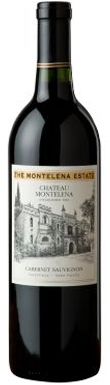
Chateau Montelena, The Montelena Estate Cabernet Sauvignon, Napa Valley, California, USA 2023
This year, Chateau Montelena has been celebrating the 50th anniversary of the 1976 Judgement of Paris tasting, whose results catapulted the winery and Napa Valley to international fame.
So it’s only fitting that, this same year, it released a wine that notched a 100-point score.
This iconic Napa winery is still going strong, and it’s still under family ownership. Bo Barrett, son of founder Jim Barrett, continues to oversee this Calistoga estate, with its iconic 1800s stone chateau.
When the family purchased the vineyard property in 1972, it was run-down and needed lots of work. (That makes it even more remarkable that their 1973 Chardonnay bested the best of Burgundy in Paris.) But the site had all the bones needed for success.
At the foot of Mount Helena, straddling the line between a valley appellation and a mountain appellation, the estate vineyard sits on a diverse mix of soils and benefits from afternoon sun.
The Montelena wines show all the ripe fruit typical of Napa Cabernet and Chardonnay, but they maintain a core of acidity that keeps them fresh and long-lived.
Though the 1973 Montelena Chardonnay crafted by original winemaker Mike Grgich may be a museum piece (a bottle sits in the Smithsonian National Museum of American History), the winery team isn’t letting the Montelena name gather any dust.
Montelena president and current winemaker Matt Crafton said in a Decanter interview: ‘What I love about this brand is that the same daring, independent spirit that built Montelena still drives what we do.’
Their Montelena Estate Cabernet helps illustrate why the 2023 vintage is so exceptional, and vice versa.
‘Fresh and inviting, the purity of this wine is striking,’ wrote Cristaldi in his review. ‘It lays down a formidable structural foundation and has the makings of one of the longest-lived Montelena Estate Cabernets in several decades.’
Since there were so many outstanding and exceptional wines released this year, we’re giving Decanter Premium members a curated list of 200 more top wines, including a few more top 2023 Napa Cabernets, Oregon Pinot Noirs, West Coast Chardonnays, sparkling wines and value buys for the holidays.
If you subscribe in November, you’ll receive 20% of a full-year subscription with promo code TOPUS2026.
Related articles


Domaine de la Côte, La Côte Pinot Noir, Sta Rita Hills, Santa Barbara County, California, USA 2024
99
The Domaine de la Côte La Côte Pinot Noir comes from a small lieu-dit within the estate’s La Côte vineyard, situated on a steep southeast-facing slope with diatomaceous shale, clay and Monterey shale soils. The relatively early bottling preserves youthful primary flavors on the palate; tart cranberry and darker Black Forest cherry complement black tea and a savory herbal quality. Smooth tannins lend considerable structure and length. Released exclusively in magnum, in part to exceedingly low yields for the 2024 vintage, this wine is delicious in its youth yet possesses exceptional potential for long-term aging, especially in this larger format.
2024
Domaine de la CôteSanta Barbara County
HdV, Comandante, Hyde Vineyard, Chardonnay, Los Carneros, Napa Valley, California, USA, 2023
98
Made from 100% Wente clone sourced from Hyde Vineyard, it is a barrel selection drawn from both the Old Wente and Young Wente sections of the vineyard. The 2023 is an eight-barrel blend. There is a striking purity and precision to the fruit and mineral character. Crystalline saline acidity is framed by a flinty mineral character and with deeply concentrated citrus fruit. The depth of flavour is impressive, yet everything remains tightly focused, driven by palpable tension. Incredibly polished and suave, it is already a joyful wine to drink, though its complexity will undoubtedly build over a decade – or two, or three – for those with the patience to cellar it.
2023
HdVNapa Valley
Antiquum Farm, Little Bud Pinot Noir, Willamette Valley, Oregon, USA, 2024
97
Little Bud, sourced from across Antiquum’s 14.5 acres (5.9ha) of Pinot Noir, showcases the remarkable tension possible at this site. It’s got a lush nose of ripe raspberry, baked strawberry, red cherry and rhubarb, accented with dust, cinnamon and dried tangerine peel. On the palate, it’s super silky on entry, with a superb verve built on the elevated acidity. This is a thrilling, fascinating wine, and the combination of tannin and acid should allow it to age beautifully. Just awesome.
2024
Antiquum FarmWillamette Valley
Domaine Carneros, Ultra Brut, Carneros, California, USA, 2020
96
I said this with the 2019 vintage and I'll say it again, the Domaine Carneros by Taittinger Ultra Brut might be one of my favourite sparkling wines from Carneros outside Le Rêve. It is bone-dry, laser-focused, and super expressive. Grapes were harvested by 17 September. This wine is just riveting, with a rich, frothy, airy mousse that is super persistent, creating such a harmonious, broad, and deeply flavourful sparkling wine, rich in orchard fruit and white flowers with slivered almond nuances and expressive baking spice notes from méthode traditionnelle production, with at least three years of ageing on the lees. The dosage is just 0.4% dosage. The finish is long, balanced, and mineral-rich.
2020
Domaine CarnerosCarneros
Caraccioli Cellars, Syrah, Santa Lucia Highlands,Monterey County, California, USA 2022
98
<p>An astounding Syrah, it comes from the upper slopes of the Escolle Vineyard, the Cariccoli estate. The Syrah blocks are among the site’s rockiest, with chipped granite throughout the soils. Feral and gamy, this is a stunning Syrah that is oh-so-evocative of the Northern Rhône. Notes of struck iron lead a mineral tone on the nose, with singed violets, wild woodland and bramble fruits, ferrous minerality, and a bloody, amaro herbal note. This is a beautiful bottle of Syrah that sings of Old World elegance but is undeniably a variety and style with a very bright future for the SLH.</p>
2022
Caraccioli CellarsMonterey County
Keplinger Wines, Sumo, Shake Ridge Vineyard, Amador County, California USA 2023

98
Petite Sirah co-fermented with Viognier and Syrah co-fermented with Viognier from Shake Ridge Vineyard in the Sierra Foothills. Helen Keplinger blends the lots together a few months before bottling, but until then, they rest in a cold, dark cellar, ageing on the lees for about 17 months. In the glass, this wine is super-fresh and lifted, with floral notes spanning white flowers, rose petals, and violets, interplaying with rich dark berry fruit and a graphite minerality. On the medium- to full-bodied palate, the wine builds with a sense of resilience, framed by powerful tannins that are subtly chalky and faintly bergamot-tea–like, carrying through to a long, drawn-out finish marked by dark, mineral-driven intensity. It’s like a mash-up of graphite and slate dusted with warming, gentle Indian spices—rich and inviting, yet remarkably fresh and complex.
2023
Keplinger WinesAmador County
Hirsch Vineyards, Maritime Pinot Noir, Sonoma Coast, Sonoma County, California, USA 2023

99
Maritime comes from a block that sits at the lowest, most ocean-exposed point of the Hirsch estate. The 2023 was the last pick of the already cool and late vintage, and it is just breathtaking. At just 12.5% alcohol, it shows so much freshness, with saline aromas of kelp, salty air, and fresh herbs like tarragon, with a layer of forest floor underneath, reminiscent of the redwoods further inland in the region. It tastes of incredible depth: crunchy cherries, wild berries, plum skins, and a touch of dry spices that carries through the saline, mineral finish. The tannins are silky and very well integrated, making this wine seriously ready to drink, yet the complexity of flavours and electric acidity promise many years to go in the bottle. Love the lifted tone. Truly stunning!
2023
Hirsch VineyardsSonoma County
Louis M. Martini, The Gryphon Cabernet Sauvignon, Napa Valley, California, USA 2023

97
Winemaker Zach Watkins tells me that all the vineyards they source across Napa Valley, including their single-vineyard sites, are ultimately destined either for the individual vineyard bottlings or for The Gryphon, their new flagship blend. In the 2023 vintage, the fruit came from William Hill in Napa, with equal portions from Monte Rosso, Stagecoach, Bruadair, and Limitless, alongside contributions from several long-time grower partners. Anchored in southern Napa, with a lift of mountain fruit from these single-vineyard sites, the wine was fermented in stainless steel and aged for 19 months in 48% new French barriques. Is this the Louis M. Martini wine of the 1960s – a Cabernet built for the table, with food in mind? With tannins that are firm, ripe and beautifully balanced, and acidity that’s present but never overwhelming – supportive, rather than dominant, and clearly geared towards long-term ageing – it certainly feels that way. This is super-classic Napa Valley Cabernet Sauvignon: inky black-fruited yet bright, layered with sagebrush, tobacco, violets and loamy earth. It’s fresh, inviting and deeply layered, with a velvety texture and slightly rustic tannins, all sharpened and focused by a graphite-driven mineral character. The lift, energy and freshness here are off the charts. So structured, so vibrant – what a wonderful direction for this wine.
2023
Louis M. MartiniNapa Valley
Donelan, Obsidian Estate Syrah, Knights Valley, Sonoma County, California, USA 2023

100
Joe Donelan believes his Obsidian Vineyard is one of the world’s greatest sites for Syrah. I’ve visited the site twice, and can say candidly it certainly sits among the most striking vineyards I've ever laid eyes on within the U.S. It sits like a rock on a promontory—two switchbacks to reach the top—and the stones under the top soil, quite literally, never stop emerging from the ground. The place has an ancient, almost sacred, temple-like feel. It is consistently swept by afternoon breezes. The vineyard was replanted in 2017 after fires ravaged it. Winemaker David Milner laid out the site at denser spacing than before, at 2,000 vines per acre to keep yields per vine low while still achieving sensible tonnage, averaging around three tonnes per acre. Viognier was planted for co-fermentations, alongside some Cabernet Sauvignon, for a single vineyard bottling of that grape. ‘God put on his viticultural hat when he designed this site,’ says Milner. The vineyard is planted with ENTA 174, 877, and Alban 1 clones, along with Donelan Heritage selections certified virus-free. The wine, the 2023 vintage release (the first from the new vines), was aged for 21 months in 36% new oak and co-fermented with 1.8% Viognier, using 32% whole clusters. And it is positively gorgeous: composed of nine different blocks, each fermented separately, then assembled through sequential blending, with no racking until bottling. From just five-year-old vines, this wine is utterly extraordinary—something oddly achievable from young vines on rare occasion. I tasted this wine from the same bottle over three days. While the high-toned espresso-bean and cedar accents are present at first pull of the cork, they mellow out a day later, and the fruit profile is so vibrant. This is the sign of an excellent wine. I first tasted wines from the Donelan’s Obsidian Vineyard years ago at Tasting Panel Magazine in the late, great Anthony Dias Blue’s office. Cushing Donelan showed the wines, and to this day, I recall the first moment I put my nose into a glass of Obsidian Syrah. In early January of 2026, as I nosed this brand new release of Obsidian Syrah, I was transported straight back to that tasting twelve years ago. What’s remarkable is that the aromatics are unmistakably the same, yet from these new, more densely planted vines, the aromas are more refined—precision-farmed wines from young vines delivering a level of detail and poise that feels beyond their years. So what’s in the glass? Pure red, black, and blue fruit nuances layered with tobacco, white truffle character, violet pastille, and an intoxicating perfume. White pepper notes emerge on the medium- to full-bodied palate, framed by velvety tannins. Iron-like and crushed slate minerality underpins dazzling black cherry and blackberry fruit, brown spices, and blood orange richness. There’s a velvety, iron-fist quality here that exudes polish, complexity, and undeniable quality. You want to drink it now—and you absolutely can—but it will also reward time in the cellar. Either way, you’ll be utterly wowed. And when you realise the price is under £100, the achievement becomes even more staggering. As these vines mature, what will become of them in subsequent vintages? I suspect that as the vines mature, they'll go in and out of phases, but so long as Mother Nature cooperates, I expect this wine to continue to dazzle each vintage.
2023
DonelanSonoma County
Chateau Montelena, The Montelena Estate Cabernet Sauvignon, Napa Valley, California, USA 2023
100
A stellar wine – polished and supremely suave. Seamless in execution, it captures the hallmarks of the 2023 vintage with an off-the-charts coolness that carries from the aromatics to the finish. Building beautifully in the glass, it reveals blackberry, black cherry and violet alongside elegant cedar wood, sagebrush and tobacco spice, all grounded by loamy earth notes. The juicy, medium- to full-bodied palate offers breadth and generosity without excess. Extremely fine, compact tannins underpin the structure, building steadily through an everlasting finish layered with unsweetened cocoa powder, wet slate and saline minerality. Fresh and inviting, the purity of this wine is striking. It lays down a formidable structural foundation and has the makings of one of the longest-lived Montelena Estate Cabernets in several decades.
2023
Chateau MontelenaNapa Valley
